

TL;DR:
- Cloud adoption is essential for Brisbane SMEs to improve efficiency and security.
- Proper planning, assessment, and phased migration reduce risks and costly mistakes.
- Continuous security monitoring and optimization ensure long-term success and compliance.
Cloud adoption is no longer a luxury for Brisbane small and medium-sized enterprises. It’s a practical necessity. Many local business owners are juggling outdated systems, rising cybersecurity threats, and the pressure to do more with less. The good news is that cloud adoption can dramatically improve efficiency and security for SMEs when approached correctly. This guide walks you through every stage of the process, from preparation to ongoing optimisation, so you can move to the cloud with confidence and without the costly mistakes that trip up so many businesses.
Table of Contents
- Preparing for cloud adoption: What Brisbane SMEs need
- Mapping your migration: A step-by-step approach
- Securing your data and ensuring compliance in the cloud
- Testing, optimising, and supporting your cloud environment
- Why methodical cloud adoption matters more than ever for Brisbane SMEs
- Ready to simplify your cloud adoption journey?
- Frequently asked questions
Key Takeaways
| Point | Details |
|---|---|
| Preparation is critical | Laying the right groundwork prevents common pitfalls in cloud adoption. |
| Follow a step-by-step process | Structured migration minimises risk and enhances results for Brisbane SMEs. |
| Prioritise security and compliance | Protecting data and meeting local standards is non-negotiable. |
| Ongoing support ensures success | Continuous monitoring and optimisation keep your cloud environment resilient. |
Preparing for cloud adoption: What Brisbane SMEs need
Before starting your cloud journey, it’s crucial to have the right groundwork in place. Skipping this stage is where most businesses come unstuck. Poor preparation leads to common migration failures and security gaps that can cost you far more than the migration itself.
A solid preparation phase starts with a thorough audit of your current systems. You need to know exactly what software, hardware, and data you’re working with before you can make informed decisions about cloud migration basics or selecting cloud services that fit your business.
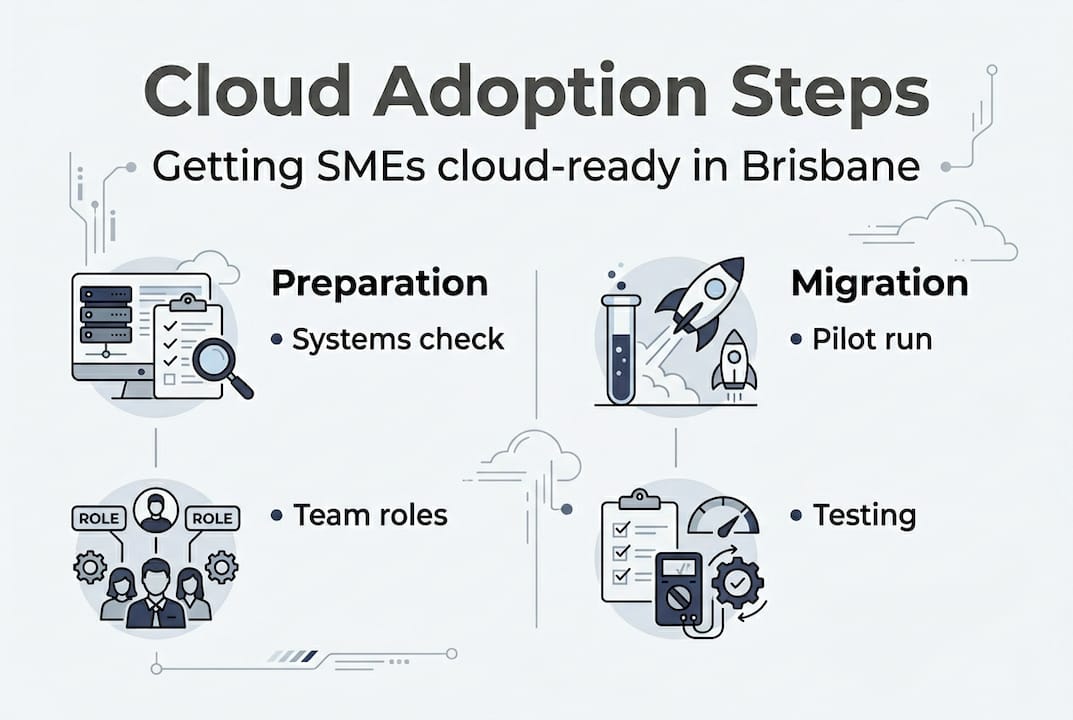
Here’s a quick overview of what you’ll need in place before migration begins:
| Area | What to assess | Tools or resources needed |
|---|---|---|
| Systems inventory | All software, hardware, and data | IT asset management tool |
| Staff readiness | Digital literacy and training needs | Skills assessment survey |
| Security posture | Existing vulnerabilities and gaps | Vulnerability scanner |
| Compliance requirements | Privacy Act, industry regulations | Legal or IT compliance review |
| Budget and timeline | Realistic cost and rollout plan | Project management software |
Beyond the audit, you’ll also want to think about your team. Cloud adoption changes how people work, and resistance from staff is one of the most underestimated hurdles. Training and clear communication from leadership make a real difference.
Common Brisbane-specific hurdles to watch for include:
- Connectivity limitations in some outer Brisbane suburbs affecting cloud performance
- Industry-specific compliance requirements for healthcare, legal, and financial services firms
- Legacy software dependencies that don’t integrate cleanly with modern cloud platforms
- Budget constraints that push businesses toward rushed, under-resourced migrations
- Limited internal IT expertise to manage the transition without external support
Pro Tip: Before committing to any cloud platform, run a gap analysis comparing your current capabilities against what your chosen cloud solution requires. This single step can save you weeks of rework and thousands of dollars.
Mapping your migration: A step-by-step approach
Once you’ve laid the groundwork, mapping out the migration process is the next vital move. A structured migration reduces risk for Brisbane SMEs and gives your team a clear path forward rather than a chaotic leap into the unknown.
Here are the six core steps every Brisbane SME should follow:
- Assessment – Catalogue all workloads, applications, and data. Identify what moves to the cloud, what stays on-premise, and what gets retired.
- Selection – Choose your cloud provider and service model (public, private, or hybrid) based on your compliance needs and budget. Weigh up the Brisbane cloud benefits relevant to your industry.
- Planning – Build a detailed migration plan with timelines, responsibilities, rollback procedures, and communication protocols.
- Migration – Execute the move in stages, starting with lower-risk workloads. Never migrate everything at once.
- Testing – Verify data integrity, system performance, and security controls before decommissioning old infrastructure.
- Optimisation – Fine-tune configurations, review costs, and adjust resources based on real usage patterns.
One of the most important decisions you’ll make is whether to manage this yourself or bring in a managed service provider. Both approaches have merit, but the risks differ significantly.
| Factor | DIY migration | Managed service provider |
|---|---|---|
| Cost upfront | Lower | Higher |
| Risk of errors | Higher | Lower |
| Speed of migration | Slower | Faster |
| Ongoing support | Self-managed | Included |
| Compliance assurance | Variable | Structured |
| Staff burden | High | Minimal |
For most Brisbane SMEs without a dedicated IT team, the managed service route delivers better outcomes and fewer sleepless nights.
Pro Tip: Before rolling out to your entire business, run a pilot with a small team of five to ten people. Use their feedback to iron out issues before the full migration. This approach consistently reduces support tickets and staff frustration.
Securing your data and ensuring compliance in the cloud
With your migration plan mapped, it’s essential to address security and compliance from day one. Security remains the biggest concern during migration, and for good reason. A single data breach can expose sensitive client information, trigger regulatory penalties, and damage your reputation in ways that take years to recover from.
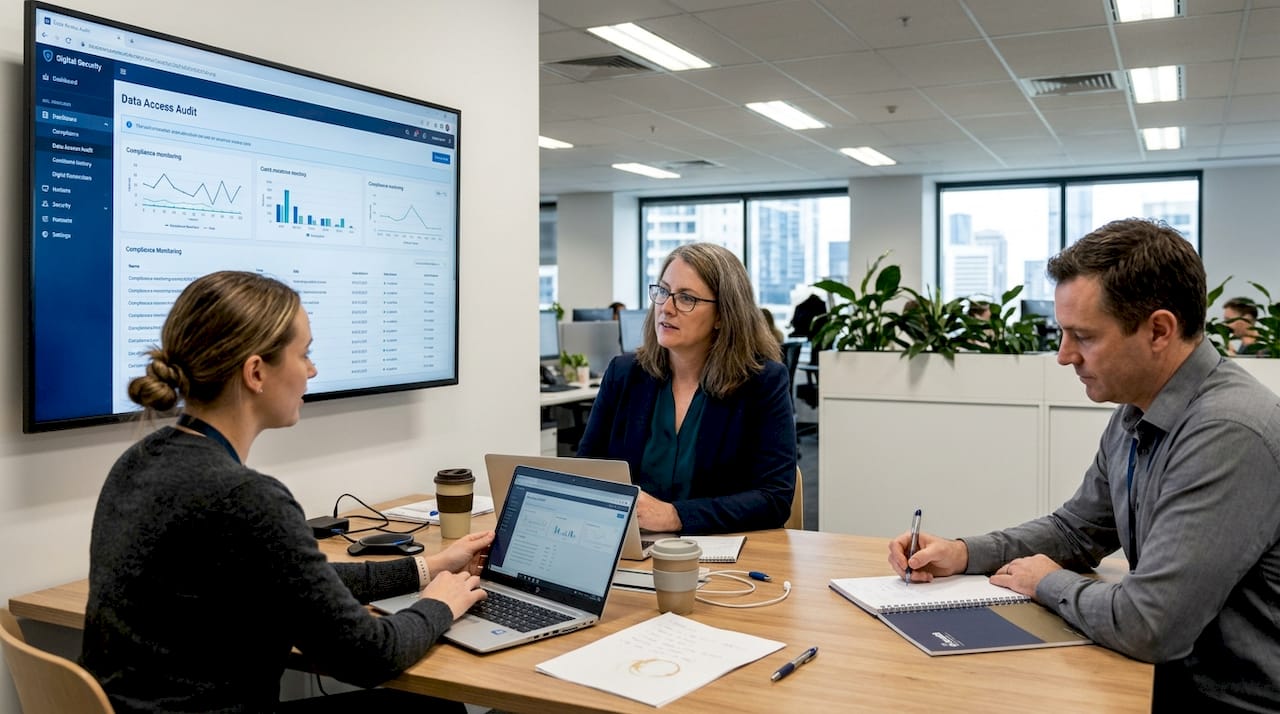
The good news is that cloud solutions can boost transparency and compliance for Brisbane businesses when configured correctly. The key word is correctly. Cloud platforms provide powerful security tools, but they don’t configure themselves.
Here are the best practices every Brisbane SME should implement:
- Enable multi-factor authentication (MFA) on all accounts, especially admin access
- Encrypt data at rest and in transit using industry-standard protocols
- Apply role-based access controls so staff only access what they need
- Schedule regular security audits to catch misconfigurations early
- Back up data to a separate location, not just within the same cloud environment
- Monitor access logs for unusual activity and set up automated alerts
- Vet your cloud provider’s compliance certifications against your industry requirements
For Brisbane businesses operating in regulated industries, you also need to understand your obligations under the Australian Privacy Act and the Notifiable Data Breaches scheme. Understanding Queensland data security obligations is not optional. It’s a legal requirement.
“Regular audits are not a one-off task. They are the ongoing heartbeat of a secure cloud environment. Businesses that audit quarterly catch problems before they become incidents.”
For detailed guidance on securing cloud data, the approach should always be layered. No single tool or policy is enough on its own.
Pro Tip: Set a recurring calendar reminder every 90 days to review user access permissions. Departed staff and changed roles are among the most common sources of unauthorised access in cloud environments.
Testing, optimising, and supporting your cloud environment
The journey doesn’t end at migration. Ongoing refinement and support are key to getting lasting value from your investment. Continuous monitoring and updates are vital for a resilient cloud environment, and businesses that treat migration as a finish line rather than a starting point often find themselves back at square one within 12 months.
Start with a structured post-migration verification checklist:
- Confirm all data has transferred completely and without corruption
- Test user login and access controls across all roles
- Verify application performance under normal and peak load conditions
- Check that backup systems are running and restoration works as expected
- Review cloud verification steps to confirm your security baselines are active
- Confirm compliance reporting tools are capturing the right data
Once you’ve verified the basics, shift your focus to optimisation. Cloud environments are dynamic. What you configured on day one may not be the most efficient setup six months later.
Ongoing support tasks that keep your cloud environment healthy include:
- Monthly cost reviews to eliminate unused resources and right-size your subscriptions
- Staff training updates as new features and tools are released by your provider
- Patch management to keep operating systems and applications up to date
- Incident response drills so your team knows exactly what to do if something goes wrong
- Quarterly cloud security improvement reviews to stay ahead of emerging threats
- Vendor relationship management to ensure your provider’s roadmap aligns with your growth plans
The businesses that get the most from cloud adoption are the ones that treat it as a living system, not a set-and-forget solution. Regular reviews, staff engagement, and proactive monitoring are what separate thriving cloud users from frustrated ones.
Why methodical cloud adoption matters more than ever for Brisbane SMEs
Here’s an uncomfortable truth we’ve seen play out repeatedly: the businesses that rush their cloud adoption almost always end up doing it twice. Fast, unplanned migrations create fragile environments that break under pressure, expose data, and frustrate staff. The cost of fixing a botched migration routinely exceeds the cost of doing it properly the first time.
We’ve worked with Brisbane SMEs across professional services, healthcare, and finance, and the pattern is consistent. The businesses that invest in a patient, step-driven process come out the other side with stronger systems, more confident teams, and better Brisbane business results than they expected. The ones that chase speed end up managing chaos.
Cloud technology is not a magic fix. It’s a platform. The value comes from how thoughtfully you build on it. In 2026, with cybersecurity threats growing more sophisticated every quarter, a methodical approach isn’t just good practice. It’s your best defence.
Ready to simplify your cloud adoption journey?
Moving to the cloud is one of the most impactful decisions a Brisbane SME can make, but it works best with the right partner alongside you. At IT Start, we specialise in cloud services for Brisbane SMEs that are tailored to your industry, your compliance requirements, and your budget. We also provide cyber security help to protect your data throughout every stage of migration and beyond. Whether you’re just starting to explore your options or ready to begin, our Brisbane IT support team is here to make the process straightforward, secure, and built for long-term success. Reach out today for a free consultation.
Frequently asked questions
What are the biggest challenges for Brisbane SMEs adopting cloud solutions?
Key challenges include data security, compliance with local laws, and staff adaptation to new systems. Addressing these early in the planning phase significantly reduces disruption and risk, as cloud solutions can boost compliance when implemented with the right structure.
How can I ensure data security during cloud migration?
Use strong encryption, multi-factor authentication, and choose a provider that meets local compliance standards. A layered security approach, combined with regular audits, is the most reliable way to protect sensitive business data throughout the migration process.
What should I test after migrating to the cloud?
Test data integrity, access controls, and system performance to ensure everything works securely and efficiently. Continuous monitoring after go-live is equally important to catch any issues that only emerge under real-world usage conditions.
Can migrating to the cloud save my business money long term?
Yes, cloud solutions reduce IT overhead, offer flexible costs, and improve operational efficiency over time. Businesses that adopt cloud solutions strategically typically see reduced hardware costs and more predictable monthly IT spending within the first year.