

Managing IT in a Brisbane healthcare or financial business often means juggling growth, cost, and the constant need to meet Australian security standards. Growing organisations like yours face big hurdles with outdated infrastructure and strict compliance rules. Embracing reliable cloud solutions helps you access scalable resources, stay secure, and ensure your data meets the latest Australian regulations. Discover how modern cloud services create true operational efficiency and robust security compliance for Brisbane SMEs.
Table of Contents
- What All Cloud Means for Brisbane SMEs
- The Three Main Types of Cloud Services
- How Cloud Solutions Improve Efficiency and Flexibility
- Australian Compliance Rules for Cloud Adoption
- Security Risks and Mitigation for Sensitive Data
- Comparing Cloud Models for Regulated Industries
Key Takeaways
| Point | Details |
|---|---|
| Cloud Solutions Enhance Agility | Brisbane SMEs can leverage cloud technologies to reduce operational costs and scale resources dynamically based on their needs. |
| Pay-as-You-Go Infrastructure | Adopting IaaS allows businesses to access sophisticated infrastructure without the burden of significant upfront capital expenses. |
| Focus on Compliance | Organisations must ensure their cloud solutions comply with Australian data protection regulations and cybersecurity standards. |
| Engagement of Local Providers | Selecting cloud providers with localised support ensures seamless integration and adherence to Australian compliance requirements. |
What All Cloud Means for Brisbane SMEs
Cloud solutions represent a transformative technology ecosystem that enables Brisbane small and medium enterprises to reimagine their operational capabilities. By leveraging cloud computing resources, local businesses can access scalable infrastructure without substantial upfront capital investment. This digital approach allows organisations to dynamically adjust computing power, storage, and technological capabilities based on real-time business requirements.
For Brisbane SMEs, cloud solutions offer several strategic advantages. Businesses can now tap into enterprise-grade technologies previously accessible only to large corporations. These solutions provide flexible computing environments that support remote work, enhance collaboration, and enable sophisticated data analytics. Organisations can rapidly deploy new applications, integrate advanced AI tools, and maintain robust cybersecurity protocols without managing complex physical infrastructure.
The cloud ecosystem fundamentally transforms how Brisbane businesses approach technology investment. Instead of purchasing expensive hardware and maintaining dedicated IT teams, companies can now access pay-as-you-go models that align technological resources directly with business growth. This approach reduces operational costs, minimises technological risks, and provides unprecedented agility in responding to market changes.
Pro tip: When exploring cloud solutions, prioritise providers offering localised support and understanding of Australian regulatory frameworks to ensure seamless integration and compliance.
The Three Main Types of Cloud Services
Cloud computing offers Brisbane businesses three primary service models that cater to diverse technological needs and organisational requirements. Infrastructure as a Service (IaaS) represents the most fundamental cloud model, providing virtualised computing infrastructure that allows businesses to rent servers, storage, and networking resources on demand. This approach enables SMEs to access sophisticated technological infrastructure without significant upfront investments, scaling resources precisely to their operational requirements.
Platform as a Service (PaaS) represents a more comprehensive cloud solution, offering developers a complete platform for building, testing, and deploying applications. By providing pre-configured development environments and tools, PaaS eliminates the complexities of managing underlying infrastructure. Local Brisbane businesses can leverage these platforms to accelerate software development, reduce technical overhead, and focus more on creating innovative digital solutions that drive competitive advantage.
Software as a Service (SaaS) delivers fully managed software applications directly over the internet, eliminating the need for local installation and maintenance. These cloud-based applications range from productivity tools to complex enterprise systems, providing Brisbane organisations with flexible, accessible, and constantly updated software solutions. By adopting SaaS models, businesses can reduce IT management costs, ensure consistent software updates, and enable seamless collaboration across distributed teams.
Pro tip: Evaluate your specific business requirements carefully before selecting a cloud service model, considering factors like budget, technical expertise, and scalability needs.
Here is a comparison of cloud service models for Brisbane SMEs:
| Cloud Model | Key Advantage | Typical Use Case | Business Impact |
|---|---|---|---|
| IaaS | Infrastructure flexibility | Dynamic scaling of resources | Lowers upfront IT spend |
| PaaS | Rapid application development | Launching custom software | Speeds up innovation |
| SaaS | Ready-to-use software | Collaborative productivity tools | Reduces IT maintenance tasks |
How Cloud Solutions Improve Efficiency and Flexibility
Brisbane businesses increasingly recognise cloud solutions as a powerful mechanism for transforming operational efficiency and organisational flexibility. Cloud migration strategies enable companies to dynamically adjust their technological infrastructure, responding rapidly to changing market demands and internal business requirements. This adaptive approach allows organisations to scale computing resources up or down instantly, eliminating traditional limitations of physical infrastructure and reducing unnecessary technology expenditure.
The efficiency gains from cloud solutions extend beyond simple resource management. By outsourcing complex technological infrastructure and maintenance, Brisbane SMEs can reallocate valuable human resources towards core business strategies and innovation. Automated updates, seamless integrations, and centralised data management reduce technical overhead, allowing teams to focus on productivity rather than managing intricate IT systems. Cloud platforms provide real-time collaboration tools, enabling distributed teams to work simultaneously on projects, share resources, and maintain consistent communication regardless of physical location.

Flexibility represents another critical advantage of cloud solutions for local businesses. Modern cloud architectures support hybrid and multi-cloud approaches, giving organisations unprecedented control over their technological ecosystem. Companies can select specific services that align precisely with their operational needs, mixing public and private cloud resources to create customised technological environments. This granular approach ensures businesses can optimise their technological investments, maintaining robust security protocols while achieving maximum operational agility.
Pro tip: Conduct a comprehensive audit of your current IT infrastructure before migrating to cloud solutions, identifying specific efficiency bottlenecks and performance requirements.
Australian Compliance Rules for Cloud Adoption
Australian organisations must navigate a complex landscape of regulatory requirements when adopting cloud technologies. Cloud computing security standards demand rigorous assessment and authorisation processes that align with the national Protective Security Policy Framework and Information Security Manual. These regulations require businesses to conduct comprehensive risk evaluations and implement robust security controls, ensuring that cloud deployments meet stringent national cybersecurity benchmarks.
The Cyber Security Act 2024 introduces critical compliance mandates for Brisbane businesses migrating to cloud environments. Organisations must now conform to specific criteria governing data protection, incident response protocols, and security practices. This legislation places direct responsibility on businesses to verify their cloud service providers meet minimum security standards, with particular emphasis on protecting sensitive Australian data and maintaining transparent ransomware reporting mechanisms. Compliance is not merely a checkbox exercise but a comprehensive approach to safeguarding organisational digital infrastructure.
Brisbane SMEs must pay special attention to data sovereignty and localisation requirements. This means understanding where data is stored, how it is protected, and ensuring it remains subject to Australian legal jurisdictions. Cloud providers must demonstrate compliance with local regulations, including provisions for data access, privacy protection, and potential government security requirements. Businesses need to conduct thorough due diligence, examining cloud service provider certifications, security audits, and their ability to meet sector specific regulatory frameworks.
Pro tip: Engage a specialised cybersecurity consultant to conduct a comprehensive compliance audit before finalising your cloud migration strategy.
This table summarises compliance priorities for Australian SMEs adopting cloud solutions:
| Compliance Aspect | Why It Matters | SME Action Item |
|---|---|---|
| Data Sovereignty | Ensures data stays under Australian jurisdiction | Verify data centre location |
| Security Certification | Proves provider meets national standards | Request certification proof |
| Incident Response | Guarantees quick breach notification | Review provider’s response plan |
Security Risks and Mitigation for Sensitive Data
Brisbane businesses must understand the critical landscape of cloud security risks, particularly when managing sensitive organisational data. Cloud computing security challenges encompass complex vulnerabilities including data breaches, multi-tenancy risks, and potential unauthorised access. Organisations must implement comprehensive strategies that go beyond basic protection, recognising that cloud environments introduce unique security complexities requiring proactive and sophisticated risk management approaches.
Multi-layered security protocols are essential for protecting sensitive information in cloud environments. This involves implementing robust access controls, advanced encryption techniques, and continuous monitoring systems. Brisbane SMEs should prioritise selecting cloud providers with stringent Australian cybersecurity certifications, conducting regular security audits, and maintaining granular control over data access permissions. Encryption should be applied both during data transmission and while data is at rest, creating multiple protective barriers against potential security breaches.
Data sovereignty remains a critical concern for Australian businesses migrating to cloud platforms. Companies must carefully evaluate cloud providers’ compliance with national data protection regulations, ensuring that sensitive information remains within Australian legal jurisdictions. This requires understanding potential foreign access risks, examining data centre locations, and implementing strict governance frameworks that maintain complete visibility and control over organisational data. Businesses should develop comprehensive incident response plans that outline specific protocols for potential security events, ensuring rapid and effective mitigation strategies.
Pro tip: Conduct quarterly comprehensive security assessments and maintain an updated risk register to proactively identify and address potential cloud security vulnerabilities.
Comparing Cloud Models for Regulated Industries
Regulated industries in Australia face complex challenges when selecting appropriate cloud deployment models, requiring nuanced approaches to technological infrastructure. Whole government cloud computing policies emphasise strategic planning that balances operational flexibility with stringent compliance requirements. Healthcare, financial services, and government sectors must carefully evaluate deployment models that provide robust security, data sovereignty, and regulatory alignment.
The three primary cloud deployment models each offer distinct advantages for regulated industries. Public cloud platforms provide scalable resources with lower initial investments, but may introduce potential data sovereignty concerns. Private cloud solutions offer maximum control and security, allowing organisations to maintain complete governance over sensitive infrastructure. Hybrid cloud models emerge as the most flexible approach, enabling businesses to strategically distribute workloads across secure environments while maintaining granular control over critical data assets.
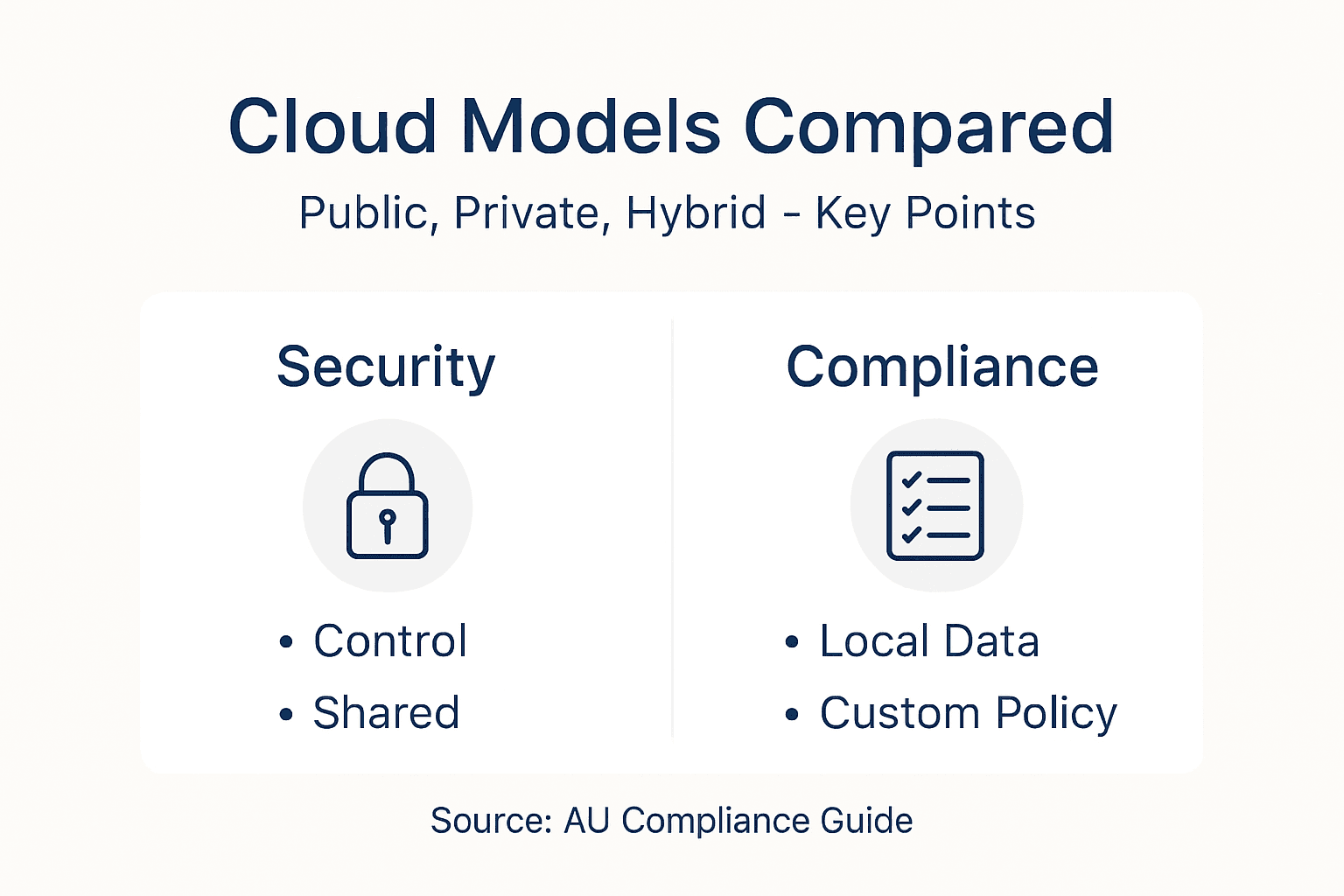
Australian regulatory frameworks mandate comprehensive cloud service provider assessments that go beyond traditional security evaluations. Organisations must conduct thorough due diligence, examining providers’ compliance certifications, data centre locations, and ability to meet sector specific security requirements. This involves assessing encryption standards, access control mechanisms, incident response capabilities, and alignment with national cybersecurity guidelines. Regulated industries should prioritise providers demonstrating transparent security practices and a proven track record of maintaining compliance in complex technological ecosystems.
Pro tip: Develop a comprehensive cloud assessment matrix that systematically scores potential providers against your industry’s specific regulatory and security requirements.
Unlock Compliance and Efficiency with IT Start Cloud Solutions
Brisbane SMEs face pressing challenges when adopting cloud technologies such as navigating complex Australian compliance rules, ensuring data sovereignty, and mitigating cybersecurity risks. The need for scalable, secure, and compliant cloud infrastructure is critical for protecting sensitive data while boosting operational agility. At IT Start, we understand these pain points and provide tailored cloud solutions designed specifically for Brisbane businesses that demand rigorous security, seamless compliance with national standards, and enhanced flexibility.
Partnering with IT Start means you gain access to:
- Managed cloud services aligned with the Protective Security Policy Framework and Cyber Security Act 2024
- Expert guidance on selecting the right cloud model including IaaS, PaaS, and SaaS for your unique business needs
- Proactive security strategies focused on encryption, incident response, and continuous compliance monitoring
Ready to overcome cloud adoption hurdles and transform your business infrastructure with trusted local expertise? Begin your journey today by booking a free consultation with our specialists. Discover how IT Start’s comprehensive cloud solutions can help your SME enhance efficiency, ensure compliance, and stay protected. Contact us now at IT Start to get started and secure your business future.
Frequently Asked Questions
What are the main types of cloud services available for SMEs?
Cloud computing offers three primary service models: Infrastructure as a Service (IaaS), Platform as a Service (PaaS), and Software as a Service (SaaS). IaaS provides virtualized computing infrastructure, PaaS offers a complete platform for application development, and SaaS delivers software applications over the internet without local installation.
How can cloud solutions improve efficiency for small and medium enterprises?
Cloud solutions enhance efficiency by allowing businesses to dynamically adjust their technology resources, reducing operational costs. By outsourcing infrastructure management, companies can reallocate human resources to core business strategies, focus on productivity, and use real-time collaboration tools.
What compliance rules should SMEs consider when adopting cloud technologies?
SMEs must navigate compliance requirements such as data sovereignty, security certifications, and incident response protocols. It’s essential to ensure that cloud service providers meet Australian regulations and that sensitive data remains protected within local jurisdictions.
What security risks should SMEs be aware of when using cloud services?
Security risks include data breaches, multi-tenancy risks, and unauthorised access. SMEs should implement multi-layered security protocols like access controls and encryption while ensuring their cloud providers adhere to national cybersecurity standards.