

Australian businesses are facing a new era of responsibility as digital data flows grow in size and significance. More than 90 percent of Brisbane companies now rely on cloud or online systems, making data sovereignty a pressing concern for every industry. Knowing where and how information is kept is not only a matter of legal compliance but also one of protecting customer trust and business reputation. With constantly changing regulations, this guide uncovers what every Australian business leader needs to navigate data sovereignty with confidence.
Table of Contents
- Defining Data Sovereignty In Australia
- Australian Laws Shaping Data Storage
- Cloud Services And Local Data Residency
- Business Responsibilities And Compliance Steps
- Risks Of Non-Compliance And Practical Pitfalls
Contents: Data Sovereignty, Australian Laws & Compliance Steps
| Point | Details |
|---|---|
| Understanding Data Sovereignty | Brisbane businesses must recognise data as a strategic asset governed by local laws to protect sensitive information. |
| Compliance with Australian Legislation | Adhering to the Privacy Act 1988 and Data Availability and Transparency Act 2022 ensures legal compliance and builds customer trust. |
| Importance of Local Data Residency | Choosing cloud providers with Australian data centres is essential for maintaining control over data and minimising security risks. |
| Proactive Risk Management | Implementing comprehensive data protection practices can mitigate risks of non-compliance, promoting organisational resilience and stakeholder confidence. |
Defining Data Sovereignty in Australia
Data sovereignty represents a critical concept for Australian businesses navigating the complex landscape of digital information management. At its core, data sovereignty refers to the legal and regulatory framework that determines how data is collected, stored, processed, and protected within national boundaries. For Brisbane businesses, understanding this principle means recognising that data is not just a resource, but a strategic asset with legal implications.
In the Australian context, data sovereignty involves ensuring that data remains under national jurisdiction, protecting critical information from potential international interference or uncontrolled cross-border data transfers. This principle becomes particularly important when considering the sensitivity of business information, customer records, and proprietary operational data. By maintaining strict control over where data is stored and who can access it, Australian organisations can safeguard against potential security breaches and comply with stringent national regulations.
Beyond legal compliance, data sovereignty also intersects with broader cultural considerations. For instance, indigenous data sovereignty highlights the right of First Nations people to own and control data about their communities, emphasising that data is not just a technical commodity but a reflection of cultural identity and self-determination. For Brisbane businesses, this means developing a nuanced approach to data management that respects both legal requirements and ethical considerations.
Key aspects of data sovereignty for local businesses include:
- Keeping sensitive data stored on Australian servers
- Understanding international data transfer regulations
- Implementing robust local data protection protocols
- Ensuring compliance with Australian Privacy Principles
- Developing transparent data handling practices that protect both business and client interests
Australian Laws Shaping Data Storage
The Australian legislative landscape provides a comprehensive framework for data storage and protection, with several key regulations defining how businesses must manage sensitive information. The Privacy Act 1988 stands as a cornerstone of data governance, establishing clear guidelines for the collection, handling, and protection of personal data across government and private sectors. For Brisbane businesses, understanding these legal requirements is not just about compliance, but about building trust and demonstrating a commitment to protecting customer information.

One of the most significant recent developments in data regulation is the Data Availability and Transparency Act 2022, which creates a structured approach to public sector data sharing. This legislation introduces sophisticated mechanisms for controlling and monitoring data access, ensuring that sensitive information is shared responsibly and with appropriate safeguards. The Act represents a crucial evolution in how Australian organisations approach data management, balancing the need for information accessibility with robust privacy protections.
For local Brisbane businesses, navigating these legal requirements means implementing comprehensive data management strategies that align with national standards. This involves more than just technical compliance. Businesses must develop robust internal policies that:
- Understand and implement the Australian Privacy Principles
- Establish clear data collection and consent mechanisms
- Create secure data storage and transmission protocols
- Develop transparent data handling and breach notification procedures
- Regularly audit and update data management practices
The legal landscape continues to evolve, with comprehensive data protection practices becoming increasingly critical for maintaining business credibility. Businesses that proactively engage with these regulations will not only avoid potential legal complications but also demonstrate their commitment to protecting customer and stakeholder interests.
Cloud Services and Local Data Residency
Data residency has become a critical consideration for Brisbane businesses navigating the complex landscape of cloud services. Australia’s digital sovereignty strategy highlights the growing importance of local data infrastructure, emphasising the need for businesses to carefully evaluate where and how their data is stored and managed.
The increasing dependence on foreign cloud services presents significant challenges for national economic security, pushing Australian organisations to develop more robust local digital infrastructure. For Brisbane businesses, this means selecting cloud providers that not only meet technical requirements but also align with national data protection standards. The implications extend beyond mere technical compliance, touching on strategic considerations of data control, privacy, and potential geopolitical risks.
Key considerations for local data residency include:
- Selecting cloud providers with Australian data centres
- Understanding data transfer and storage regulations
- Evaluating the physical and legal location of data servers
- Assessing potential cross-border data access risks
- Ensuring compliance with Australian Privacy Principles
Comprehensive cloud service strategies have become essential for maintaining robust data sovereignty in an increasingly complex digital landscape. Brisbane businesses must approach cloud services with a strategic mindset, recognising that data residency is not just a technical decision, but a critical aspect of organisational risk management and strategic planning.
Business Responsibilities and Compliance Steps
Data compliance represents a critical obligation for Brisbane businesses navigating the complex regulatory landscape of information management. Businesses subject to the Privacy Act 1988 must meticulously adhere to the Australian Privacy Principles, which provide comprehensive guidelines for handling personal information throughout its lifecycle.
The regulatory framework extends beyond basic data protection, requiring organisations to implement robust mechanisms for data governance. Under the Data Availability and Transparency Act 2022, businesses must obtain specific accreditations and follow strict protocols for data sharing, ensuring that information exchanges occur with appropriate privacy safeguards and organisational accountability.
Key compliance steps for Brisbane businesses include:
- Conducting comprehensive privacy impact assessments
- Developing clear data handling and consent policies
- Implementing secure data storage and transmission protocols
- Training staff on privacy and data protection requirements
- Establishing transparent breach notification procedures
- Regularly auditing data management practices
Proactive IT security compliance strategies have become essential for managing regulatory risks in an increasingly complex digital environment. By treating data protection as a strategic priority, Brisbane businesses can transform compliance from a legal obligation into a competitive advantage that builds trust with customers and stakeholders.
Risks of Non-Compliance and Practical Pitfalls
Data non-compliance represents a significant threat to Brisbane businesses, with potential consequences that extend far beyond mere financial penalties. Non-compliance with the Privacy Act 1988 can result in substantial legal and reputational risks, including hefty financial penalties that could potentially cripple small to medium enterprises.
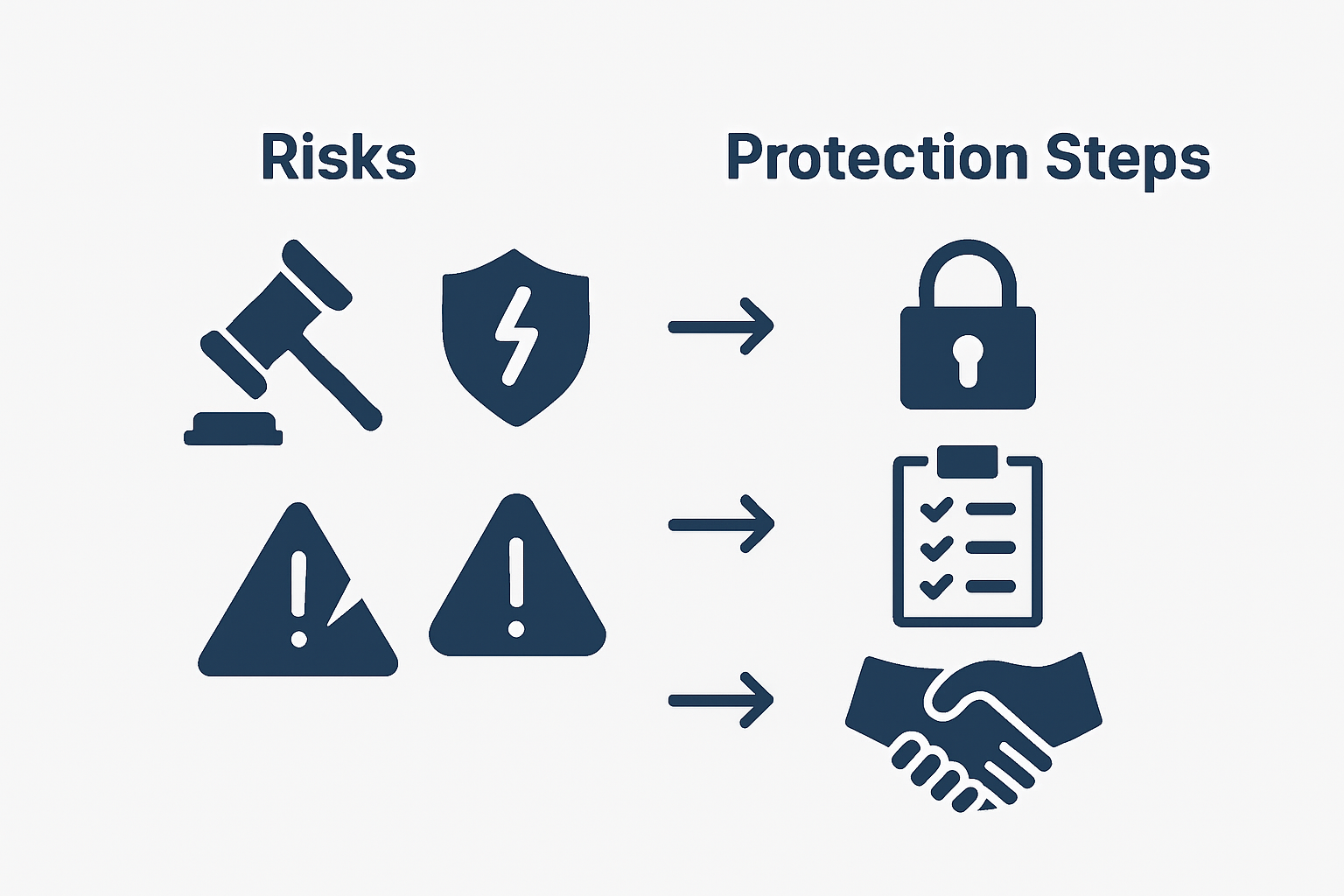
Violations of data access regulations, such as those outlined in the Telecommunications (Interception and Access) Act 1979, carry serious legal implications. Businesses can face complex legal challenges that might involve significant financial penalties, potential criminal charges, and long-term damage to their professional reputation and customer trust.
Practical pitfalls that Brisbane businesses must carefully navigate include:
- Inadequate data protection mechanisms
- Incomplete or unclear privacy policies
- Insufficient staff training on data handling
- Lack of robust breach notification protocols
- Inconsistent record-keeping practices
- Failure to conduct regular compliance audits
Comprehensive IT security compliance strategies provide essential protection against these potential risks, transforming regulatory requirements from a potential threat into a strategic opportunity for building organisational resilience and customer confidence.
Strengthen Your Data Sovereignty with Trusted Local IT Solutions
Australian businesses in Brisbane face growing challenges in protecting sensitive information, ensuring compliance with national regulations, and managing data residency risks. The complex demands of the Privacy Act 1988 and the Data Availability and Transparency Act 2022 require a strategic, proactive approach to IT management that safeguards your data and upholds your customers’ trust. Your business cannot afford to navigate these legal and technical requirements alone.
At IT Start, we specialise in helping Brisbane businesses meet these challenges through tailored managed IT support, secure cloud solutions hosted on Australian servers, and expert cybersecurity services aligned with Australian Privacy Principles. Our local expertise and SMB 1001 Gold certification mean we understand the critical importance of data sovereignty and compliance in your industry. Don’t risk costly penalties or reputational harm by delaying your data management strategy.
Take control of your data compliance today by contacting our team for a free assessment. Discover how IT Start can help you securely manage your business data while maintaining full compliance with Australian laws through a customised IT roadmap. Reach out now via contact us and start building a secure, compliant digital future for your Brisbane business.
Frequently Asked Questions
What is data sovereignty, and why is it important for businesses?
Data sovereignty refers to the legal and regulatory framework governing how data is collected, stored, protected, and processed within national boundaries. For businesses, it is important because it helps safeguard sensitive information from international risks and ensures compliance with local laws.
How do Australian laws influence data storage for businesses?
Australian laws, including the Privacy Act 1988 and the Data Availability and Transparency Act 2022, establish guidelines for how businesses must handle and protect personal information, ensuring that they maintain compliance and build trust with customers.
What are the key responsibilities for businesses regarding data compliance?
Businesses must conduct privacy impact assessments, develop clear data handling policies, implement secure storage and transmission protocols, and regularly audit their data management practices to comply with Australian regulations.
What are the risks of non-compliance with data protection laws?
Non-compliance can lead to substantial legal penalties, reputational damage, and trust issues with customers. Businesses may face financial challenges, complex legal disputes, or even criminal charges for violations related to data access and protection.
Recommended
- Data Privacy Explained: Protecting Your Brisbane Business – IT Start
- 7 Essential Data Protection Tips for Brisbane Businesses – IT Start
- IT Compliance Explained: What Brisbane Businesses Need – IT Start
- Why Is Cybersecurity Important? Complete Guide for SMEs – IT Start
- Understanding Employee Privacy Policies in Canada – Probe IT