

Trying to run a small business in Brisbane without tackling your IT risks can leave you exposed to unexpected disruptions and costly security threats. Local enterprises face daily decisions about which systems to trust and how to protect valuable data. By exploring technology landscape evaluation and clear risk management strategies, you will discover practical ways to safeguard your operations and make smarter choices about IT managed services.
Table of Contents: IT Managed Services Guide for Brisbane SMBs
- Step 1: Define Your Business’s IT Needs And Risks
- Step 2: Assess Local Service Providers’ Expertise
- Step 3: Compare Solution Features And Certifications
- Step 4: Verify Support Responsiveness And Transparency
- Step 5: Select IT Start For Strategic Partnership
Quick Summary
| Key Point | Explanation |
|---|---|
| 1. Assess IT needs and risks | Conduct a comprehensive evaluation of your technology infrastructure and potential vulnerabilities. |
| 2. Choose a suitable IT provider | Evaluate local IT service providers based on their expertise, understanding of your sector, and credentials. |
| 3. Compare service features | Use a structured approach to compare providers’ technical capabilities, certifications, and service offerings. |
| 4. Verify support responsiveness | Investigate potential providers’ communication protocols, response times, and transparency during technical support. |
| 5. Establish a strategic partnership | Select a managed services provider that aligns with your business goals and offers proactive, tailored support. |
Step 1: Define your business’s IT needs and risks
Identifying and understanding your small business’s IT requirements and potential vulnerabilities is crucial for creating a robust technology strategy. This process involves thoroughly assessing your current technological infrastructure, operational dependencies, and potential cybersecurity risks.
To effectively define your IT needs, start by conducting a comprehensive technology landscape evaluation. This means mapping out all existing digital systems, hardware, software, and network configurations your business currently uses. Risk assessment tools can help you systematically catalogue these elements and identify potential gaps or weaknesses.
Key areas to assess include:
- Current hardware and software inventory
- Network infrastructure and connectivity
- Data storage and management systems
- Cybersecurity current state
- Compliance requirements for your industry
Businesses should prioritise understanding their unique technological vulnerabilities. Some critical questions to ask include: How dependent are your operations on digital systems? What would happen if critical systems failed? What types of cyber threats are most likely to impact your specific business model?
Effective risk management means calculating potential consequences and balancing control costs against potential business impact.
Prioritise your IT needs based on their potential business disruption. Not all risks are equal, so focus on those that could most significantly interrupt your operations or expose sensitive data.
Here’s how business IT risks and impacts can be prioritised:
| Risk Type | Example Impact | Priority Consideration |
|---|---|---|
| Data breach | Loss of customer trust, fines | High – affects core data integrity |
| Hardware failure | Service disruption, downtime | High – halts business operations |
| Software vulnerability | Exploitable entry for cyber attacks | Medium – can be patched or updated |
| Network outage | Productivity and sales reduction | High – immediate business interruption |
| Compliance non-adherence | Legal or financial penalties | High – regulatory impact |
Pro tip: Consider engaging a local Brisbane IT professional who understands Queensland’s specific small business technology landscape for a more nuanced risk assessment.
Step 2: Assess local service providers’ expertise
Identifying the right local IT managed services provider requires a systematic approach to evaluating their professional credentials and understanding their specific capabilities. Your goal is to find a provider who not only meets technical requirements but also understands the unique challenges of small businesses in Brisbane and Queensland.
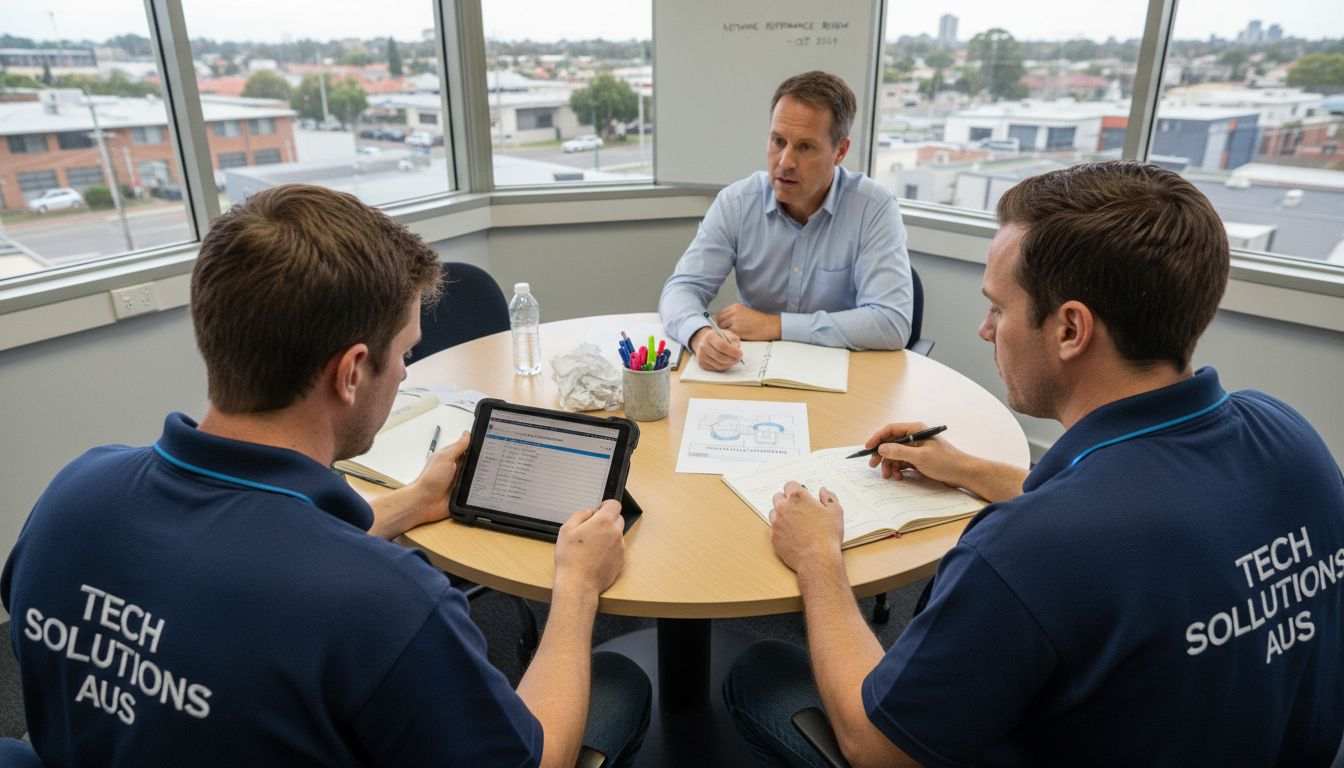
Start by examining potential providers’ professional qualifications. Professional accreditation networks can help verify the technical expertise and credibility of IT service providers. Look for certifications, industry memberships, and documented experience working with businesses similar to yours.
Key assessment criteria include:
- Years of operational experience
- Industry-specific technical certifications
- Local business references
- Understanding of Brisbane and Queensland business landscapes
- Range of services offered
- Cybersecurity and compliance expertise
Beyond technical credentials, evaluate the provider’s communication approach and cultural alignment. A great IT managed services partner should feel like an extension of your team, not just an external vendor. This means they should demonstrate:
- Proactive problem-solving skills
- Clear and transparent communication
- Responsiveness to your specific business needs
- Ability to explain technical concepts in plain language
Selecting the right IT managed services provider is about finding a strategic partner who understands your business’s unique technological ecosystem.
Consider scheduling initial consultations with 2-3 providers to discuss your specific requirements. This allows you to assess their expertise, communication style, and potential fit for your business.
Pro tip: Request detailed case studies or references from local small businesses in similar industries to gain deeper insights into each provider’s real-world performance.
Step 3: Compare solution features and certifications
Comparing IT managed services requires a systematic approach to evaluating technical capabilities, service offerings, and professional credentials. Your goal is to identify a provider that not only meets your specific technological needs but also demonstrates verifiable expertise through industry-recognised certifications.
Vendor certifications serve as critical indicators of a provider’s technical competence and commitment to industry standards. When comparing potential providers, look for globally recognised credentials that demonstrate depth of expertise across key technological domains.
Key certification categories to evaluate include:
- Cloud infrastructure credentials
- Cybersecurity qualifications
- Network and systems management certifications
- Vendor-specific technical badges
- Industry compliance credentials
Beyond individual certifications, assess the comprehensive service capabilities and technological compatibility of each provider. This means examining how their technical offerings align with your specific business requirements, including:
- Scalability of solutions
- Integration capabilities with existing systems
- Depth of technical support
- Proactive monitoring and maintenance approaches
- Incident response frameworks
Selecting an IT managed services provider is about finding a partner with proven technical expertise and a holistic understanding of your business’s technological ecosystem.
Consider creating a detailed comparison matrix that scores potential providers across multiple dimensions, including technical certifications, service features, and alignment with your specific business needs.
Use this matrix to compare potential IT providers:
| Criteria | Provider A | Provider B |
|---|---|---|
| Local business expertise | In-depth Brisbane knowledge | General Queensland experience |
| Certifications | Microsoft, AWS, CISSP | Cisco, CompTIA |
| Response speed | Under 1 hour | 2-4 hours |
| Communication style | Direct, clear, proactive | Formal, scheduled check-ins |
Pro tip: Request detailed documentation of a provider’s most recent certifications and ask how they maintain their technical credentials through ongoing professional development.
Step 4: Verify support responsiveness and transparency
Assessing an IT managed services provider’s support infrastructure is crucial for ensuring your business receives timely, effective technological assistance when challenges arise. Your objective is to thoroughly evaluate their communication protocols, response times, and transparency mechanisms.
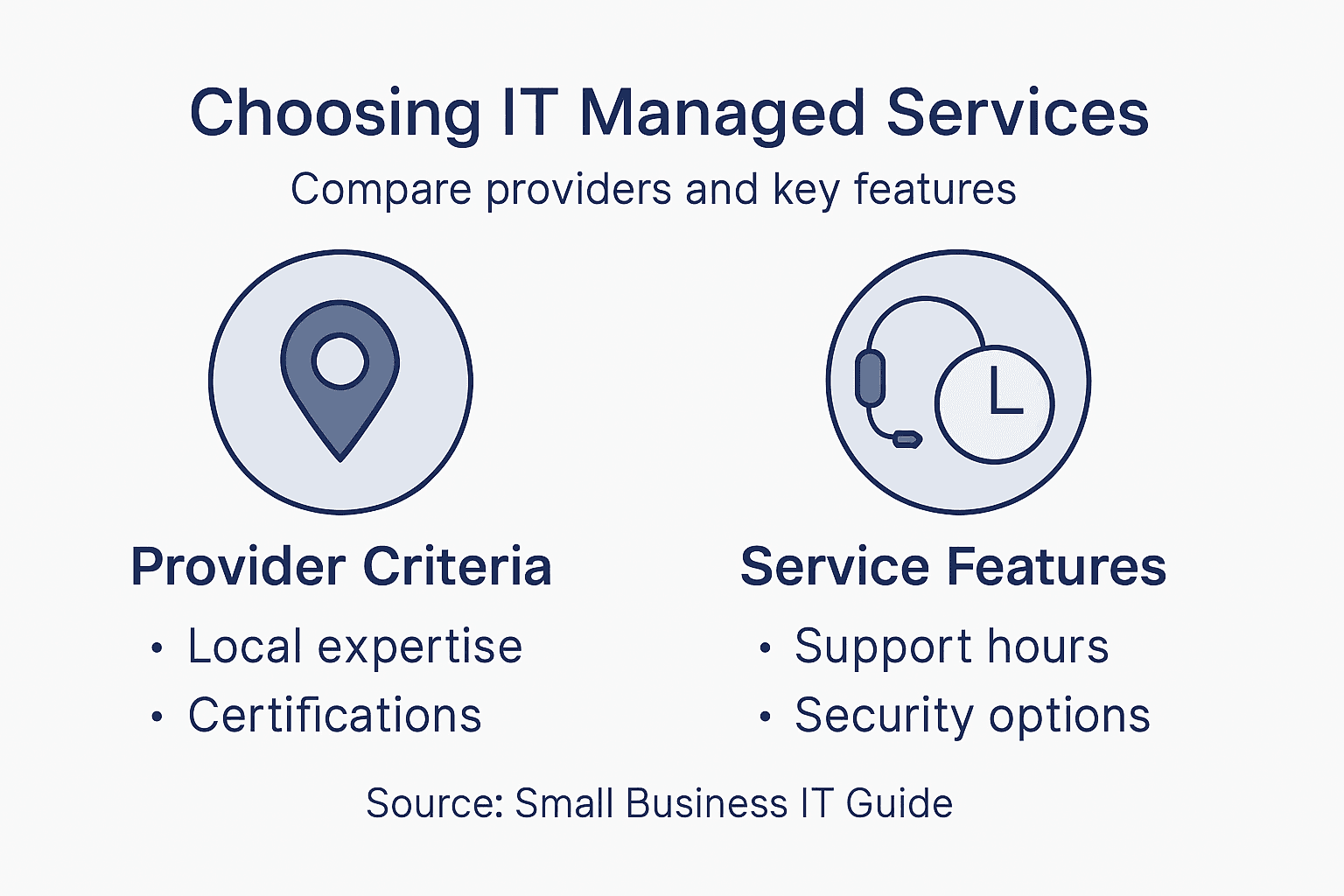
Service request processes play a critical role in determining the quality of technical support. Small businesses should carefully examine how potential providers manage incident reporting, track support tickets, and communicate resolution strategies.
Key transparency indicators to investigate include:
- Defined service level agreements (SLAs)
- Average incident response times
- Escalation protocols
- Real-time status tracking capabilities
- Comprehensive reporting mechanisms
Beyond technical metrics, evaluate the provider’s communication approach and support philosophy. This involves understanding how they:
- Communicate during critical incidents
- Provide detailed post-resolution reports
- Offer proactive system health updates
- Handle unexpected technological challenges
- Maintain open lines of communication
Effective IT support transcends technical resolution it requires transparent, consistent, and empathetic communication throughout the support journey.
Consider requesting sample support documentation, conducting reference checks with existing clients, and potentially performing a simulated support scenario to test their responsiveness and professionalism.
Pro tip: Request a detailed walkthrough of their support ticketing system and ask about typical resolution timeframes for different types of technological issues.
Step 5: Select IT Start for strategic partnership
Choosing the right IT managed services partner is more than a transactional decision it’s about establishing a strategic relationship that supports your business’s technological growth and resilience. IT Start represents a comprehensive solution designed specifically for Brisbane and Queensland small businesses seeking reliable, proactive technological support.
Strategic business partnerships require careful evaluation of alignment, capabilities, and long-term potential. IT Start distinguishes itself through a tailored approach that goes beyond standard managed services, offering holistic technological support aligned with your specific business objectives.
Key strategic advantages of partnering with IT Start include:
- Local Brisbane and Queensland expertise
- Proactive technological monitoring
- Customised IT infrastructure solutions
- Comprehensive cybersecurity protection
- Scalable support mechanisms
Evaluate IT Start’s potential by examining their strategic partnership approach and technological compatibility. This involves understanding how they:
- Align technological solutions with business goals
- Provide flexible, adaptive support models
- Demonstrate industry-specific knowledge
- Offer transparent communication channels
- Support ongoing technological innovation
A true technological partner does more than solve problems they anticipate and prevent them, becoming an extension of your business strategy.
Consider scheduling an initial consultation to discuss your specific technological requirements, allowing you to experience their collaborative approach and assess their potential as a strategic partner.
Pro tip: Request a detailed overview of their past client success stories and technological transformation case studies to understand their strategic partnership capabilities.
Partner with IT Start for Brisbane Small Business IT Success
Choosing the best IT managed services for your small business means addressing key challenges such as managing cybersecurity risks, ensuring responsive support, and finding a provider who truly understands your Brisbane-based company. The article highlights the importance of local expertise, clear communication, and certified technical solutions to protect your data and maintain business continuity.
At IT Start, we specialise in delivering tailored IT support, cloud solutions, and cybersecurity services designed specifically for Queensland small businesses. Our proactive approach means you get transparent, timely service backed by industry-leading certifications like SMB 1001 Gold. We act as a strategic technology partner by aligning IT solutions with your unique business goals and compliance needs.
Ready to secure reliable, expert-managed IT support that helps reduce risks and keeps your operations running smoothly? Explore how our managed IT services can bring you peace of mind today. Take the next step with a free consultation by contacting us at IT Start Brisbane to see how our local knowledge and proven expertise will empower your business to thrive.
Frequently Asked Questions
How do I define my small business’s IT needs?
To define your small business’s IT needs, conduct a thorough evaluation of your current technology landscape. Map out existing systems, hardware, and software, then identify any vulnerabilities or risks that could impact operations.
What should I look for in a local IT managed services provider?
When selecting a local IT managed services provider, examine their professional qualifications, industry experience, and understanding of small business challenges. Schedule initial consultations with multiple providers to assess their communication style and ability to meet your specific requirements.
How can I compare different IT managed services?
Compare IT managed services by creating a matrix that evaluates their technical capabilities, service offerings, and certifications. Score each provider across essential criteria, such as local expertise and responsiveness, to make an informed decision.
What indicators show a provider’s support responsiveness?
Indicators of a provider’s support responsiveness include defined service level agreements, average incident response times, and escalation protocols. Assess their communication approach by asking for documentation on their support ticketing process and typical resolution timeframes.
How can I ensure a good partnership with an IT managed services provider?
To ensure a good partnership, evaluate the provider’s ability to align IT solutions with your business goals. Start by discussing your technological requirements in an initial consultation, observing how they propose customized support and proactive communication.
Recommended
- Managed IT Services: Complete Guide for Brisbane SMBs – IT Start
- 8 Best Cybersecurity Solutions for Small Business – Expert Comparison 2025 – IT Start
- Why Managed IT Services: Complete Guide for Brisbane SMEs – IT Start
- 7 Main Types of Managed Services for Brisbane Businesses – IT Start
- 7 Beispiele flexibler Bürolösungen für KMU und Startups | ProOffice Business Center Blog
- 7 Tipologie di minacce informatiche e soluzioni per PMI SaaS – Security Hub
- Salīdzinājums: datoru servisa pakalpojumi Latvijā – Ekspertu salīdzinājums 2026