
More than 60 percent of Australian small businesses have experienced a cybersecurity incident in the past year, highlighting how digital threats are a growing concern across the country. Whether you own a Brisbane café or manage a local consultancy, overlooking IT security can put your data and reputation at risk. This straightforward guide steps through how any Australian business can assess IT needs, set up smart monitoring, and build a proactive defence—all without feeling overwhelmed by jargon or complexity.
Table of Contents
- Stage 1: Assess Business IT Needs And Key Risks
- Stage 2: Establish Monitoring Tools And Policies
- Stage 3: Configure Real-Time Alerts And Reporting
- Stage 4: Review And Optimise Monitoring Processes
- Stage 5: Verify System Reliability And Compliance
Quick Summary
| Key Insight | Explanation |
|---|---|
| 1. Conduct a thorough risk assessment | Systematically analyse IT infrastructure to identify vulnerabilities and operational requirements. |
| 2. Implement effective monitoring tools | Use strategic technologies for real-time threat detection, user behaviour monitoring, and incident response. |
| 3. Configure precise alert systems | Establish tiered alerts that differentiate between minor and critical security events for effective response. |
| 4. Regularly review monitoring processes | Continuously assess and improve monitoring tools based on performance metrics and emerging threats. |
| 5. Ensure compliance through regular audits | Conduct internal audits to evaluate systems against compliance standards and implement automated tools for ongoing checks. |
Stage 1: Assess business IT needs and key risks
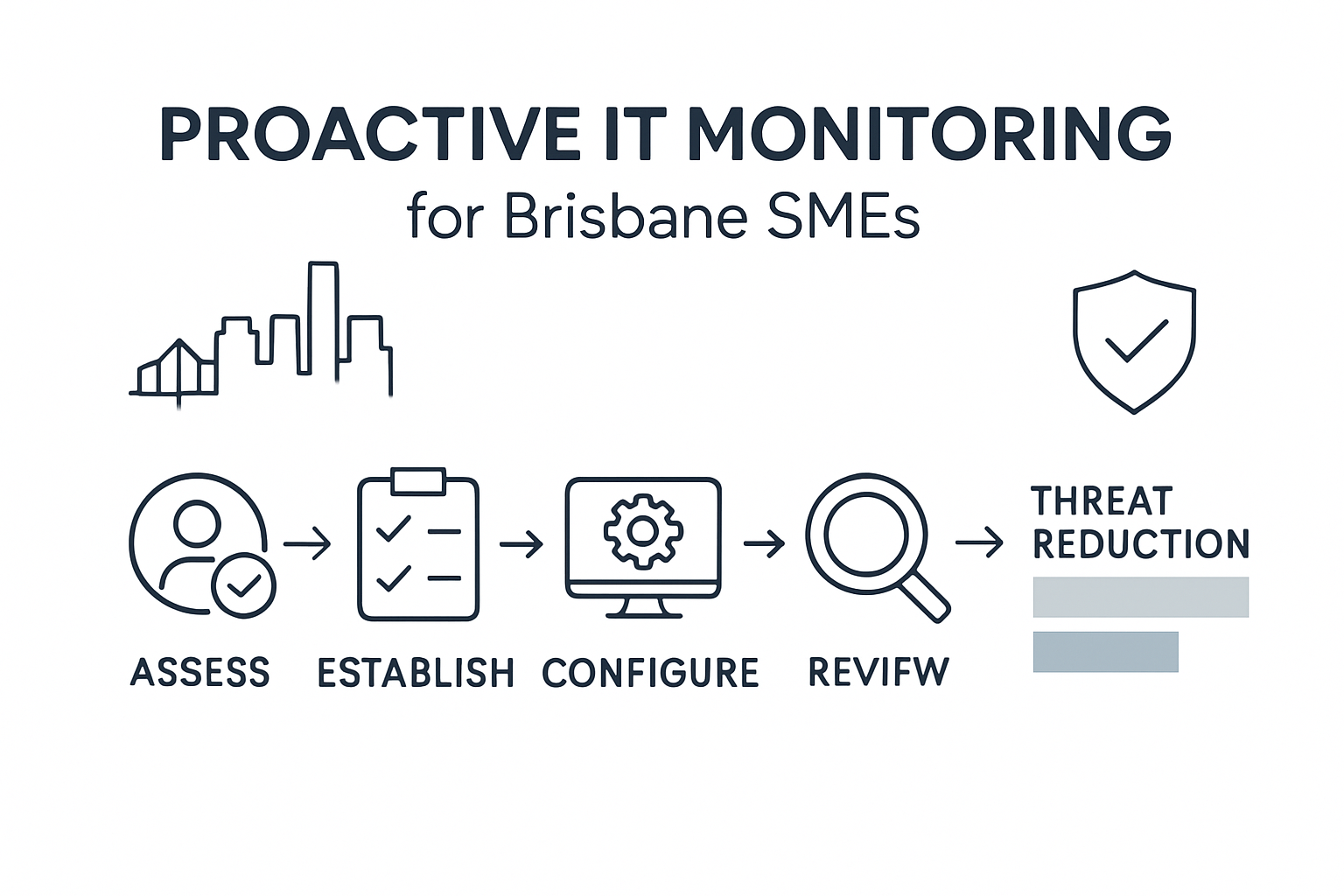
Assessing your Brisbane small business’s IT infrastructure begins with a systematic understanding of potential vulnerabilities and operational requirements. Developing a comprehensive risk assessment strategy allows you to proactively identify potential cybersecurity challenges before they become critical problems.
The AssessITS framework provides a structured methodology for organisations to systematically analyse and mitigate IT risks, aligning with international standards like NIST and ISO. When conducting your assessment, focus on several key areas: data sensitivity, current network architecture, existing security protocols, and potential threat vectors specific to your business sector.
Start by mapping out your entire digital ecosystem. This includes cataloguing all hardware devices, software applications, cloud services, and network connections used in your business operations. Pay special attention to endpoints like employee laptops, mobile devices, and remote access points which often represent significant security risks. Prioritise identifying potential vulnerabilities such as outdated software, unpatched systems, and weak authentication mechanisms. A strategic cybersecurity assessment for Brisbane businesses will help you develop a targeted approach to protecting your critical business assets.
Warning: Never assume your current IT setup is secure simply because you haven’t experienced a breach. Cybersecurity threats evolve rapidly, and proactive assessment is your best defence against potential digital risks.
Stage 2: Establish monitoring tools and policies
Establishing robust IT monitoring tools and policies is crucial for protecting your Brisbane small business from potential cybersecurity threats. This stage involves implementing strategic technologies and frameworks that provide comprehensive visibility into your digital infrastructure.
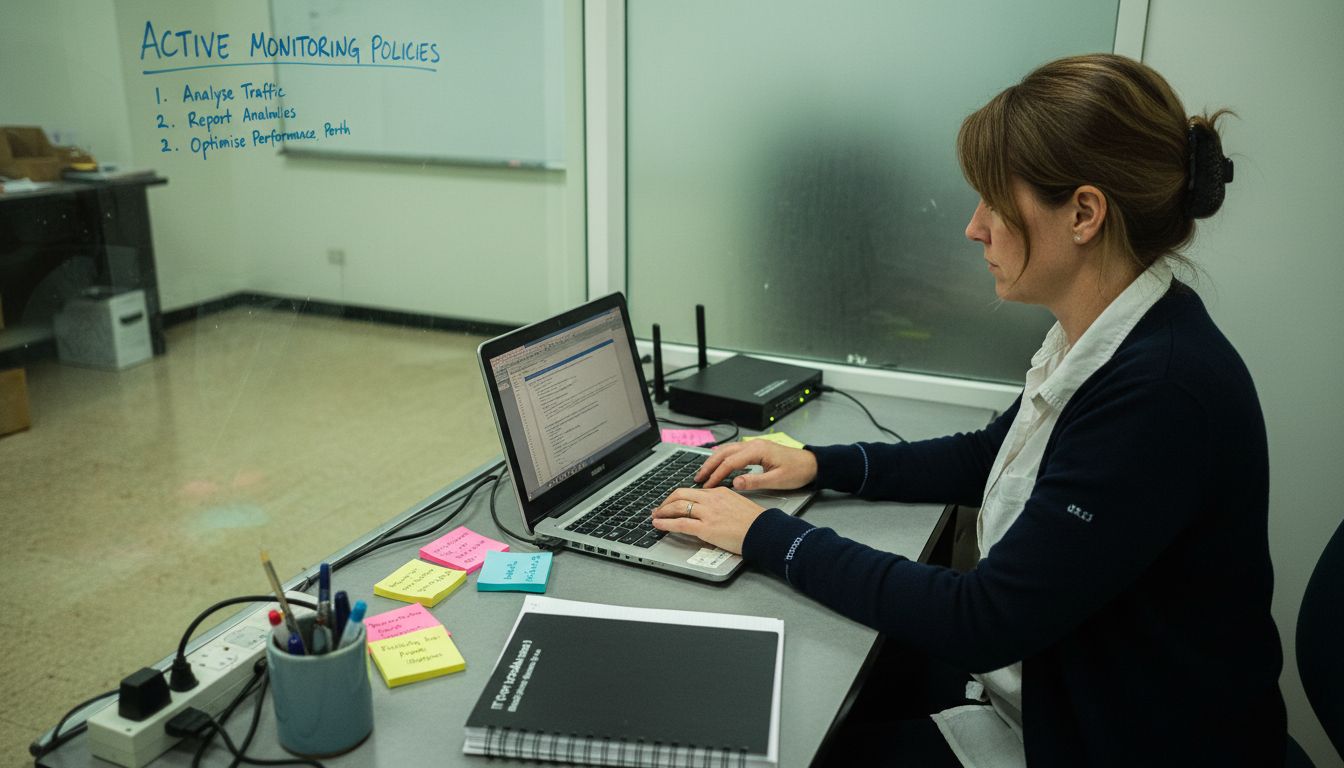
Modern cybersecurity strategies increasingly leverage advanced technologies. Research into AI and machine learning technologies highlights innovative approaches for Australian SMEs to enhance their monitoring capabilities. When selecting monitoring tools, prioritise solutions that offer real time threat detection, network traffic analysis, user behaviour monitoring, and automated incident response mechanisms.
Start by selecting monitoring tools that integrate seamlessly with your existing IT infrastructure. These should include endpoint protection platforms, network monitoring software, intrusion detection systems, and security information and event management (SIEM) solutions. Cybersecurity challenges specific to Australian small businesses emphasise the importance of tailored monitoring approaches that balance comprehensive protection with practical implementation.
Warning: Avoid tool overload. Select monitoring solutions that provide clear actionable insights rather than drowning your team in unnecessary alerts. The goal is intelligent, strategic monitoring that supports your business operations while maintaining robust security standards.
Stage 3: Configure real-time alerts and reporting
Configuring real-time alerts and reporting is a critical step in creating a proactive cybersecurity strategy for your Brisbane small business. This process transforms your monitoring tools from passive observers into active defenders of your digital infrastructure.
The AssessITS framework provides practical evaluation metrics that enable organisations to establish sophisticated alert configurations. When setting up your real-time monitoring system, focus on creating tiered alert levels that match the severity and potential impact of different security events. This means developing distinct notification protocols for minor system irregularities versus critical security breaches.
Advanced AI and machine learning technologies are revolutionising how Australian SMEs approach alert configurations. Implement a system that not only detects potential threats but also provides contextual information to help your team quickly assess and respond to security incidents. Prioritise alerts that offer clear actionable insights such as the specific system affected, potential vulnerability details, and recommended immediate response steps.
Warning: Avoid alert fatigue by fine tuning your notification thresholds. Too many low priority alerts can desensitise your team and potentially cause critical warnings to be overlooked. The goal is a smart, focused alerting system that provides meaningful information without overwhelming your staff.
Stage 4: Review and optimise monitoring processes
Reviewing and optimising your monitoring processes is an essential ongoing strategy for maintaining robust cybersecurity protection for your Brisbane small business. This stage involves critically analysing your existing monitoring infrastructure and implementing continuous improvements based on emerging threats and technological advancements.
Cybersecurity challenges specific to Australian small businesses underscore the importance of developing adaptive monitoring strategies. Start by conducting regular comprehensive assessments of your current monitoring tools and processes. This includes reviewing alert logs, analysing false positive rates, evaluating response times, and identifying any potential gaps in your security coverage.
Advanced AI and machine learning technologies are transforming how organisations approach process optimization. Implement a systematic review cycle that includes quarterly assessments of your monitoring infrastructure, tracking key performance indicators such as threat detection accuracy, response efficiency, and overall system resilience. Consider leveraging machine learning algorithms that can help automatically identify patterns and suggest improvements to your monitoring strategy.
Warning: Avoid becoming complacent with your existing monitoring processes. Cybersecurity threats evolve rapidly, and what worked effectively six months ago might be obsolete today. Maintain a proactive approach of continuous learning and adaptation to stay ahead of potential security risks.
Stage 5: Verify system reliability and compliance
Verifying system reliability and compliance is a critical final step in establishing a robust cybersecurity framework for your Brisbane small business. This process ensures your monitoring infrastructure not only functions effectively but also meets essential regulatory and industry standards.
The AssessITS framework provides comprehensive guidelines for systematically evaluating system reliability and ensuring compliance with established IT and cybersecurity standards. Begin by conducting thorough internal audits that assess your current systems against key performance metrics such as uptime, response accuracy, data integrity, and potential vulnerability points. Focus on creating detailed documentation that demonstrates your commitment to maintaining high security standards.
Technological advancements offer sophisticated approaches to compliance verification. Emerging AI models are transforming compliance assessment techniques, providing more nuanced and comprehensive evaluation methods. Implement automated compliance checking tools that can continuously monitor your systems against relevant Australian cybersecurity regulations and industry best practices. These tools can help identify potential gaps or non conformity issues before they become significant problems.
Warning: Compliance is not a one time checkbox exercise. Regulatory requirements and technological landscapes evolve rapidly. Maintain a proactive stance by scheduling regular compliance reviews and staying informed about changes in cybersecurity standards that might impact your business operations.
Elevate Your Brisbane SME’s IT Security with Expert Support
The challenges of maintaining proactive IT monitoring described in the guide highlight the urgent need for Brisbane small businesses to protect themselves against evolving cybersecurity threats. Key pain points such as assessing vulnerabilities, configuring smart real-time alerts, and ensuring ongoing compliance resonate deeply with business owners aiming to safeguard their digital assets without becoming overwhelmed. Understanding that outdated systems, alert fatigue, and rapid threat evolution can leave you exposed is critical.
At IT Start, we specialise in delivering managed IT support, cybersecurity services, and cloud solutions crafted specifically for small to medium enterprises in Queensland. With our local Brisbane expertise and adherence to high standards like SMB 1001 Gold certification, we provide strategic partnerships that help businesses confidently navigate every stage of IT monitoring. Whether you need a thorough risk assessment or smart monitoring tools that reduce noise and improve response times, our tailored approach ensures your IT infrastructure remains resilient and compliant.
Protect your business now: Explore how our proactive IT management can boost your security framework by requesting a free assessment or consultation at Contact IT Start. Take the first step to transform your IT monitoring with proven strategies that align perfectly with the Proactive IT Monitoring Guide: Boost Security for Brisbane SMEs. Don’t wait for a breach to act—secure your operations today.
Frequently Asked Questions
How can I assess my small business’s IT vulnerabilities?
To assess your small business’s IT vulnerabilities, start by mapping out your digital ecosystem, including all hardware, software, and connections. Identify any outdated software or weak authentication methods within the next month to establish a baseline risk profile.
What monitoring tools should I consider for effective cybersecurity?
Consider implementing tools that provide real-time threat detection, network traffic analysis, and user behaviour monitoring. Begin by selecting two to three tools that integrate well with your existing infrastructure, ensuring they enhance your visibility without overwhelming your team.
How do I set up real-time alerts for my business’s security?
Set up real-time alerts by creating tiered notification protocols based on the severity of security events. Configure your system to distinguish between minor issues and critical breaches, aiming to complete this setup within the next two weeks.
What processes should I include in my ongoing monitoring review?
Include processes that assess your monitoring tools, analyze false positive rates, and evaluate response times. Conduct a review every quarter to identify improvement areas and ensure your systems adapt to evolving threats.
How can I ensure compliance with cybersecurity regulations?
To ensure compliance, conduct regular internal audits to measure your systems against key performance metrics such as data integrity and uptime. Schedule compliance reviews at least every six months to stay updated with regulatory changes and maintain high security standards.