

Cyber attacks hit nearly half of Australian businesses each year, exposing valuable data and disrupting operations. For companies in Brisbane, even a single vulnerability can open the door to significant financial loss or reputational damage. Learning how to assess risks, secure systems, and maintain strict controls offers real protection against these threats and helps build a resilient digital foundation for your business.
Table of Contents
- Step 1: Assess Current Data Risks And Vulnerabilities
- Step 2: Implement Robust Backup And Encryption Solutions
- Step 3: Apply Strict Access Controls And User Permissions
- Step 4: Monitor Systems And Detect Potential Threats
- Step 5: Review Security Measures For Compliance And Improvement
5 Critical Steps to Secure Business Data for Brisbane SMEs
| Key Point | Explanation |
|---|---|
| 1. Assess digital risks thoroughly | Map all digital assets and identify vulnerabilities to strengthen cybersecurity. |
| 2. Implement strong backups and encryption | Utilize onsite and offsite backups alongside strong encryption to protect sensitive data. |
| 3. Enforce strict access controls | Limit data interaction to authorized personnel through detailed access levels and multi-factor authentication. |
| 4. Continuously monitor for threats | Deploy monitoring tools to detect and respond to potential cybersecurity incidents quickly. |
| 5. Review security measures regularly | Conduct systematic evaluations to improve security infrastructure and maintain compliance with industry standards. |
Step 1: Assess current data risks and vulnerabilities
Assessing your business data risks starts with a strategic understanding of your current digital landscape and potential vulnerabilities. According to ASIC, organizations can leverage targeted cyber pulse surveys to comprehensively evaluate their cybersecurity controls and incident preparedness.
To begin your assessment, map out all digital assets your Brisbane business owns or operates. This includes computers, servers, mobile devices, cloud storage, customer databases, financial systems, and any networked equipment. Review each system for potential entry points that malicious actors might exploit. Pay special attention to areas like outdated software, weak password protocols, unprotected network access points, and employee devices that connect to your business systems.
The Australian Cyber Security Centre recommends conducting a thorough inventory of the data your business handles. Categorize information based on sensitivity levels protection requirements. High risk data like financial records customer personal information require more robust security measures compared to general operational documents.
Pro Tip: Consider performing a mock cyber attack scenario to identify potential weak points in your current security infrastructure before real threats emerge.
Once you have completed your initial risk assessment prepare to develop a targeted mitigation strategy that addresses the specific vulnerabilities unique to your business operations. The next step will involve implementing protective measures designed to neutralize the risks you have identified.
Step 2: Implement robust backup and encryption solutions
Securing your business data requires a comprehensive strategy focused on creating reliable backup systems and implementing strong encryption protocols. Australian Cyber Security Centre emphasizes the critical importance of understanding your organizational data and protecting it through appropriate security measures.
Start by establishing a multi layered backup strategy that includes onsite and offsite storage solutions. This means creating automatic backups of all critical business data to both local external hard drives and secure cloud storage platforms. According to ACSC, regular backups are essential for recovering operations during potential cybersecurity incidents like ransomware attacks.
For encryption, prioritize protecting sensitive information through strong encryption protocols. Utilize full disk encryption for all business computers and mobile devices. Implement end to end encryption for email communications and cloud storage platforms. Ensure all encryption keys are securely managed and periodically rotated to maintain optimal security.
Pro Tip: Test your backup and recovery systems quarterly to confirm they function correctly during an actual data emergency.

Your next step involves developing comprehensive access management protocols to control who can view and modify these encrypted backup systems.
Step 3: Apply strict access controls and user permissions
Protecting your business data requires implementing comprehensive user access management strategies that limit potential security risks. Australian Cyber Security Centre recommends establishing strict access controls to ensure only authorized personnel can interact with sensitive business information.
Begin by creating a detailed permissions matrix that maps out specific access levels for each employee role. This means developing granular access rights where staff members can only view and modify data directly relevant to their job responsibilities. For instance, your accounting team should have full access to financial systems while marketing personnel might have restricted viewing capabilities. Implement role based access control software that allows you to quickly assign and modify these permissions as your team evolves.
Additionally, ACSC advises implementing multi factor authentication across all business systems. This involves requiring multiple verification steps beyond traditional passwords such as temporary code generators mobile authentication apps or biometric checks. By adding these extra layers of security you significantly reduce the risk of unauthorized access even if login credentials are compromised.
Pro Tip: Regularly audit and update user permissions removing access for employees who have changed roles or left the organization.
Your next step involves training employees on the importance of maintaining strict access protocols and recognizing potential security threats.
Step 4: Monitor systems and detect potential threats
Effective cybersecurity requires continuous monitoring and proactive threat detection strategies to protect your Brisbane business from potential digital risks. Australian Cyber Security Centre emphasizes the critical importance of implementing robust system monitoring mechanisms to safeguard against emerging cyber threats.
Establish a comprehensive monitoring strategy by deploying advanced intrusion detection systems and security information event management software. These tools provide real time tracking of network activities tracking unusual login patterns unexpected data transfers or suspicious access attempts. Configure these systems to generate immediate alerts for potential security breaches enabling your team to respond quickly to any detected anomalies. Focus on monitoring critical areas such as user login attempts network traffic external communication channels and system configuration changes.
ACSC recommends implementing log management practices that record and analyze system activities. This means maintaining detailed logs of all digital interactions documenting timestamps user identities access attempts and system modifications. Regularly review these logs to identify potential security patterns or indicators of compromise that might suggest an ongoing or imminent cyber attack.
Pro Tip: Schedule weekly security reviews where your IT team comprehensively analyzes monitoring reports and investigates any flagged suspicious activities.
Your next step involves developing an incident response plan that outlines precise actions to take when potential security threats are detected.
Step 5: Review security measures for compliance and improvement
Conducting regular security reviews is crucial for maintaining robust cybersecurity defenses and ensuring your Brisbane business remains protected against evolving digital threats. Australian Cyber Security Centre recommends systematic assessments to identify potential vulnerabilities and improve overall security infrastructure.
Begin by developing a comprehensive security review framework that encompasses multiple evaluation dimensions. This includes assessing technical controls policy effectiveness employee awareness and alignment with current industry standards. Conduct quarterly comprehensive audits that examine your access management protocols encryption strategies backup systems and incident response capabilities. Create detailed checklists that cover key compliance requirements specific to your industry whether you operate in financial services healthcare or professional consulting sectors.
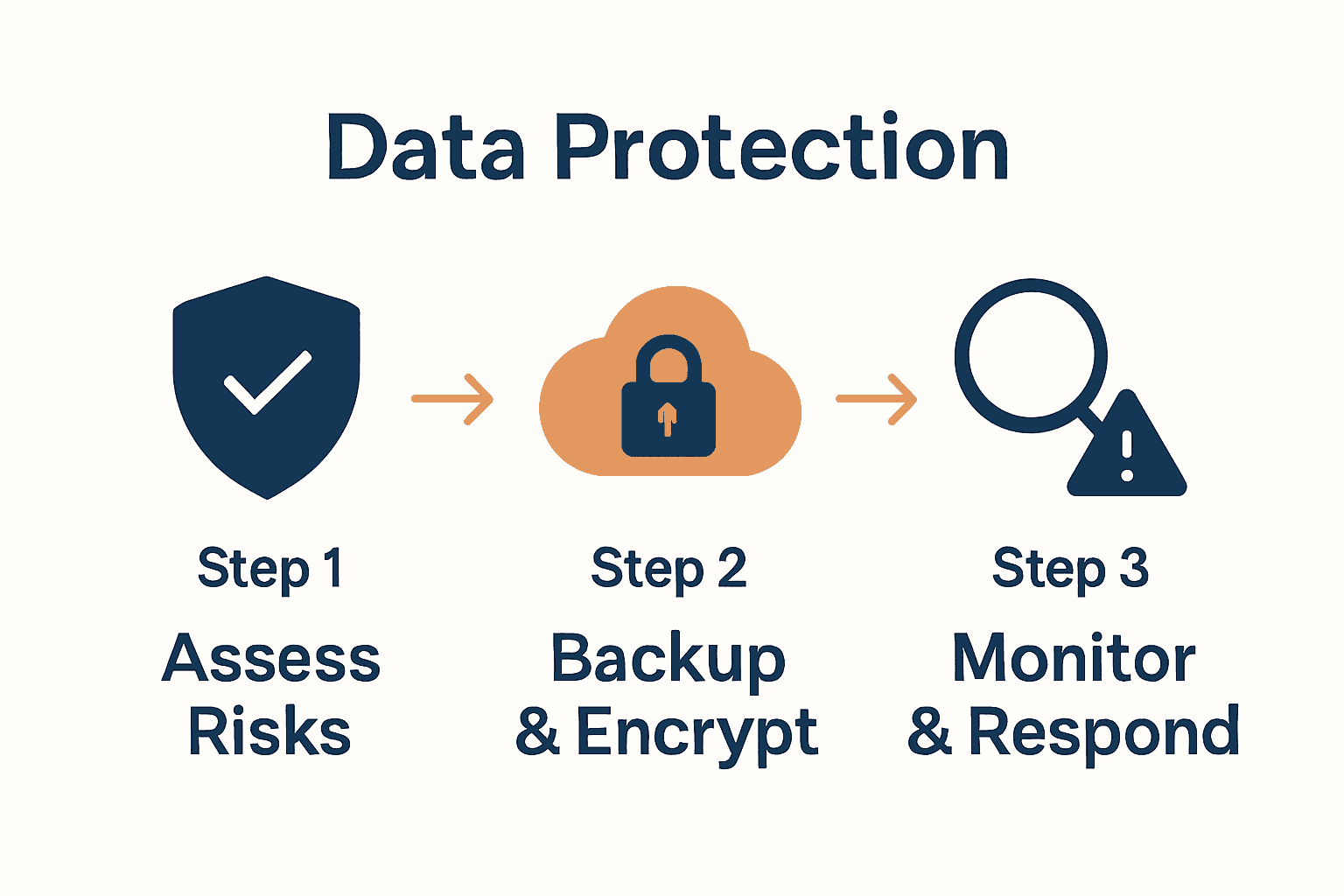
ACSC advises organizations to maintain documentation of all security assessments tracking progress identifying trends and demonstrating continuous improvement. Integrate understanding compliance protocols into your regular business processes ensuring that security reviews are not one time events but ongoing strategic activities.
Pro Tip: Consider engaging external cybersecurity professionals for an independent assessment to gain unbiased insights into your security posture.
Your final step involves creating a strategic roadmap for implementing improvements identified during these comprehensive security reviews.
Protect Your Brisbane Business Data with IT Start’s Expert Support
Securing your business data is no easy task. The challenges Brisbane SMEs face—ranging from identifying hidden vulnerabilities to enforcing strict access controls and timely threat detection—can quickly feel overwhelming. You want to avoid costly data breaches, maintain regulatory compliance, and keep your operations running smoothly without the constant worry of cyber risks.
At IT Start, we understand these pressures. Our managed IT support and cybersecurity services are tailored specifically for Brisbane businesses like yours. We offer strategic solutions including robust backup and encryption, access management, and continuous system monitoring. By partnering with us, you gain a proactive ally who can help you assess risks and implement effective protection measures with transparency and local expertise.
Ready to take control of your business data security? Discover how our certified professionals can craft a customised strategy built around your unique needs. Don’t wait until vulnerabilities become costly incidents. Contact IT Start today for a free consultation and start securing your business future. Visit our contact page to get started now or learn more about our managed IT support and cybersecurity services designed to keep your Brisbane SME safe and compliant.
Frequently Asked Questions
How can I assess the current data risks in my business?
Begin by mapping out all digital assets your business operates. Review each system for vulnerabilities, focusing on outdated software and weak password protocols, to identify potential entry points for malicious actors.
What steps should I take to implement effective backup solutions?
Establish a multi-layered backup strategy by creating automatic backups to both local hard drives and secure cloud storage. Ensure backups are scheduled regularly, at least once a day, to minimize data loss during cybersecurity incidents.
How can I manage access controls for my team effectively?
Create a detailed permissions matrix to define specific access levels for each employee role, ensuring they only access data relevant to their responsibilities. Regularly audit and update these permissions, especially when staff roles change or when team members leave.
What monitoring practices should I follow to detect potential threats?
Implement advanced intrusion detection systems to monitor network activities in real time. Regularly review and analyze activity logs to identify unusual patterns or potential security breaches, ideally on a weekly basis.
How often should I review my security measures?
Conduct comprehensive security reviews at least once every quarter. This will help you identify vulnerabilities and track compliance efforts, ensuring that your security infrastructure remains robust and up to date.
What is a good first step in developing an incident response plan?
Outline clear action steps for your team to take if a security threat is detected. Prioritize defining roles and responsibilities for responding to incidents, and ensure that all team members are familiar with these protocols.