

Cyber attacks cost Australian businesses billions each year, yet many organisations still lack a clear plan for responding to digital threats. For every Brisbane company, understanding how to transform uncertainty into action is non-negotiable. This practical guide breaks down each step so your team can tackle cyber incidents confidently, from first detection to full recovery, and keep your business running strong.
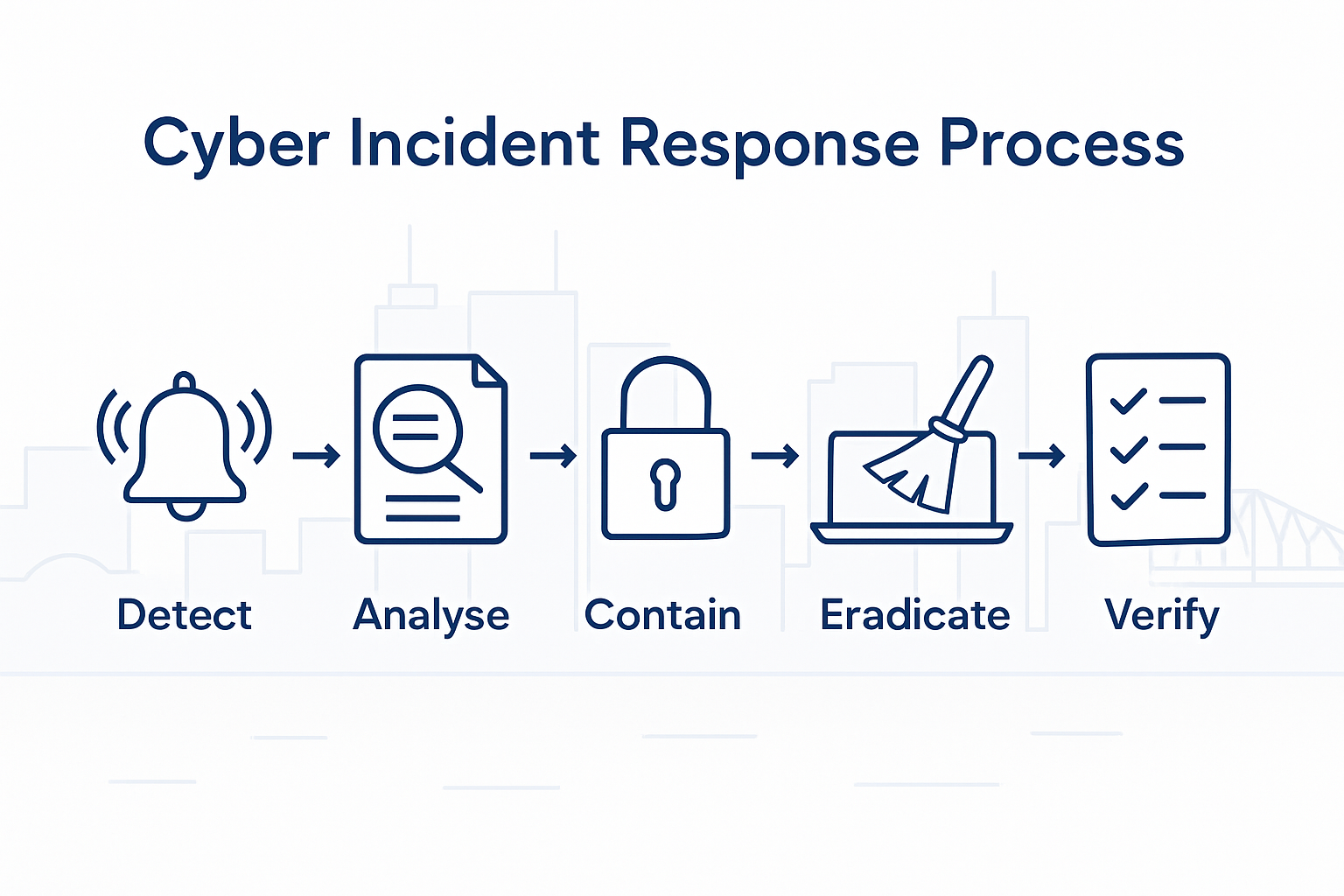
Contents: 5-Step Cyber Incident Response Plan for Brisbane SMBs
- Step 1: Establish Response Protocols And Train Your Team
- Step 2: Detect And Analyse Potential Cyber Threats
- Step 3: Contain Incidents To Minimise Business Impact
- Step 4: Eradicate Threats And Restore Critical Systems
- Step 5: Verify Resolution And Update Security Measures
Quick Summary
| Important Insight | Explanation |
|---|---|
| 1. Develop Clear Response Protocols | Create actionable guidelines to ensure your team knows how to respond to cyber threats swiftly and effectively. |
| 2. Implement Robust Threat Detection | Use monitoring tools to identify suspicious activities early, preventing potential cyber incidents from escalating. |
| 3. Contain Incidents Immediately | Quickly isolate affected systems to minimise operational disruption and prevent the threat from spreading. |
| 4. Conduct Thorough Forensic Analysis | Eradicate threats by fully understanding the attack vector and removing all traces of malicious activity. |
| 5. Establish Continuous Monitoring Practices | Develop a framework for real-time threat detection and updates to security measures following incidents. |
Step 1: Establish Response Protocols and Train Your Team
Creating robust cybersecurity response protocols isn’t just about having a fancy document. It’s about building a team that knows exactly what to do when a threat emerges. The goal here is straightforward: develop clear, actionable guidelines that transform your staff from potential vulnerability points into your organisation’s first line of defence.
Start by mapping out potential cyber incident scenarios specific to your Brisbane business. What might a data breach look like? How would a ransomware attack impact your operations? Australian Cyber Security Centre’s Exercise in a Box offers excellent simulation tools to help you think through these scenarios systematically. Create a step-by-step response plan that outlines roles responsibilities during an incident. Who alerts management? Who contacts external support? Who manages system isolation?
Training is where theory meets practice. Schedule regular cybersecurity awareness sessions where your team learns to recognise phishing attempts, understand secure password practices, and know the immediate steps to take if they suspect a breach. AUSCERT’s Incident Response Planning course provides structured training that can elevate your team’s readiness. Remember that cybersecurity is a collective responsibility everyone plays a crucial part in protecting your business’s digital assets.
Pro Tip: Document everything. Create a clear, accessible incident response manual that breaks down complex procedures into simple, actionable steps. This becomes your team’s reliable roadmap during high stress moments.
What comes next? Testing and refining your protocols through regular simulated cyber incidents to ensure your team stays sharp and prepared.
Step 2: Detect and Analyse Potential Cyber Threats
Detecting cyber threats requires a proactive and systematic approach that transforms your Brisbane business into a resilient digital fortress. Your primary objective is to develop keen threat detection skills that help you identify suspicious activities before they escalate into full scale security incidents.
Start by implementing robust monitoring tools that track network traffic unusual user behaviours and potential system vulnerabilities. Comprehensive cyber threat detection strategies recommend establishing baseline behaviour patterns for your digital ecosystem. This means understanding what normal looks like so you can quickly spot anomalies. Watch for red flags such as unexpected login attempts from unfamiliar locations multiple failed password attempts irregular data transfer volumes or suspicious network connections outside your typical operational hours.
Analysis is equally critical. When a potential threat is detected dont panic investigate systematically. Collect all relevant logs network traffic data and system records. Examine the timeline of events look for patterns and try to understand the potential attack vector. Are there signs of phishing? Potential malware infiltration? Unauthorized access attempts? Document everything meticulously create a clear chronology and assess the potential impact on your business systems and data.
Pro Tip: Consider using automated threat intelligence platforms that can provide real time insights and correlate data across multiple sources. These tools can significantly reduce your response time and help you stay ahead of emerging cyber threats.
What comes next? Developing a targeted response strategy based on your threat analysis findings that minimises potential damage and prevents future similar incidents.
Step 3: Contain Incidents to Minimise Business Impact
When a cyber incident strikes your Brisbane business, swift and strategic containment becomes your primary defence mechanism. Your goal is to isolate the threat quickly preventing its potential spread across your digital infrastructure and minimising operational disruption.
First isolate the affected systems immediately. This might mean disconnecting specific network segments unplugging compromised devices or temporarily disabling network access for particular user accounts. Australian cyber incident support guidelines recommend creating clear communication protocols that enable rapid decision making during these critical moments. Identify the precise scope of the incident by conducting an immediate preliminary assessment determine which systems networks or data repositories have been potentially compromised.

Documentation is crucial during containment. Record every action taken including timestamps system states and specific isolation measures. This creates a comprehensive forensic trail that will help your technical team understand the incident’s mechanics and prevent future similar breaches. Consider implementing network segmentation strategies that allow you to quarantine problematic areas without shutting down your entire operational ecosystem.
Pro Tip: Develop pre approved containment scripts and protocols before an actual incident occurs. Having these ready means your team can react instantly without wasting precious time figuring out procedures in the heat of the moment.
What comes next? Moving into a detailed investigation phase to understand the full extent of the breach and prepare for system recovery.
Step 4: Eradicate Threats and Restore Critical Systems
Eradicating cyber threats requires a methodical and comprehensive approach that goes beyond simply removing malicious code. Your objective is to completely eliminate the threat while ensuring your Brisbane business’s digital infrastructure remains stable and secure.
Advanced threat detection and response platforms offer sophisticated tools for systematically removing malware and compromised system components. Begin by conducting a thorough forensic analysis to understand the complete attack vector. Use specialised scanning tools to identify and remove all malicious software traces registry modifications and potential backdoors. This might involve completely reimaging affected systems wiping them clean and restoring from verified clean backup sources.
Recovery is not just about technical restoration but also about rebuilding system integrity. Patch all identified vulnerabilities update security configurations and implement stronger access controls. Verify the integrity of your restored systems through multiple layers of testing. Conduct comprehensive security scans run penetration tests and carefully monitor system behaviour for any lingering anomalies. Ensure that all critical business systems are brought back online with enhanced security measures that prevent similar incidents from recurring.
Pro Tip: Create a prioritised restoration plan before an incident occurs. Know exactly which systems are mission critical and establish clear protocols for their rapid recovery.
What comes next? Implementing long term preventative strategies and conducting a comprehensive post incident review to strengthen your overall cybersecurity posture.
Step 5: Verify Resolution and Update Security Measures
Verifying the complete resolution of a cyber incident is a critical phase that determines your Brisbane business’s true recovery and future resilience. Your primary goal is to conduct a comprehensive assessment that confirms the total elimination of threats and identifies potential vulnerabilities for future prevention.
Cybersecurity incident verification protocols recommend a multi layered validation approach. Start by running advanced security scans across all previously affected systems. Use forensic analysis tools to verify that no residual malware traces remain. Conduct thorough log reviews examining network traffic user activities and system interactions for any unusual patterns or potential reinfection indicators. Compare current system states against clean baseline configurations to ensure complete restoration.
Updating security measures goes beyond technical fixes. Develop a strategic improvement plan based on insights gained from the incident. This might involve implementing more robust access controls enhancing network segmentation upgrading endpoint protection systems and retraining staff on updated security protocols. Document all changes meticulously create detailed incident reports and review your overall cybersecurity strategy to address any systemic weaknesses uncovered during the investigation.
Pro Tip: Establish a continuous monitoring framework that allows real time threat detection and immediate response. Automated security platforms can provide ongoing validation and alert mechanisms.
What comes next? Conducting a comprehensive post incident review and developing long term strategic improvements to your organisational cybersecurity approach.
Strengthen Your Brisbane Business Against Cyber Threats Today
Brisbane SMBs face complex challenges in detecting, containing and eradicating cyber threats while maintaining smooth operations. This guide highlights critical pain points such as creating clear incident response protocols, developing staff training, rapid threat analysis and system recovery. At IT Start we understand the urgency of transforming these concerns into strategic strengths through proactive, tailored cybersecurity solutions delivered with local expertise and transparency.
Boldly protect your business with certified managed IT support and cutting-edge cloud and security services designed specifically for Queensland small to medium enterprises. Our team will help you design practical response frameworks and deploy automated monitoring tools to catch suspicious activity early. Avoid costly downtime by implementing pre approved containment protocols and prioritised restoration plans crafted with your industry needs in mind. Extend this to continuous verification and cyber resilience improvements underpinned by our SMB 1001 Gold standard commitment.
Ready to turn these insights into action and safeguard your digital infrastructure? Discover how IT Start can partner with you by requesting a free consultation or get expert advice on incident response planning at https://itstart.com.au/contact-us. Don’t wait until an attack disrupts your business schedule your cybersecurity assessment now and stay steps ahead of evolving threats.
Frequently Asked Questions
What should I include in my cybersecurity response protocols for my Brisbane SMB?
To create effective cybersecurity response protocols, develop clear, actionable guidelines that specify roles and responsibilities during a cyber incident. Start by mapping potential threat scenarios specific to your business and document a step-by-step response plan for your team.
How can I train my team to recognize and respond to cyber threats?
Schedule regular cybersecurity awareness sessions to teach your team how to identify phishing attempts and implement secure password practices. Aim to conduct these sessions at least once a quarter to keep knowledge fresh and improve your team’s overall readiness.
What steps should I take to detect potential cyber threats in my business?
Implement monitoring tools that track network traffic and user behaviour to identify unusual activity early. Establish baseline behaviour patterns within your systems to help spot anomalies more quickly, reducing detection time by 30% or more.
How do I contain a cyber incident when it occurs?
To contain a cyber incident, isolate affected systems immediately by disconnecting them from the network and disabling user access as required. Document every action taken to create a clear record for future analysis and recovery efforts.
What is the process for eradicating threats and restoring my systems?
Begin by conducting a forensic analysis to identify the full extent of the threat, including removing any malware and checking for vulnerabilities. Ensure that you restore systems from clean backups, update security configurations, and conduct thorough testing of all systems before bringing them back online.
How can I verify the resolution of a cyber incident and strengthen my security measures?
Run comprehensive security scans on all systems that were affected, checking for residual malware and ensuring complete restoration of the system. Update your security measures based on insights gained from the incident to prevent future issues, and consider implementing continuous monitoring for better ongoing threat detection.