

Over 70 percent of Australian firms have already embraced cloud technologies, marking a dramatic shift in how local businesses manage their digital infrastructure. For every Australian small or medium enterprise, the promise of cost savings, scalability, and stronger security is simply too significant to ignore. This guide outlines the essentials of cloud solutions, tailored to meet the needs of Brisbane organisations aiming to stay ahead in a constantly evolving technological landscape.
Table of Contents
- Cloud Solutions Defined for Australian Businesses
- Types of Cloud Services and Deployment Models
- Essential Benefits for Brisbane-Based SMEs
- Security, Compliance, and Data Sovereignty Issues
- Comparing Cloud vs Traditional IT Setups
- Cost Factors, Common Pitfalls, and ROI Insights
Key Takeaways
| Point | Details |
|---|---|
| Cloud Solutions Enhance Flexibility | Australian businesses benefit from scalable cloud services that adapt to evolving technological needs without substantial upfront costs. |
| Multiple Deployment Models Available | SMEs can choose from public, private, and hybrid clouds to align with specific operational requirements and security needs. |
| Critical Focus on Cloud Security | Implementing robust cloud security measures is essential for protecting sensitive data and complying with Australian regulations. |
| Cost and Operational Efficiency | Cloud computing transforms IT expenditure from fixed costs to flexible investments, improving overall business agility and competitive advantage. |
Cloud Solutions Defined for Australian Businesses
Cloud computing represents a transformative technology enabling businesses to access powerful computing resources without massive upfront infrastructure investments. Cloud services provide scalable digital infrastructure that allows Australian enterprises to adapt rapidly to changing technological demands. The Australian Government defines cloud computing as a model that facilitates on-demand network access to shared computing resources, enabling cost-effective and flexible IT service delivery.
For Brisbane small and medium enterprises (SMEs), cloud solutions offer comprehensive capabilities across multiple domains. These solutions encompass critical services including data storage, computational processing, networking capabilities, software applications, and advanced analytics platforms. Comprehensive cloud services typically include three primary deployment models:
- Public Cloud: Shared infrastructure managed by third-party providers
- Private Cloud: Dedicated infrastructure for single organisational use
- Hybrid Cloud: Integrated approach combining public and private cloud environments
Understanding cloud security is paramount for Australian businesses considering digital transformation. Cloud security protocols protect critical business data through advanced encryption, multi-factor authentication, and continuous monitoring techniques. By leveraging cloud solutions, SMEs can significantly reduce technology management complexities while maintaining robust cybersecurity standards and operational flexibility.
Types of Cloud Services and Deployment Models
Cloud services in Australia are strategically categorised into three primary service models that provide businesses with scalable technological solutions. Cloud computing infrastructure encompasses Infrastructure as a Service (IaaS), Platform as a Service (PaaS), and Software as a Service (SaaS), each offering distinct levels of management and control for organisations.
Let’s break down these service models in more detail:
- Infrastructure as a Service (IaaS): Provides virtualised computing resources over the internet
- Includes virtual machines, storage, and networking capabilities
- Offers maximum flexibility for technical teams
- Platform as a Service (PaaS): Delivers computing platforms and development tools
- Enables developers to build, run, and manage applications
- Reduces complexity of infrastructure management
- Software as a Service (SaaS): Delivers software applications via internet
- Eliminates need for local software installation
- Provides automatic updates and centralised management
Cloud deployment models range from public and private to hybrid and community configurations. Each model offers unique advantages tailored to specific business requirements. Public clouds provide cost-effective, scalable solutions for businesses seeking flexible infrastructure, while private clouds offer enhanced security and customisation for organisations with strict compliance needs. Hybrid cloud approaches combine these models, allowing businesses to optimise performance, security, and operational efficiency across their digital ecosystem.

Essential Benefits for Brisbane-Based SMEs
Cloud computing solutions have revolutionised operational capabilities for Brisbane small and medium enterprises, offering transformative advantages that address critical business challenges. Over 70% of Australian firms now leverage cloud technologies, recognising their potential to streamline operations, reduce costs, and enhance competitive positioning in a rapidly evolving digital landscape.
The key benefits for Brisbane SMEs include:
- Cost Efficiency: Eliminates substantial upfront infrastructure investments
- Scalability: Allows businesses to quickly adjust computing resources
- Remote Accessibility: Enables work from anywhere with internet connectivity
- Automatic Updates: Ensures systems remain current without manual intervention
- Enhanced Security: Provides robust protection through advanced cloud security protocols
IT support strategies demonstrate that cloud solutions offer remarkable flexibility for Brisbane businesses. Organisations can now dynamically scale their technological infrastructure, responding instantly to market changes without significant capital expenditure. By adopting cloud technologies, SMEs can redirect resources from managing complex IT infrastructure towards core business growth strategies, ultimately improving operational efficiency and maintaining a competitive edge in the Queensland business ecosystem.
Security, Compliance, and Data Sovereignty Issues
Data location risks represent a critical consideration for Brisbane SMEs exploring cloud solutions. Understanding the nuanced landscape of data sovereignty requires businesses to carefully evaluate cloud providers, ensuring their sensitive information remains protected under Australian legal frameworks and regulatory standards.
Key compliance and security considerations include:
- Legal Jurisdiction: Protecting data within Australian legal boundaries
- Data Residency: Ensuring data is stored on local servers
- Regulatory Compliance: Meeting industry-specific security standards
- Encryption Protocols: Implementing robust data protection mechanisms
- Access Management: Controlling and monitoring data access points
IT security compliance goes beyond simple storage solutions. Brisbane businesses must navigate complex regulatory environments, selecting cloud providers that demonstrate rigorous security practices, transparent data handling policies, and comprehensive risk management strategies. By prioritising local cloud services with proven track records in data protection, organisations can mitigate potential legal and operational risks while maintaining the flexibility and efficiency that cloud technologies offer.
Comparing Cloud vs Traditional IT Setups
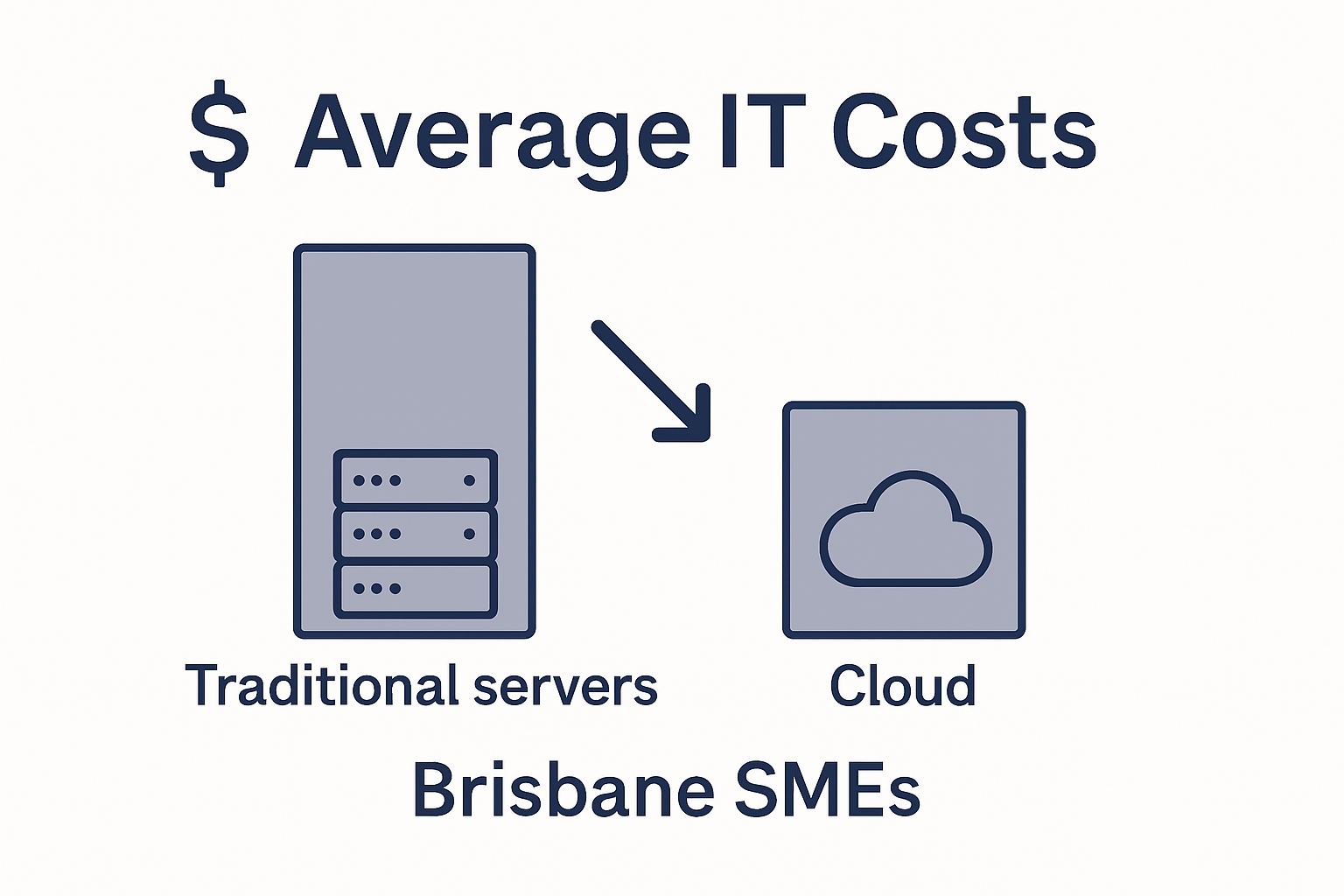
Cloud technology fundamentally transforms traditional computing infrastructure, offering Brisbane SMEs a revolutionary approach to managing technological resources. Traditional on-premise IT setups require substantial upfront capital investments in physical hardware, dedicated server rooms, and ongoing maintenance, whereas cloud solutions provide a more flexible and cost-effective alternative.
Key differences between cloud and traditional IT setups include:
- Capital Expenditure:
- Traditional: High upfront hardware costs
- Cloud: Minimal initial investment, pay-as-you-go model
- Scalability:
- Traditional: Requires manual hardware upgrades
- Cloud: Instant resource scaling with minimal friction
- Maintenance:
- Traditional: In-house IT team manages all infrastructure
- Cloud: Provider handles technical updates and maintenance
- Accessibility:
- Traditional: Limited to physical office network
- Cloud: Seamless remote access from anywhere
- Disaster Recovery:
- Traditional: Complex and expensive backup systems
- Cloud: Automated, redundant data protection
Hybrid cloud migration strategies enable businesses to transition smoothly, combining the best aspects of traditional and cloud infrastructures. By strategically selecting cloud solutions, Brisbane SMEs can dramatically reduce operational costs, enhance technological flexibility, and focus resources on core business growth rather than complex IT management.
Cost Factors, Common Pitfalls, and ROI Insights
Cloud services present complex financial considerations that Brisbane SMEs must carefully evaluate beyond simple cost comparisons. Return on Investment (ROI) extends far deeper than immediate monetary savings, encompassing operational efficiency, scalability, and strategic technological advantages.
Critical cost considerations and potential pitfalls include:
- Hidden Expenses:
- Bandwidth costs
- Data transfer fees
- Additional security configuration
- Performance Risks:
- Potential network latency
- Dependency on internet connectivity
- Vendor lock-in challenges
- Financial Planning:
- Predictable monthly expenditure
- Reduced capital infrastructure investments
- Flexible scaling of technological resources
Managed IT services help Brisbane businesses navigate these complex financial landscapes by providing strategic guidance and transparent cost structures. By conducting thorough cost-benefit analyses and understanding potential technological risks, organisations can develop robust cloud strategies that deliver genuine value, transforming technological expenses from fixed costs into strategic investments that drive business growth and operational agility.
Empower Your Brisbane SME with Expert Cloud Solutions from IT Start
Navigating the complexities of cloud adoption can feel overwhelming, especially when balancing cost efficiency, security, and scalability alongside daily business demands. The article highlights key challenges Brisbane SMEs face such as ensuring data sovereignty, managing IT costs, and maintaining robust cybersecurity while striving for operational flexibility. Concepts like hybrid cloud deployment, advanced security protocols, and ROI assessment are crucial yet often difficult to implement without dedicated expertise.
At IT Start, we understand these unique challenges faced by Queensland businesses. Our managed IT services are designed to deliver proactive, strategic support tailored specifically for SMEs seeking cloud solutions that optimise resources and safeguard sensitive data. With local Brisbane presence and SMB 1001 Gold certification, IT Start offers trusted guidance on selecting the right cloud models, ensuring compliance, and maximising your technology investment.
Are you ready to transform your IT infrastructure with cloud solutions built for Brisbane’s fast-paced market? Discover how our expert team can help you reduce costs, enhance security, and gain scalable technology that grows with your business. Contact us today for a free consultation and start your journey towards smarter IT management.
Frequently Asked Questions
What are the main benefits of cloud solutions for SMEs?
Cloud solutions offer significant benefits including cost efficiency, scalability, remote accessibility, automatic updates, and enhanced security. Businesses can adjust resources quickly and reduce upfront infrastructure investments.
How do cloud services improve data security for businesses?
Cloud services employ advanced security protocols such as encryption, multi-factor authentication, and continuous monitoring to protect sensitive business data and ensure compliance with regulatory standards.
What is the difference between IaaS, PaaS, and SaaS?
IaaS provides virtualized computing resources; PaaS delivers computing platforms for application development; and SaaS offers software applications online without local installation, allowing for centralised management and automatic updates.
What considerations should SMEs keep in mind when choosing a cloud provider?
SMEs should evaluate legal jurisdiction, data residency, regulatory compliance, encryption protocols, and access management practices of cloud providers to ensure data protection and compliance with local laws.
Recommended
- Types of Cloud Services – What Brisbane Businesses Need – IT Start
- Cloud Services – IT Start
- Managed IT Services: Complete Guide for Brisbane SMBs – IT Start
- IT Support Benefits Explained: Value for Brisbane SMEs – IT Start
- Tech for Small Businesses: Complete Guide for 2025 – Projector Display