

More than 60 percent of Australian SMEs now use cloud services to power their daily operations. With rising expectations for flexibility and data security, finding the right digital tools can be challenging for any Australian business owner. Understanding the available cloud service models and their distinct benefits helps business leaders in Brisbane and across Australia make informed choices that protect data, control costs, and drive growth.
Table of Contents
- Cloud Services Explained For Australian SMEs
- IaaS, PaaS, SaaS – Comparing The Models
- How Cloud Services Work For Businesses
- Cloud Costs, Risks And Security Factors
- Choosing The Right Cloud Setup In Brisbane
Key Takeaways
| Point | Details |
|---|---|
| Cloud Computing Benefits | Australian SMEs can leverage cloud services for remote access, cost savings, and scalable resources to enhance business efficiency. |
| Understanding Service Models | Familiarity with IaaS, PaaS, and SaaS enables businesses to select the appropriate model based on their operational needs. |
| Security Considerations | Robust security measures, including encryption and multi-factor authentication, are essential to protect sensitive data in cloud adoption. |
| Strategic Cloud Setup | Choosing the right cloud infrastructure should align with performance requirements, security needs, and budget constraints to ensure effective deployment. |
Cloud Services Explained For Australian SMEs
Cloud computing represents a transformative technology for small and medium enterprises (SMEs) in Australia, offering powerful digital infrastructure without massive upfront investments. By leveraging cloud services, Brisbane businesses can access scalable computing resources that adapt to their changing operational needs while minimising technology maintenance costs.
The Queensland government recognises cloud computing as a strategic tool for business efficiency. Through cloud-based solutions, SMEs can benefit from several critical advantages:
- Remote Access: Employees can work from anywhere with internet connectivity
- Cost Reduction: Eliminate expensive hardware and infrastructure investments
- Scalability: Quickly adjust computing resources as business demands change
- Automatic Updates: Software and security patches managed seamlessly by providers
Understanding cloud service models is crucial for Australian businesses. The Australian Institute of Criminology highlights potential security risks that accompany cloud adoption, emphasising the importance of selecting reputable providers and implementing robust cybersecurity protocols. SMEs must assess their specific requirements and choose between public, private, or hybrid cloud environments that align with their operational objectives and compliance needs.
By strategically implementing cloud services, Brisbane businesses can transform their technological capabilities, enhance operational flexibility, and compete more effectively in today’s digital marketplace.
IaaS, PaaS, SaaS – Comparing The Models
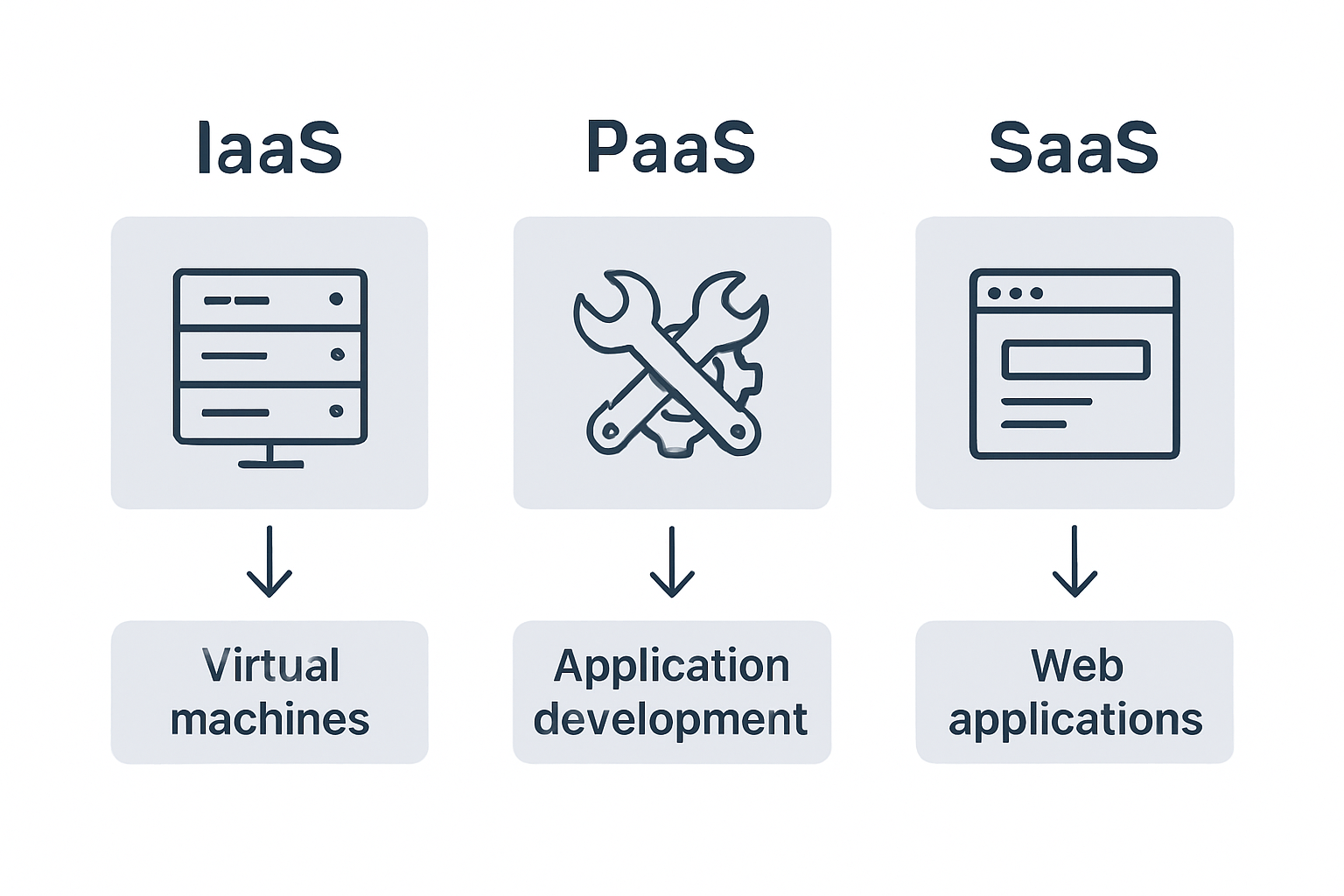
Cloud service models represent different approaches to delivering computing infrastructure and software solutions, each offering unique advantages for Brisbane businesses seeking flexible technological capabilities. Understanding the distinctions between Infrastructure as a Service (IaaS), Platform as a Service (PaaS), and Software as a Service (SaaS) enables organisations to select the most appropriate model for their specific operational requirements.
Infrastructure as a Service (IaaS) provides the fundamental building blocks of cloud computing. In this model, businesses rent virtualised computing resources like servers, storage, and networking components. IaaS allows companies to:
- Scale infrastructure rapidly without physical hardware investments
- Reduce capital expenditure on technology infrastructure
- Maintain greater control over computing environments
- Quickly deploy and modify server configurations
Platform as a Service (PaaS) offers a more comprehensive solution, providing developers with a complete environment for creating, testing, and deploying applications. PaaS solutions streamline software development processes by managing underlying infrastructure complexities, allowing technical teams to focus exclusively on application design and functionality.

Software as a Service (SaaS) represents the most user-friendly cloud model, delivering fully functional applications directly through web browsers. These solutions eliminate the need for local software installations, providing seamless updates and accessibility from any internet-connected device. SaaS applications cover diverse business needs, from customer relationship management to accounting and communication platforms.
Choosing between these cloud service models depends on an organisation’s technical capabilities, budget constraints, and specific operational requirements. Brisbane businesses must carefully evaluate their technological infrastructure, development needs, and long-term strategic objectives when selecting the most appropriate cloud service approach.
How Cloud Services Work For Businesses
Cloud services fundamentally transform how Brisbane businesses manage their technological infrastructure by providing flexible, scalable computing solutions that eliminate traditional hardware limitations. Cloud computing enables organisations to access powerful technological resources without substantial upfront investments, allowing companies to adapt quickly to changing business environments.
The operational mechanics of cloud services revolve around remote data storage and processing capabilities. Businesses can leverage cloud infrastructure through three primary interaction methods:
- Data Storage: Securely store and backup critical business information
- Computing Power: Access high-performance processing capabilities
- Software Delivery: Run applications directly through web-based platforms
Security Considerations are paramount in cloud service implementation. Small businesses must carefully evaluate potential crime risks associated with digital infrastructure, implementing robust protection mechanisms to safeguard sensitive organisational data. This involves:
- Encrypting sensitive information
- Implementing multi-factor authentication
- Regular security audits
- Restricted access protocols
Cloud services operate through sophisticated data centre networks that distribute computing resources across multiple geographic locations. This approach ensures high availability, redundancy, and performance for Brisbane businesses, allowing them to scale technological capabilities seamlessly without managing complex physical infrastructure. By outsourcing technological management, companies can focus more energy on core business objectives and strategic growth initiatives.
Cloud Costs, Risks And Security Factors
Cloud services present a complex ecosystem of financial considerations and potential security challenges for Brisbane businesses seeking technological solutions. While cloud computing offers significant operational advantages, organisations must carefully evaluate the intricate balance between cost-effectiveness and robust security protocols.
Cost Considerations for cloud services typically involve multiple financial dimensions:
- Subscription Models: Predictable monthly or annual pricing
- Scalability Expenses: Costs associated with increasing computational resources
- Migration Investments: Initial setup and transition expenditures
- Potential Hidden Costs: Additional fees for premium features or data transfer
Security Risks represent a critical evaluation point for businesses contemplating cloud adoption. Potential vulnerabilities include:
- Data breach possibilities
- Unauthorized access threats
- Compliance regulation challenges
- Potential service interruptions
Business owners must implement comprehensive security strategies that protect sensitive organisational data while maintaining operational flexibility. This involves developing robust authentication protocols, encryption mechanisms, and continuous monitoring systems that safeguard critical business information across cloud infrastructure.
Ultimately, successful cloud service integration requires a strategic approach that balances technological innovation with prudent risk management. Brisbane businesses must conduct thorough due diligence, carefully assess provider credentials, and develop comprehensive security frameworks that protect their digital assets while enabling technological growth and operational efficiency.
Choosing The Right Cloud Setup In Brisbane
Selecting the most appropriate cloud infrastructure requires careful consideration of your Brisbane business’s unique technological and operational requirements. The complex landscape of cloud computing demands a strategic approach that aligns technological capabilities with specific business objectives.
Evaluation Criteria for cloud setup selection should encompass several critical dimensions:
- Performance Requirements: Processing power and computational needs
- Data Security Protocols: Compliance and protection standards
- Budget Constraints: Initial and ongoing financial investments
- Scalability Potential: Future growth and flexibility
- Integration Capabilities: Compatibility with existing systems
Cloud Deployment Models provide businesses with multiple strategic options:
- Public Cloud: Cost-effective, shared infrastructure
- Private Cloud: Enhanced security, dedicated resources
- Hybrid Cloud: Flexible combination of public and private environments
Hybrid cloud solutions offer Brisbane businesses unprecedented flexibility in managing technological infrastructure, allowing organisations to balance performance, security, and cost-effectiveness. This approach enables companies to maintain sensitive operations on private servers while leveraging the scalability of public cloud resources.
Ultimately, the ideal cloud setup depends on understanding your specific business ecosystem. Brisbane organisations must conduct comprehensive assessments, consult with expert IT professionals, and develop a nuanced strategy that addresses immediate technological requirements while providing a robust framework for future digital transformation.
Unlock Your Brisbane Business Potential with Tailored Cloud Solutions
Navigating the complexities of cloud services such as IaaS, PaaS, and SaaS can be overwhelming, especially when balancing cost, security, and scalability for your unique business needs. The article highlights critical challenges like choosing the right cloud deployment model, understanding operational risks, and aligning technology with strategic goals. At IT Start, we understand that Brisbane businesses require more than just technology – they need a trusted partner to manage these challenges proactively.
Our specialised cloud solutions focus on maximising operational efficiency while mitigating cybersecurity risks through industry-leading practices. With local expertise and certifications like SMB 1001 Gold, IT Start delivers transparent managed IT support tailored to financial services, healthcare, legal, and professional sectors. Whether you need assistance assessing your current cloud setup or help with seamless migration, our team ensures your technology infrastructure is secure, compliant, and ready to scale.
Ready to transform your business with confidence? Discover how we can customise cloud strategies that align with your operational goals. Request your free consultation today at IT Start Contact Us and take the first step towards a secure, scalable future. For insights on cloud security and hybrid cloud benefits, explore our detailed guidance at Understanding Cloud Security and Benefits of Hybrid Cloud. Your Brisbane business deserves expert support that puts you ahead in the digital marketplace.
Frequently Asked Questions
What are the main types of cloud services available for businesses?
The three main types of cloud services are Infrastructure as a Service (IaaS), Platform as a Service (PaaS), and Software as a Service (SaaS). Each offers different levels of control, flexibility, and management.
How does Infrastructure as a Service (IaaS) benefit businesses?
IaaS provides virtualised computing resources over the internet, allowing businesses to scale infrastructure rapidly, reduce capital expenditure, and maintain greater control over their computing environments.
What advantages does Software as a Service (SaaS) offer for companies?
SaaS delivers fully functional applications via web browsers, eliminating the need for local installations. This model offers seamless updates, easy accessibility from any device, and caters to various business needs, such as accounting and communication.
What should businesses consider when choosing a cloud service model?
When selecting a cloud service model, businesses should evaluate their technical capabilities, budget constraints, data security requirements, performance needs, and scalability potential to find the most suitable solution.
Recommended
- Cloud Services – IT Start
- Co-location vs On-Premise vs Cloud: Complete Guide – IT Start
- Understanding Cloud Business Phone System for SMBs – IT Start
- Managed IT Services: Complete Guide for Brisbane SMBs – IT Start
- Tech for Small Businesses: Complete Guide for 2025 – Projector Display