

More than 60 percent of australian small and medium enterprises have experienced a cyber incident in the past year, putting sensitive business information at risk. With constant digital threats targeting businesses in Queensland and across Australia, understanding how to detect and prevent data breaches is crucial. This guide uncovers actionable Data Loss Prevention strategies that help australian companies protect vital intellectual property, meet regulatory obligations, and safeguard customer trust.
Table of Contents
- Defining Data Loss Prevention For SMEs
- Types Of Data Loss Prevention Solutions
- How DLP Protects Sensitive Business Data
- Australian Legal Compliance And Data Security
- Risks Of Inadequate Data Loss Prevention
Key Takeaways
| Point | Details |
|---|---|
| Understanding DLP | Data Loss Prevention is essential for protecting sensitive information from breaches and ensuring comprehensive data security strategies for SMEs in Brisbane. |
| Types of DLP Solutions | Implementing a combination of network, endpoint, cloud, and content-aware DLP solutions can create a robust security framework for Queensland businesses. |
| Legal Compliance | Adhering to the Privacy Act 1988 and other regulations is crucial for businesses to protect customer information and manage legal risks effectively. |
| Risks of Inadequate DLP | Insufficient data loss prevention strategies can lead to severe financial losses and reputational damage, highlighting the need for proactive protective measures. |
Defining Data Loss Prevention For SMEs
Data Loss Prevention (DLP) is a critical cybersecurity strategy designed to protect sensitive business information from potential breaches and unauthorized data transmission. For Brisbane small and medium enterprises, understanding DLP means recognising a comprehensive approach to safeguarding your most valuable digital assets.
At its core, data loss prevention represents a systematic method for detecting and preventing potential data leaks across multiple technology environments. Unlike traditional security measures that focus solely on external threats, modern DLP strategies monitor data movement both inside and outside corporate networks. This means tracking how information is shared, transferred, and potentially compromised across on-premises systems, cloud platforms, and endpoint devices like laptops, tablets, and smartphones.
For Queensland businesses, implementing effective DLP isn’t just about technology – it’s about protecting your reputation, customer trust, and legal compliance. Sensitive information monitoring helps organisations achieve critical regulatory standards, including adherence to the Privacy Act 1988. Typical DLP strategies address multiple data protection objectives:
- Identifying confidential information types
- Tracking data movement across networks
- Preventing unauthorized data transfers
- Generating comprehensive breach reports
- Enforcing organisational data handling policies
By understanding and implementing robust DLP practices, Brisbane SMEs can significantly reduce their risk of data breaches, protect intellectual property, and maintain the trust of their clients and stakeholders.
Types Of Data Loss Prevention Solutions
Data Loss Prevention (DLP) solutions come in multiple strategic configurations, each designed to address specific organisational security challenges. For Brisbane businesses, understanding these variations helps create a robust, multilayered approach to data protection.
The primary DLP solution types include network, endpoint, cloud, and content-aware solutions. Network DLP monitors data transmission across corporate networks, intercepting potential breaches before sensitive information leaves secure boundaries. Endpoint DLP protection focuses on individual devices like laptops, smartphones, and tablets, ensuring data security at the user interaction point. This approach is particularly crucial for businesses with remote or hybrid work environments.
Cloud and content-aware DLP solutions represent more advanced protection strategies. Cloud DLP monitors data transfers within cloud platforms, tracking how information moves between different cloud services and preventing unauthorised sharing. Content-aware DLP goes beyond simple location tracking, analysing the actual content of documents and communications to identify sensitive information based on predefined rules and patterns.
Specific implementation strategies for Brisbane SMEs typically involve a combination of these solution types:
- Network traffic monitoring
- Device-level data protection
- Cloud service integration
- Contextual content analysis
- Automated breach prevention protocols
By selecting and integrating appropriate DLP solutions, Queensland businesses can create a comprehensive security framework that protects intellectual property, maintains regulatory compliance, and minimises potential data breach risks.
How DLP Protects Sensitive Business Data
Data Loss Prevention (DLP) represents a comprehensive strategy for safeguarding an organisation’s most critical digital assets against potential security threats. By implementing sophisticated monitoring and protection mechanisms, DLP solutions create multiple layers of defence to prevent sensitive information from falling into the wrong hands.

Data loss prevention technologies combine advanced techniques like artificial intelligence, machine learning, and comprehensive policy frameworks to detect and prevent potential data breaches. These sophisticated systems continuously analyse data movement, comparing content against predefined organisational policies to identify suspicious activities and potential vulnerabilities before they can escalate into significant security incidents.
Comprehensive DLP protection extends beyond simple monitoring, offering Brisbane businesses multiple strategic advantages:
- Rapid incident response capabilities
- Enhanced compliance support mechanisms
- Automated alerting and encryption protocols
- Improved visibility into data flow patterns
- Significant reduction of financial and reputational risks
For Queensland enterprises, effective DLP implementation means creating a proactive security environment that anticipates potential threats, protects intellectual property, and maintains the integrity of sensitive business information across all digital platforms.
Australian Legal Compliance And Data Security
Navigating the complex landscape of data security requires Queensland businesses to understand and implement robust legal compliance mechanisms that protect both organisational and customer information. The Australian regulatory environment demands proactive approaches to data management and protection.
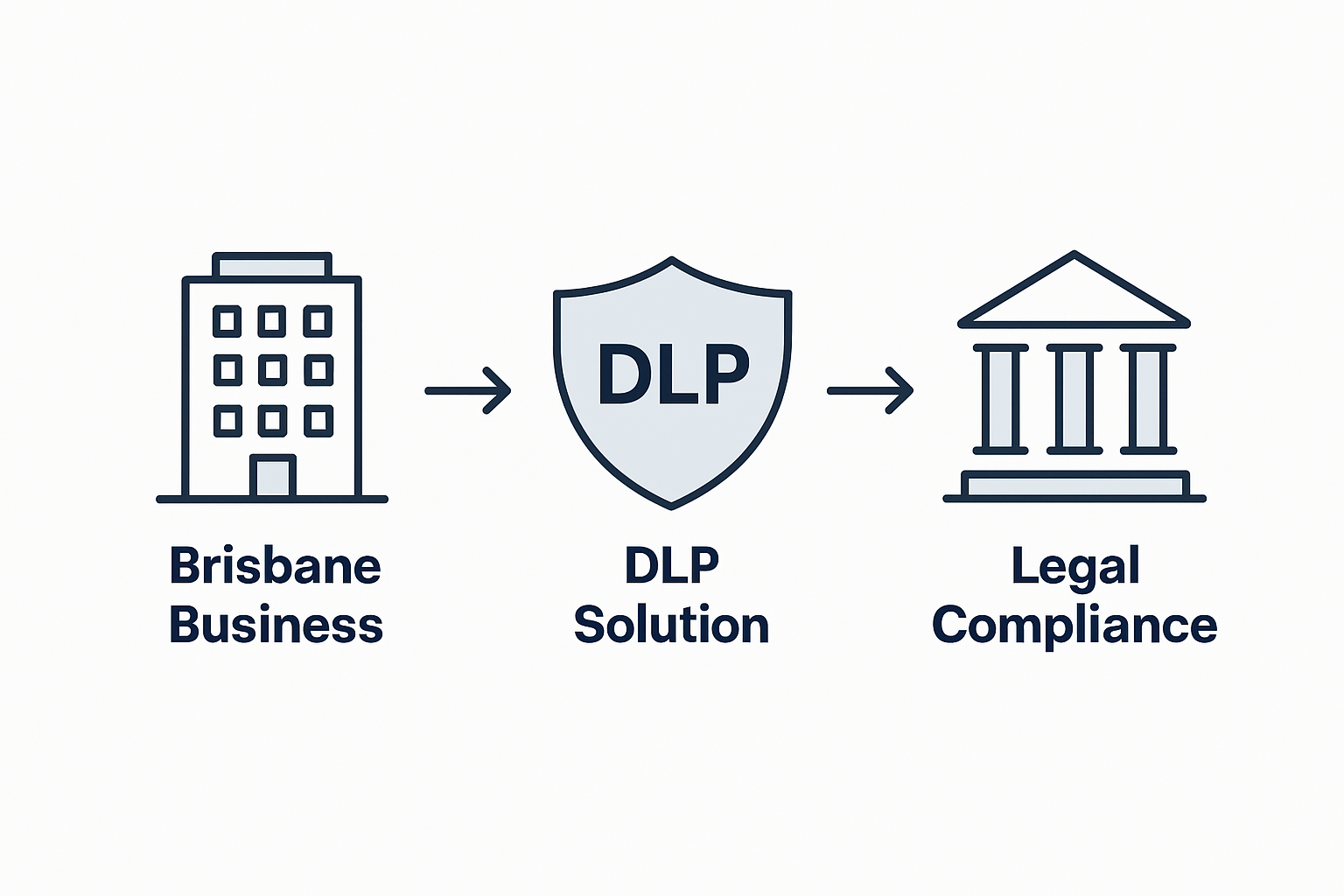
Telecommunications data retention regulations mandate specific obligations for businesses handling digital information. Under the Telecommunications (Interception and Access) Amendment (Data Retention) Act 2015, organisations must retain particular types of telecommunications data for a minimum of two years, creating significant responsibilities for information management and security protocols.
Policy-based information control frameworks help businesses implement sophisticated data protection strategies that align with legal requirements. These sophisticated systems enable organisations to enforce comprehensive controls across sensitive information states including data at rest, in transit, and during active use.
Key compliance considerations for Brisbane businesses include:
- Understanding Privacy Act 1988 requirements
- Implementing robust data retention policies
- Protecting personally identifiable information
- Establishing clear data breach notification procedures
- Maintaining comprehensive audit trails
By developing a proactive approach to data security and legal compliance, Queensland enterprises can effectively mitigate risks while maintaining the trust of customers and regulatory bodies.
Risks Of Inadequate Data Loss Prevention
Insufficient data loss prevention strategies expose Brisbane businesses to significant operational, financial, and reputational vulnerabilities. Without robust protective mechanisms, organisations risk catastrophic breaches that can permanently damage their competitive position and customer trust.
Small businesses face increasing cyber vulnerability, with cyber-criminals specifically targeting organisations lacking comprehensive security infrastructure. These enterprises often struggle to implement the sophisticated protection strategies that larger corporations routinely deploy, creating critical weaknesses in their digital defences.
Cyber threats continue to escalate in complexity, particularly for Australian small and medium enterprises. The potential consequences of inadequate data loss prevention include:
- Substantial financial losses from data breaches
- Permanent destruction of customer confidence
- Potential legal penalties and regulatory non-compliance
- Intellectual property theft
- Operational disruption and potential business closure
Qld businesses must recognise that data protection is not optional but a critical survival strategy in an increasingly interconnected digital landscape. Proactive investment in comprehensive data loss prevention represents the most effective defence against these potentially devastating risks.
Strengthen Your Brisbane Business With Expert Data Loss Prevention Support
Data loss prevention is essential for protecting your business’s sensitive information and maintaining client trust. As highlighted in the article, Brisbane SMEs face rising risks from data breaches, regulatory pressures like the Privacy Act 1988, and evolving cyber threats that demand a proactive approach. Key challenges include monitoring data movement, preventing unauthorised transfers, and ensuring compliance with Australian data retention laws.
At IT Start, we specialise in delivering customised managed IT support and cybersecurity solutions designed specifically for Queensland small to medium enterprises. Our services combine network, endpoint, and cloud data loss prevention strategies that align with your business goals. By partnering with us, you gain enhanced visibility into your data flow, rapid incident response, and automated protection—all backed by local expertise and industry-leading standards such as SMB 1001 Gold.
Protect your intellectual property and customer data today. Discover how our tailored cybersecurity services can secure your business by contacting us for a free consultation. Take the vital step forward now by reaching out via Contact IT Start and start building a safer, compliant future.
Frequently Asked Questions
What is Data Loss Prevention (DLP)?
Data Loss Prevention (DLP) is a cybersecurity strategy designed to protect sensitive information from breaches and unauthorized data transfers by monitoring data movement both within and outside of corporate networks.
Why is DLP important for my business?
Implementing DLP is crucial for protecting your business’s reputation, maintaining customer trust, and ensuring legal compliance, particularly in meeting regulatory standards like the Privacy Act 1988.
What types of DLP solutions are available?
DLP solutions include network DLP, endpoint DLP, cloud DLP, and content-aware DLP. Each type focuses on different aspects of data protection, from monitoring network traffic to analysing content for sensitive information.
How can inadequate DLP strategies affect my business?
Insufficient DLP strategies can expose your business to risks such as financial losses from data breaches, legal penalties for non-compliance, loss of customer trust, and potential theft of intellectual property.