

Most Australian businesses underestimate the complexity of transitioning to cloud platforms, yet over 60 percent face unexpected disruptions during migration. With digital infrastructure becoming the backbone of modern operations, getting each step right is crucial for efficiency, security, and ongoing growth. This guide walks you through the essential stages, offering practical strategies and clear checkpoints to ensure your Australian organisation’s move to the cloud is smooth and resilient.
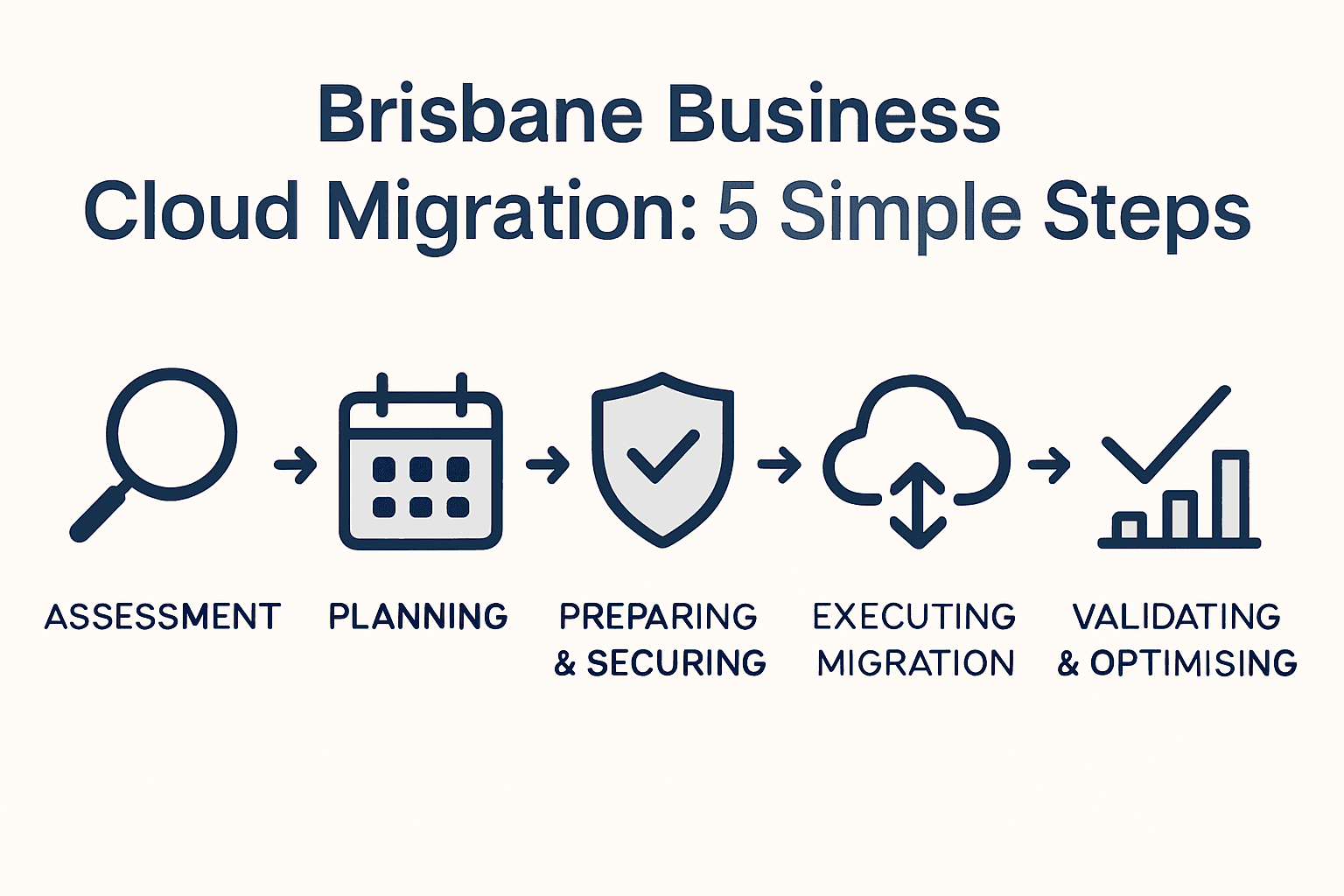
5-Step Cloud Migration Guide for Brisbane SMEs
- Step 1: Assess Existing Infrastructure And Set Migration Goals
- Step 2: Plan Migration Strategy And Select Cloud Solutions
- Step 3: Prepare Data And Secure Business Systems For Transfer
- Step 4: Execute Migration And Monitor Progress Closely
- Step 5: Validate System Functionality And Optimise Performance
Quick Summary
| Key Insight | Explanation |
|---|---|
| 1. Thoroughly assess current IT infrastructure | Document all technical assets to understand capabilities and needs for cloud migration. |
| 2. Align migration goals with business outcomes | Ensure that technology supports organisational objectives like efficiency and cost reduction. |
| 3. Categorise cloud migration approaches | Organise systems into public, private, or hybrid cloud options based on specific requirements. |
| 4. Implement strong data security measures | Protect sensitive data during migration with encryption, access controls, and backup strategies. |
| 5. Conduct rigorous testing post-migration | Validate system functionality and optimise performance through real-world scenario simulations and metrics tracking. |
Step 1: Assess existing infrastructure and set migration goals
Cloud migration starts with understanding your current technology landscape. Before jumping into cloud solutions, you need a thorough assessment of your existing IT infrastructure. This means taking a comprehensive snapshot of your current systems hardware software networks and applications.
To do this effectively work with your IT team to document every technical asset your business currently uses. The Intelligent Cloud Decision Framework (ICDF) provides a comprehensive methodology for evaluating legacy applications that will help you make strategic migration choices. Start by creating an inventory that includes server configurations network architecture software licences and current performance metrics. Pay special attention to identifying which systems are mission critical and which might be candidates for immediate migration.
As you conduct this assessment align your technical inventory with specific business objectives. This means understanding not just what technology you have but how each system supports your organisation’s goals. Review factors like system age scalability security requirements and potential for improvement through cloud technologies. Your migration goals should directly connect technological capabilities with business outcomes such as improved efficiency reduced operational costs or enhanced collaboration.
Pro tip: Start with a simple spreadsheet tracking each system infrastructure component its current performance limitations and potential cloud migration readiness score. This will give you a clear roadmap for your cloud migration strategy.
Here is a summary of the key factors to assess during the cloud migration planning phase:
| Assessment Area | Key Considerations | Business Impact |
|---|---|---|
| System Criticality | Identify mission-critical systems | Prioritises smooth business continuity |
| Performance Limits | Document current limitations | Reveals areas for improvement |
| Scalability | Assess growth potential | Ensures future readiness |
| Security Needs | Evaluate current controls | Reduces risk and improves compliance |
| Age of Systems | Consider tech end-of-life status | Guides upgrade and migration strategy |
Step 2: Plan migration strategy and select cloud solutions
With your infrastructure assessment complete, the next crucial step is developing a targeted migration strategy that aligns with your business objectives. Enterprise-level network design requires careful consideration of on-premises wireless and cloud technologies that will support your specific operational needs.
Start by categorising your systems into three primary migration approaches potential candidates for public cloud direct migration candidates for private cloud and workloads that might require a hybrid solution. Consider factors like data sensitivity compliance requirements performance needs and budget constraints. Public cloud services offer scalability and cost effectiveness while private cloud provides greater control and security. Hybrid models can provide a balanced approach allowing you to leverage the strengths of multiple cloud environments.
Evaluate potential cloud service providers based on their ability to meet your specific technical and business requirements. Look beyond surface level features and assess their track record with businesses similar to yours in Brisbane. Consider aspects like service level agreements data migration support security protocols and ongoing technical support. Your goal is to select a cloud solution that not only meets your current needs but can also scale and adapt as your business evolves.
Pro tip: Create a detailed migration risk assessment matrix that scores potential cloud solutions across dimensions like security performance cost compliance and ease of integration. This systematic approach will help you make an objective decision that minimises potential disruptions to your business operations.
Here is a comparison of public, private, and hybrid cloud migration options:
| Approach | Advantages | Common Use Cases |
|---|---|---|
| Public Cloud | Lower upfront cost, scalability | Website hosting, SaaS deployments |
| Private Cloud | Greater control, enhanced security | Sensitive data, strict compliance |
| Hybrid Cloud | Flexibility, workload balancing | Combining legacy and new systems |
Step 3: Prepare data and secure business systems for transfer
Preparing your data and securing business systems is a critical phase in cloud migration that demands meticulous attention and strategic planning. Understanding computer and network infrastructure including cyber security and risk management principles forms the foundation of a successful data transfer strategy.
Begin by conducting a comprehensive data audit to identify sensitive information confidential records and critical business data. Categorise your data based on sensitivity levels and develop tailored encryption and protection strategies for each category. Implement robust access controls multi factor authentication and data encryption protocols to ensure that your information remains secure during and after the migration process. This involves reviewing user permissions restricting data access to essential personnel and creating detailed backup strategies that protect against potential data loss.
Establish a strict data governance framework that outlines clear protocols for data handling classification and transfer. Work closely with your chosen cloud service provider to understand their security measures and ensure they align with your organisation’s compliance requirements. Securing business data for Brisbane SMEs requires a proactive approach that anticipates potential vulnerabilities and implements comprehensive protective measures across your entire digital ecosystem.
Pro tip: Create a detailed data migration checklist that includes mandatory security checks encryption requirements permission validation and post migration verification steps. This systematic approach will help you minimise risks and ensure a smooth secure data transfer process.
Step 4: Execute migration and monitor progress closely
With your preparation complete the actual cloud migration begins a critical phase that requires precision strategic oversight and continuous monitoring. Implementing industry-grade tools and techniques for network design deployment and management becomes paramount during this execution stage.

Start the migration process in stages beginning with less critical systems and gradually moving towards mission critical infrastructure. Establish real time monitoring dashboards that track performance metrics data transfer progress system compatibility and potential bottlenecks. These dashboards should provide granular insights into transfer speeds integrity checks and any emerging issues that require immediate attention. Assign dedicated team members to oversee different aspects of the migration ensuring comprehensive coverage and rapid response to any unexpected challenges.
Maintain open communication channels with your cloud service provider throughout the migration. Document every step of the process create comprehensive logs and conduct periodic validation checks to ensure data integrity and system functionality. Be prepared to pause or rollback the migration if significant anomalies are detected. Your goal is not just completing the transfer but ensuring a smooth seamless transition that minimises operational disruptions and maintains business continuity.
Pro tip: Develop a detailed migration playbook that includes predefined escalation protocols contingency plans and specific trigger points for pausing or reverting the migration process. This proactive approach will help you navigate potential challenges with confidence and precision.
Step 5: Validate system functionality and optimise performance
After completing the migration you now enter a critical phase of comprehensive system validation and performance optimisation. Implementing cloud computing tools and techniques like virtual machines and mobile services will help you systematically assess and enhance your new cloud infrastructure.
Begin with a thorough functionality testing process that simulates real world business scenarios. Conduct comprehensive performance tests that measure system response times data transfer speeds and overall operational efficiency. Pay close attention to application integration workflow continuity and user access protocols. Compare pre migration and post migration performance metrics to identify any potential bottlenecks or performance degradation. This might involve running parallel systems temporarily to ensure complete operational reliability before fully decommissioning your legacy infrastructure.
Establish a continuous monitoring and optimization strategy that allows for ongoing performance tuning. Create performance baseline reports that track key metrics such as computational efficiency resource utilisation network latency and application responsiveness. Work closely with your cloud service provider to implement recommended optimization strategies and leverage their expertise in fine tuning cloud environments. Regular performance reviews will help you proactively identify and address potential issues before they impact your business operations.
Pro tip: Develop a standardised performance testing protocol that includes automated monitoring scripts and predefined performance benchmarks. This systematic approach will help you maintain consistent system performance and quickly identify any emerging technical challenges.
Simplify Your Cloud Migration Journey with IT Start
Cloud migration can feel overwhelming when you face challenges like assessing complex infrastructure, choosing the right cloud solution, and ensuring your data stays secure throughout the process. This article highlights crucial steps such as evaluating system criticality, planning your migration strategy, and maintaining operational continuity — all vital to achieving a successful transition. Many Brisbane businesses share concerns about minimising downtime, meeting compliance requirements, and optimising performance after migration.
At IT Start, we understand these pain points and are here to take the pressure off with tailored cloud solutions and managed IT support designed specifically for Brisbane-based small to medium enterprises. Our proactive approach ensures your systems are carefully evaluated and perfectly aligned with your unique business goals. By partnering with us you gain access to local expertise, strong cybersecurity practices, and ongoing performance optimisation that keeps your cloud environment secure and efficient.
Ready to transform your IT infrastructure and embrace seamless cloud migration? Discover how IT Start can help your business improve operational efficiency and reduce risks with expert guidance every step of the way. Start today with a free consultation by reaching out through our contact page and take the first step towards a confident cloud future. Learn more about our managed IT support services and how we build secure, scalable cloud environments tailored for Brisbane businesses.
Frequently Asked Questions
What steps should Brisbane businesses take to assess their existing infrastructure for cloud migration?
Begin by conducting a thorough assessment of your current IT landscape, including hardware, software, networks, and applications. Document every technical asset and create an inventory that aligns with your business goals to identify areas for improvement before moving to the cloud.
How can I choose the right cloud migration strategy for my business?
Evaluate your systems to determine the best migration approach: public, private, or hybrid cloud solutions. Categorise your systems based on factors such as data sensitivity and compliance requirements to ensure the selected strategy meets your business needs effectively.
What measures should I implement to secure my data during the migration process?
Establish a data governance framework that includes strict access controls, multi-factor authentication, and encryption strategies. Conduct a comprehensive data audit and categorise sensitive information to ensure it is protected throughout the migration.
How can I validate the functionality of my systems after cloud migration?
Conduct thorough functionality testing and performance assessments of your newly migrated systems. Compare pre- and post-migration performance metrics, running parallel systems temporarily as needed to ensure operational reliability before fully decommissioning legacy systems.
What ongoing optimisations should I consider after completing the migration?
Implement a continuous monitoring strategy to track system performance and resource utilisation. Regularly review performance metrics and work with your cloud service provider to identify and apply optimisation strategies that maintain or improve efficiency over time.