

More than 43 percent of Australian cyber attacks now target small and medium businesses, putting everyday operations and sensitive data at serious risk. For any Australian SME, a single breach can mean costly downtime, damaged trust, and challenges that linger long after the attack has ended. Understanding the real threats facing Brisbane and Queensland businesses helps owners protect what matters and take practical steps to strengthen their digital defences.
Cyber Threats to Brisbane SMEs: Risks, Impacts & Prevention Tips
- Cyber Security Risks Defined For Australian SMEs
- Common Threat Types Facing Local Businesses
- How Cyber Attacks Impact Business Operations
- Legal, Financial And Compliance Consequences
- Preventing Risks With Proactive Security Measures
Key Takeaways
| Point | Details |
|---|---|
| Cybersecurity Risks Are Prevalent | Australian SMEs face numerous cyber threats, including phishing, ransomware, and data breaches, necessitating strong security measures. |
| Business Email Compromise Is a Key Threat | Cybercriminals exploit email systems to manipulate financial transactions, putting SMEs at considerable risk. |
| Proactive Security Measures Are Essential | Regular training, software updates, and multi-factor authentication are crucial for minimising vulnerabilities against cyber attacks. |
| Legal and Financial Consequences Can Be Severe | Cyber incidents can lead to significant regulatory penalties, financial losses, and long-term reputational damage for SMEs. |
Cyber Security Risks Defined for Australian SMEs
Cyber security risks represent significant challenges for Australian small and medium enterprises (SMEs), threatening operational stability and financial integrity. Cyber threats pose substantial risks that can disrupt business continuity and compromise sensitive information across multiple sectors.
The primary cyber security risks facing Brisbane and Queensland SMEs include phishing attacks, malware infections, and data breaches. These digital threats can manifest through various channels, such as compromised email systems, vulnerable network infrastructure, and social engineering tactics. Business email compromise remains particularly dangerous, allowing cybercriminals to impersonate trusted contacts and manipulate financial transactions.
Some specific cyber security risks Australian SMEs encounter include:
- Ransomware attacks that encrypt critical business data
- Sophisticated phishing emails designed to steal login credentials
- Network intrusions targeting financial and customer information
- Social engineering attempts to manipulate employee behaviour
Understanding these risks requires ongoing vigilance and proactive security measures. Small businesses must recognise that cybercriminals frequently target organisations with limited security resources, viewing them as easier entry points compared to large corporations with robust defence systems.
Pro Security Insight: Regular staff training and implementing multi-factor authentication can significantly reduce your organisation’s vulnerability to cyber attacks.
Common Threat Types Facing Local Businesses
Brisbane businesses face an increasingly complex landscape of cyber security threats that can compromise operational integrity and financial stability. Local businesses commonly encounter cyber threats that range from sophisticated digital attacks to targeted social engineering strategies.
The most prevalent threat types impacting Queensland SMEs include:
- Phishing Attacks: Deceptive emails designed to trick employees into revealing sensitive credentials
- Business Email Compromise (BEC): Fraudulent attempts to manipulate financial transactions
- Ransomware: Malicious software that encrypts business data and demands payment
- Network Intrusions: Unauthorised access to company digital infrastructure
Cybercriminals have become increasingly strategic, targeting small businesses with specific cyber attack methods that exploit potential vulnerabilities. These attacks often leverage psychological manipulation, technical weaknesses, and gaps in employee training to penetrate organisational defences.
Specifically, ransomware attacks have emerged as a particularly devastating threat, capable of completely halting business operations and potentially causing irreparable financial and reputational damage. Small businesses are especially vulnerable because they typically lack comprehensive cyber security resources compared to larger enterprises.
Here’s a comparison of common cyber threat types and their specific impacts on Queensland SMEs:
| Threat Type | Typical Entry Point | Primary Business Impact |
|---|---|---|
| Phishing | Email and web links | Credential theft, fund diversion |
| Ransomware | Malicious downloads | Data encryption, operational halt |
| BEC | Compromised email | Unauthorised fund transfers |
| Network Intrusions | Insecure networks | Customer data exposure, compliance risk |
Pro Security Warning: Implement comprehensive staff cyber awareness training and regularly update your digital security protocols to minimise potential breach points and protect your business from evolving digital threats.
How Cyber Attacks Impact Business Operations
Cyber attacks can devastate business operations across multiple critical operational domains, creating substantial financial and reputational risks for Queensland enterprises. These digital threats extend far beyond simple technical disruptions, potentially triggering comprehensive systemic failures that can compromise entire organisational infrastructures.
The primary operational impacts of cyber attacks include:
- Operational Downtime: Complete halting of business processes
- Financial Losses: Direct monetary expenses from recovery and potential ransom payments
- Reputational Damage: Eroding customer and stakeholder trust
- Compliance Risks: Potential legal and regulatory consequences
Ransomware attacks have emerged as particularly disruptive digital threats, capable of generating extensive operational paralysis. These malicious interventions can encrypt critical business data, demanding substantial financial ransoms while simultaneously preventing access to essential digital resources and communication channels.

Small to medium enterprises face heightened vulnerabilities due to limited cyber security resources. Attackers strategically target these organisations, recognising their typically less sophisticated defence mechanisms. The consequences often extend beyond immediate technical disruptions, potentially triggering cascading failures across financial, operational, and strategic business domains.
Pro Security Strategy: Develop a comprehensive incident response plan that includes immediate containment protocols, backup systems, and clear communication strategies to minimise potential operational disruptions during a cyber attack.
Legal, Financial and Compliance Consequences
Cyber incidents can trigger substantial legal and financial consequences for Brisbane businesses, extending far beyond immediate operational disruptions. These potential repercussions encompass complex regulatory penalties, significant monetary losses, and long-term reputational damage that can fundamentally compromise an organisation’s future sustainability.
The key legal and financial risks include:
- Data Protection Violations: Potential fines under Australian Privacy Principles
- Regulatory Non-Compliance: Penalties from government oversight bodies
- Client Trust Erosion: Potential loss of business relationships
- Litigation Exposure: Legal actions from affected stakeholders
The Australian Taxation Office emphasises robust security measures as critical for preventing financial and legal complications. Businesses that fail to implement adequate cyber security protocols may face not just immediate financial penalties, but also prolonged investigations, potential mandatory reporting requirements, and significant compliance-related expenses.
Small to medium enterprises in Queensland are particularly vulnerable, often lacking dedicated legal and cyber security resources to navigate these complex challenges. The financial impact can be devastating, with potential costs including forensic investigations, system recovery, potential ransom payments, legal defence, and compensatory damages.
Pro Compliance Warning: Regularly review and update your cyber security policies to ensure alignment with current Australian regulatory standards and maintain comprehensive documentation of your security protocols and incident response strategies.
Preventing Risks With Proactive Security Measures
Implementing strategic security measures can dramatically reduce cyber vulnerability for Brisbane businesses. Proactive approaches transform cyber security from a reactive defence mechanism into a comprehensive, anticipatory strategy that identifies and mitigates potential threats before they materialise.
Key proactive security strategies include:
- Regular Software Updates: Patching known vulnerabilities
- Employee Cyber Awareness Training: Building human firewall capabilities
- Comprehensive Data Backup Systems: Ensuring rapid recovery potential
- Multi-Factor Authentication: Adding critical access protection layers
- Network Monitoring: Detecting suspicious activities in real-time
The Australian Government recommends developing robust incident preparedness and response plans as a critical component of proactive cyber defence. This approach involves creating detailed protocols that outline precise steps for identifying, containing, and recovering from potential cyber incidents, ensuring minimal disruption to business operations.
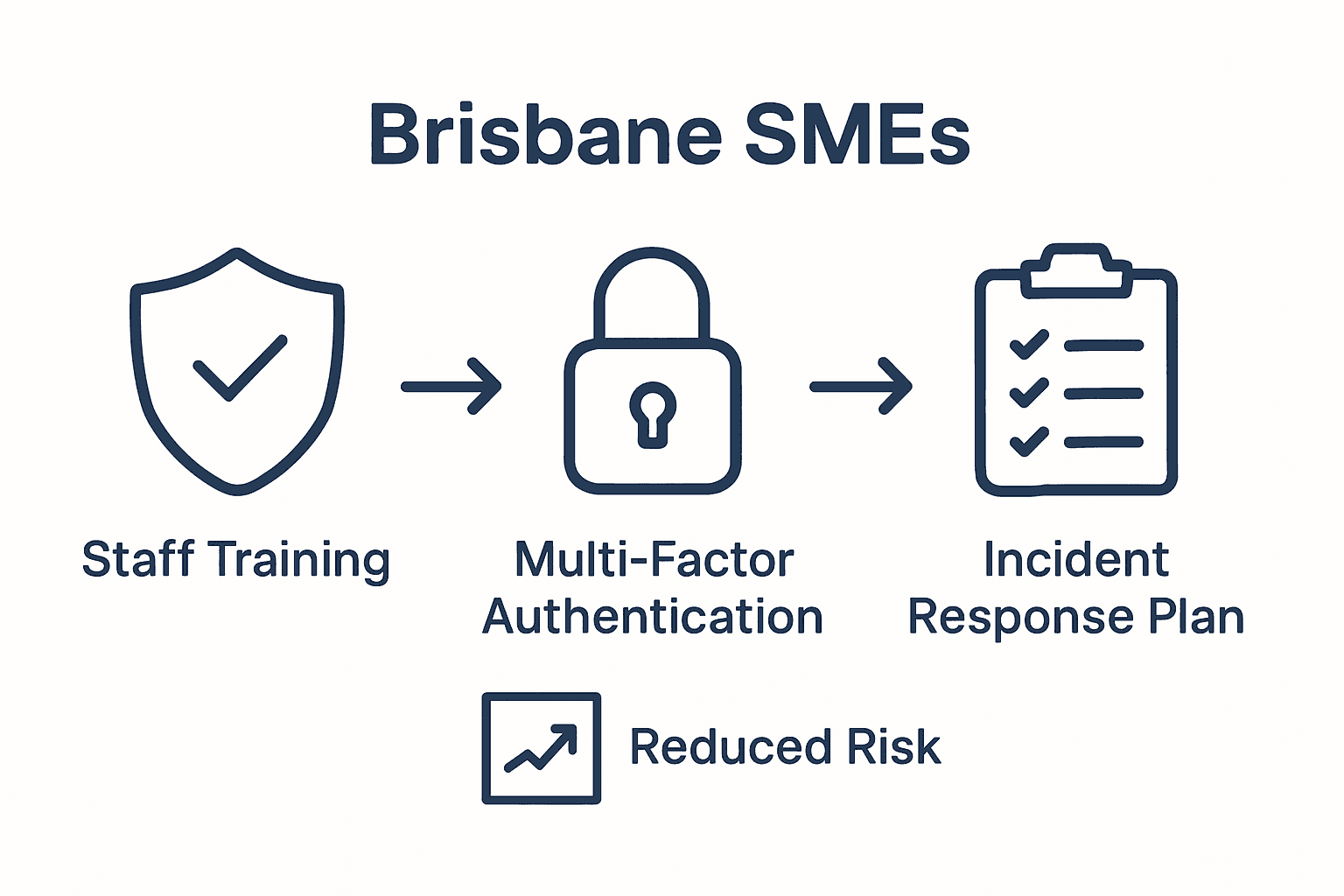
queensland small businesses must understand that cyber security is not a one-time implementation but an ongoing process of adaptation and improvement. By cultivating a culture of security awareness, investing in continuous training, and maintaining flexible, responsive security infrastructures, organisations can significantly reduce their vulnerability to emerging digital threats.
The following table summarises recommended proactive security measures and their benefits for SMEs:
| Security Measure | Key Benefit | Implementation Frequency |
|---|---|---|
| Software Updates | Patches vulnerabilities | Monthly or as released |
| Cyber Awareness Training | Reduces employee error | Quarterly |
| Data Backups | Enables rapid recovery | Daily or weekly |
| Multi-Factor Authentication | Strengthens access control | Ongoing, all accounts |
Pro Security Strategy: Conduct quarterly comprehensive cyber security assessments and maintain an updated incident response plan that includes clear communication protocols and designated team responsibilities.
Strengthen Your Brisbane Business Against Cyber Security Risks
Understanding the cyber security risks facing Brisbane businesses, such as phishing, ransomware, and business email compromise, is essential but not enough on its own. The real challenge lies in proactively defending your business to prevent operational downtime, financial loss and compliance issues outlined in this article. If your business is struggling with limited resources or insufficient in-house expertise to manage these evolving threats, IT Start offers tailored managed IT support and cybersecurity services designed specifically for small to medium enterprises in Queensland.
Our local team brings certified industry knowledge and a proactive approach to safeguard your business. From implementing multi-factor authentication and comprehensive data backups to staff cyber awareness training and real-time network monitoring, we help you build a strong cyber defence that aligns with Australian regulatory standards. Take control of your digital security with confidence by scheduling a free assessment today.
Explore how IT Start’s cybersecurity solutions can shield your business from increasing cyber threats. Don’t wait for a costly incident to force action. Connect with us now to secure ongoing peace of mind and operational efficiency through managed IT support. Your Brisbane business deserves expert protection that adapts as cyber risks evolve. Visit Contact Us and start building your cyber resilience today.
Frequently Asked Questions
What are the most common cyber security risks for businesses?
The most common cyber security risks include phishing attacks, ransomware, business email compromise (BEC), and network intrusions that target sensitive financial and customer information.
How can phishing attacks affect my business?
Phishing attacks can lead to credential theft, financial losses, and unauthorized access to sensitive data, which can compromise business integrity and customer trust.
What proactive measures can businesses take to prevent cyber attacks?
Businesses can implement regular software updates, employee cyber awareness training, comprehensive data backups, multi-factor authentication, and continuous network monitoring to enhance their security posture.
What are the legal consequences of a cyber attack on a business?
Legal consequences can include penalties for data protection violations, regulatory non-compliance fines, erosion of client trust, and the potential for litigation from affected stakeholders.