

More than 60 percent of Australian small and medium enterprises face at least one cyber attack every year, putting their financial and operational security at risk. In a connected world, no business is too small for cybercriminals to target, especially in cities like Brisbane and across Queensland. Understanding how these threats work is essential for protecting your organisation’s data, reputation, and long-term success.
Table of Contents
- Defining Cyber Security Threats For SMEs
- Major Types Of Threats Facing Australian Businesses
- How Cyber Attacks Commonly Happen
- Business Impact And Legal Responsibilities
- Prevention, Compliance And Expert Support
Cybersecurity Topics for Brisbane SMEs: Your Quick Guide
| Point | Details |
|---|---|
| Recognise Cyber Threats | SMEs must understand that cyber security threats, including phishing and ransomware, pose immediate risks to their operations and reputation. |
| Implement Comprehensive Training | Regular employee training on identifying cyber threats is crucial in minimising human error and enhancing overall security posture. |
| Conduct Regular Audits | Performing cyber security audits every six months can help identify vulnerabilities and ensure that defence measures are current and effective. |
| Establish Strong Security Protocols | Adopting robust security measures such as two-factor authentication and regular system updates is essential for protecting digital assets. |
Defining Cyber Security Threats For SMEs
Cyber security threats represent a complex landscape of malicious digital activities specifically designed to exploit vulnerabilities in business technology infrastructure. These threats encompass a wide range of potential attacks that can devastate small and medium enterprises (SMEs) in Brisbane and across Queensland. Understanding cyber security risks is crucial for protecting your organisation’s digital assets and operational continuity.
The primary cyber security threats confronting SMEs include sophisticated tactics such as phishing attacks, malware infections, ransomware, account compromises, and data breaches. Each threat carries significant potential for financial loss and reputational damage. Online risks can target critical IT systems, potentially causing substantial disruptions to business operations, compromising sensitive data, and exposing organisations to potential legal and regulatory consequences.
Brisbane businesses must recognise that cyber threats are not just theoretical risks but real, immediate challenges. Cybercriminals increasingly target SMEs because they often lack comprehensive security infrastructure, making them attractive and relatively easier targets compared to larger enterprises with more robust defence mechanisms. These attacks can range from simple phishing emails attempting to steal login credentials to complex ransomware operations designed to lock down entire computer systems and demand payment.
Here’s a comparison of common cyber threats and their potential business impacts for SMEs:
| Cyber Threat Type | Typical Method of Attack | Potential Business Impact |
|---|---|---|
| Phishing | Deceptive emails or messages | Stolen credentials, financial loss |
| Ransomware | Malicious file encryption | Business downtime, ransom payments |
| Malware Infection | Infected downloads/websites | Data loss, system damage |
| Business Email Comp. | Impersonated communications | Fraudulent payments, data exposure |
| Data Breach | System/network infiltration | Loss of sensitive information |
Pro Tip – Cyber Defence Strategy: Conduct a comprehensive cyber security audit every six months, identifying potential vulnerabilities in your current digital infrastructure and updating your defence protocols accordingly to stay ahead of emerging threats.
Major Types Of Threats Facing Australian Businesses
Australian businesses face a sophisticated and evolving landscape of cyber security threats that can compromise organisational stability and financial integrity. Top cybercrimes reported by businesses reveal a complex ecosystem of digital risks that demand strategic and proactive defence mechanisms. These threats range from sophisticated digital intrusions to sophisticated social engineering tactics designed to exploit technological and human vulnerabilities.
The primary threat categories confronting Australian enterprises include business email compromise (BEC), online banking fraud, ransomware, supply chain attacks, and data breaches. Cyber threats impacting Australian businesses demonstrate a nuanced approach by cybercriminals who continuously adapt their strategies to penetrate organisational defences. Credential theft and insider threats represent particularly insidious challenges, where external actors or compromised internal personnel can create significant security vulnerabilities.

Moreover, these cyber threats are not merely theoretical risks but tangible challenges with substantial potential for financial and reputational damage. Small and medium enterprises are especially vulnerable, often lacking comprehensive security infrastructure and sophisticated defence protocols. Cybercriminals strategically target these organisations, recognising that they may have less robust security measures compared to large corporate entities. The complexity of these attacks ranges from simple phishing emails attempting to steal login credentials to intricate ransomware operations designed to lock down entire digital ecosystems.
Pro Tip – Threat Mitigation Strategy: Implement a comprehensive cyber security training program for all staff members, focusing on recognising and responding to potential digital threats, and regularly update your organisation’s digital defence protocols to stay ahead of emerging cyber risks.
How Cyber Attacks Commonly Happen
Cyber attack methods reveal a sophisticated landscape of digital infiltration strategies targeting businesses across Brisbane and Queensland. Cybercriminals employ multiple sophisticated techniques to breach organisational defences, exploiting technological vulnerabilities and human psychological triggers. These attacks are not random but carefully orchestrated strategies designed to compromise digital infrastructure and extract maximum potential value from each successful intrusion.
The primary mechanisms of cyber attacks involve several interconnected strategies. Phishing attempts represent a prevalent approach where malicious actors craft deceptive emails or text messages mimicking legitimate communications to trick employees into revealing sensitive credentials. Malware infections serve as another critical method, where criminals deploy malicious software designed to infiltrate computer systems, steal data, or create backdoor access points. Business email compromise tactics involve impersonating trusted contacts to initiate fraudulent financial transactions or extract confidential information.
Small and medium enterprises are particularly vulnerable due to limited cybersecurity resources and potentially less sophisticated defence protocols. Attackers frequently target human vulnerabilities, recognising that employees can inadvertently become the weakest link in an organisation’s security framework. Common cyber threats to small businesses demonstrate how criminals exploit technological gaps and human error, ranging from sophisticated ransomware deployments to simple social engineering techniques that manipulate staff into compromising security measures.
Pro Tip – Attack Prevention Strategy: Develop a comprehensive staff training program focusing on recognising potential cyber threats, implementing strict verification protocols for digital communications, and creating a culture of ongoing cybersecurity awareness within your organisation.
Business Impact And Legal Responsibilities
Cyber attacks can fundamentally undermine business operations through substantial financial losses, severe reputational damage, and significant operational disruptions. Brisbane businesses must understand that cybersecurity is not merely a technological challenge but a critical legal and financial risk management strategy. The potential consequences extend far beyond immediate technical repairs, potentially threatening an organisation’s entire economic sustainability and market credibility.
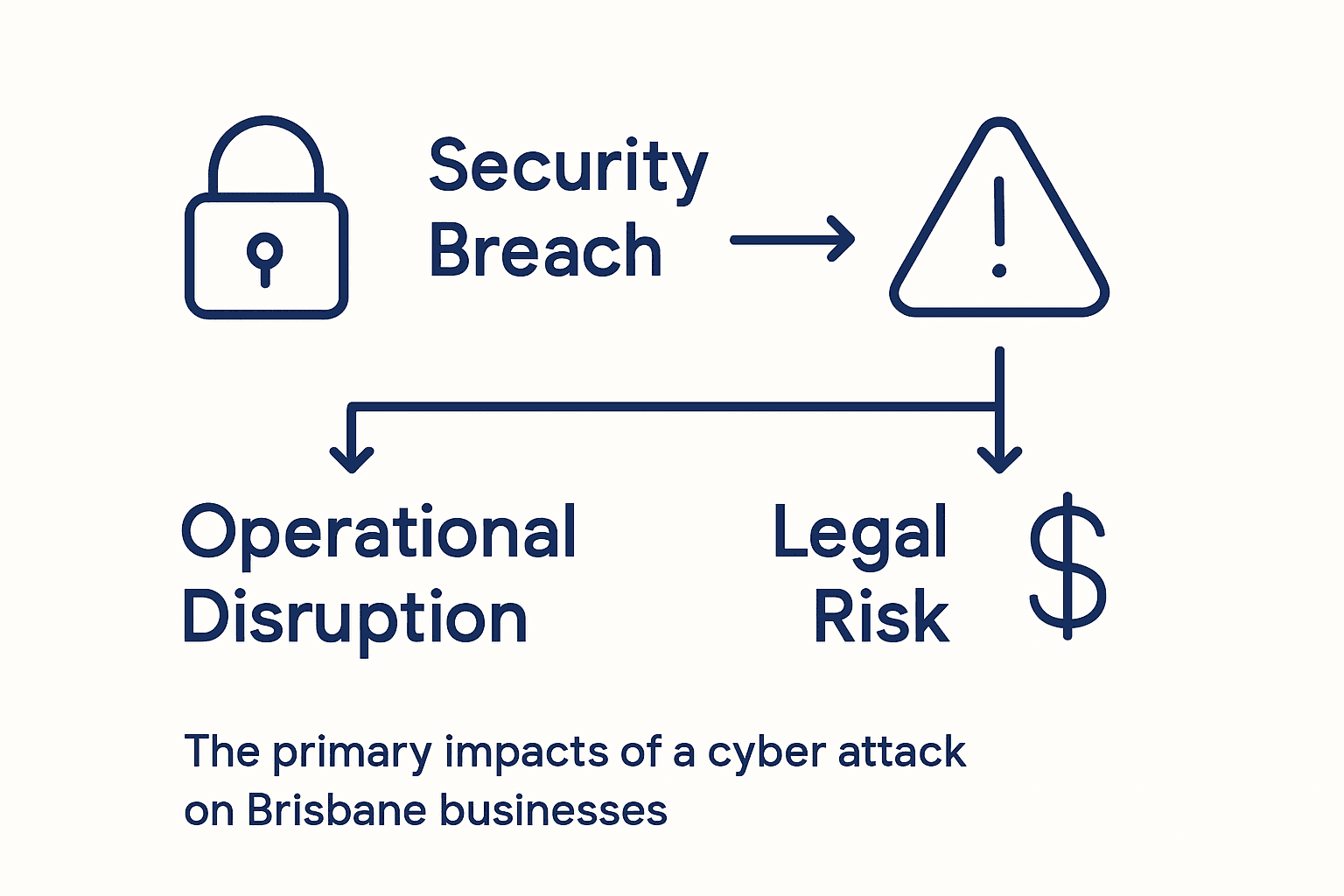
Under Australian legal frameworks, businesses bear substantial legal responsibilities for protecting digital assets and customer information. The Privacy Act and Cyber Security Act impose strict compliance requirements, with potential financial penalties for organisations found negligent in their digital security practices. These legislative provisions mandate proactive cybersecurity measures, requiring businesses to implement robust protective strategies, maintain comprehensive data protection protocols, and demonstrate ongoing risk management efforts.
Cyber threats can result in multiple devastating consequences that extend beyond immediate financial losses. Small and medium enterprises face potential outcomes including permanent customer trust erosion, substantial legal liability, potential regulatory investigations, and long-term brand reputation damage. The interconnected digital ecosystem means a single security breach can trigger cascading effects that might permanently compromise an organisation’s market position and financial stability.
Pro Tip – Legal Protection Strategy: Develop a comprehensive cybersecurity policy document that clearly outlines your organisation’s digital risk management approach, documenting all protective measures and establishing clear accountability protocols to demonstrate proactive compliance with Australian cybersecurity regulations.
Prevention, Compliance And Expert Support
Effective cyber security protection requires a multifaceted approach that combines technological solutions, strategic planning, and comprehensive employee education. Brisbane businesses must develop robust defence mechanisms that address both technical vulnerabilities and human factors. This holistic strategy involves implementing advanced security protocols, maintaining rigorous compliance standards, and cultivating a proactive organisational security culture.
Key preventative measures include establishing strong authentication protocols, regular system updates, and comprehensive employee training programs. Businesses should prioritise critical security practices such as enabling two-factor authentication, maintaining complex password requirements, and implementing intrusion detection systems. Cyber security measures for businesses emphasise the importance of continuous monitoring, regular security audits, and creating clear organisational guidelines for digital interactions and data protection.
Expert support plays a crucial role in navigating the complex cybersecurity landscape. Professional IT security partners can provide specialised guidance, conduct comprehensive risk assessments, and develop tailored defence strategies specific to an organisation’s unique technological ecosystem. These experts help businesses understand emerging threats, implement cutting-edge protective technologies, and ensure ongoing compliance with Australian cybersecurity regulations. Small and medium enterprises particularly benefit from external expertise that can bridge knowledge gaps and provide sophisticated security solutions beyond internal capabilities.
Below is a summary of practical cyber security prevention measures and their advantages:
| Prevention Measure | Primary Benefit | Implementation Frequency |
|---|---|---|
| Two-Factor Authentication | Harder for attackers to access data | Whenever accessing key accounts |
| Regular Security Audits | Early threat identification | Every 3–6 months |
| Staff Training Programmes | Reduced human error risk | At least bi-annually |
| System Updates & Patching | Blocks known vulnerabilities | Monthly or as updates release |
| Intrusion Detection Systems | Rapid attack detection | Continuous monitoring |
Pro Tip – Continuous Protection Strategy: Establish a quarterly cybersecurity review process that includes staff training updates, technology infrastructure assessments, and a comprehensive evaluation of existing security protocols to ensure ongoing protection against evolving digital threats.
Protect Your Brisbane Business From Cyber Security Threats With IT Start
Brisbane businesses face a growing risk from sophisticated cyber security threats like phishing attacks, ransomware, and business email compromise. These dangers can cause serious financial loss and damage your company’s reputation. If your SME struggles with limited cybersecurity resources or worries about meeting legal compliance such as the Privacy Act, you are not alone. IT Start understands these critical pain points and provides tailored cybersecurity services designed specifically for Queensland businesses. Our proactive approach includes regular security audits, staff training, and advanced protection technologies to help you stay one step ahead of cybercriminals.
Don’t wait until a cyber attack disrupts your operations or exposes sensitive data. Take action now by reaching out to IT Start for a free assessment of your current digital security. Discover how our managed IT support and cloud solutions can strengthen your defences and ensure full compliance with Australian regulations. Protect your business with expert local support you can trust. Contact IT Start today and secure your organisation’s future against ever-evolving cyber threats.
Frequently Asked Questions
What are the common cyber security threats faced by Brisbane businesses?
Brisbane businesses commonly face threats such as phishing attacks, ransomware, malware infections, business email compromise, and data breaches. These threats can lead to significant financial loss and reputational damage.
How can small and medium enterprises in Brisbane protect against cyber attacks?
Small and medium enterprises can protect against cyber attacks by implementing strong authentication protocols, conducting regular security audits, providing employee training, and maintaining up-to-date security systems.
What are the potential impacts of a cyber attack on a business?
The potential impacts of a cyber attack on a business include financial losses, operational disruptions, erosion of customer trust, significant legal liabilities, and long-term reputational damage.
Why are small and medium enterprises particularly targeted by cybercriminals?
Small and medium enterprises are often targeted because they typically have less comprehensive security infrastructure compared to larger companies, making them more accessible for cybercriminals looking to exploit vulnerabilities.