

More than 40 percent of Australian small businesses have experienced a cyber attack in the past year, making vulnerability management a top priority for every owner. As digital threats grow more advanced, understanding exactly what puts your systems at risk is crucial for protecting customer data and maintaining trust. This guide breaks down what vulnerabilities in cyber security really mean for Australian organisations, showing clear steps to keep your business safe from evolving online dangers.
Overview: Cybersecurity Risks & Solutions for Brisbane SMEs
- Defining Vulnerabilities In Cyber Security
- Common Types Of Vulnerabilities For SMEs
- How Vulnerabilities Are Exploited In Practice
- Risks And Consequences For Brisbane Businesses
- Mitigating Vulnerabilities And Staying Compliant
Key Takeaways
| Point | Details |
|---|---|
| Understanding Vulnerabilities | Cyber security vulnerabilities are critical weaknesses in digital systems that can be exploited by attackers, affecting both technical and human-related factors. |
| Cost of Cyber Incidents | Brisbane SMEs face significant financial risks, with average losses of around AUS$46,000 from cyber incidents, highlighting the need for proactive measures. |
| Importance of Training | Implementing comprehensive cybersecurity training can transform staff from potential vulnerabilities to crucial defenders against cyber threats. |
| Proactive Compliance | Aligning with frameworks like the ASD Essential Eight and the Privacy Act 1988 is essential for SMEs to safeguard digital assets and maintain stakeholder trust. |
Defining Vulnerabilities in Cyber Security
In the complex world of digital protection, cyber security vulnerabilities represent critical weaknesses that can compromise an organisation’s digital infrastructure. According to the National Institute of Standards and Technology, a vulnerability is a specific weakness within an information system that could potentially be exploited by malicious threat actors.
These vulnerabilities can manifest in multiple forms, ranging from software coding errors and misconfigured network settings to human-related lapses in security protocols. For Brisbane small and medium businesses, understanding these vulnerabilities is paramount. Cybercriminals constantly search for these digital weak points, much like a burglar examining a building for unlocked windows or vulnerable entry points.
Technical vulnerabilities often include outdated software, unpatched systems, weak authentication mechanisms, and insufficient encryption protocols. Human-related vulnerabilities might involve inadequate staff training, poor password management, or lack of awareness about potential phishing attempts. Cybersecurity best practices for Brisbane SMBs highlight the importance of a comprehensive approach that addresses both technological and human factors.
Pro Tip for Smart Defence: Conduct regular security audits and vulnerability assessments to identify and address potential weaknesses before cybercriminals can exploit them, treating your digital infrastructure like a continuously evolving security landscape that requires constant vigilance and proactive management.
Common Types of Vulnerabilities for SMEs
Brisbane small and medium enterprises face a complex landscape of cyber security vulnerabilities that can compromise their digital infrastructure. Research from online sources reveals several critical vulnerability categories that consistently threaten SME operations, with technical and human-related weaknesses presenting significant risks.
Technical vulnerabilities represent systematic flaws in digital systems. These often include unpatched software, which leaves critical security gaps open for exploitation. Misconfigured applications create additional entry points for cybercriminals, allowing potential breaches that can devastate business operations. Weak authentication mechanisms like simple passwords or lack of multi-factor authentication further compound these technical risks.
Human-related vulnerabilities pose an equally substantial threat. Cybersecurity research highlights that employees can inadvertently become the weakest link in an organisation’s security chain. Phishing susceptibility, poor password practices, and limited cybersecurity awareness can transform staff into potential vulnerability vectors. Sophisticated social engineering tactics exploit these human factors, tricking employees into revealing sensitive information or granting unauthorized system access.

Pro Tip for Vulnerability Management: Implement comprehensive cybersecurity training programs that address both technical and human vulnerabilities, ensuring your team understands current threat landscapes and knows how to recognise and respond to potential security risks proactively.
The following table summarises typical technical and human-related vulnerabilities affecting Brisbane SMEs, along with practical mitigation steps.
| Vulnerability Type | Specific Example | Business Impact | Mitigation Measure |
|---|---|---|---|
| Technical Vulnerability | Outdated operating system | Increased risk of unauthorised access | Regular software patching |
| Technical Vulnerability | Poor network configuration | Easy entry for cyber attackers | Professional network audits |
| Human Vulnerability | Weak company passwords | Staff accounts easily compromised | Enforce strong password policies |
| Human Vulnerability | Lack of phishing awareness | Employees may reveal sensitive data | Staff cyber security training |
How Vulnerabilities Are Exploited in Practice
Cybercriminals employ sophisticated strategies to exploit digital vulnerabilities, transforming seemingly minor weaknesses into significant security breaches. Researchers from Rutgers University reveal that attackers leverage multiple technical approaches to compromise system security, with methods ranging from intricate buffer overflow techniques to exploiting simple configuration oversights.
One primary exploitation method involves targeting unpatched software and system misconfigurations. By identifying and manipulating protocol design flaws, cybercriminals can gain unauthorised access to critical business systems. Default passwords, weak authentication mechanisms, and outdated security configurations provide convenient entry points for malicious actors seeking to infiltrate an organisation’s digital infrastructure. Cybersecurity analysis from Champlain College emphasises that these vulnerabilities can enable attackers to access, modify, or completely destroy sensitive business information.
Sophisticated social engineering techniques complement technical exploitation methods, allowing cybercriminals to manipulate human psychology. By crafting convincing phishing emails, creating fraudulent websites, or impersonating trusted contacts, these attackers can trick employees into revealing login credentials, installing malware, or bypassing standard security protocols. The most dangerous exploits often combine technical vulnerabilities with human manipulation, creating multi-layered attack strategies that can completely compromise an organisation’s digital defences.
Pro Tip for Exploit Prevention: Develop a comprehensive, multi-layered security approach that combines robust technical safeguards with ongoing staff training, ensuring your organisation can identify, respond to, and mitigate potential vulnerability exploits before they cause significant damage.
Risks and Consequences for Brisbane Businesses
Cyber security vulnerabilities represent a critical threat to Brisbane’s small and medium enterprises, with potentially devastating financial and operational consequences. Research from the World Economic Forum reveals that Australian SMEs face substantial financial risks, with the average small business experiencing losses of approximately AUS$46,000 from cyber incidents.
Beyond immediate financial damage, cyber attacks can trigger cascading consequences that compromise business continuity and reputation. Sensitive customer data breaches can lead to significant legal liabilities, regulatory penalties, and permanent loss of customer trust. Operational disruptions from system compromises can halt business activities, potentially causing revenue losses that extend far beyond the initial security incident. Australia’s Cyber Security Strategy highlights the particular vulnerability of SMEs, who often lack dedicated cybersecurity resources and expertise to mount comprehensive defensive strategies.
The reputational damage from a significant cyber incident can be equally devastating. Clients and partners may permanently withdraw their business following a data breach, viewing such incidents as indicators of fundamental organisational negligence. Small businesses in competitive sectors like professional services, finance, and technology face heightened risks, where a single security failure can instantly erode years of carefully built professional credibility. Cybercriminals increasingly target SMEs precisely because they recognise these organisations as potentially easier targets with less sophisticated defence mechanisms.
Pro Tip for Risk Mitigation: Develop a proactive cybersecurity strategy that includes regular vulnerability assessments, comprehensive staff training, and robust incident response planning to minimise potential financial and reputational damages before they can escalate.
Mitigating Vulnerabilities and Staying Compliant
Effective vulnerability management requires a systematic and comprehensive approach that goes beyond basic security measures. Research from California State University emphasises the critical process of identifying, classifying, prioritising, and remediating potential security weaknesses across an organisation’s digital infrastructure.
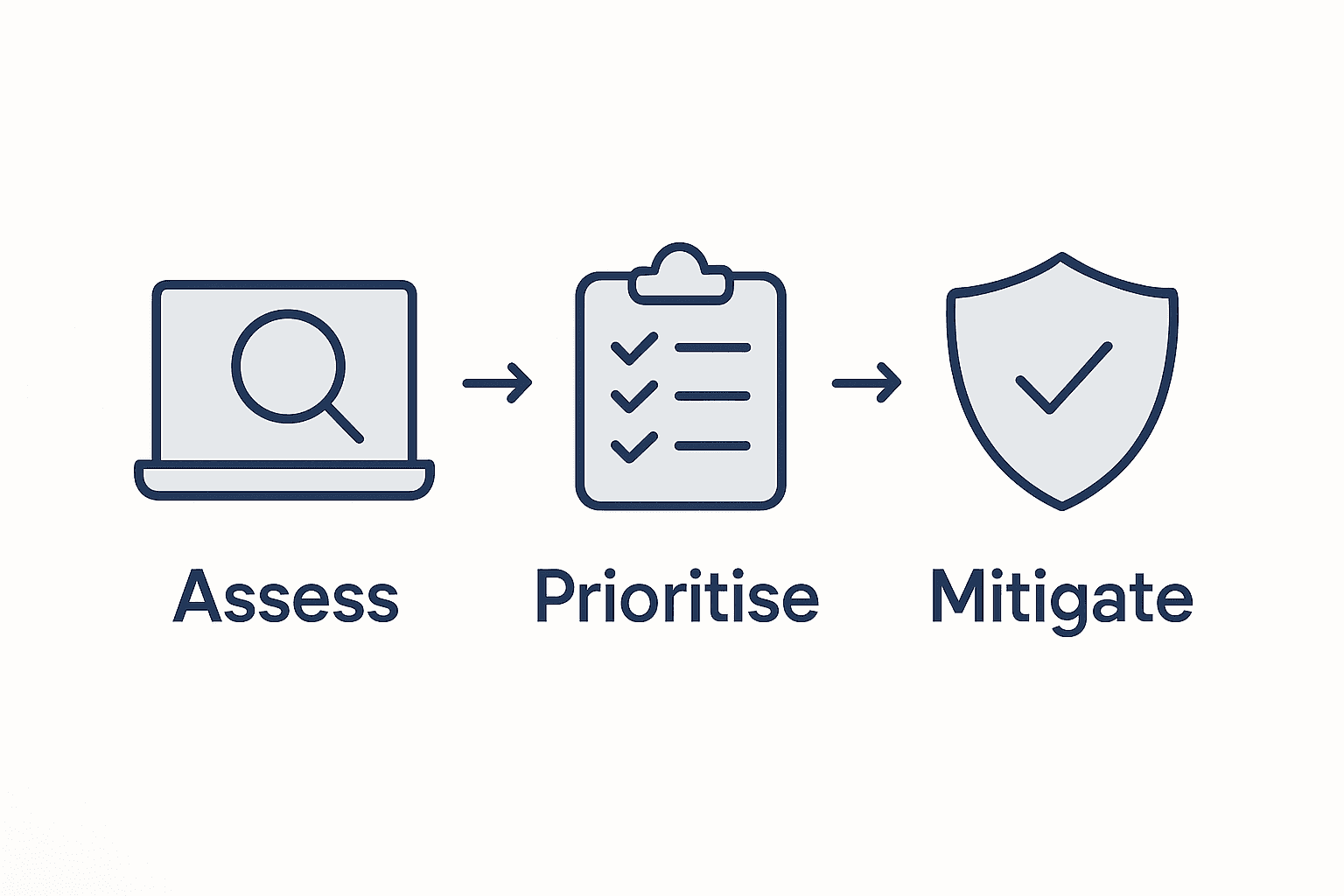
A robust mitigation strategy begins with continuous vulnerability assessment and prioritisation. This involves conducting regular security audits, performing penetration testing, and maintaining up-to-date software and systems. Brisbane businesses must implement multi-layered defence mechanisms that include advanced endpoint protection, network segmentation, and comprehensive access control protocols. Insights from the Software Engineering Institute underscore the importance of discovering and transparently addressing vulnerabilities before they can be exploited by malicious actors.
Compliance represents another critical dimension of vulnerability management. Australian businesses must align with regulatory frameworks like the Australian Signals Directorate’s Essential Eight and the Privacy Act 1988. This requires developing comprehensive cybersecurity policies, implementing strong authentication mechanisms, maintaining detailed incident response plans, and ensuring regular staff training on emerging cyber threats. Small to medium enterprises must view compliance not as a checkbox exercise, but as an ongoing commitment to protecting their digital assets and maintaining stakeholder trust.
Below is a comparison of key Australian cybersecurity compliance frameworks relevant to SMEs.
| Framework | Main Requirement | Relevance to SMEs |
|---|---|---|
| ASD Essential Eight | Baseline security controls | Prevents common attacks |
| Privacy Act 1988 | Protect personal information | Legal obligation |
| ACSC Small Business Cyber Security Guide | Practical guidance for small firms | Step-by-step implementations |
| ISO/IEC 27001 | International info security standard | Global credibility boost |
Pro Tip for Strategic Defence: Adopt a proactive, holistic cybersecurity approach that integrates continuous vulnerability assessment, staff education, and adaptive defence strategies, treating your organisation’s digital security as a dynamic and evolving ecosystem.
Protect Your Brisbane SME from Cyber Security Vulnerabilities Today
The article highlights the urgent challenge Brisbane small and medium enterprises face with cyber security vulnerabilities that threaten your business’s digital infrastructure. Whether it is outdated software, weak passwords, or human error, these risks can lead to costly data breaches, operational disruption, and severe reputational damage. Protecting your business requires a strong and proactive approach that addresses both technical weaknesses and staff awareness.
IT Start specialises in tailored cybersecurity solutions for Brisbane SMEs that want to stay one step ahead of cybercriminals. Our managed IT support and cloud services provide continuous vulnerability assessments combined with comprehensive staff training. We focus on building a multi-layered defence strategy to keep your data safe while ensuring compliance with Australian regulations like the Essential Eight and Privacy Act. Don’t wait for a costly breach to take action. Take advantage of our free consultation to start strengthening your digital defences right now.
Ready to safeguard your business from evolving cyber threats? Visit Contact IT Start to book your no-obligation cybersecurity assessment today and transform your vulnerability management into a strategic business advantage.
Frequently Asked Questions
What are cyber security vulnerabilities?
Cyber security vulnerabilities are weaknesses in an organization’s digital infrastructure that can be exploited by malicious actors, such as software flaws, misconfigured systems, and human errors.
How can Brisbane SMEs identify their cyber security vulnerabilities?
Brisbane SMEs can identify vulnerabilities by conducting regular security audits, performing vulnerability assessments, and keeping software up to date with patches and security updates.
What are the consequences of a cyber attack for small and medium enterprises?
Consequences of a cyber attack may include financial losses, operational disruptions, reputational damage, and legal liabilities due to data breaches or non-compliance.
What strategies can SMEs implement to mitigate cyber security vulnerabilities?
To mitigate vulnerabilities, SMEs should adopt a multi-layered security approach, including employee training, strong password policies, continuous monitoring, and compliance with established security frameworks.