

Cyber crime is costing the average Australian small business more than $49,000 every year. As digital threats grow more advanced across Brisbane and beyond, understanding cyber security is no longer optional. Business owners face constantly evolving risks that threaten operations, customer trust, and regulatory standing. This guide demystifies critical cyber security concepts and delivers clear, practical solutions every Australian enterprise needs for stronger digital protection.
Comprehensive Cyber Security Guide for Brisbane SMEs
- Cyber Security Defined for Australian Businesses
- Common Types of Cyber Threats Facing SMEs
- Essential Cyber Security Solutions and Tools
- Compliance, Legal Duties and Industry Standards
- Risks, Costs and Cyber Incident Mistakes to Avoid
Key Takeaways
| Point | Details |
|---|---|
| Comprehensive Cyber Security | Australian SMEs must adopt a holistic cyber security strategy to protect against sophisticated digital threats and safeguard sensitive information. |
| Regular Training and Assessment | Continuous employee training and systematic risk assessments are essential for maintaining a strong defence against cyber threats. |
| Understanding Legal Compliance | Businesses must adhere to legal obligations regarding data protection and establish robust protocols to mitigate risks of data breaches. |
| Proactive Incident Response Planning | Developing a clear incident response plan can help minimise damage and recovery time during a cyber incident. |
Cyber Security Defined for Australian Businesses
Cyber security represents the comprehensive digital defence strategy that protects businesses from technological risks and potential digital breaches. For Brisbane small to medium enterprises (SMEs), understanding this concept goes far beyond basic computer protection.
At its core, cyber security involves safeguarding technology, data, and information systems from unauthorised access or damage. This means defending digital assets against accidental corruption, malicious theft, and strategic cyber attacks that could compromise business operations. Australian businesses face increasingly sophisticated digital threats that require proactive and intelligent protective measures.
The landscape of cyber security for SMEs encompasses multiple critical domains. These include network security, application security, endpoint protection, data encryption, and comprehensive threat management. Small businesses must recognise that cyber risks are not just theoretical concerns but real, tangible threats that can devastate operational capabilities and customer trust. Maintaining legal compliance and protecting customer information represents a fundamental responsibility for modern Australian businesses.
Pro Tip for SMEs: Develop a systematic cyber security approach by conducting regular risk assessments, implementing multi-layered defence strategies, and training staff on basic digital safety protocols to create a robust protective environment.
Key Cyber Security Focus Areas for Brisbane Businesses:
- Network infrastructure protection
- Data encryption techniques
- Employee digital awareness training
- Regular security vulnerability assessments
- Incident response planning
Common Types of Cyber Threats Facing SMEs
Small and medium enterprises in Brisbane face a complex and evolving landscape of digital security challenges. Cyber threats can emerge from multiple sources, targeting businesses through sophisticated and increasingly adaptive strategies that exploit technological vulnerabilities.
One primary category of cyber threats involves malicious software designed to infiltrate and disrupt business operations. These malware variations include ransomware, which locks critical business data and demands payment for restoration, viruses that corrupt system files, and trojans that create backdoor access for cybercriminals. Each threat type presents unique risks that can potentially cripple a business’s digital infrastructure and compromise sensitive information.

Beyond malware, Brisbane SMEs must also contend with social engineering attacks, phishing attempts, and network intrusion strategies. Cybercriminals continuously develop new techniques to exploit human error and technological weaknesses. Phishing emails mimicking legitimate communications, targeted social media manipulation, and sophisticated password compromise techniques represent ongoing challenges that require constant vigilance and proactive defence mechanisms.
Key Cyber Threat Categories for Brisbane Businesses:
- Ransomware attacks
- Phishing scams
- Network infiltration
- Social engineering techniques
- Data breach attempts
Pro Tip for Business Owners: Implement regular staff training programs focusing on recognising potential cyber threats, establish robust multi-factor authentication protocols, and maintain updated security software to create a comprehensive defensive strategy.
Essential Cyber Security Solutions and Tools
Brisbane small and medium enterprises require a comprehensive suite of cyber security solutions to protect their digital infrastructure and sensitive business information. Cyber security tools represent the technological armour that defends businesses against increasingly sophisticated digital threats and potential system vulnerabilities.
Developing a robust cyber security policy forms the foundational framework for digital protection strategies. This involves implementing strategic technological controls, defining clear information asset protection protocols, and establishing stringent passphrase requirements that prevent unauthorised system access. Modern cyber security solutions encompass multi-layered defence mechanisms including advanced firewall technologies, endpoint protection platforms, intrusion detection systems, and real-time threat monitoring software.
The Australian Government provides specialised cyber security assessment tools that enable businesses to comprehensively evaluate their current digital defence capabilities. These diagnostic platforms help organisations identify potential security weaknesses, generate tailored action plans, and prioritise critical infrastructure improvements. Key technological solutions include network segmentation, encrypted communication channels, multi-factor authentication, and continuous security patch management.
Critical Cyber Security Solution Components:
- Advanced firewall configurations
- Endpoint protection platforms
- Intrusion detection systems
- Encrypted communication channels
- Comprehensive threat monitoring software
Pro Tip for Cyber Defence: Regularly conduct independent security audits, maintain updated software patches, and implement a holistic approach to cyber security that combines technological tools with ongoing staff education and awareness training.
Here’s a comparison of common cyber security solutions and the risks they help mitigate:
| Solution Type | Primary Function | Mitigated Risk |
|---|---|---|
| Advanced firewalls | Block unauthorised network access | Prevents network intrusion attempts |
| Endpoint protection | Scan and shield end-user devices | Reduces malware and ransomware infections |
| Intrusion detection systems | Observe incoming traffic for anomalies | Alerts to suspicious activity or breaches |
| Encrypted communication | Secure data in transit | Protects sensitive information disclosure |
| Threat monitoring software | Real-time tracking of threats | Early identification of cyber attacks |
Compliance, Legal Duties and Industry Standards
Brisbane small to medium enterprises operate within a complex regulatory landscape that demands rigorous attention to legal compliance and data protection standards. Navigating these requirements is not merely a recommended practice but a critical business imperative that directly impacts organisational reputation and operational legitimacy.
Businesses must understand their fundamental legal duties for storing and safeguarding private information. This encompasses comprehensive protocols for data management, protection mechanisms, and transparent handling of sensitive digital assets. Australian regulatory frameworks impose strict obligations on businesses to maintain robust security measures, implement privacy protection strategies, and demonstrate proactive risk mitigation approaches that protect customer and stakeholder information.
Specific legal regulations mandate businesses to actively protect any digital information they collect and process. These requirements extend across multiple domains including privacy legislation, industry-specific compliance standards, and national cybersecurity guidelines. Key regulatory considerations include the Australian Privacy Principles, sector-specific data protection regulations, and mandatory breach notification requirements that compel businesses to disclose significant security incidents within specified timeframes.
Critical Compliance Focus Areas:
- Privacy legislation adherence
- Data protection protocols
- Mandatory breach reporting
- Customer information security
- Industry-specific regulatory standards
Pro Tip for Legal Compliance: Conduct regular comprehensive compliance audits, maintain detailed documentation of your data management practices, and develop a systematic approach to understanding and implementing evolving regulatory requirements.
Risks, Costs and Cyber Incident Mistakes to Avoid
Brisbane small to medium enterprises face an increasingly complex digital threat landscape that demands strategic awareness and proactive defence mechanisms. Cyber incidents can rapidly transform from minor vulnerabilities into catastrophic business disruptions that compromise operational integrity and financial stability.
The average cost of cybercrime presents a sobering reality for Australian businesses. Small businesses encounter an average financial impact of $49,600, while medium enterprises face potential losses approaching $62,800. These substantial financial risks arise from multiple potential incident scenarios, including data breaches, operational downtime, reputation damage, and complex recovery processes that extend far beyond immediate monetary losses.
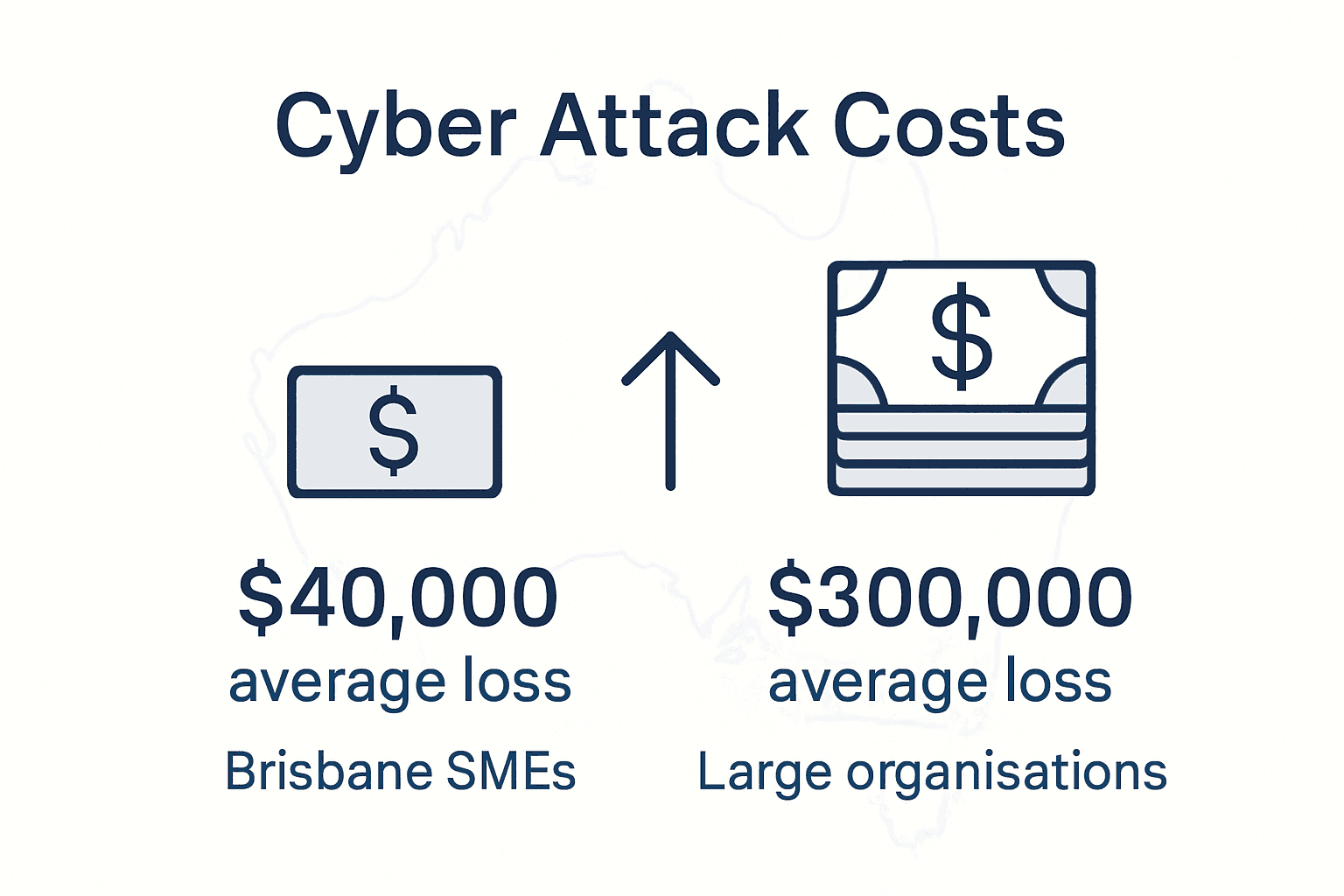
Cyber attacks can precipitate extensive business disruptions through multiple interconnected risk vectors. Critical mistakes that amplify vulnerability include inadequate software update protocols, insufficient backup strategies, poorly configured network security, lack of employee cybersecurity training, and minimal incident response planning. These systemic weaknesses create exploitable gaps that sophisticated cybercriminals can rapidly manipulate to compromise business systems.
To better understand business impact, here is a summary of potential costs and consequences of different cyber incidents for SMEs:
| Incident Type | Typical Financial Impact | Possible Business Consequence |
|---|---|---|
| Data breach | $49,600 – $62,800 (average) | Loss of customer trust, legal penalties |
| Ransomware event | Recovery and ransom expenses | Downtime, loss of access to key systems |
| Phishing attack | Financial theft, data leaks | Credential loss, regulatory enquiry |
| Service outage | Revenue reduction, recovery | Disrupted operations, reputation impact |
Key Cyber Incident Risk Domains:
- Financial loss potential
- Operational disruption scenarios
- Reputation damage mechanisms
- Data compromise pathways
- Business continuity challenges
Pro Tip for Cyber Risk Management: Develop a comprehensive cyber incident response plan, conduct regular vulnerability assessments, implement multi-layered security strategies, and create a culture of continuous cybersecurity awareness within your organisation.
Strengthen Your Brisbane SME with Expert Cyber Security Support
Brisbane small to medium enterprises face serious challenges in combating increasing cyber threats such as ransomware, phishing scams, and data breaches that can cause costly operational disruptions and damage customer trust. The article highlights critical pain points including the need for multi-layered defence strategies, ongoing staff training, and legal compliance with privacy obligations. Protecting your business infrastructure against these evolving risks requires more than just basic security — it demands a proactive and well-rounded approach tailored to your unique business environment.
At IT Start, we understand the complex cyber security landscape Brisbane SMEs navigate daily. Our managed IT support and specialised cybersecurity services are designed to help you build a resilient defence against digital threats while ensuring compliance with Australian regulations. With our local expertise, strategic frameworks, and certifications like SMB 1001 Gold, we help businesses like yours improve operational efficiency and mitigate risks effectively. Take control of your cyber safety today by booking a free cyber security assessment or connecting with our team for a personalised consultation. Secure your future and protect what matters most with IT Start — your trusted Brisbane IT partner.
Frequently Asked Questions
What is cyber security?
Cyber security refers to the comprehensive strategy designed to protect technology, data, and information systems from unauthorized access, damage, and theft. It involves various measures to defend digital assets against accidental corruption, malicious attacks, and strategic cyber threats.
Why is cyber security important for SMEs?
Cyber security is crucial for SMEs as they face real and escalating digital threats that can compromise operational capabilities and customer trust. Protecting sensitive information and maintaining legal compliance in data protection are fundamental responsibilities for businesses today.
What are the common types of cyber threats facing businesses?
Common types of cyber threats include ransomware attacks, phishing scams, network infiltration, social engineering techniques, and data breaches. Each of these threats can severely disrupt business operations and cause financial losses.
What essential tools and solutions should SMEs implement for cyber security?
SMEs should implement essential tools such as advanced firewalls, endpoint protection platforms, intrusion detection systems, encrypted communication channels, and comprehensive threat monitoring software to protect their digital infrastructure and sensitive information.