

Over 60 percent of australian small and medium-sized businesses experienced a cyber attack in the past year. For Brisbane financial services firms, the real threat goes beyond lost data or disrupted systems. Understanding cyber security basics helps protect sensitive client information, ensures compliance with national regulations, and reduces the risk of costly downtime. This guide clears up common myths and highlights vital protections every australian business owner should know.
Table of Contents
- Cyber Security Basics And Common Myths
- Types Of Assets Cyber Security Protects
- Key Threats Facing Brisbane Businesses
- Legal Obligations And Compliance Requirements
- Risks Of Inadequate Cyber Security Measures
Cyber Security Essentials: Topics for Brisbane Businesses
| Point | Details |
|---|---|
| Understanding Cyber Security | Cyber security is essential for safeguarding Brisbane businesses against evolving digital threats and requires continuous assessment and improvement. |
| Common Myths | Many businesses mistakenly believe they are immune to attacks or that basic antivirus is sufficient, leaving them exposed to various risks. |
| Protecting Assets | Critical digital and physical assets, including intellectual property and customer data, require tailored protection strategies to mitigate risks. |
| Legal Compliance | Adhering to legal obligations, such as the Privacy Act 1988, is crucial to avoid significant penalties and protect sensitive information. |
Cyber Security Basics and Common Myths
Cyber security represents the digital shield protecting Brisbane businesses from increasingly sophisticated digital threats. As technology evolves, so do the methods criminals use to compromise sensitive information and disrupt operations. Understanding the fundamentals helps organisations develop robust defence strategies that safeguard critical assets and maintain business continuity.
Businesses frequently misunderstand cyber security, believing myths that can leave them vulnerable. Some common misconceptions include thinking small businesses are not targets, assuming antivirus software provides complete protection, or believing that cyber attacks only happen to other companies. In reality, cybersecurity practices for Brisbane SMBs demonstrate that every organisation faces potential risks, regardless of size or industry.
The core principles of cyber security involve multiple layers of protection across technological, human, and procedural domains. This includes implementing strong password policies, conducting regular staff training, maintaining updated software, using multi-factor authentication, and developing comprehensive incident response plans. Effective cyber security is not a one-time setup but an ongoing process of assessment, adaptation, and continuous improvement.
Pro Tip: Cyber Security Awareness: Conduct monthly 15-minute team briefings about current digital threats and basic protection strategies to transform your staff from potential security vulnerabilities into your organisation’s first line of defence.
Here is a summary highlighting how core cyber security principles translate into business benefits for Brisbane organisations:
| Principle | Implementation Example | Business Benefit |
|---|---|---|
| Multi-factor authentication | Login requires code and password | Reduces risk of unauthorised access |
| Regular staff training | Monthly threat awareness sessions | Minimises human error and phishing success |
| Updated software | Automated updates on devices | Closes known security vulnerabilities |
| Incident response planning | Clear breach action protocol | Minimises downtime and damage during attacks |
| Strong password policies | Complexity and change requirements | Guards critical systems from brute-force attacks |
Types of Assets Cyber Security Protects
Cyber security in Brisbane businesses encompasses protection for a wide range of critical digital and physical assets that are fundamental to organisational operations. These assets extend far beyond simple computer systems, encompassing intellectual property, financial data, customer information, operational technologies, and complex digital infrastructure. Understanding cyber security methods reveals the comprehensive nature of digital asset protection.
The primary categories of assets requiring robust cyber security include:
- Intellectual Property: Trade secrets, product designs, research data, and proprietary algorithms
- Financial Information: Banking details, transaction records, financial forecasts, accounting systems
- Customer Data: Personal identifiable information, contact details, purchase histories
- Operational Systems: Network infrastructure, cloud storage, communication platforms
- Digital Communications: Email systems, messaging platforms, collaborative workspaces
- Hardware Assets: Servers, workstations, mobile devices, networking equipment
Each asset type presents unique vulnerabilities that require targeted protection strategies. Digital systems are interconnected, meaning a breach in one area can potentially compromise multiple asset categories simultaneously. Brisbane businesses must adopt a holistic approach that considers the interdependencies between different digital and physical infrastructure components.

Pro Tip: Asset Mapping: Conduct a comprehensive quarterly audit of all digital and physical assets, categorising their criticality and potential risk exposure to develop precise, targeted cyber security strategies.
Key Threats Facing Brisbane Businesses
Brisbane businesses face an increasingly complex landscape of digital threats that can compromise their operational integrity and financial stability. Cyber security threats specific to Brisbane businesses reveal a sophisticated ecosystem of digital risks that demand proactive and strategic defence mechanisms.
The most prevalent cyber security threats confronting local organisations include:
- Ransomware Attacks: Malicious software that encrypts business data and demands payment for restoration
- Phishing Schemes: Sophisticated email and communication strategies designed to steal sensitive credentials
- Social Engineering: Psychological manipulation techniques targeting employee vulnerabilities
- Distributed Denial of Service (DDoS) Attacks: Overwhelming business network infrastructure to disrupt operations
- Insider Threats: Potential risks from current or former employees with access to critical systems
- Supply Chain Vulnerabilities: Exploiting interconnected digital networks through third-party weaknesses
Small and medium enterprises are particularly susceptible to these threats, often lacking comprehensive security infrastructure. Cybercriminals frequently target organisations with limited resources, viewing them as easier entry points into broader digital ecosystems. The financial and reputational damage from a successful cyber attack can be devastating, potentially causing operational disruption, financial loss, and long-term trust erosion among clients and stakeholders.
Pro Tip: Threat Intelligence: Establish a monthly cybersecurity briefing that reviews recent local and global threat trends, ensuring your team remains informed and prepared to recognise and respond to emerging digital risks.
The table below compares typical cyber threat impacts and the recommended strategies Brisbane businesses can use to address each risk:
| Threat Type | Likely Impact | Recommended Strategy |
|---|---|---|
| Ransomware | Loss of business data, downtime | Maintain backups, staff training |
| Phishing | Credential theft, fraud | Email filtering, user education |
| Social engineering | Unauthorised access, data leak | Employee awareness programs |
| DDoS attacks | Service interruption | Scaling, network monitoring |
| Insider threats | Data sabotage or theft | Access controls, monitoring |
Legal Obligations and Compliance Requirements
Brisbane businesses must navigate a complex landscape of legal and regulatory requirements surrounding cyber security, with significant implications for data protection and organisational risk management. IT compliance guidelines for Brisbane businesses outline critical frameworks that organisations must implement to protect sensitive information and maintain legal integrity.
Key legal obligations for businesses in Queensland include:
- Privacy Act 1988: Mandates protection of personal information and requires notification of data breaches
- Australian Signals Directorate (ASD) Guidelines: Provides comprehensive cyber security mitigation strategies
- Queensland Cyber Security Strategy: Establishes regional expectations for digital security practices
- Corporations Act 2001: Requires businesses to maintain appropriate risk management systems
- GDPR and International Data Protection Regulations: Governs cross-border data handling and privacy
- Industry-Specific Compliance Requirements: Additional regulations for financial, healthcare, and government sectors
Non-compliance can result in substantial financial penalties, legal consequences, and reputational damage. Businesses must develop comprehensive cyber security frameworks that not only meet legal requirements but also proactively protect against emerging digital risks. This involves regular audits, staff training, robust technological infrastructure, and demonstrable commitment to data protection principles.
Pro Tip: Compliance Mapping: Develop an annual compliance roadmap that tracks changing regulatory requirements, ensuring your organisation remains ahead of legal obligations and potential cyber security challenges.
Risks of Inadequate Cyber Security Measures
Brisbane businesses face profound and potentially catastrophic consequences when cyber security measures remain inadequate or poorly implemented. Cyber security vulnerabilities confronting Brisbane businesses reveal a complex landscape of digital risks that can devastate organisational stability and reputation.
The most significant risks associated with insufficient cyber security include:
- Financial Losses: Potential direct monetary damages from ransomware, fraud, and theft
- Operational Disruption: Complete shutdown of business systems and critical infrastructure
- Reputational Damage: Permanent loss of customer trust and potential market share erosion
- Legal Consequences: Substantial fines, potential litigation, and regulatory penalties
- Data Compromise: Permanent loss or exposure of sensitive business and customer information
- Competitive Disadvantage: Potential permanent damage to business relationships and market positioning
Small and medium enterprises are particularly vulnerable, often lacking comprehensive defensive strategies and resources to recover from significant cyber incidents. The cumulative impact extends beyond immediate financial losses, potentially threatening the entire organisational ecosystem. Cybercriminals increasingly target businesses with perceived weak security infrastructure, viewing them as low-risk, high-reward opportunities for malicious activities.
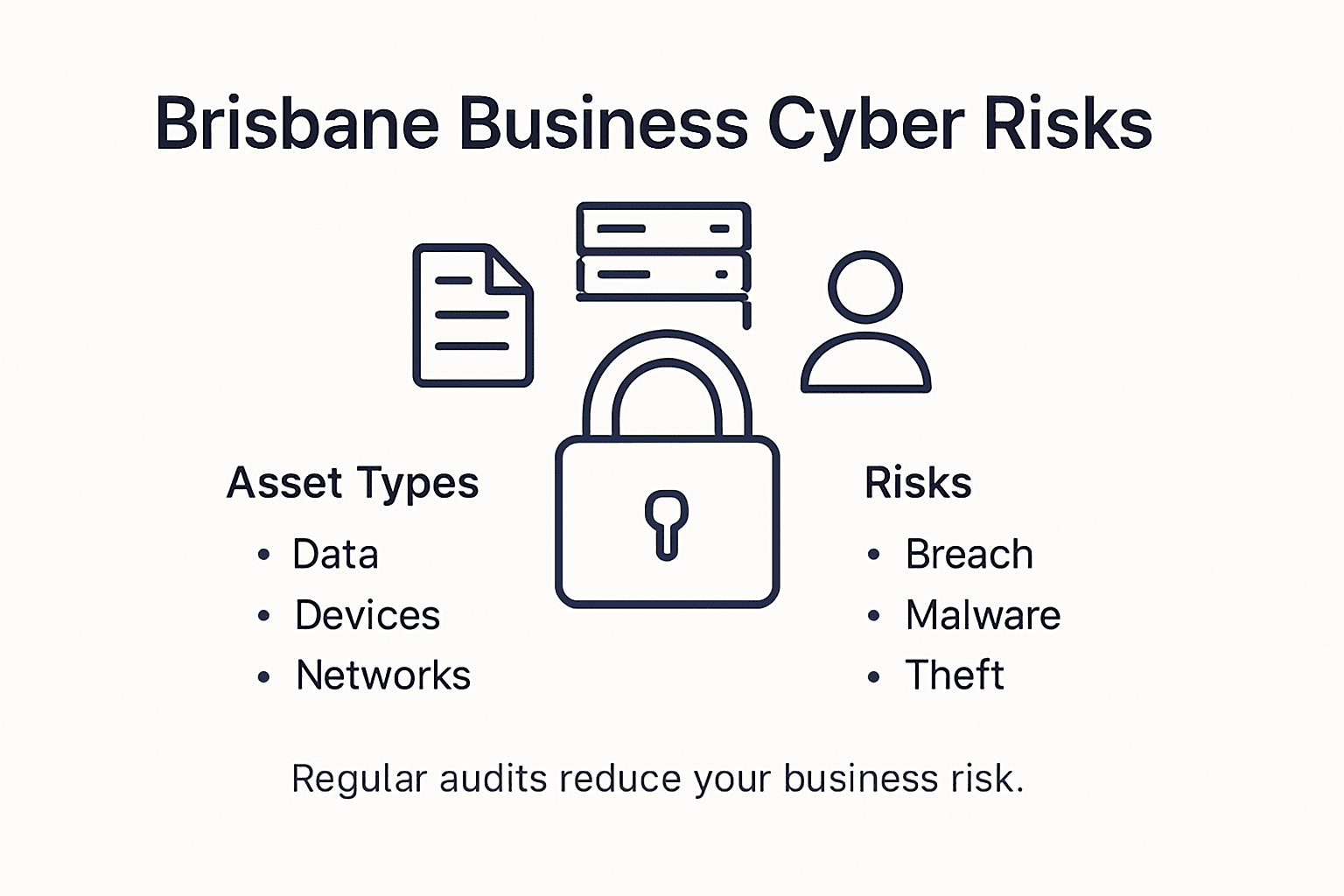
Pro Tip: Vulnerability Assessment: Conduct quarterly comprehensive cyber security audits that systematically identify and prioritise potential system weaknesses, ensuring proactive risk mitigation before potential breaches occur.
Protect Your Brisbane Business with Expert Cyber Security Support
Brisbane businesses face complex challenges protecting crucial assets like intellectual property, customer data and operational systems from evolving cyber threats. The risks of inadequate security include financial loss, operational disruption and reputational damage. If you find yourself concerned about ransomware, phishing or insider threats undermining your business continuity, you are not alone. Understanding core principles such as multi-factor authentication, regular staff training and incident response planning is just the start.
At IT Start we specialise in managed IT support and tailored cyber security solutions designed specifically for Brisbane small to medium-sized enterprises. Our proactive approach helps you stay compliant with regulations like the Privacy Act and Queensland Cyber Security Strategy while fortifying your digital infrastructure against targeted attacks. Take the first step towards safeguarding your business by booking a free security assessment today. Partner with local experts who understand your unique risks and can keep your operations running smoothly.
Protect what matters most with IT Start. Learn more about how our comprehensive cybersecurity services translate into real business benefits by visiting our contact page and arranging a personalised consultation to improve your digital resilience now.
Frequently Asked Questions
What types of assets does cyber security protect for businesses?
Cyber security protects a wide range of assets, including intellectual property, financial information, customer data, operational systems, digital communications, and hardware assets. Each category has unique vulnerabilities that require tailored protection strategies.
Why is cyber security important for small businesses?
Cyber security is crucial for small businesses as they are often seen as easier targets by cybercriminals. Inadequate measures can lead to significant financial loss, operational disruption, reputational damage, and legal consequences due to data breaches.
How can businesses improve their cyber security measures?
Businesses can improve their cyber security by implementing strong password policies, conducting regular staff training, maintaining updated software, using multi-factor authentication, and having clear incident response plans in place.
What are the common cyber security threats that businesses face?
Common cyber security threats include ransomware attacks, phishing schemes, social engineering tactics, DDoS attacks, insider threats, and supply chain vulnerabilities. Each of these poses significant risks to business operations and data integrity.