

Securing Brisbane’s small and medium financial firms is becoming more challenging every year. Cybercriminals now use highly personalised tactics, making comprehensive protection vital for Australian businesses. Understanding the basics of layered cyber security measures such as multi-factor authentication, regular updates, and staff training helps protect sensitive data and ensures operational stability. This article offers practical insight on building organisational resilience and adopting essential defensive strategies suited to the unique pressures faced by local SME decision-makers.
Table of Contents
- Cyber Security Basics For Aussie SMEs
- Types Of Cyber Threats In 2026
- How Cyber Security Measures Work
- Australian Requirements And Compliance Standards
- Costs, Risks, And Common Pitfalls For SMEs
Explore Cybersecurity Essentials for Brisbane SMEs
| Point | Details |
|---|---|
| Implement Core Strategies | Enable multi-factor authentication, update software regularly, and create secure password protocols to enhance cyber security. |
| Understand Emerging Threats | Stay informed about sophisticated cyber threats like ransomware and AI-driven phishing to adopt proactive defensive strategies. |
| Ensure Compliance | Adhere to mandatory reporting and security protocols under the Cyber Security Act 2024 to mitigate risks and enhance organisational resilience. |
| Invest in Cyber Insurance | Financial protection via cyber insurance and a detailed incident response plan is crucial to minimise potential losses from cyber incidents. |
Cyber Security Basics for Aussie SMEs
Cyber security for small and medium enterprises (SMEs) in Australia demands a strategic and proactive approach. Brisbane businesses face increasingly complex digital threats that require comprehensive protection strategies. Understanding fundamental cyber security principles can help protect sensitive data and maintain operational integrity.
The Australian Cyber Security Centre recommends several core strategies for SMEs. Implementing essential cyber security measures involves multiple layers of protection. Key recommendations include:
- Enabling multi-factor authentication
- Regularly updating software and systems
- Creating secure password protocols
- Backing up critical business data
- Training employees on cyber threat awareness
Directors and business owners must also understand their critical role in managing cyber risks. The Australian Cyber Security Handbook emphasises developing robust internal policies and fostering a culture of cyber resilience. This means moving beyond technical solutions to create organisational awareness and preparedness.
Implementing the Australian Signals Directorate’s Essential Eight maturity model provides a structured framework for improving cyber security. Small businesses can progressively enhance their digital defences by adopting these strategies systematically, reducing vulnerability to potential cyber attacks.
Pro tip: Conduct a quarterly cyber security audit to identify and address potential vulnerabilities before they become critical risks.
Types of Cyber Threats in 2026
As we approach 2026, Brisbane’s small and medium enterprises face an increasingly sophisticated and complex cyber threat landscape. Emerging cyber security challenges are becoming more nuanced and targeted, requiring businesses to develop comprehensive defensive strategies. These digital threats are no longer generic attacks but highly personalised and intelligent approaches designed to exploit specific vulnerabilities.
The primary cyber threats confronting Australian SMEs in 2026 include several critical categories:
- Ransomware attacks with advanced encryption techniques
- AI-driven phishing campaigns that mimic legitimate communications
- Supply chain compromises targeting interconnected business networks
- Internet of Things (IoT) vulnerabilities in business infrastructure
- Business email compromise schemes targeting financial transactions
Cybercriminals are increasingly leveraging sophisticated technologies to penetrate business defenses. Cybersecurity trends for Australian SMEs indicate that attacks are becoming more personalised, using machine learning and social engineering techniques to craft highly convincing infiltration strategies. These threats are no longer random but strategically designed to exploit specific organisational weaknesses.
Understanding these evolving threat landscapes requires continuous learning and adaptive security protocols. Small businesses must invest in regular training, implement multi-layered security approaches, and maintain robust incident response plans to effectively mitigate potential cyber risks.
Pro tip: Develop a comprehensive cyber threat intelligence program that continuously monitors and updates your organization’s defensive strategies against emerging digital risks.
How Cyber Security Measures Work
Cyber security measures function as a comprehensive, multi-layered defensive system designed to protect digital infrastructure and sensitive business information. Cyber security controls operate through strategic preventative, detective, and responsive mechanisms that work simultaneously to safeguard organisational assets.
These protective strategies typically involve several critical components:
- Access Control: Restricting system entry points
- Authentication Protocols: Verifying user identities
- Encryption Technologies: Protecting data transmission and storage
- Continuous Monitoring: Detecting potential security breaches
- Incident Response Planning: Managing and mitigating potential threats
The fundamental approach involves creating multiple defensive barriers that work interdependently. Cyber security risk management requires embedding security protocols directly into business processes, ensuring that every digital interaction is scrutinised and protected. This means developing robust policies, establishing clear organisational responsibilities, and implementing technical safeguards that adapt to evolving threat landscapes.

For Brisbane SMEs, effective cyber security measures are not about creating impenetrable walls, but developing intelligent, responsive systems that can quickly identify, contain, and neutralise potential security risks. The goal is building organisational resilience through proactive planning, continuous education, and adaptive technological solutions.
Here’s a summary of how major cyber security measures function and their impact for Australian SMEs:
| Measure | Primary Function | Business Impact |
|---|---|---|
| Access Control | Limits system entry points | Reduces unauthorised access risk |
| Authentication Protocols | Verifies user identities | Strengthens user accountability |
| Encryption Technologies | Secures data in transit & storage | Prevents data leakage or theft |
| Continuous Monitoring | Detects security breaches early | Enables rapid incident response |
| Incident Response Planning | Manages and mitigates threats | Minimises damage from cyber attacks |
Pro tip: Implement a regular security audit schedule that tests and updates your cyber defense mechanisms at least quarterly to stay ahead of emerging threats.
Australian Requirements and Compliance Standards
Australian businesses must navigate an increasingly complex cyber security compliance landscape shaped by recent legislative developments. Cyber Security Act 2024 introduces mandatory standards that fundamentally transform how organisations approach digital risk management and incident reporting.
Key compliance requirements for Brisbane SMEs include:
- Mandatory reporting of cyber incidents within specified timeframes
- Implementing robust security protocols for Internet of Things (IoT) devices
- Establishing comprehensive ransomware response strategies
- Developing comprehensive risk management frameworks
- Ensuring strict data protection and privacy standards
Cyber Security Bill 2024 significantly expands regulatory oversight by broadening the definition of critical infrastructure sectors and enforcing stringent incident reporting mechanisms. This legislation requires organisations to not only protect their digital assets but also demonstrate proactive risk management capabilities through detailed documentation and rapid response protocols.
For small to medium enterprises in Brisbane, compliance is no longer optional but a critical business imperative. These regulatory frameworks demand a strategic approach that integrates technological solutions, employee training, and continuous monitoring to meet evolving national cyber security standards.
The table below compares compliance requirements and SME challenges under recent Australian cyber security legislation:
| Compliance Requirement | SME Challenge | Practical Solution |
|---|---|---|
| Mandatory incident reporting | Timely identification | Automated breach alerts |
| IoT device security protocols | Device diversity | Standardise device onboarding |
| Ransomware response strategies | Resource constraints | Predefined action plans |
| Comprehensive risk management | Time and expertise gaps | Outsource risk assessments |
| Privacy and data protection | Policy consistency | Regular policy reviews |
Pro tip: Conduct a comprehensive compliance audit annually and maintain detailed documentation of your cyber security measures to ensure alignment with current Australian regulatory requirements.
Costs, Risks, and Common Pitfalls for SMEs
Cyber security for Brisbane small businesses represents a complex and potentially expensive challenge that demands strategic understanding. Cyber incidents for SMEs can result in devastating financial and reputational consequences that extend far beyond immediate technical remediation.
The primary risks and cost factors include:
- Direct financial losses from cyber attacks
- Potential regulatory compliance penalties
- Customer trust and reputation damage
- Operational disruption and business continuity challenges
- Long-term brand reputation erosion
Australian SME cyber vulnerabilities stem from several critical factors, including limited technological resources, absence of dedicated cybersecurity teams, and challenges in maintaining current threat awareness. Small businesses often underestimate their digital risk exposure, believing they are too small to be targeted, which paradoxically increases their vulnerability.
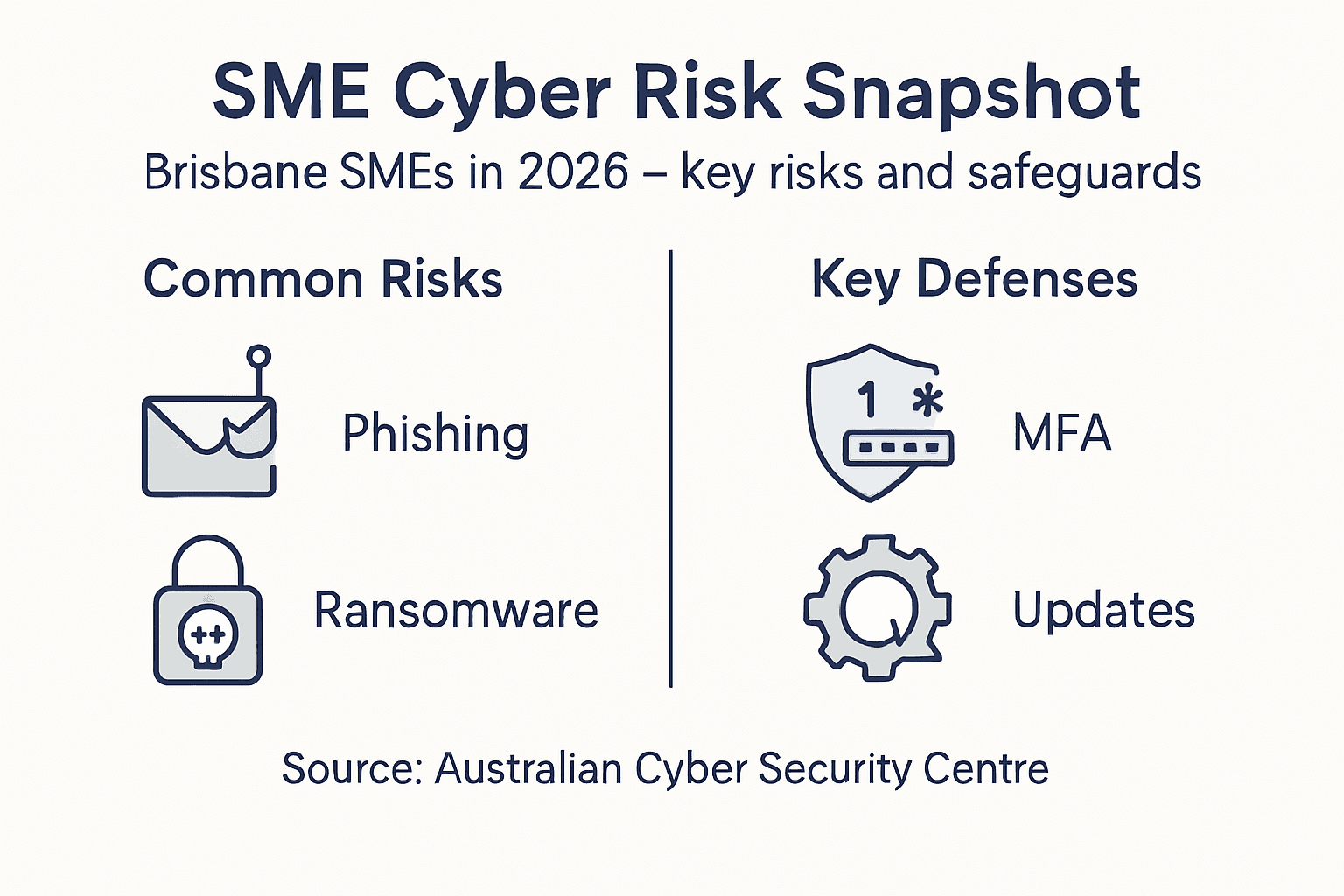
The financial implications can be profound. A single significant cyber incident could potentially cost a small business tens of thousands of dollars in direct losses, regulatory fines, and recovery expenses. Beyond monetary costs, businesses risk losing customer confidence, experiencing operational interruptions, and facing potential legal consequences from inadequate data protection.
Pro tip: Invest in comprehensive cyber insurance and develop a detailed incident response plan to mitigate potential financial and operational risks before they escalate.
Strengthen Your Brisbane SME Cyber Security with IT Start
Facing the rising tide of cyber threats as outlined in “What Is Cyber Security Like for Brisbane SMEs” can feel overwhelming. Your business risks exposure to ransomware, AI-driven phishing and complex compliance demands. Protecting sensitive data while meeting Australian regulatory standards requires a proactive, multi-layered defence approach combined with expert guidance.
At IT Start, we specialise in delivering managed IT support and cybersecurity services tailored specifically for Brisbane small and medium enterprises. Our transparent, locally based team understands the unique challenges your business faces. We help you implement strong access controls, regular security audits, employee training and compliance management to build resilience against evolving threats.
Ready to transform your cyber security strategy and secure your business future? Get a free consultation with our specialists today by visiting Contact IT Start. Don’t wait until a cyber incident strikes. Invest now in peace of mind with trusted Brisbane expertise and uncover how our tailored solutions can safeguard your business growth.
Frequently Asked Questions
What are the core cyber security measures that SMEs should implement?
Implementing essential cyber security measures involves enabling multi-factor authentication, regularly updating software, creating secure password protocols, backing up critical data, and providing employee training on cyber threat awareness.
How can SMEs in Brisbane develop a cyber resilience culture?
Developing a culture of cyber resilience involves creating robust internal policies, encouraging continuous education about cyber threats, and ensuring that all employees are aware of their role in maintaining the security of the organisation.
What are the most common types of cyber threats faced by SMEs?
Common cyber threats faced by SMEs include ransomware attacks, AI-driven phishing campaigns, supply chain compromises, IoT vulnerabilities, and business email compromise schemes.
How do Australian compliance standards impact cyber security for SMEs?
Australian compliance standards require SMEs to implement mandatory incident reporting, robust security protocols for IoT devices, and comprehensive risk management frameworks, making cyber security a critical business imperative for compliance and risk management.