

Cyber attacks cost the australian economy billions every year, and Brisbane’s small and medium enterprises are among the most vulnerable targets. For IT managers and business owners in fintech and healthcare, the risks extend well beyond stolen data or interrupted operations. Defining cyber security for your business means understanding how targeted strategies protect sensitive information and support compliance. This guide delivers clear, actionable steps for strengthening digital defences so you can operate confidently and meet australian legal standards.
Navigate This Guide: Cyber Security Actions for Brisbane SMEs
- Defining Cyber Security For Modern SMEs
- Common Cyber Security Threats Facing SMEs
- Key Responsibilities In Cyber Security Management
- Australian Laws And Compliance Standards
- Practical Strategies For Building Cyber Resilience
- Mistakes To Avoid In Your Cyber Security Approach
Key Takeaways
| Point | Details |
|---|---|
| Cyber Security is Essential for SMEs | Brisbane’s small and medium enterprises must prioritise cyber security to protect their digital infrastructure and sensitive data from growing threats. |
| Proactive Measures Are Crucial | Regular software updates, employee training, and incident response planning are key strategies to defend against cyber threats. |
| Shared Responsibility for Cyber Security | Cyber security is a collective obligation requiring involvement from all employees, emphasising the need for a culture of awareness and proactive defence. |
| Compliance with Legal Standards | Understanding and adhering to Australian cyber security regulations is crucial for SMEs to avoid penalties and build trust with customers. |
Defining Cyber Security for Modern SMEs
Cyber security represents a critical strategic imperative for Brisbane’s small and medium enterprises (SMEs) in protecting their digital infrastructure and sensitive business data. At its core, cyber security involves implementing comprehensive protective measures designed to safeguard computer systems, networks, and digital assets from malicious digital threats. Unlike large corporations, SMEs often face unique vulnerabilities that demand targeted, pragmatic security approaches.
The Australian Cyber Security Centre defines cyber security as a holistic system of preventing, detecting, and responding to digital risks that could compromise business operations. For modern SMEs, this means developing robust strategies that address potential cyber threats across multiple domains including technological infrastructure, human behaviour, and organisational processes. These strategies encompass technical solutions like secure network configurations, employee training programs, and proactive monitoring systems.
Key components of effective cyber security for Brisbane SMEs include:
- Implementing multi-factor authentication
- Regularly updating software and security systems
- Conducting periodic vulnerability assessments
- Creating comprehensive data backup protocols
- Developing clear incident response frameworks
Pro tip: Invest in regular cyber security awareness training for all staff members, treating it as an ongoing process rather than a one-time event.
Common Cyber Security Threats Facing SMEs
Brisbane’s small and medium enterprises face a complex landscape of digital threats that can potentially compromise their operational integrity and financial stability. Modern cybercriminals employ sophisticated techniques designed to exploit technological and human vulnerabilities, targeting businesses that may lack comprehensive security infrastructure.
The Australian Cyber Security Centre highlights several critical cyber threats specifically impacting SMEs. These threats include sophisticated phishing attacks, which manipulate employees into revealing sensitive credentials, malicious software designed to infiltrate business networks, and social engineering tactics that exploit human psychology to gain unauthorised access to critical systems.
Key cyber security threats facing Brisbane SMEs include:
- Phishing emails attempting to steal login credentials
- Ransomware attacks that encrypt business data
- Social engineering manipulation techniques
- Weak password vulnerabilities
- Unpatched software security gaps
- Unsecured network access points
Businesses must understand that cybercriminals view SMEs as attractive targets due to potentially less robust security systems. These attackers often use automated tools to scan for and exploit even minor vulnerabilities, making continuous monitoring and proactive defence strategies essential for digital survival.
Here’s a comparison of key cyber security threats and the potential business impact for SMEs:
| Threat Type | How Attack Occurs | Potential Business Impact |
|---|---|---|
| Phishing attacks | Fraudulent emails or messages | Data theft, financial loss |
| Ransomware | Malicious software locks files | Disrupted operations, ransom costs |
| Social engineering | Manipulation of staff | Unauthorised system access |
| Weak passwords | Easy-to-guess credentials | Account breaches, data compromise |
| Unpatched software | Outdated system vulnerabilities | Network exploitation, malware risks |
| Unsecured networks | Open or poorly protected access | Information leaks, system invasion |
Pro tip: Conduct monthly vulnerability assessments and maintain a comprehensive incident response plan that every team member understands and can execute quickly.
Key Responsibilities in Cyber Security Management
Cyber security management in Brisbane’s small and medium enterprises demands a comprehensive and strategic approach that extends far beyond traditional IT responsibilities. Business leaders must recognise that protecting digital infrastructure requires a holistic organisational commitment involving every team member and operational process.

SME cyber security management research emphasises that cyber security responsibilities are not confined to technical teams but represent a shared organisational obligation. Key leadership responsibilities include developing robust security policies, implementing risk management frameworks, and creating a culture of digital awareness that empowers employees to become active defenders of the business’s technological ecosystem.
Critical responsibilities in cyber security management include:
- Developing comprehensive cyber security policies
- Conducting regular risk assessments
- Implementing employee training programs
- Establishing clear incident response protocols
- Maintaining up-to-date technological defences
- Monitoring and reporting potential security breaches
Small businesses without dedicated cyber security personnel must be especially vigilant, recognising that each team member plays a crucial role in maintaining digital resilience. This involves not just technical controls, but also fostering a proactive security mindset that identifies and mitigates potential risks before they escalate into significant threats.
Pro tip: Create a simple, clear cyber security responsibility matrix that defines specific roles and actions for each team member, ensuring everyone understands their part in protecting the business.
Australian Laws and Compliance Standards
Navigating the complex landscape of cyber security regulations represents a critical challenge for Brisbane’s small and medium enterprises. Australian businesses must understand and implement comprehensive legal frameworks that protect both organisational and customer digital assets while maintaining rigorous compliance standards.
The newly enacted Cyber Security Act introduces significant legal obligations for SMEs, mandating proactive cyber security measures and establishing clear reporting requirements for digital incidents. This legislation fundamentally transforms how Australian businesses approach technological risk management, shifting from reactive responses to strategic, preventative cyber security practices.
Key compliance standards and legal requirements for Brisbane businesses include:
- Mandatory reporting of cyber security incidents
- Implementing baseline security protocols
- Protecting customer data privacy
- Maintaining comprehensive risk management documentation
- Adhering to industry-specific regulatory guidelines
- Ensuring transparent communication about potential breaches
Brisbane businesses must recognise that compliance is not merely a legal checkbox but a critical strategic imperative. The evolving cyber security landscape demands continuous adaptation, with organisations required to stay informed about changing regulations, technological advancements, and emerging threat landscapes. Proactive engagement with these standards helps businesses build trust, protect their reputation, and demonstrate commitment to digital safety.
The following table summarises key Australian cyber security legal requirements and the benefits of compliance for SMEs:
| Legal Requirement | Description | Compliance Benefit |
|---|---|---|
| Incident reporting | Notify authorities of breaches | Avoids penalties, builds trust |
| Baseline security protocols | Minimum technical security measures | Reduces attack likelihood |
| Customer data privacy protection | Safeguard personal information | Enhances reputation, ensures trust |
| Risk management documentation | Maintain records of risk practices | Demonstrates due diligence |
| Industry-specific guidelines | Comply with sector standards | Meets client/partner expectations |
Pro tip: Develop an annual compliance review process that systematically evaluates your cyber security practices against current Australian legal requirements and industry standards.
Practical Strategies for Building Cyber Resilience
Cyber resilience is not a destination but a continuous journey for Brisbane’s small and medium enterprises, requiring consistent effort, strategic planning, and adaptive thinking. Businesses must develop robust frameworks that anticipate, respond to, and recover from potential digital disruptions with agility and precision.
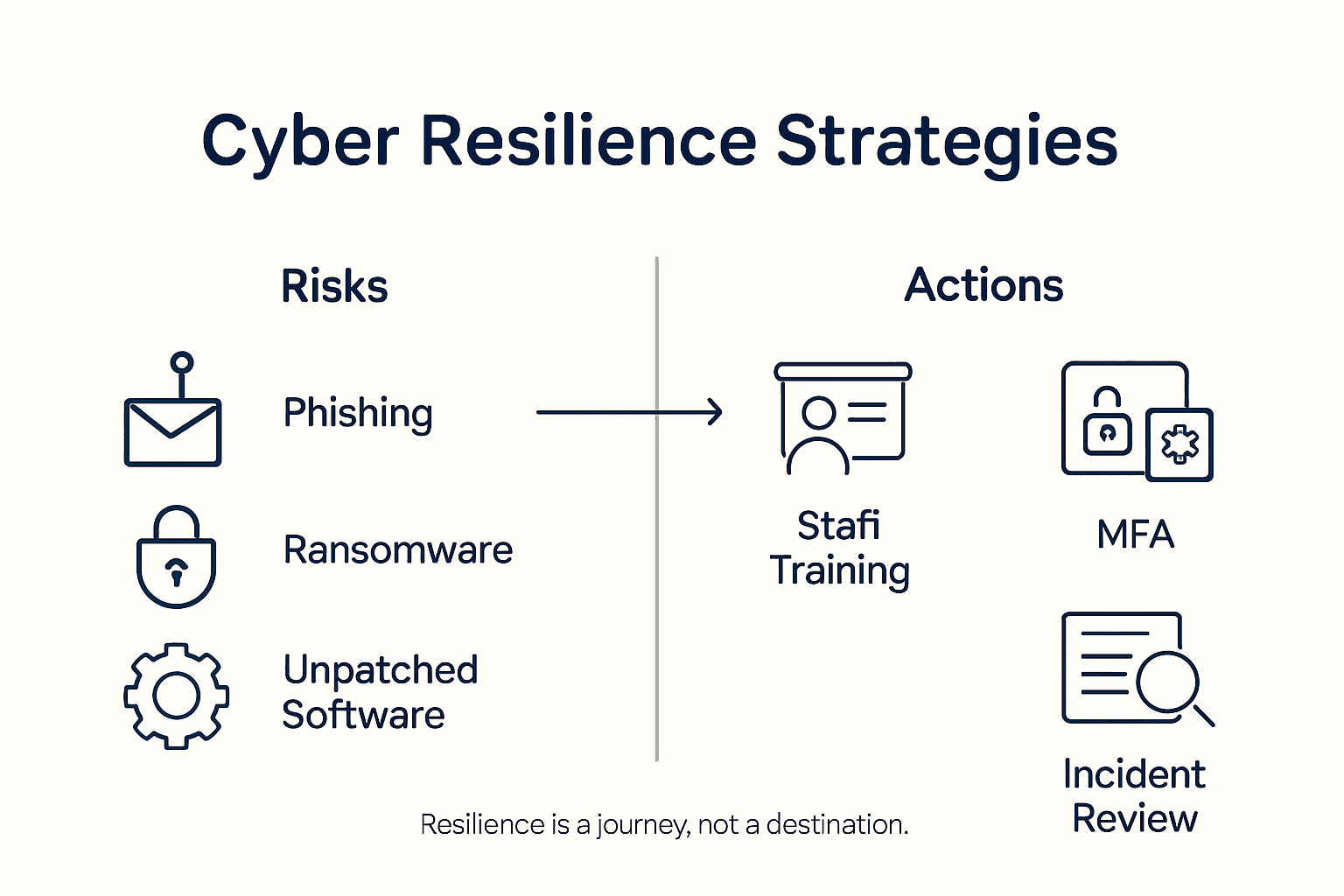
The Australian Cyber Security Centre provides comprehensive guidance for SMEs looking to build cyber resilience. Key strategies focus on implementing practical, sustainable security practices that protect digital assets while remaining accessible to businesses with limited technical resources. These approaches prioritise creating layered defence mechanisms that can adapt to evolving technological landscapes and emerging threat patterns.
Practical strategies for building cyber resilience include:
- Enabling multi-factor authentication across all systems
- Conducting regular software and security updates
- Implementing robust data backup protocols
- Training staff in recognising potential cyber threats
- Developing clear incident response plans
- Establishing granular access control mechanisms
- Creating redundant communication and recovery systems
Successful cyber resilience requires businesses to view security as a dynamic, collaborative process rather than a static set of technical controls. By fostering a culture of continuous learning, proactive risk management, and shared responsibility, Brisbane SMEs can develop sophisticated defence capabilities that protect their digital ecosystem without overwhelming their operational capacity.
Pro tip: Schedule quarterly cyber security simulation exercises to test and improve your team’s incident response capabilities and identify potential vulnerabilities before they can be exploited.
Mistakes to Avoid in Your Cyber Security Approach
Cyber security is not a static checklist but a dynamic, evolving challenge that demands continuous attention and strategic thinking from Brisbane’s small and medium enterprises. Understanding and avoiding common pitfalls can mean the difference between robust digital protection and potentially catastrophic security breaches.
Business NSW warns against critical cyber security mistakes that can compromise an organisation’s digital infrastructure. The most dangerous cyber security misconceptions include treating security as a one-time implementation rather than an ongoing process, neglecting regular system updates, and failing to develop comprehensive incident response strategies that can quickly mitigate potential threats.
Common mistakes Brisbane SMEs frequently encounter include:
- Assuming small businesses are not attractive targets for cybercriminals
- Neglecting regular software and security system updates
- Using weak or repeated passwords across multiple platforms
- Failing to train staff on basic cyber security awareness
- Overlooking insider threats and access management
- Skipping regular vulnerability assessments
- Not maintaining comprehensive data backup systems
Successful cyber security requires a holistic, proactive approach that recognises the interconnected nature of digital risks. Businesses must shift from a reactive mindset to a strategic, anticipatory framework that views security as an integral part of overall business operations, not a peripheral technical concern.
Pro tip: Implement a quarterly cyber security review process that systematically evaluates your current protection strategies, identifies potential vulnerabilities, and updates your defence mechanisms accordingly.
Strengthen Your Brisbane Business with Expert Cyber Security Support
Small and medium enterprises in Brisbane face increasing cyber threats such as phishing, ransomware, and unpatched software vulnerabilities. As highlighted, effective cyber security requires ongoing vigilance, robust risk management, and clearly defined responsibilities. The challenge lies in building cyber resilience while ensuring compliance with evolving Australian laws and maintaining smooth business operations.
At IT Start we understand these pain points and can help you implement practical, tailored strategies including multi-factor authentication, proactive monitoring, and incident response planning. Our local Brisbane-based team delivers managed IT support and cloud solutions designed specifically for SMEs. By partnering with us you gain a trusted ally committed to elevating your operational efficiency and safeguarding your digital assets against emerging threats.
Don’t let uncertainty put your business at risk. Take advantage of our proactive, transparent approach by booking a free cyber security assessment today. Get in touch with IT Start now through our contact page and discover how our certified experts can help you build lasting cyber resilience with peace of mind. Learn more about our managed IT support services tailored for Brisbane SMEs and start securing your future the right way.
Frequently Asked Questions
What are the key components of effective cyber security for SMEs?
Key components include implementing multi-factor authentication, regularly updating software and security systems, conducting periodic vulnerability assessments, creating comprehensive data backup protocols, and developing clear incident response frameworks.
What types of cyber security threats are most common for small businesses?
Common threats include phishing attacks designed to steal login credentials, ransomware that encrypts business data, social engineering tactics that manipulate staff, weak password vulnerabilities, unpatched software security gaps, and unsecured network access points.
What responsibilities do business leaders have in managing cyber security?
Business leaders are responsible for developing cyber security policies, conducting regular risk assessments, implementing training programs for employees, establishing incident response protocols, maintaining up-to-date security measures, and monitoring for potential breaches.
How can SMEs improve their cyber resilience?
SMEs can improve cyber resilience by enabling multi-factor authentication, conducting regular software updates, implementing robust data backup protocols, training staff to recognise cyber threats, developing clear incident response plans, and establishing access control mechanisms.
Recommended
- What Cyber Security Protects for Brisbane Businesses – IT Start
- Cyber Security Risks – What Brisbane Businesses Face – IT Start
- Cyber Security Threats – What Brisbane Businesses Face – IT Start
- How to Enforce Cybersecurity for Brisbane Businesses – IT Start
- Cybersecurity for Senior Leaders: Governance & Training