

More than 60 percent of Australian healthcare organisations cite cloud data protection as their top security priority. For IT managers in Brisbane, understanding how cloud security frameworks protect sensitive information is crucial as cyber threats rise and Australian privacy laws tighten. This article explains what cloud security means within an Australian context and highlights practical strategies for compliance and safeguarding patient data.
Cloud Security Essentials: Solutions, Compliance & Healthcare Data
- Defining Cloud Security In Cloud Computing
- Types Of Cloud Security Solutions
- How Cloud Security Protects Healthcare Data
- Critical Compliance For Australian Healthcare
- Roles, Risks And Shared Responsibility In The Cloud
- Common Mistakes And How To Avoid Them
Key Takeaways
| Point | Details |
|---|---|
| Understanding Cloud Security | Cloud security is essential for protecting digital assets in cloud environments and involves a comprehensive strategy that includes policies, technology, and governance. |
| Importance of Compliance | Adhering to regulatory frameworks like the Australian Privacy Principles is crucial for maintaining data protection and privacy standards in healthcare. |
| Shared Responsibility Model | Both cloud providers and customers have distinct roles in security, necessitating a clear understanding of responsibilities to effectively manage risks. |
| Avoiding Common Mistakes | To enhance security, organisations should proactively address common pitfalls such as misconfigurations and inadequate access controls through regular audits and training. |
Defining cloud security in cloud computing
Cloud security represents a specialised approach to protecting digital assets, infrastructure, and data within cloud computing environments. At its core, cloud security encompasses a comprehensive strategy of cybersecurity policies, technological controls, and governance frameworks designed to safeguard cloud-based systems from potential threats and vulnerabilities.
According to research from cloud security experts, cloud security refers to the cybersecurity policies, best practices, controls, and technologies applied to secure applications, data, and infrastructure within cloud environments. This definition highlights the multifaceted nature of protecting digital resources across complex technological landscapes. The strategy involves managing risks related to:
- Preventing unauthorized access
- Defending against online attacks
- Maintaining robust data governance
- Ensuring regulatory compliance
- Establishing comprehensive disaster recovery protocols
Under the shared responsibility model, cloud security operates through a collaborative approach where cloud providers secure the underlying infrastructure while organisations protect their specific data and applications. This model requires healthcare firms and other businesses to understand their specific security obligations and implement targeted protective measures.

Pro tip: Conduct a comprehensive cloud security assessment every six months to identify and address potential vulnerabilities before they become critical risks.
Types of cloud security solutions
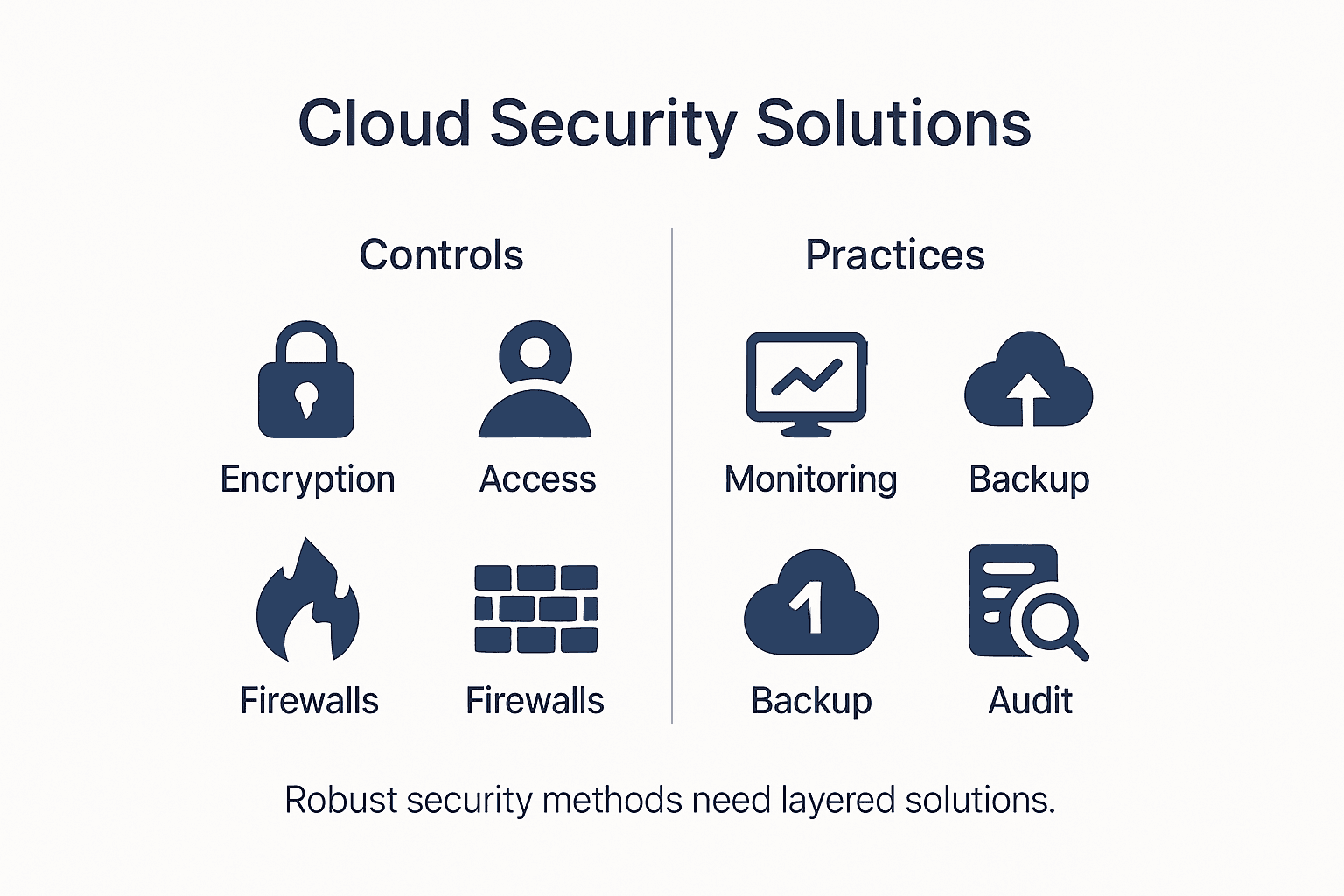
Cloud security solutions represent a diverse set of technological strategies and frameworks designed to protect digital infrastructure and sensitive data across cloud environments. These comprehensive approaches address the complex challenges of securing cloud-based systems through multiple interconnected methodologies.
Cloud security solutions encompass various sophisticated frameworks that provide robust protection mechanisms. Key frameworks include:
- COBIT5 governance framework
- NIST security standards
- ISO compliance protocols
- Cloud Security Alliance (CSA) STAR certification
- AWS well-architected framework
These solutions incorporate multiple layers of protection, including advanced authentication techniques such as:
- Node authentication
- Mutual authentication protocols
- Digital certificate verification
- Comprehensive access control systems
- Single sign-on mechanisms
- Secure live migration strategies
By integrating these diverse approaches, organisations can develop robust security methods for protecting cloud applications across their digital infrastructure. The goal is to create a multi-layered defence system that prevents unauthorized access, mitigates potential risks, and ensures comprehensive data protection.
Pro tip: Regularly audit and update your cloud security frameworks to ensure they remain aligned with the latest technological threats and compliance requirements.
Here’s a summary of the main cloud security frameworks and their distinctive focus areas for Australian organisations:
| Framework | Primary Focus | Business Impact |
|---|---|---|
| COBIT5 | IT governance and controls | Ensures transparent risk management |
| NIST | Standardised security practices | Improves compliance and reliability |
| ISO Compliance | International data protection standards | Enhances global trust and credibility |
| CSA STAR | Cloud provider assurance | Validates provider security maturity |
| AWS Well-Architected | Cloud architecture best practices | Reduces misconfiguration risks |
How cloud security protects healthcare data
Healthcare data protection represents a critical challenge in the digital age, where sensitive patient information requires robust security measures. Cloud security provides a comprehensive approach to safeguarding medical records, patient details, and critical health information from potential cyber threats and unauthorized access.
Cloud security protects healthcare data by enforcing strict access controls, encryption, and compliance with healthcare-specific regulations such as the Australian Privacy Principles. These advanced security mechanisms ensure three fundamental aspects of data protection:
- Data Integrity: Preventing unauthorized modifications
- Confidentiality: Restricting access to authorised personnel
- Availability: Ensuring continuous and secure access for healthcare professionals
Healthcare organisations benefit from sophisticated cloud security techniques that address unique technological challenges. Advanced security approaches like threat modelling and penetration testing help healthcare providers maintain robust digital infrastructure by proactively identifying and mitigating potential security vulnerabilities.
Key protection strategies include comprehensive security frameworks that monitor potential breaches, implement rapid incident response protocols, and maintain stringent compliance auditing. These approaches minimise disruption risks while ensuring patient data remains protected across cloud-based medical systems.
Pro tip: Implement regular security training for healthcare staff to create a human firewall that complements your technical cloud security measures.
Critical compliance for Australian healthcare
Healthcare compliance in the Australian digital landscape represents a complex and rigorous framework of legal and technological requirements designed to protect patient data and maintain the highest standards of information security. Healthcare organisations must navigate a sophisticated ecosystem of regulatory expectations that demand meticulous attention to data protection and privacy.
Critical compliance for Australian healthcare involves adhering to the Australian Privacy Principles (APPs) under the Privacy Act 1988, which establishes comprehensive guidelines for managing sensitive medical information. Key compliance requirements include:
- Ensuring complete data sovereignty
- Implementing robust data protection mechanisms
- Establishing clear breach notification protocols
- Selecting cloud providers with appropriate security certifications
Healthcare providers must carefully assess their compliance strategies through frameworks like the IT compliance guidelines for Brisbane businesses, which provide structured approaches to meeting regulatory standards. This involves comprehensive processes such as:
- Regular security assessments
- Alignment with Australian Signals Directorate’s Information Security Manual
- Certification under the Department of Home Affairs’ Hosting Certification Framework
- Continuous monitoring of data handling practices
The complexity of compliance requires healthcare organisations to develop a proactive approach that integrates technological solutions with robust governance frameworks. By understanding and implementing these critical requirements, healthcare providers can protect patient information while maintaining legal and ethical standards in their cloud computing environments.
Pro tip: Conduct quarterly internal audits of your cloud security compliance to identify and address potential gaps before they become significant regulatory risks.
Roles, risks and shared responsibility in the cloud
Cloud security requires a sophisticated understanding of collaborative responsibilities between cloud service providers and their customers. The intricate landscape of digital protection demands a nuanced approach that clearly defines roles, manages potential risks, and establishes comprehensive security protocols.
The shared responsibility model delineates critical roles between cloud service providers and customers, creating a structured framework for comprehensive security management. This model fundamentally divides responsibilities into distinct categories:
- Provider Responsibilities: Securing core cloud infrastructure
- Customer Responsibilities: Protecting data, applications, and network configurations
- Shared Responsibilities: Managing identity and access management
Potential risks in this collaborative environment include:
- Misconfigurations in cloud settings
- Unauthorized access attempts
- Potential data breaches
- Compliance and governance challenges
Healthcare and business organisations must understand the complex cyber security roles that impact their digital ecosystem by developing robust strategies that address these interconnected responsibilities. Effective risk management requires continuous monitoring, regular security assessments, and a proactive approach to identifying and mitigating potential vulnerabilities.
Pro tip: Develop a comprehensive security matrix that clearly documents the specific responsibilities of both your cloud provider and internal team to eliminate potential security gaps.
This comparison outlines responsibility areas in the shared responsibility cloud security model:
| Security Aspect | Cloud Provider | Customer |
|---|---|---|
| Physical infrastructure | Full responsibility | None |
| Application security | Limited control | Full responsibility |
| Data encryption | Depends on service | Must configure and manage |
| Compliance reporting | Certification maintenance | Ongoing governance duties |
| Access management | Baseline controls | Detailed user management |
Common mistakes and how to avoid them
Cloud security mistakes can expose organisations to significant vulnerabilities, potentially compromising sensitive data and undermining entire digital infrastructures. Understanding these critical errors is the first step towards developing a robust and resilient cloud security strategy.
Common mistakes in cloud security include misconfiguration of cloud resources, insufficient access controls, lack of continuous monitoring, and inadequate staff training. These systemic issues can lead to devastating security breaches and compliance failures. Key mistakes organisations frequently encounter include:
- Weak authentication mechanisms
- Improper network configuration
- Neglecting regular security updates
- Insufficient encryption practices
- Overlooking third-party vendor security risks
To mitigate these risks, organisations must adopt a proactive approach. Implementing comprehensive cybersecurity roles and training can significantly reduce potential vulnerabilities by building internal expertise and creating a culture of security awareness. Strategic avoidance strategies include:
- Adopting zero-trust security principles
- Conducting regular security audits
- Implementing robust configuration management
- Investing in continuous staff cybersecurity training
- Developing clear incident response protocols
Effective cloud security requires ongoing commitment, technical expertise, and a holistic understanding of potential risks. By recognising and addressing common mistakes, organisations can create a more secure and resilient digital environment.
Pro tip: Schedule quarterly comprehensive security reviews that systematically evaluate and update your cloud security configurations and training protocols.
Strengthen Your Cloud Security with IT Start
Cloud security in cloud computing is critical for protecting your business from rising cyber threats and compliance risks. Many Brisbane businesses struggle with defending sensitive data against unauthorised access, managing complex compliance obligations, and understanding the shared responsibility model between providers and customers. You need trusted security frameworks and continuous proactive monitoring to avoid common pitfalls like misconfigurations and weak access controls.
At IT Start, we specialise in tailored cloud security solutions designed specifically for small to medium-sized enterprises in Queensland. Our certified experts help you build resilient IT systems that ensure data integrity, regulatory compliance, and seamless disaster recovery. Discover how our proactive managed IT support can eliminate your security headaches with clear governance strategies and ongoing vulnerability assessments.
Are you ready to safeguard your cloud infrastructure with local Brisbane expertise? Take control of your cloud security today by reaching out for a free consultation. Connect with IT Start now via our Contact Us page to schedule your security assessment and explore customised solutions. Learn how our cybersecurity services can transform your data protection strategy while maintaining full compliance with Australian healthcare and business regulations.
Frequently Asked Questions
What is cloud security?
Cloud security refers to the cybersecurity policies, practices, controls, and technologies used to protect applications, data, and infrastructure within cloud environments from various threats and vulnerabilities.
How does cloud security protect healthcare data?
Cloud security protects healthcare data through strict access controls, encryption, and compliance with regulations, ensuring data integrity, confidentiality, and availability for healthcare professionals.
What are common mistakes in cloud security?
Common mistakes include misconfiguration of cloud resources, insufficient access controls, neglecting regular security updates, and inadequate staff training, which can expose organisations to significant vulnerabilities.
What is the shared responsibility model in cloud security?
The shared responsibility model defines the roles of cloud service providers and customers, where providers secure the infrastructure while customers are responsible for protecting their specific data and applications.
Recommended
- Cloud Security in Cyber Security – Why It Matters – IT Start
- SaaS Security Explained: Protecting Cloud Applications – IT Start
- Understanding Cloud Security Methods for Businesses – IT Start
- 7 Essential Certifications for Cyber Security Success – IT Start
- Cloud Security: Best Practices for Enterprise Protection