

Over half of australian healthcare SMEs admit confusion about what cyber security really means and why it matters. For business owners in Brisbane, this lack of clarity can invite costly compliance mistakes and increase risk. Understanding common misconceptions and the real definition of cyber security helps you navigate legal requirements, protect patient data, and build a stronger, safer practice.
Table of Contents
- Cyber Security Definition And Common Misconceptions
- Types Of Cyber Threats Facing Healthcare SMEs
- How Cyber Security Protects Critical Health Data
- Legal Obligations And Compliance Requirements
- Risks, Costs And Impact Of Poor Cyber Security
Cyber Security Essentials for Brisbane Healthcare SMEs
| Point | Details |
|---|---|
| Comprehensive Cyber Security | Cyber security involves a multi-layered approach that requires technology, human training, and strategic governance to protect sensitive information. |
| Misconceptions in Healthcare | Many small to medium enterprises wrongly believe they are too small to attract cybercriminals, increasing their vulnerability to attacks. |
| Legal Compliance Is Essential | Adhering to regulations like the Security of Critical Infrastructure Act 2018 is crucial for protecting patient data and avoiding legal repercussions. |
| Impact of Poor Cyber Security | Inadequate measures can lead to severe operational disruptions, financial losses, and damage to organisational reputation in the healthcare sector. |
Cyber security definition and common misconceptions
Cyber security represents a comprehensive strategy for protecting digital infrastructure, networks, and sensitive information from potential threats and malicious activities. Far from being a simple technological challenge, cyber security involves a multifaceted approach that combines technological solutions, human awareness, and strategic governance. The University of Queensland’s Cyber Research Centre highlights that this discipline extends well beyond merely installing antivirus software or implementing firewalls.
In the context of Brisbane’s healthcare sector, cyber security is particularly critical. Many small to medium enterprises mistakenly believe they are too small to be targeted by cybercriminals. However, this misconception can be catastrophically dangerous. Healthcare SMEs often manage sensitive patient data, medical records, and complex digital systems that are prime targets for ransomware attacks, data breaches, and sophisticated digital intrusions. The reality is that smaller organisations are frequently seen as easier targets precisely because they tend to have less robust security infrastructure.
Common misconceptions about cyber security include the belief that it is solely an IT department’s responsibility or that robust protection requires massive financial investment. In truth, cyber security is a collective organisational effort that demands participation from every team member. Healthcare professionals must understand basic digital safety practices, recognise potential phishing attempts, and maintain stringent data handling protocols. Training, awareness, and a proactive approach are far more important than expensive technological solutions.
Pro tip: Conduct a quarterly cyber security awareness workshop for all staff members, focusing on practical skills like identifying suspicious emails and understanding basic digital safety protocols.
Types of cyber threats facing healthcare SMEs
Healthcare SMEs in Brisbane face a complex landscape of digital security challenges that demand sophisticated understanding and proactive management. Research from the University of Queensland reveals multiple critical cyber threats specifically targeting small healthcare organisations. Ransomware attacks represent one of the most dangerous risks, where malicious actors encrypt essential patient data and demand significant financial payments for restoration, potentially crippling a medical practice’s operations.
Another significant threat emerges through social engineering and phishing attempts. Cybercriminals strategically target healthcare professionals by crafting sophisticated email communications that appear legitimate, tricking employees into revealing sensitive login credentials or downloading malicious attachments. Cyber threat research from the University of Southern Queensland highlights that these attacks exploit human psychology, taking advantage of busy healthcare workers who might not scrutinise digital communications carefully.
Supply chain vulnerabilities pose another substantial risk for healthcare SMEs. Third-party providers like medical equipment suppliers, billing systems, and telehealth platforms can inadvertently create security weak points that cybercriminals exploit. These vulnerabilities might include inadequate data protection protocols, outdated software systems, or insufficient employee cybersecurity training. Insider threats further compound these risks, with potential breaches arising from negligent or maliciously motivated employees who have direct system access.
Pro tip: Implement a mandatory quarterly cybersecurity awareness training program that simulates real-world phishing scenarios and teaches staff how to identify and report potential digital threats.
Here is a summary of major cyber threats facing healthcare SMEs and their typical consequences:
| Threat Type | Attack Method | Likely Consequence | Prevention Focus |
|---|---|---|---|
| Ransomware | Data encryption & ransom | Loss of medical records | Strong backup protocols |
| Social Engineering | Fake emails & calls | Credential theft, system breach | Staff awareness training |
| Supply Chain Weakness | Third-party compromise | Service disruption, data exposure | Audit external partners |
| Insider Threat | Internal misuse | Deliberate or accidental data breach | Employee access controls |
How cyber security protects critical health data
Critical health data protection represents a comprehensive shield against digital vulnerabilities that could compromise patient privacy and organisational integrity. Strategic cyber security approaches outlined by the New South Wales Audit Office emphasise multiple layers of protection designed to safeguard sensitive medical information. Data encryption serves as the primary defence mechanism, transforming patient records into unreadable formats that prevent unauthorized access, ensuring that even if digital systems are breached, the underlying information remains protected.

Beyond technical protection, cyber security in healthcare involves comprehensive risk management strategies that address human and technological vulnerabilities. Clinical systems require continuous monitoring and threat assessment to identify potential security weaknesses. This includes implementing robust authentication protocols, restricting data access to authorised personnel, and maintaining detailed logs of all system interactions. Healthcare SMEs must develop incident response plans that outline precise steps for managing potential data breaches, minimising potential damage and ensuring rapid recovery.
Patient record availability and integrity represent critical components of healthcare cyber security. Sophisticated backup systems and redundant storage solutions ensure that medical data remains accessible during potential cyber incidents, preventing disruptions to patient care. Advanced security frameworks incorporate real-time threat detection systems that can identify and neutralise potential security risks before they can cause substantial damage to critical healthcare information systems.
Pro tip: Conduct monthly simulated cyber security drills that test your team’s ability to respond to potential data breach scenarios and validate your incident response protocols.
Legal obligations and compliance requirements
Healthcare SMEs in Brisbane face a complex landscape of legal obligations that demand rigorous cyber security compliance. The NSW Health Cyber Security Taskforce guidelines underscore the critical importance of adhering to national regulations such as the Security of Critical Infrastructure Act 2018. This legislation mandates comprehensive security protocols that protect sensitive patient information, with significant legal consequences for organisations failing to implement adequate protective measures.
Key compliance requirements encompass multiple dimensions of digital security management. Healthcare providers must establish robust privileged access controls that restrict system entry to authorised personnel, maintain detailed audit logs of all digital interactions, and develop comprehensive incident response strategies. These obligations extend beyond simple technological implementations, requiring ongoing staff training, regular security assessments, and transparent reporting mechanisms that demonstrate proactive risk management.
The legal framework surrounding patient data protection is particularly stringent, reflecting the sensitive nature of medical information. Organisations must implement encryption protocols, secure data transmission methods, and maintain strict confidentiality standards. Non compliance can result in substantial financial penalties, potential legal actions, and irreparable damage to organisational reputation. Healthcare SMEs must view these regulatory requirements not as bureaucratic burdens, but as essential frameworks designed to protect patient privacy and maintain public trust in healthcare digital infrastructure.
Pro tip: Conduct an annual comprehensive cyber security compliance audit that maps your current practices against the latest regulatory requirements and identifies potential vulnerability gaps.
Here is a comparison of cyber security compliance requirements important for Brisbane healthcare SMEs:
| Requirement | Practical Example | Impact on Organisation | Regulatory Source |
|---|---|---|---|
| Privileged Access Control | Restricting admin rights | Minimises internal risk | Security of Critical Infrastructure Act |
| Incident Response Plan | Written breach management steps | Faster recovery, reduced damage | NSW Health Cyber Security Taskforce |
| Audit Logging | Monitoring system changes | Tracks unauthorised activities | National health data laws |
| Encryption | Securing patient info | Protects privacy, builds trust | Data Protection regulations |
Risks, costs and impact of poor cyber security
Healthcare SMEs in Brisbane face potentially devastating consequences from inadequate cyber security measures. Research from the University of Southern Queensland reveals that poor digital protection can trigger catastrophic financial and operational disruptions. Ransomware attacks can instantly paralyse critical healthcare systems, demanding substantial monetary payments while simultaneously blocking access to essential patient records and medical information.
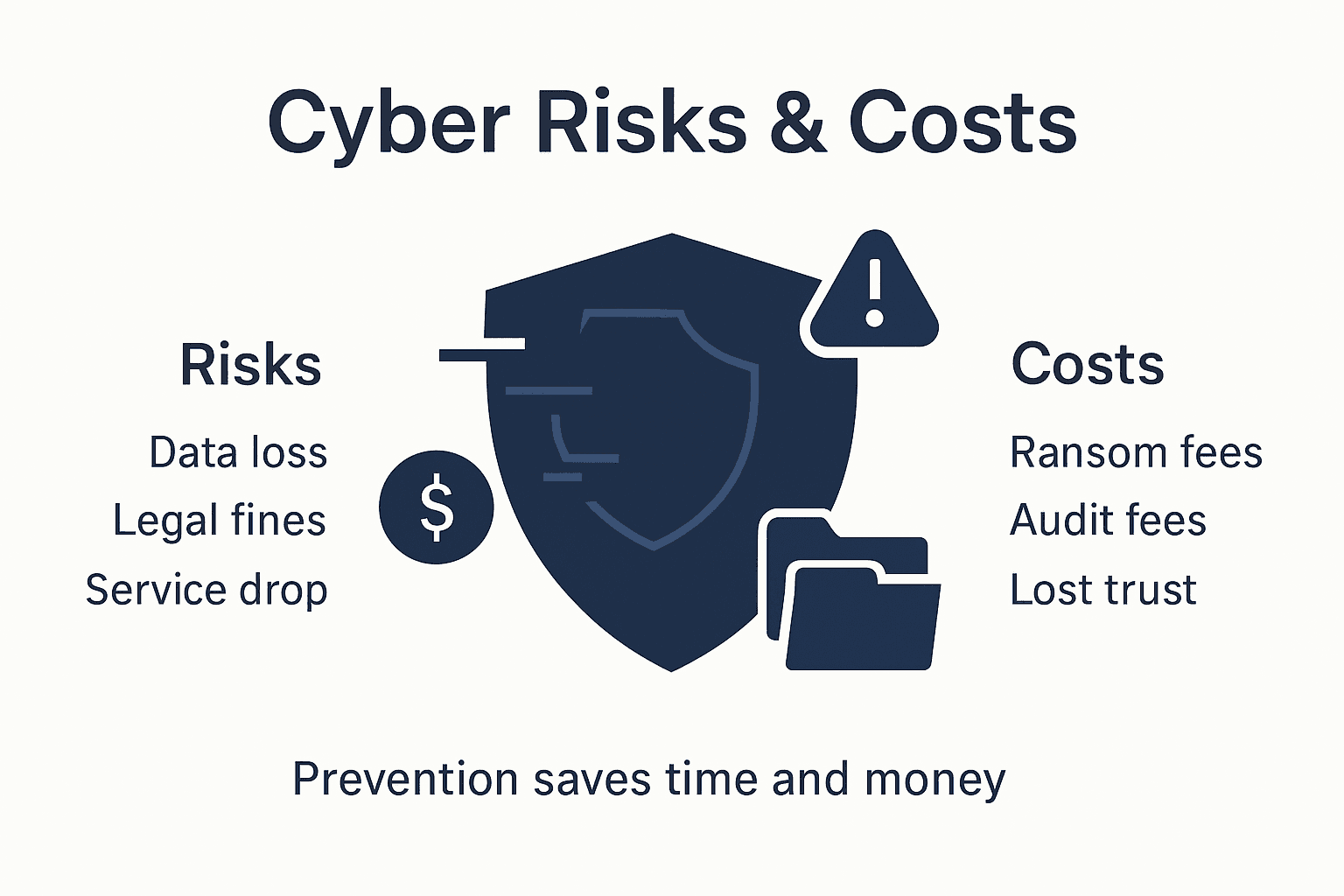
The financial implications extend far beyond immediate ransom demands. Cyber incidents can result in significant regulatory fines, legal expenses, and potential litigation costs that could easily exceed hundreds of thousands of dollars. Reputational damage represents an equally profound risk, with potential patient trust erosion that might permanently damage an organisation’s standing. A single significant data breach can undermine years of professional reputation, leading to patient migration and substantial revenue losses.
Operational disruption represents another profound risk for healthcare providers. Cyber attacks can interrupt critical medical services, potentially delaying treatments, compromising patient safety, and creating cascading system failures. The interconnected nature of modern healthcare technology means that a single vulnerability can rapidly escalate into a comprehensive system breakdown, threatening not just digital infrastructure but direct patient care capabilities. Small to medium healthcare enterprises are particularly vulnerable, often lacking the sophisticated defence mechanisms of larger institutions.
Pro tip: Develop a comprehensive cyber security incident response plan that includes immediate communication protocols, system isolation procedures, and predefined recovery strategies to minimise potential operational disruptions.
Strengthen Your Brisbane Healthcare SME with Trusted Cyber Security Support
Healthcare SMEs in Brisbane face unique challenges such as ransomware, phishing attacks, and insider threats that put critical patient data at risk. This article highlights the importance of collective organisational effort, comprehensive risk management, and legal compliance to protect your business from costly operational disruptions and reputational damage. If you are concerned about maintaining robust cyber security practices without overwhelming your team or budget, you are not alone.
At IT Start, we specialise in tailored cyber security solutions for Brisbane businesses in the healthcare sector. Our proactive managed IT support and compliance expertise help you implement strong data encryption, privileged access controls, and effective incident response plans that align with the latest regulations. Do not wait until a costly breach occurs to act. Explore how our local Brisbane team can be your strategic security partner by contacting us today.
Take the first step towards safeguarding your patient records and operational integrity with a free consultation. Visit Contact IT Start now to arrange your assessment and discover how proactive cyber security can protect and future-proof your healthcare SME.
Frequently Asked Questions
What is the definition of cyber security?
Cyber security is a comprehensive strategy for protecting digital infrastructure, networks, and sensitive information from potential threats and malicious activities. It involves applying technology, human awareness, and strategic governance.
Why is cyber security particularly important for healthcare SMEs?
Healthcare SMEs manage sensitive patient data and complex digital systems, making them prime targets for cybercriminals. They often have less robust security infrastructure and can suffer catastrophic consequences from attacks.
What are the common types of cyber threats facing healthcare SMEs?
Healthcare SMEs face threats such as ransomware attacks, social engineering, phishing attempts, supply chain vulnerabilities, and insider threats, each posing significant risks to patient data and organisational integrity.
What legal obligations do healthcare SMEs have regarding cyber security?
Healthcare SMEs must comply with national regulations that mandate comprehensive security protocols for protecting sensitive patient information. This includes establishing access controls, maintaining audit logs, and developing incident response plans.
Recommended
- What Is Cyber Security and Why Brisbane SMEs Rely On It – IT Start
- Cyber Security Vulnerabilities – Why Brisbane SMEs Need Protection – IT Start
- Cyber Security Threats – What Brisbane Businesses Face – IT Start
- What Is Cyber Hygiene? Complete Guide for Brisbane SMEs – IT Start
- Whistleblower Retaliation Trends in Healthcare Companies