Cyber attacks cost Australian businesses billions every year, with small and medium enterprises being prime targets. Keeping digital systems healthy requires more than just strong passwords or anti-virus programs. Effective cyber hygiene shapes your daily habits and long-term strategies, helping you guard sensitive data and stay ahead of emerging risks. This guide sheds light on the core principles of cyber hygiene so you can protect your Brisbane business from costly breaches and unexpected threats.
Key Cyber Hygiene Topics for Brisbane SMEs
- Defining Cyber Hygiene And Core Principles
- Essential Cyber Hygiene Practices For Businesses
- Common Misconceptions About Cyber Hygiene
- Compliance And Legal Obligations In Australia
- Risks From Poor Cyber Hygiene Practices
- Expert Recommendations For Brisbane SMEs
Key Takeaways
| Point | Details |
|---|---|
| Proactive Cyber Hygiene | Organizations must adopt robust cyber hygiene practices to minimize vulnerabilities and prevent cyber threats effectively. |
| Comprehensive Training | Employee education and clear security protocols are essential components in fostering a strong cybersecurity culture. |
| Legal Compliance | Understanding and adhering to cybersecurity regulations is critical for protecting customer data and avoiding legal repercussions. |
| Multi-layered Security | Implementing multiple security measures, such as multi-factor authentication and regular software updates, strengthens overall protection against cyberattacks. |
Defining Cyber Hygiene and Core Principles
Cyber hygiene represents the fundamental set of practices and precautions that organisations and individuals take to maintain the health and security of their digital systems and networks. Think of it like personal hygiene but for your digital infrastructure – a systematic approach to preventing potential cybersecurity vulnerabilities before they become critical threats.
According to UniSA, basic cyber hygiene practices are instrumental in preventing large-scale cyberattacks. These practices include critical actions such as:
- Implementing regular software updates
- Establishing strong password policies
- Conducting routine security assessments
- Managing user access controls
- Backing up critical data consistently
At its core, cyber hygiene is about creating a proactive defence strategy. Rather than waiting for security incidents to occur, businesses systematically reduce potential entry points for cybercriminals. This approach transforms cybersecurity from a reactive measure into a strategic, preventative discipline. By consistently applying these principles, Brisbane SMEs can significantly minimise their risk profile and protect their digital assets from potential breaches and sophisticated cyber threats.
Successful cyber hygiene requires more than just technical solutions – it demands a comprehensive cultural approach. This means training staff, developing clear security protocols, and maintaining an ongoing commitment to digital wellness. Your organisation’s security is only as strong as its weakest link, which is why every team member must understand and practice good cyber hygiene principles.
Essential Cyber Hygiene Practices for Businesses
Navigating the complex world of cybersecurity can feel overwhelming, but breaking it down into practical, actionable steps makes protecting your Brisbane business much more manageable. Cyber hygiene isn’t about complex technical manoeuvres – it’s about implementing consistent, smart practices that dramatically reduce your digital risk.
According to Australian Cyber Security Centre, small businesses need a comprehensive approach to safeguarding their digital infrastructure. Key cyber hygiene practices include:
- Implementing regular and automatic software updates
- Creating and enforcing strong, unique password policies
- Conducting comprehensive employee cybersecurity training
- Managing and limiting user access permissions
- Establishing robust data backup and recovery protocols
Multi-layered security is crucial. Australian Cyber Security Magazine recommends additional strategies like multi-factor authentication and systematic access controls. These aren’t just technical requirements – they’re strategic investments in your business’s resilience. Each practice acts like a digital lock, making it progressively harder for potential cybercriminals to breach your systems.

Remember, cyber hygiene is an ongoing process, not a one-time fix. It requires consistent attention, regular review, and a proactive mindset. By treating your digital infrastructure with the same care you’d treat your physical office security, you create a robust defence that protects your business’s data, reputation, and bottom line. Learn more about our cybersecurity best practices for Brisbane SMBs to get started on your cyber hygiene journey.
Common Misconceptions About Cyber Hygiene
In the rapidly evolving digital landscape, cyber myths can be more dangerous than ignorance. Many Brisbane businesses unknowingly expose themselves to significant cybersecurity risks by believing common misconceptions that seem harmless but can have devastating consequences.
According to CrowdStrike, several pervasive misconceptions put businesses at serious risk. These dangerous beliefs include:
- Thinking password reuse is acceptable
- Believing outdated software poses minimal threat
- Assuming antivirus software provides complete protection
- Considering suspicious email links harmless
Each of these myths represents a potential entry point for cybercriminals. Password reuse, for instance, means that if one account is compromised, multiple systems become vulnerable. Outdated software often contains known security vulnerabilities that hackers can easily exploit. Relying solely on antivirus software creates a false sense of security, as modern cyber threats constantly evolve beyond traditional detection methods.
The reality is that cyber hygiene requires a holistic, proactive approach.
VIDEO:video_content] No single tool or practice can guarantee complete protection. Businesses must cultivate a comprehensive cybersecurity culture that combines technological solutions, employee education, and continuous learning. Learn more about protecting your business with our [cybersecurity best practices for Brisbane SMBs, and transform these misconceptions into a robust defence strategy.
Compliance and Legal Obligations in Australia
Navigating the complex landscape of cybersecurity compliance in Australia requires more than good intentions. Small businesses face a critical challenge: understanding and implementing legal frameworks that protect both their digital assets and customer data while meeting stringent national regulations.
The Australian Cyber Security Centre provides comprehensive guidance for small businesses, highlighting key compliance obligations that go beyond basic security measures. These legal requirements include:
- Protecting personal and sensitive customer information
- Implementing robust data breach notification protocols
- Maintaining comprehensive cybersecurity documentation
- Establishing clear incident response mechanisms
- Conducting regular security risk assessments
Research from arXiv emphasises that compliance is not a one-size-fits-all approach. Each Brisbane SME must develop a tailored strategy that addresses their unique operational context while meeting national cybersecurity standards. This means understanding specific legal nuances that apply to your industry, whether you’re in financial services, healthcare, or professional consulting.
The stakes are high. Non-compliance can result in significant financial penalties, reputational damage, and potential legal action. By proactively addressing your legal cybersecurity obligations, you’re not just ticking boxes – you’re building trust with customers and creating a resilient digital infrastructure. For a deeper understanding of these compliance requirements, explore our guide on IT security compliance to ensure your business stays protected and legally sound.
Risks From Poor Cyber Hygiene Practices
Poor cyber hygiene is like leaving your business’s front door wide open in a high-crime neighbourhood. For Brisbane SMEs, neglecting digital security isn’t just risky – it’s potentially catastrophic. Cybercriminals are constantly searching for the path of least resistance, and weak cyber practices provide them exactly that.
The potential risks of inadequate cyber hygiene can be devastating and multi-layered:
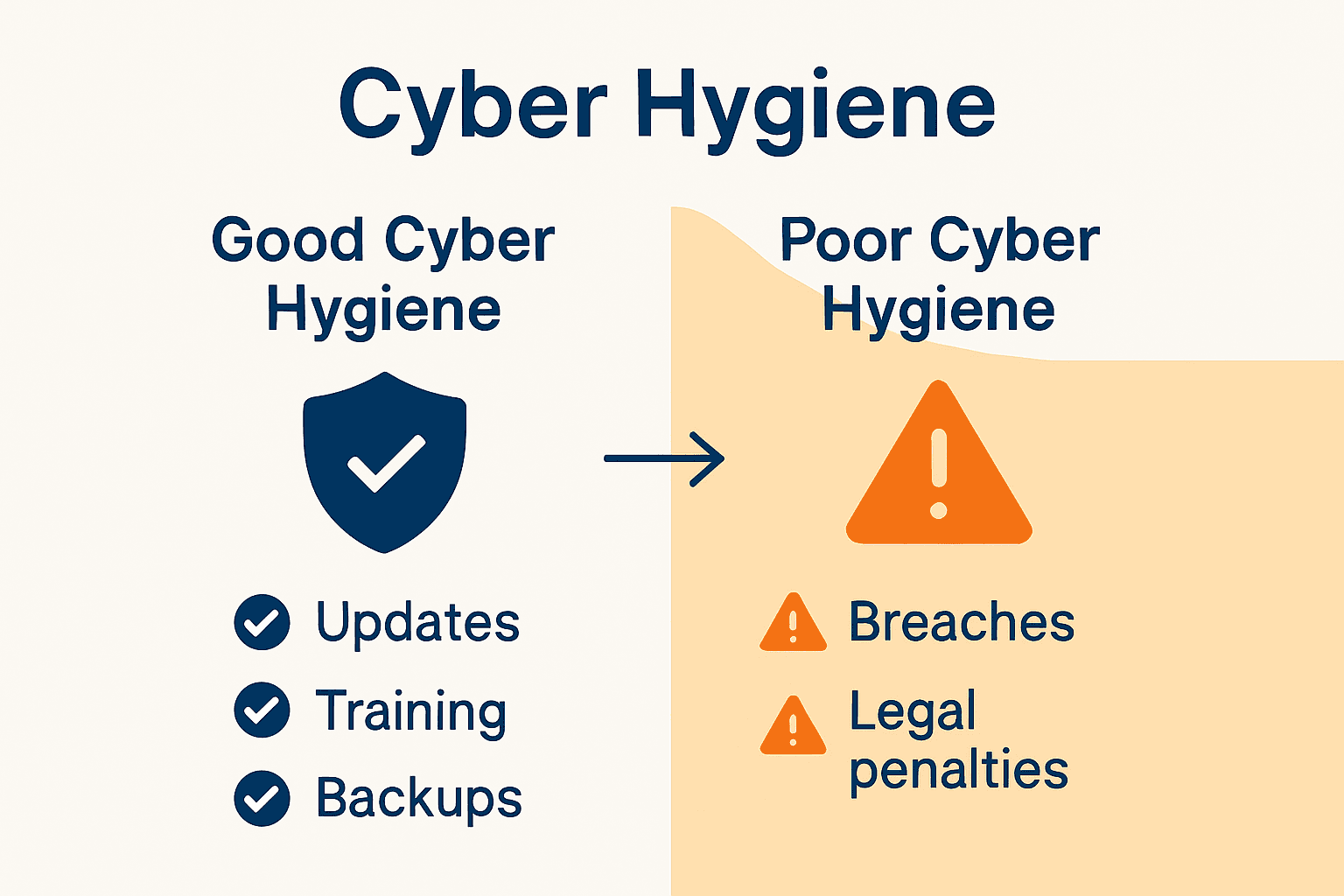
- Financial losses from data breaches
- Permanent reputation damage
- Operational disruption and downtime
- Potential legal and regulatory penalties
- Loss of customer trust and business relationships
Small businesses are particularly vulnerable. Hackers often view them as ‘soft targets’ because they typically lack sophisticated cybersecurity infrastructure. A single overlooked vulnerability – an unpatched software system, a weak password, or an unmonitored network connection – can become an entry point for substantial financial and operational damage.
Understanding these risks is crucial. By recognising the potential consequences, Brisbane businesses can shift from a reactive to a proactive cybersecurity mindset. Learn more about protecting your business by exploring our guide to top SMB cybersecurity threats, and take the first step towards building a robust digital defence strategy.
Expert Recommendations for Brisbane SMEs
Cybersecurity isn’t a one-size-fits-all solution, especially for Brisbane’s diverse small and medium businesses. Strategic cyber hygiene requires a nuanced, proactive approach that goes beyond basic technical measures and embraces a holistic security culture.
UniSA cyber experts emphasise fundamental practices that can dramatically reduce cybersecurity risks:
- Implement consistent software update protocols
- Develop robust password management strategies
- Conduct regular security awareness training
- Create comprehensive incident response plans
- Establish multi-layered authentication systems
Emergent research from arXiv suggests Brisbane SMEs should also explore transformative technologies like Artificial Intelligence to enhance their cybersecurity resilience. These advanced tools can provide predictive threat detection, automate security responses, and offer intelligent risk management capabilities that traditional approaches cannot match.
Navigating cybersecurity complexities requires more than technical knowledge – it demands a strategic mindset. By combining foundational cyber hygiene practices with cutting-edge technologies, Brisbane businesses can build a robust digital defence. For a comprehensive strategy tailored to local businesses, explore our guide to essential cybersecurity layers and take the first step towards comprehensive protection.
Strengthen Your Cyber Hygiene with IT Start’s Tailored IT Solutions
Understanding the critical importance of cyber hygiene in protecting your Brisbane SME reveals common challenges such as managing software updates, enforcing strong password policies and maintaining consistent data backups. These key practices are essential for reducing vulnerabilities but can feel overwhelming without the right support. Many businesses worry about potential data breaches, compliance risks and the constant threat of cyberattacks that could disrupt operations and damage trust.
At IT Start, we specialise in helping local Brisbane businesses build robust digital defences through proactive, customised cybersecurity and managed IT support. Our expertise aligns with the principles discussed in the guide to cyber hygiene and includes continuous security monitoring, employee training programs and tailored cloud solutions. Don’t wait for a security incident to highlight urgent gaps. Act now to secure your business infrastructure and ensure compliance with legal standards. Discover how our managed IT support can empower your team and safeguard your digital assets.
Ready to transform your cyber hygiene into a strategic advantage? Connect with us today for a free consultation and take the first step towards a resilient, secure future. Reach out through our contact page and learn more about our cybersecurity best practices for Brisbane SMBs. Your business deserves IT support built on local expertise and relentless commitment to security.
Frequently Asked Questions
What is cyber hygiene?
Cyber hygiene refers to the essential practices and precautions that organizations and individuals take to maintain the health and security of their digital systems and networks. It involves proactive measures to prevent potential cybersecurity vulnerabilities.
Why is cyber hygiene important for small businesses?
Cyber hygiene is crucial for small businesses as they are often seen as ‘soft targets’ by cybercriminals. Implementing basic cyber hygiene practices helps protect against financial losses, reputational damage, and operational disruptions due to cyberattacks.
What are some key practices for maintaining good cyber hygiene?
Key practices include regular software updates, strong password policies, employee cybersecurity training, user access management, and consistent data backups. These actions form a multi-layered security approach.
How can businesses ensure they comply with cybersecurity regulations?
Businesses can ensure compliance by protecting sensitive customer data, implementing data breach notification protocols, maintaining cybersecurity documentation, and conducting regular security risk assessments to meet legal requirements.