

Losing control of sensitive financial records or patient information is a nightmare scenario for any Brisbane business owner. As cyber threats become smarter and more targeted, simply hoping for the best is no longer enough. The latest Australian government strategies confirm cyber security needs to be a collective effort, with clear steps that protect data and help businesses meet strict legal standards. This guide highlights why building strong cyber defences is vital for local SMEs in high-risk sectors.
Guide Overview: Cyber Security Essentials for Brisbane SMEs
- Defining Cyber Security For Australian SMEs
- Major Cyber Threats Facing Local Businesses
- Legal Obligations And Industry Compliance
- Business Impact: Costs And Disruption Risks
- Building A Resilient Cyber Security Culture
Key Takeaways
| Point | Details |
|---|---|
| Understanding Cyber Security is Essential | Australian SMEs must adopt cyber security as a critical strategy for business survival in an increasingly digital landscape. |
| Recognise Major Cyber Threats | Identifying prevalent cyber threats such as phishing, ransomware, and identity theft is crucial for protecting business assets. |
| Legal Compliance is Mandatory | SMEs need to be aware of and comply with legal obligations regarding data protection and incident reporting to avoid significant penalties. |
| Cultivating a Cyber Security Culture is Key | Building a resilient cyber security culture involves engaging all employees in security practices and continuous education efforts. |
Defining Cyber Security for Australian SMEs
Cyber security represents the comprehensive strategy and set of practices businesses use to protect their digital assets, networks, and systems from malicious cyber threats. For Brisbane small and medium enterprises (SMEs), understanding this concept is not just technical jargon—it’s a critical business survival skill in an increasingly digital world.
At its core, cyber security involves multiple layers of protection designed to defend digital infrastructure against potential breaches, attacks, and unauthorized access. Australian cyber security strategies emphasize that protecting digital resources is a collaborative effort involving businesses, government, and individual staff members.
Key components of cyber security for Australian SMEs include:
- Protecting business data and digital infrastructure
- Implementing robust authentication protocols
- Developing staff awareness and training programs
- Regular software and system updates
- Creating comprehensive incident response plans
The Small Business Cyber Security Guide highlights that cyber threats are not abstract concepts—they represent real financial and reputational risks. Cybercriminals often target SMEs precisely because they perceive smaller organisations as having weaker digital defences.
Business Impact Areas:
- Financial losses from potential data breaches
- Disruption of critical business operations
- Potential legal and compliance challenges
- Damage to customer trust and business reputation
Pro tip: Treat cyber security as an ongoing process, not a one-time implementation, and regularly review and update your digital defence strategies.
Major Cyber Threats Facing Local Businesses
Brisbane businesses face an increasingly complex landscape of cyber threats that can compromise their digital infrastructure, financial stability, and reputation. Cyber security threats continue to evolve, presenting sophisticated challenges for small and medium enterprises across Queensland.
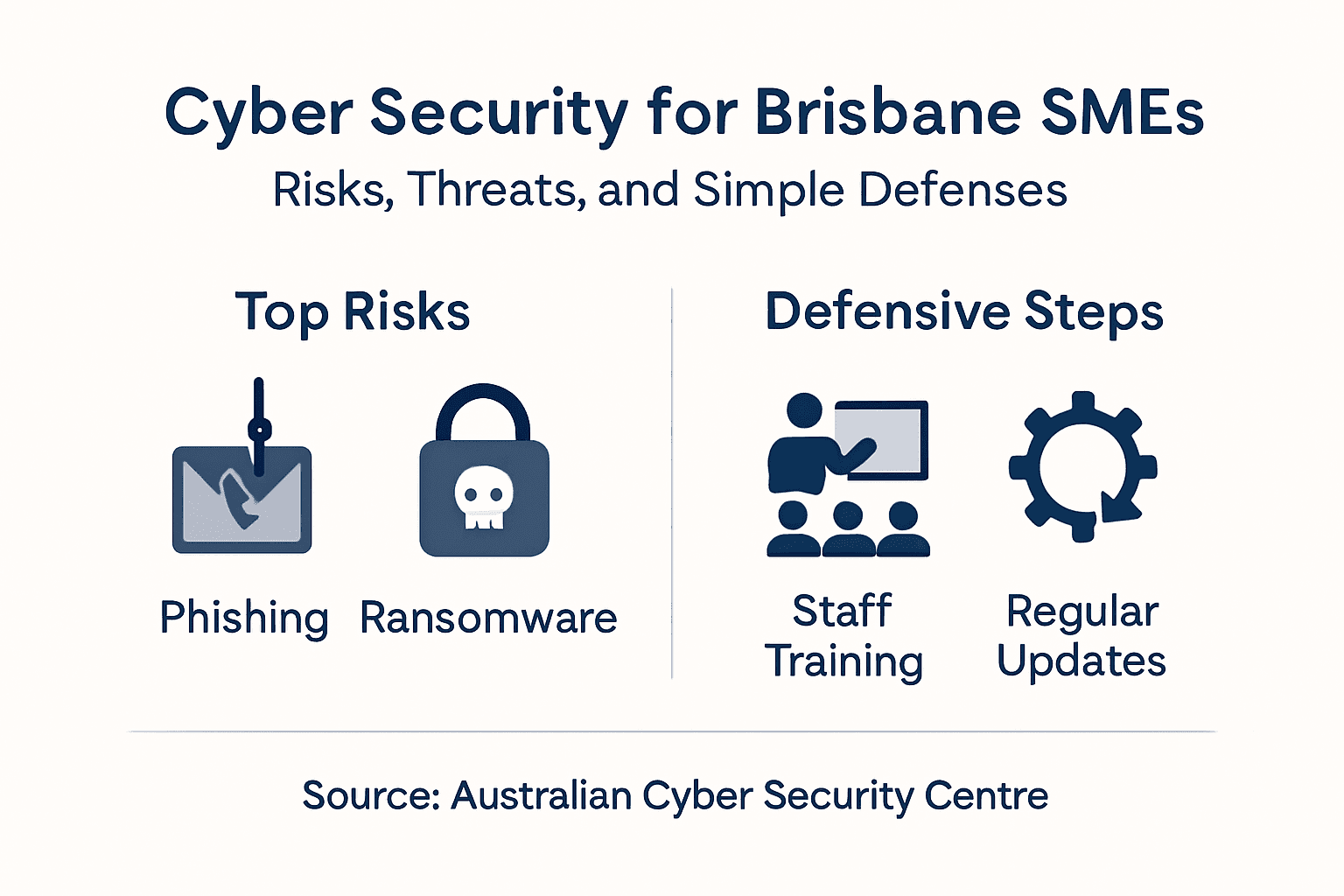
The most prevalent cyber threats targeting local businesses include:
- Phishing Scams: Deceptive emails designed to steal sensitive information
- Ransomware Attacks: Malicious software that locks critical business data
- Identity Theft: Unauthorized access to business and customer personal information
- Network Intrusions: Unauthorized access to company digital systems
- Software Vulnerability Exploits: Targeting unpatched system weaknesses
Cybercriminals are becoming more strategic, with Annual Cyber Threat Reports highlighting how state-sponsored actors and criminal networks adapt their tactics to exploit vulnerable business systems. They specifically target small businesses, recognising that these organisations often have less robust cyber defence mechanisms.
Cybercriminals view small businesses as easier targets with potentially significant financial returns.
The financial and operational risks of these cyber threats are substantial. A single successful cyber attack can result in:
To better understand the kinds of cyber threats facing Brisbane SMEs, the following table compares how each threat can affect business operations:
| Cyber Threat Type | Typical Attack Method | Business Disruption Risk | Best Initial Defence |
|---|---|---|---|
| Phishing Scams | Fraudulent email communication | Data theft and fraud | Email filtering, staff training |
| Ransomware Attacks | Malicious software encryption | Access loss, costly recovery | Regular backups, software updates |
| Identity Theft | Unauthorised data access | Compromised customer records | Strong authentication, access control |
| Network Intrusions | Unauthorised network access | System downtime, data loss | Firewall management, monitoring |
| Software Vulnerability | Exploiting outdated systems | Service interruptions, breaches | Timely patching, vulnerability scans |
- Significant financial losses
- Operational downtime
- Permanent data destruction
- Reputational damage
- Potential legal consequences
Pro tip: Implement a proactive cyber security strategy that includes regular staff training, system updates, and comprehensive incident response planning.

Legal Obligations and Industry Compliance
Brisbane businesses must navigate a complex landscape of legal responsibilities surrounding cyber security, with increasingly stringent regulatory requirements designed to protect digital assets and customer information. Cyber security regulations are evolving rapidly, creating new compliance challenges for small and medium enterprises across Queensland.
Key legal obligations for businesses include:
- Protecting customer personal information
- Implementing robust data protection measures
- Reporting significant cyber security incidents
- Maintaining comprehensive security documentation
- Conducting regular risk assessments
- Ensuring third-party vendor security standards
Cyber Security Handbook guidelines emphasise that company directors bear significant legal responsibility for cyber security governance. This means business leaders must actively understand, manage, and mitigate digital risks, not simply delegate technical responsibilities.
Legal non-compliance can result in substantial financial penalties and reputational damage for businesses.
Major regulatory frameworks businesses must consider include:
- Australian Privacy Principles (APPs)
- Notifiable Data Breaches (NDB) scheme
- Critical Infrastructure Security Legislation
- Industry-specific compliance requirements
- Australian Securities and Investments Commission (ASIC) guidelines
Pro tip: Consult with a legal professional specialising in cyber security to ensure comprehensive compliance and develop a robust governance framework.
Here is a summary of key Australian cyber security regulations and what they mean for Brisbane SMEs:
| Legislation or Standard | Primary Focus | Impact on SMEs |
|---|---|---|
| Australian Privacy Principles | Protecting personal information | Mandatory customer data safeguards |
| Notifiable Data Breaches (NDB) | Reporting serious data incidents | Requirement to notify affected customers |
| Critical Infrastructure Legislation | Securing essential systems | Enhanced compliance for vital assets |
| Industry Compliance Requirements | Sector-specific standards | Adherence to industry rules and audits |
| ASIC Guidelines | Cyber governance and risk | Increased leadership accountability |
Business Impact: Costs and Disruption Risks
Cyber security breaches represent a significant financial and operational threat to Brisbane businesses, with potentially devastating consequences that extend far beyond immediate technical repairs. Small business cyber incidents can trigger catastrophic financial and reputational damage that may take years to fully recover from.
The direct and indirect costs of cyber security incidents for local businesses typically include:
- Immediate Recovery Costs
- Technical investigation and system restoration
- Cybersecurity expert consultation
- Hardware and software replacements
- Operational Disruption
- Business downtime
- Lost productivity
- Missed customer opportunities
- Reputational Damage
- Customer trust erosion
- Potential client loss
- Brand reputation impact
Cyber resilience research indicates that inconsistent cyber security budgets dramatically increase vulnerability, with many small businesses experiencing substantial financial strain following a cyber incident. The average cost of a data breach for a small enterprise can range from $30,000 to $275,000, depending on the complexity and extent of the attack.
Unaddressed cyber vulnerabilities can potentially bankrupt a small business within months of a significant security breach.
Key financial risk factors for Brisbane businesses include:
- Lack of comprehensive cyber insurance
- Inadequate incident response planning
- Limited technological infrastructure
- Insufficient staff cyber security training
- Outdated security systems
Pro tip: Invest in proactive cyber security measures and comprehensive incident response planning to mitigate potential financial and operational risks.
Building a Resilient Cyber Security Culture
Building a robust cyber security culture requires more than implementing technical solutions; it demands a comprehensive approach that transforms how every team member thinks about digital protection. Cyber security handbook guidelines emphasise that organisational resilience starts with leadership commitment and systematic awareness development.
Key elements of developing a strong cyber security culture include:
- Establishing clear security policies
- Conducting regular staff training
- Creating accountability mechanisms
- Promoting transparent communication
- Implementing continuous learning programs
- Developing incident response protocols
Australian Cyber Security Strategy highlights the importance of transforming cyber security from a technical challenge into a shared organisational responsibility. This means moving beyond compliance to cultivate a proactive mindset where every employee understands their role in protecting digital assets.
Cyber security is not a technology problem, but a people problem that requires continuous education and engagement.
Effective cyber security culture development strategies involve:
- Leadership demonstrating commitment
- Regular threat awareness training
- Encouraging reporting of potential vulnerabilities
- Rewarding security-conscious behaviour
- Creating psychologically safe environments for discussing risks
Pro tip: Develop a comprehensive cyber security training program that is engaging, practical, and tailored to your specific business context.
Strengthen Your Brisbane Business Against Cyber Threats with IT Start
Cyber security is not just a technical requirement for Brisbane businesses it is essential to protect your financial wellbeing reputation and compliance standing. This article highlights the real risks of phishing scams ransomware and data breaches that can disrupt operations and cause costly damage. If your business is burdened by the challenge of keeping digital assets safe and meeting evolving legal obligations IT Start offers a proactive solution tailored precisely for Queensland SMEs.
Our local expertise and managed IT support focus on building resilient cyber security cultures through comprehensive staff training up-to-date system patches and strong authentication measures. We understand how vital it is to minimise downtime and safeguard sensitive data while aligning with Australian Privacy Principles and Notifiable Data Breaches schemes. Don’t wait until a breach threatens your business trust IT Start to create a robust defence framework customised for your needs.
Discover how our cybersecurity services can reduce your risk today. Ready to protect your business from evolving threats? Contact IT Start for a free cyber security assessment and consultation through our contact page. Take control of your business’s security now before it is too late.
Frequently Asked Questions
What is cyber security and why is it important for businesses?
Cyber security refers to the strategies and practices businesses use to protect their digital assets from cyber threats. For businesses, it is crucial to safeguard sensitive information, maintain operational efficiency, and build customer trust in an increasingly digital world.
What are common cyber threats faced by small and medium enterprises?
Common cyber threats include phishing scams, ransomware attacks, identity theft, network intrusions, and software vulnerability exploits. These threats can lead to data breaches, financial losses, and reputational damage for businesses.
How can businesses improve their cyber security measures?
Businesses can improve their cyber security by implementing robust authentication protocols, conducting regular software updates, providing staff training on cyber awareness, and creating comprehensive incident response plans to mitigate potential risks.
What legal obligations do businesses have regarding cyber security?
Businesses must comply with legal obligations such as protecting customer personal information, reporting significant cyber security incidents, and ensuring third-party vendor security. Non-compliance can result in financial penalties and reputational harm.
Recommended
- What Cyber Security Protects for Brisbane Businesses – IT Start
- Cyber Security Advice – Protecting Brisbane Businesses – IT Start
- Cyber Security Risks – What Brisbane Businesses Face – IT Start
- Cyber Security Actions for Brisbane Businesses – IT Start
- Understanding the Compliance Management System for Businesses | Gammatica