

Nearly one in three Australian small businesses reported a cyber attack last year, putting sensitive client data at direct risk. For Brisbane IT managers and decision-makers in financial services, the threat feels more immediate as malicious actors target weak links and evolving systems. Gain practical insights on how australian businesses can recognise, assess, and protect against the most dangerous cyber security threats before they disrupt daily operations.
Table of Contents
- What Is A Threat In Cyber Security?
- Main Types Of Cyber Security Threats
- How Cyber Threats Target Small Businesses
- Impact On Data Security And Legal Compliance
- Reducing Risk: Proactive Defences And Best Practices
In This Guide: Cybersecurity Threats & Solutions for Brisbane SMEs
| Point | Details |
|---|---|
| Understanding Cyber Threats | Cybersecurity threats continually evolve, requiring businesses to stay informed and adapt their security practices. Regular threat assessments and training are essential. |
| Types of Cyber Threats | Major threats include ransomware, phishing, and identity fraud, each posing unique risks to businesses. Knowing these threats helps in formulating effective defence strategies. |
| Small Business Vulnerabilities | Small enterprises often lack sufficient cybersecurity measures, making them prime targets for cybercriminals. Comprehensive training and better resource allocation can mitigate these risks. |
| Legal Compliance | New legal requirements for reporting incidents and protecting data require businesses to align their cybersecurity strategies accordingly to avoid penalties and reputational damage. |
What Is a Threat in Cyber Security?
In the rapidly evolving digital landscape of Brisbane, understanding cyber security threats is crucial for protecting business assets and sensitive information. According to the Annual Cyber Threat Report, a cyber security threat represents any malicious activity designed to compromise digital systems, networks, or infrastructure with the intent to cause disruption, steal data, or create financial damage.
Cyber threats manifest in multiple sophisticated forms, targeting businesses through various intrusion methods. These can include:
- Phishing attacks exploiting human vulnerabilities
- Ransomware that encrypts critical business data
- Malware designed to infiltrate network systems
- Social engineering tactics manipulating employees
- Distributed Denial of Service (DDoS) attacks interrupting operations
The Australian Government’s cyber threat assessment highlights that malicious actors continuously adapt their strategies, making cyber threats dynamic and increasingly complex. State and non-state actors leverage technological advancements to bypass traditional security measures, presenting significant risks for Brisbane small to medium enterprises across various sectors.
Pro tip: Regularly update your cybersecurity knowledge and conduct frequent vulnerability assessments to stay ahead of emerging digital threats.
Main Types of Cyber Security Threats
Cyber security threats have become increasingly sophisticated, presenting significant challenges for Brisbane businesses across multiple domains. Cyber threat landscape analysis reveals several critical threat categories that organisations must understand and proactively defend against.
The primary types of cyber security threats include:
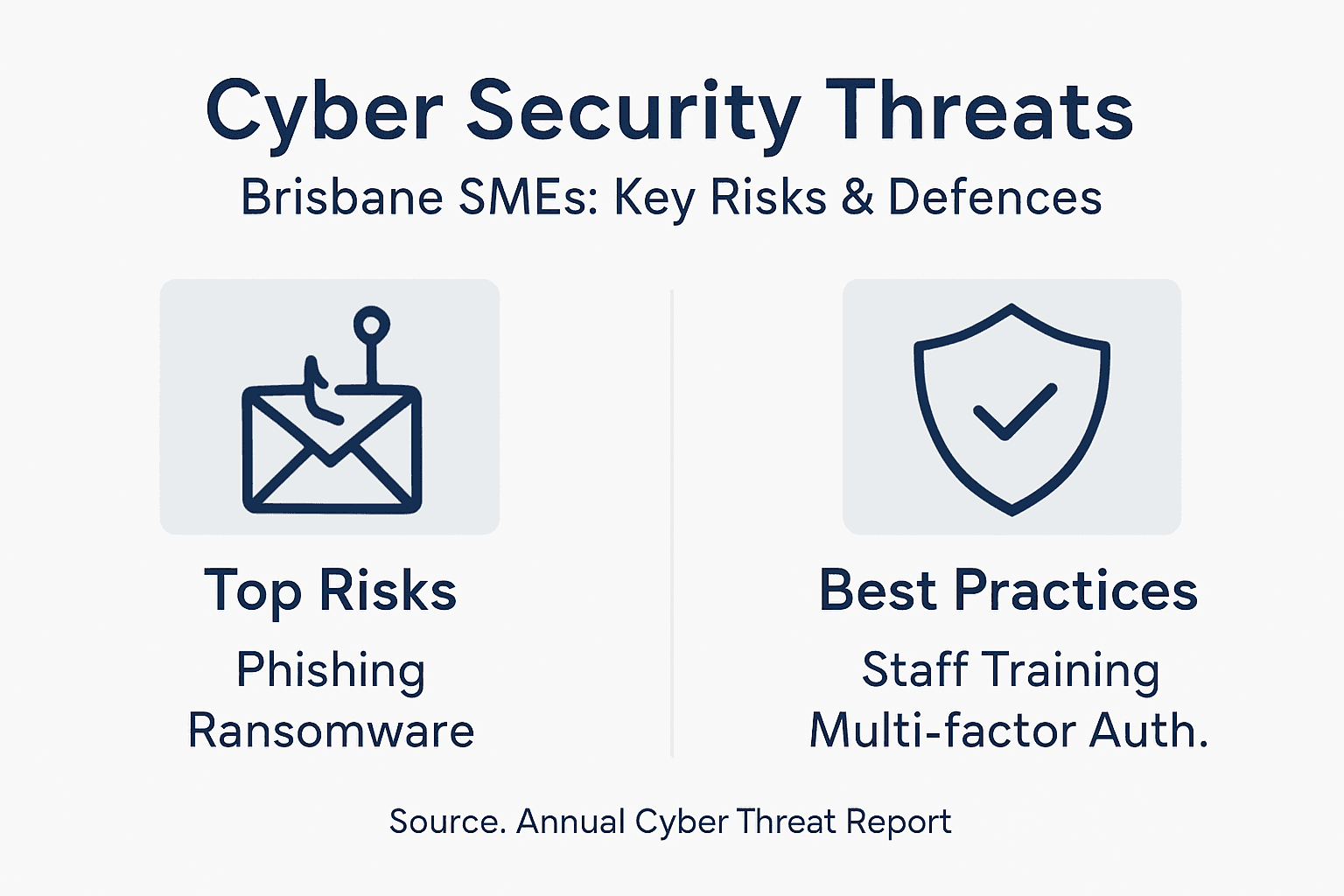
- Ransomware: Malicious software that encrypts business data and demands payment for restoration
- Business Email Compromise (BEC): Sophisticated email scams targeting financial transactions
- Phishing Attacks: Deceptive communications designed to steal sensitive credentials
- Identity Fraud: Unauthorised access and impersonation of legitimate user accounts
- State-Sponsored Espionage: Targeted digital attacks from foreign government actors
- Supply Chain Vulnerabilities: Exploitation of weaknesses in interconnected technological ecosystems
The Annual Cyber Threat Report emphasises that these threats are dynamic, with cybercriminals continuously evolving their tactics to bypass traditional security measures. Queensland businesses must remain vigilant, understanding that each threat type carries unique risks and requires specialised defensive strategies.
To help Brisbane businesses prioritise, here’s a summary of major cyber threats and their potential impacts:
| Threat Type | Typical Target | Business Impact |
|---|---|---|
| Ransomware | Financial records | Data loss, downtime |
| Business Email Compromise | Payment systems | Financial theft, fraud |
| Phishing Attacks | Employee credentials | Unauthorised access, breach |
| Identity Fraud | Customer databases | Reputational damage |
| State-Sponsored Espionage | Sensitive information | Intellectual property loss |
| Supply Chain Vulnerabilities | IT vendors | System compromise |
Pro tip: Implement a multi-layered cybersecurity approach that combines technological solutions, regular staff training, and continuous threat monitoring to effectively mitigate diverse digital risks.
How Cyber Threats Target Small Businesses
Small businesses in Brisbane represent prime targets for cybercriminals due to their often limited technological defences. Cyber attack research reveals that SMEs are particularly vulnerable because they typically lack robust security infrastructure and comprehensive threat management strategies.
Cybercriminals exploit several key vulnerabilities in small business environments:
- Inadequate staff cybersecurity training
- Outdated software and unpatched systems
- Limited budget for advanced security technologies
- Weak password management practices
- Insufficient data backup and recovery protocols
- Minimal network segmentation
The Australian business cybersecurity guidelines emphasise that attackers frequently use sophisticated social engineering techniques to penetrate small business networks. These methods include crafting convincing phishing emails, impersonating trusted contacts, and manipulating employees into revealing sensitive credentials or executing malicious actions.

Pro tip: Develop a comprehensive cybersecurity awareness program that trains staff to recognise and respond to potential digital threats, creating a human firewall against sophisticated cyber attacks.
Impact on Data Security and Legal Compliance
Cybersecurity incidents pose substantial risks to Brisbane businesses, extending far beyond immediate technological disruptions. Cyber Security Act 2024 introduces stringent legal requirements that fundamentally reshape how organisations manage digital risks and protect sensitive information.
The key compliance implications for small to medium enterprises include:
- Mandatory reporting of cybersecurity incidents
- Minimum standards for data protection
- Potential financial penalties for non-compliance
- Enhanced requirements for incident response planning
- Mandatory disclosure of data breaches
- Increased accountability for senior management
The Annual Cyber Threat Report highlights that legal non-compliance can result in severe consequences. These range from substantial financial penalties to potential legal action, reputational damage, and loss of customer trust. Queensland businesses must proactively develop comprehensive cybersecurity strategies that not only protect against threats but also demonstrate adherence to evolving regulatory standards.
Pro tip: Conduct regular compliance audits and maintain detailed documentation of your cybersecurity practices to demonstrate regulatory alignment and protect your business from potential legal vulnerabilities.
Reducing Risk: Proactive Defences and Best Practices
Brisbane SMEs must adopt a strategic approach to cybersecurity that goes beyond reactive measures. Commonwealth Cyber Security Posture emphasises the critical importance of proactive defence strategies that anticipate and mitigate potential threats before they escalate.
Key proactive defence strategies include:
- Implementing multi-factor authentication
- Regular staff cybersecurity training
- Continuous vulnerability assessments
- Robust incident response planning
- Network segmentation
- Endpoint protection systems
- Regular software and system updates
The ASIC cyber resilience guidelines recommend establishing a comprehensive governance framework that integrates cybersecurity into core business operations. This approach involves creating a culture of security awareness, maintaining detailed documentation, and ensuring leadership actively participates in cyber risk management.
The table below compares proactive and reactive cyber defence approaches for SMEs:
| Defence Approach | Description | Example Benefit |
|---|---|---|
| Proactive | Prevents breaches before they occur | Reduced incident costs |
| Reactive | Responds only when an attack is detected | Quick recovery support |
Pro tip: Develop a comprehensive cybersecurity playbook that outlines specific protocols for prevention, detection, and rapid response to potential cyber incidents, ensuring your team is prepared and resilient.
Protect Your Brisbane SME From Growing Cyber Security Threats
The article highlights critical challenges Brisbane small to medium enterprises face from evolving cyber security threats such as ransomware, phishing attacks, and business email compromise. These risks threaten your data security, operational continuity, and legal compliance. Many businesses struggle with limited staff training, outdated systems, and lack of proactive defence strategies, making them vulnerable targets. IT Start understands these pain points and offers tailored, proactive cybersecurity services designed specifically for Queensland SMEs. Our approach combines advanced technologies with staff education to create a strong human firewall and robust defence framework.
Take control of your digital security today and shield your business from costly data breaches and compliance risks. Discover how IT Start’s managed IT support and cybersecurity solutions can help you stay ahead of cybercriminals. Don’t wait until an attack happens; secure your operations with expert support you can trust. Start your journey with a free consultation by contacting IT Start now. Learn more about our commitment to local Brisbane businesses and how we personalize cybersecurity at https://itstart.com.au/contact-us. Ready to build resilience against cyber threats visit contact us for a tailored assessment and safeguard your business future.
Frequently Asked Questions
What are the main types of cyber security threats?
The main types of cyber security threats include ransomware, business email compromise (BEC), phishing attacks, identity fraud, state-sponsored espionage, and supply chain vulnerabilities. Each of these threats presents unique risks and requires specialized defensive strategies.
How do cyber threats specifically target small businesses?
Cyber threats often target small businesses due to their limited technological defences, inadequate staff training, outdated software, weak password practices, and minimal network segmentation. Criminals exploit these vulnerabilities using social engineering techniques and sophisticated phishing scams.
What are the legal implications of a cyber security incident for businesses?
Legal implications include mandatory reporting of incidents, minimum data protection standards, potential financial penalties for non-compliance, and increased accountability for senior management regarding data breaches and incident response planning.
How can Brisbane SMEs effectively reduce cyber security risks?
Brisbane SMEs can reduce cyber security risks by implementing proactive defences such as multi-factor authentication, regular staff cybersecurity training, continuous vulnerability assessments, incident response planning, and maintaining software updates.
Recommended
- Cyber Security Threats – What Brisbane Businesses Face – IT Start
- Cyber Security Risks – What Brisbane Businesses Face – IT Start
- Cyber Security Vulnerabilities – Why Brisbane SMEs Need Protection – IT Start
- What Is Cyber Security and Why Brisbane SMEs Rely On It – IT Start
- How your digital workplace puts an end to Shadow IT