

Nearly one in three australian businesses experience cyber incidents every year, yet many Brisbane financial services SMEs remain vulnerable. Cyber threats are growing more advanced, making the protection of digital assets a daily challenge for local IT managers and business owners. This introduction breaks down what information security truly means, why its principles matter, and how australian compliance standards shape smarter cybersecurity strategies for your organisation.
Table of Contents
- Defining Information Security In Cyber Security
- Core Principles: Confidentiality, Integrity, Availability
- Types Of Threats Facing Brisbane Smes
- Australian Laws And Industry Obligations
- Practical Steps For Strong Information Security
- Common Pitfalls And How To Avoid Them
Information Security & Compliance Guide for Brisbane SMEs
| Point | Details |
|---|---|
| Understanding Information Security | Information security is crucial for Brisbane SMEs, encompassing strategies to protect digital assets, data, and systems from threats and unauthorised access. |
| Core Principles of Cybersecurity | The fundamental principles of confidentiality, integrity, and availability must be established and maintained throughout all organisational processes. |
| Awareness of Cyber Threats | Brisbane SMEs must recognise the various sophisticated cyber threats, such as phishing, ransomware, and insider threats, to effectively safeguard their operations. |
| Compliance with Legislation | Adhering to Australian cybersecurity laws and establishing robust protocols is essential to avoid penalties and maintain customer trust. |
Defining Information Security in Cyber Security
Information security represents a critical defensive strategy within cyber security designed to protect digital assets, systems, and data from potential threats and unauthorized access. For Brisbane small to medium enterprises (SMEs), understanding this concept goes beyond technical jargon — it involves creating a comprehensive shield around organisational digital infrastructure.
At its core, information security encompasses systematic protection strategies that safeguard digital resources from potential breaches, attacks, and unintended data exposures. These strategies integrate technological solutions, human processes, and organisational policies to create multiple layers of defence. The objective is not merely preventing unauthorized access but maintaining the integrity, confidentiality, and availability of sensitive information across digital platforms.
In the Australian context, information security carries significant strategic importance. Government frameworks like the South Australian Cyber Security Framework emphasise that effective security practices are fundamental to maintaining trust in digital services. For Brisbane SMEs, this translates into implementing robust mechanisms that protect customer data, financial records, intellectual property, and operational information from potential cyber threats.
Pro tip: Conduct a comprehensive information security audit every six months to identify and address potential vulnerabilities in your digital infrastructure before they become critical risks.
Core Principles: Confidentiality, Integrity, Availability
Cybersecurity for Brisbane SMEs rests on three fundamental principles: confidentiality, integrity, and availability. These core principles form the backbone of comprehensive information security strategies, ensuring digital assets remain protected, accurate, and accessible.
Confidentiality represents the first critical principle, which focuses on protecting sensitive information from unauthorised access or disclosure. For Brisbane businesses, this means implementing robust access controls, encryption technologies, and strict data handling protocols that prevent potential breaches of private customer, financial, and operational information.
The second principle, integrity, ensures that digital information remains accurate, complete, and unaltered throughout its lifecycle. Australian privacy standards emphasise maintaining data reliability by preventing unauthorized modifications, detecting potential tampering, and establishing clear audit trails. This principle protects against malicious alterations that could compromise business operations or decision-making processes.
Availability represents the final cornerstone, guaranteeing that authorized users can access critical information and systems when required. This principle involves maintaining robust infrastructure, implementing redundancy measures, and developing comprehensive disaster recovery plans that ensure business continuity even during unexpected disruptions.
Pro tip: Develop a comprehensive information security policy that explicitly defines and implements these three core principles across all digital platforms and organizational processes.
Here is a summary of the three core principles of information security and how they affect Brisbane SMEs:
| Principle | Practical Application | Impact on Brisbane SMEs |
|---|---|---|
| Confidentiality | Encryption, access controls | Protects customer and financial data |
| Integrity | Audit trails, data checks | Ensures reliable business decisions |
| Availability | Redundancy, recovery plans | Maintains business continuity |
Types of Threats Facing Brisbane SMEs
Brisbane’s small and medium enterprises (SMEs) face an increasingly complex landscape of cybersecurity threats that can potentially devastate business operations. Understanding these threats is the first critical step in developing robust defensive strategies that protect digital assets and maintain business continuity.

Phishing attacks represent a primary and increasingly sophisticated threat, with cybercriminals targeting SME vulnerabilities through deceptive emails and social engineering techniques. These attacks often trick employees into revealing sensitive credentials or financial information, creating significant risks for businesses with limited cybersecurity infrastructure. Attackers strategically exploit human error, crafting convincing messages that appear legitimate and bypass traditional security measures.
Ransomware and malware pose another critical threat to Brisbane businesses. These malicious software programs can encrypt critical data, effectively locking organisations out of their systems and demanding substantial financial ransoms. Sophisticated cyber threats increasingly leverage artificial intelligence to create more convincing attack vectors, making traditional defensive strategies less effective. Business email compromise represents an additional risk, where attackers manipulate communication channels to initiate fraudulent financial transactions or steal sensitive corporate information.
Insider threats further complicate the cybersecurity landscape for SMEs. Employees with access to critical systems can inadvertently or intentionally compromise organisational security, whether through negligence, poor password management, or deliberate malicious actions. This multifaceted threat requires comprehensive employee training and robust access control mechanisms.
Pro tip: Implement a multi-layered cybersecurity approach that combines technological solutions, regular employee training, and proactive threat monitoring to effectively mitigate diverse cyber risks.
Below is a comparison of major cyber threats facing Brisbane SMEs:
| Threat Type | Common Tactics | Potential Business Impact |
|---|---|---|
| Phishing | Impersonation emails, scams | Credential and data theft |
| Ransomware | Data encryption, extortion | Loss of access, ransom payments |
| Insider Threats | Negligence, intentional breach | Data leaks, system compromise |
Australian Laws and Industry Obligations
Australian cybersecurity legislation creates a comprehensive framework that mandates strict requirements for businesses, particularly small to medium enterprises (SMEs) operating in increasingly digital environments. Compliance is no longer optional but a critical legal and operational necessity for organisations across Brisbane and beyond.
Cybersecurity legal frameworks in Australia encompass multiple legislative instruments that define specific obligations for businesses. The Privacy Act 1988 remains a foundational regulation, governing how organisations collect, manage, and protect personal information. More recent legislation like the Cyber Security Act 2024 introduces mandatory reporting requirements for ransomware incidents and establishes minimum security standards for digital infrastructure, with significant penalties for non-compliance.
Sector-specific regulations add additional layers of complexity for Brisbane SMEs. Critical infrastructure industries such as healthcare, finance, and telecommunications face more stringent requirements, often mandating advanced security protocols, regular vulnerability assessments, and comprehensive incident response plans. Minimum security standards now require businesses to implement multi-factor authentication, maintain regular software updates, and develop robust cybersecurity governance frameworks that demonstrate proactive risk management.
The consequences of non-compliance extend beyond financial penalties. Businesses that fail to meet legislative requirements risk reputational damage, potential legal action, and loss of customer trust. Regulatory bodies increasingly expect organisations to demonstrate not just technical compliance, but a genuine commitment to protecting digital assets and customer information.
Pro tip: Conduct an annual comprehensive compliance audit that maps your current cybersecurity practices against the latest Australian legislative requirements to identify and address potential gaps.
Practical Steps for Strong Information Security
Establishing robust information security requires a strategic and comprehensive approach that goes beyond simple technological solutions. Brisbane SMEs must develop a holistic framework that integrates technological tools, employee education, and proactive risk management strategies.
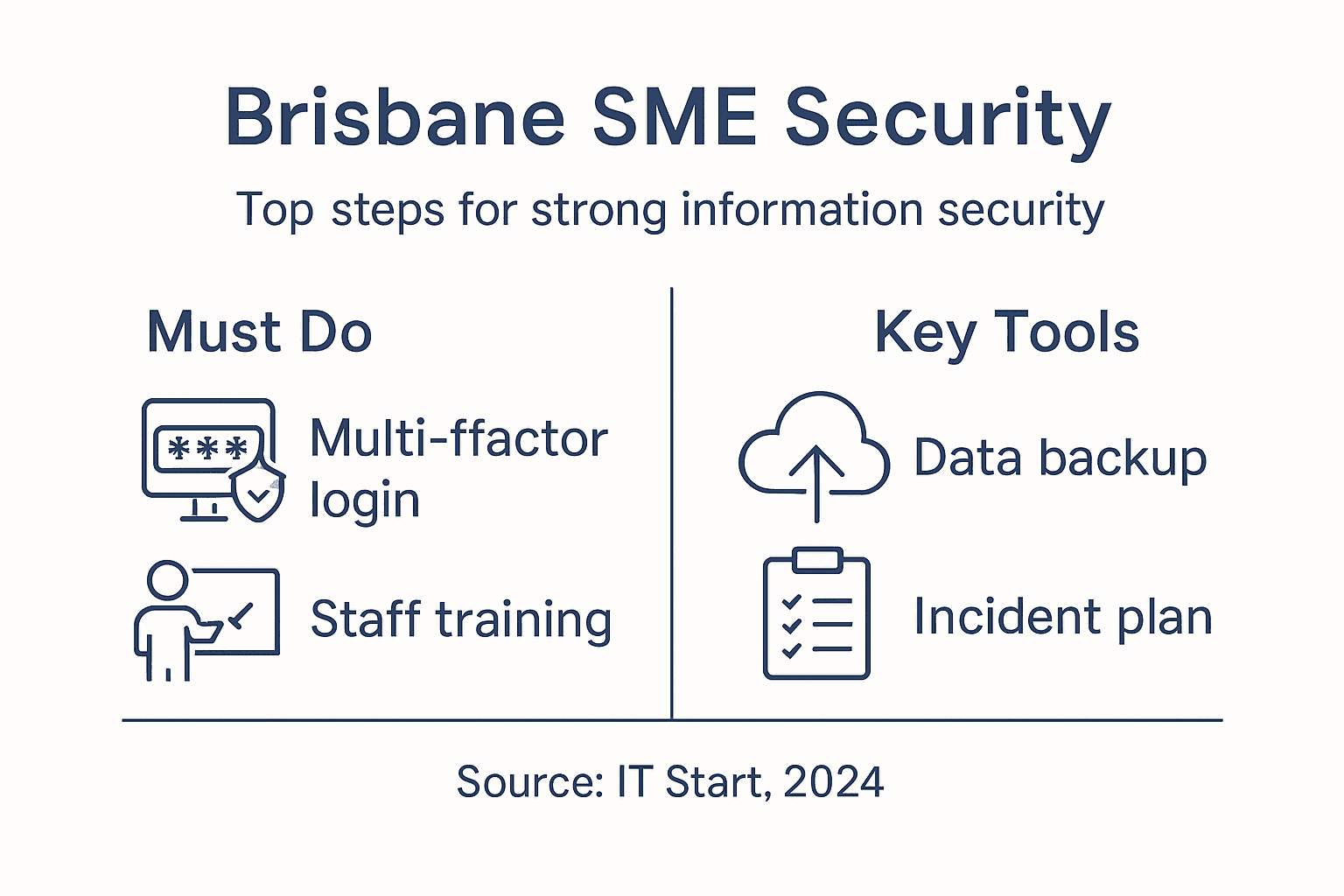
Essential cybersecurity strategies start with fundamental protective measures. Multi-factor authentication represents the first critical line of defence, preventing unauthorized access even if passwords are compromised. Businesses should implement strong, unique passwords across all systems and regularly update software to patch potential vulnerabilities. Network segmentation and robust access controls can further limit potential damage by restricting system access based on employee roles and requirements.
Employee training emerges as a crucial component of information security. Regular cybersecurity awareness programs help staff recognise potential threats like phishing attempts, social engineering tactics, and suspicious digital communications. Conducting simulated security exercises can help teams develop practical skills in identifying and responding to potential cyber incidents. Implementing clear policies around device usage, data handling, and remote work security ensures that every team member understands their role in maintaining organisational digital safety.
Technological solutions must be complemented by comprehensive backup and recovery strategies. This involves maintaining multiple backup copies of critical data, including offline storage options that remain protected from potential ransomware attacks. Automated patch management systems can help ensure that all software and systems remain current, reducing potential exploitation windows for cybercriminals.
Pro tip: Develop a comprehensive incident response plan that clearly outlines step-by-step procedures for detecting, containing, and recovering from potential cybersecurity breaches.
Common Pitfalls and How to Avoid Them
Information security for Brisbane SMEs is fraught with potential missteps that can compromise organisational digital infrastructure. Understanding these common vulnerabilities is the first step towards developing a robust, resilient cybersecurity strategy that protects critical business assets.
Cybersecurity risk management requires businesses to recognise and systematically address key vulnerabilities. One significant pitfall involves underestimating the sophistication of contemporary cyber threats. Many Brisbane SMEs mistakenly believe they are too small to be targeted, leaving themselves exposed to increasingly automated and indiscriminate attack methods. This misconception can lead to inadequate investment in defensive technologies and processes.
Administrator privilege management represents another critical area of potential weakness. Businesses often grant excessive system access to employees, creating unnecessary risk vectors. By implementing strict role-based access controls and regularly auditing user permissions, organisations can significantly reduce their potential attack surface. Additionally, many SMEs neglect fundamental security practices like consistent software patching, leaving known vulnerabilities unaddressed and creating easy entry points for cybercriminals.
Employee behaviour and awareness constitute a complex vulnerability that technical solutions alone cannot resolve. Relying solely on technological defences without comprehensive staff training creates significant organisational risk. Phishing simulations, regular cybersecurity awareness training, and clear communication of digital safety protocols can transform employees from potential security weak points into active defenders of organisational digital infrastructure.
Pro tip: Conduct quarterly comprehensive security assessments that systematically evaluate your technological defences, employee readiness, and potential vulnerability points.
Strengthen Your Brisbane SME’s Information Security with IT Start
The article highlights critical information security challenges facing Brisbane SMEs including protecting confidentiality, maintaining data integrity, and ensuring availability amid growing cyber threats like phishing and ransomware. If you are concerned about meeting Australian cybersecurity laws or avoiding common pitfalls like insufficient employee training and weak access controls, you are not alone. These pain points demand a proactive, layered defence strategy to safeguard your business’s digital assets and reputation.
At IT Start we specialise in empowering Brisbane businesses with tailored cybersecurity services that align perfectly with these essential principles. Our managed IT support and cloud solutions incorporate strong multi-factor authentication, regular security audits, employee awareness training, and incident response planning to address key vulnerabilities highlighted in the article.
Protect your business today with expert local support that understands the legal landscape and the latest threats. Don’t let cyber risks escalate into costly breaches or compliance failures. Take the first step by scheduling a free assessment. Discover how IT Start can build a bespoke security framework designed around your specific needs and industry requirements.
Explore your options and act now to secure your future with IT Start cybersecurity solutions. Ready to strengthen your information security posture today? Contact us for a consultation and transform cyber risk into confident protection.
Frequently Asked Questions
What is information security in cyber security?
Information security in cyber security refers to the strategies implemented to protect digital assets, systems, and data from threats and unauthorized access, ensuring the integrity, confidentiality, and availability of sensitive information.
Why is information security important for Brisbane SMEs?
Information security is crucial for Brisbane SMEs as it helps protect customer data, financial records, and intellectual property from cyber threats, ensuring business continuity and maintaining customer trust.
What are the core principles of information security?
The core principles of information security include confidentiality (protecting sensitive data from unauthorized access), integrity (ensuring data accuracy and reliability), and availability (ensuring authorized users can access information when needed).
What types of cyber threats should Brisbane SMEs be aware of?
Brisbane SMEs should be aware of various cyber threats, including phishing attacks, ransomware, malware, and insider threats, which can compromise business operations and lead to significant financial losses.
Recommended
- Cyber Security Actions for Brisbane Businesses – IT Start
- Cyber Security Vulnerabilities – Why Brisbane SMEs Need Protection – IT Start
- What Is Cyber Security and Why Brisbane SMEs Rely On It – IT Start
- Cyber Security Threats: Vital Risks for Brisbane SMEs – IT Start
- Understanding the Compliance Management System for Businesses | Gammatica