

Australian SMEs face a pressing reality: cyber attacks cost small businesses an average of over $30,000 per breach. With Brisbane’s financial and healthcare sectors operating in highly regulated and competitive environments, maintaining robust computer security is no longer optional. Rising threat levels require IT managers to master layered protection strategies and compliance standards, equipping teams to safeguard sensitive data and reinforce operational stability against targeted digital risks.
Quick Navigation: Key Computer Security Sections for Brisbane SMEs
- Defining Computer Security for Australian SMEs
- Key Types of Computer Security Threats
- Core Components and How Protection Works
- Australian Laws and Compliance Requirements
- Business Risks, Costs, and Common Mistakes
Key Takeaways
| Point | Details |
|---|---|
| Importance of Computer Security | Effective computer security is vital for Australian SMEs to protect their digital assets and maintain business integrity against rising cyber threats. |
| Common Cyber Threats | SMEs face various cyber threats such as phishing, malware, and ransomware, necessitating comprehensive awareness and training among employees. |
| Regulatory Compliance | Adhering to Australian cybersecurity laws is essential, including the Privacy Act 1988 and the Notifiable Data Breaches scheme, to mitigate risks and ensure responsible data handling. |
| Risk Assessment | Regular cybersecurity audits and risk assessments are necessary to identify vulnerabilities and reinforce protective measures within the organisation’s digital framework. |
Defining Computer Security for Australian SMEs
Computer security represents a comprehensive strategy for protecting digital assets, technology infrastructure, and sensitive information from potential cyber threats. For Australian small and medium enterprises (SMEs), this approach goes beyond simple technical solutions, becoming a critical business survival mechanism. Cyber threats targeting Australian businesses are increasing in sophistication and frequency, making robust digital defence strategies essential.
At its core, computer security encompasses multiple layers of protection designed to safeguard an organisation’s digital ecosystem. These layers include technological defences like firewalls and encryption, procedural protocols such as access management, and human-centric practices involving employee training and awareness. For Brisbane SMEs operating in competitive sectors like finance and healthcare, understanding these multifaceted security dimensions is crucial for maintaining operational integrity and client trust.
The Australian cybersecurity landscape presents unique challenges for small businesses. Limited resources, lack of dedicated IT teams, and complex technological environments make SMEs particularly vulnerable to cyber attacks. National cybersecurity strategies emphasise proactive defence mechanisms that help businesses develop resilient digital infrastructures. Key protective measures include implementing multi-factor authentication, regularly updating software systems, maintaining comprehensive data backup protocols, and developing incident response strategies.
Pro tip: Conduct a monthly cybersecurity audit of your digital systems, focusing on identifying potential vulnerabilities and updating your defence mechanisms accordingly.
Key Types of Computer Security Threats
Computer security threats represent sophisticated digital risks that can compromise an organisation’s technological infrastructure and sensitive information. Small businesses in Australia face an increasingly complex landscape of cybersecurity challenges, with malicious actors constantly developing new strategies to exploit digital vulnerabilities.
The primary categories of computer security threats targeting Brisbane SMEs include phishing attacks, malware infections, ransomware, social engineering, and account compromise. Phishing remains particularly dangerous, with cybercriminals crafting elaborate email and messaging strategies designed to trick employees into revealing sensitive credentials or downloading malicious software. These attacks often appear remarkably authentic, mimicking legitimate communications from trusted sources like banks, government agencies, or internal company contacts.
Malware presents another significant threat, encompassing various digital weapons like viruses, trojans, spyware, and worms that can infiltrate computer systems through seemingly innocent download links, email attachments, or compromised websites. Ransomware represents an especially insidious subset of malware, where criminal actors encrypt critical business data and demand payment for its release. Small businesses without robust backup systems and comprehensive security protocols are particularly vulnerable to these potentially devastating digital extortion attempts.

Here is a summary of the most common cybersecurity threats for Australian SMEs:
| Threat Type | Main Risk | Typical Entry Points | Recommended Response |
|---|---|---|---|
| Phishing | Credential theft | Emails, messages | Employee awareness training |
| Malware | System compromise | Downloads, attachments | Antivirus, regular updates |
| Ransomware | Data encryption | Infected files, links | Scheduled data backups |
| Social Engineering | Information leakage | Phone calls, emails | Strict verification protocols |
| Account Compromise | Unauthorised access | Weak passwords | Enforced password policies |
Pro tip: Implement a comprehensive staff training program that teaches employees how to identify and report potential security threats, focusing on real-world examples and interactive learning techniques.
Core Components and How Protection Works
Computer security protection operates as a sophisticated, multi-layered defence system designed to safeguard digital assets and technological infrastructure. Comprehensive cybersecurity frameworks for small businesses involve strategic coordination of technical controls and human awareness, creating a robust shield against potential cyber threats.
The core components of effective cyber protection encompass several critical elements. Asset identification represents the foundational step, where businesses meticulously catalogue their digital resources, including hardware, software, data repositories, and network infrastructure. Access controls play a pivotal role, implementing strict authentication mechanisms that limit system entry to authorised personnel. Multi-factor authentication adds an additional security layer, requiring multiple verification methods such as passwords, biometric data, and time-limited security tokens to validate user identity.
Technical protection mechanisms extend beyond access management to include continuous software updates, comprehensive data backup strategies, and advanced threat monitoring systems. Layered security controls work in concert to minimise vulnerability and create multiple defensive barriers against potential cyber intrusions, ensuring that even if one security mechanism is compromised, alternative protections remain active. These technical safeguards are most effective when combined with ongoing staff training programs that cultivate a culture of cyber awareness and teach employees to recognise and respond to potential security threats.
The table below compares essential cybersecurity practices and their business impacts for SMEs:
| Practice | Primary Benefit | Business Impact |
|---|---|---|
| Multi-factor authentication | Enhanced login protection | Reduced risk of data breaches |
| Regular software updates | Vulnerability reduction | Fewer exploitable system flaws |
| Data backup protocols | Operational continuity | Fast recovery from cyber incidents |
| Incident response planning | Swift threat containment | Minimised downtime and loss |
| Staff training programs | Improved threat identification | Stronger overall security posture |
Pro tip: Develop a comprehensive incident response plan that outlines clear protocols for identifying, containing, and recovering from potential cybersecurity breaches, ensuring your team can react swiftly and effectively.
Australian Laws and Compliance Requirements
The Australian cybersecurity regulatory landscape represents a complex and evolving framework designed to protect businesses from increasing digital threats. Recent legislative developments have introduced mandatory cybersecurity standards that significantly impact small and medium enterprises, compelling organisations to adopt more robust digital defence strategies.
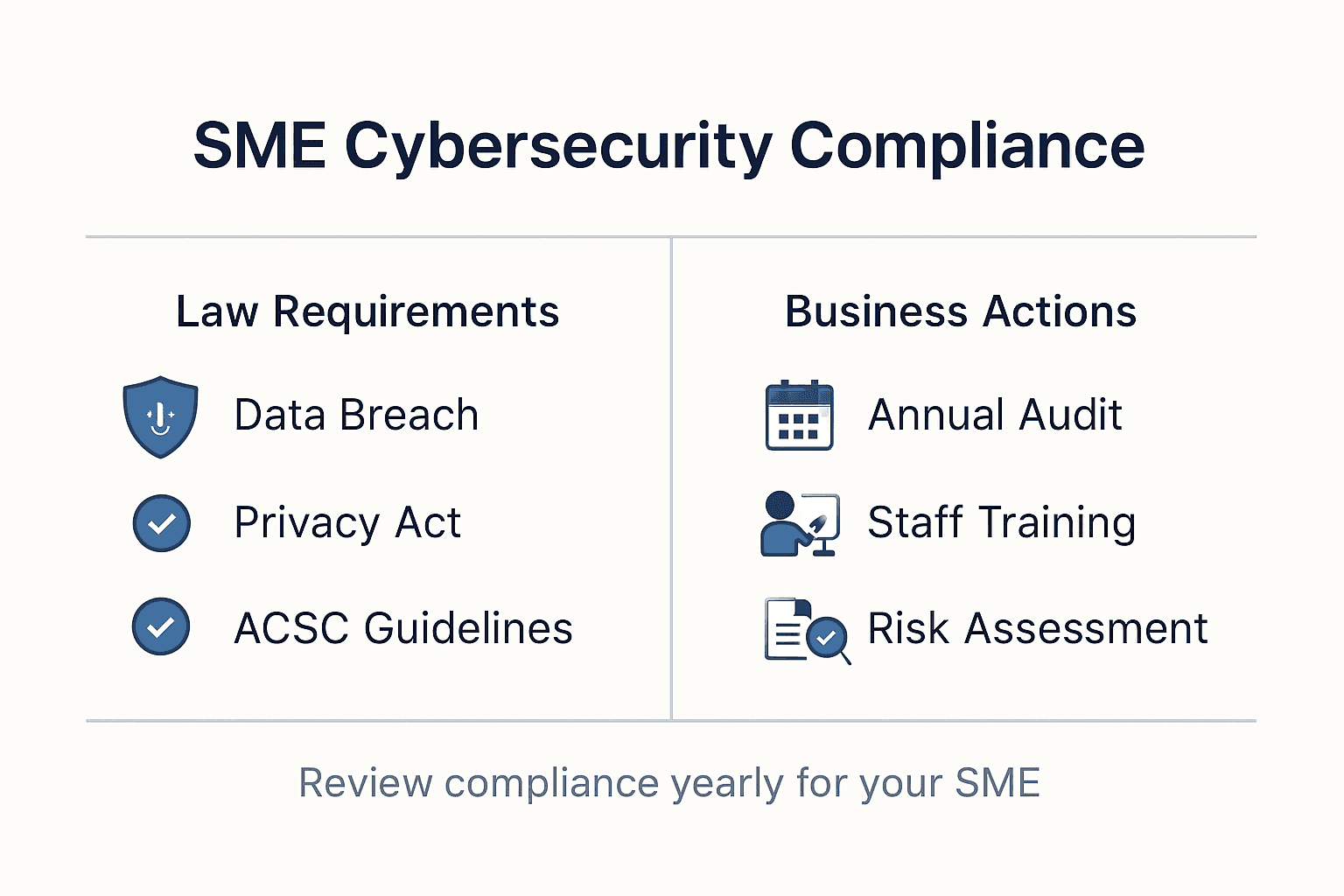
Regulatory compliance in Australia encompasses multiple critical dimensions for SMEs. Key legislative requirements include adherence to the Privacy Act 1988, which mandates responsible data handling practices, and the Notifiable Data Breaches scheme, which requires businesses to report significant security incidents. Specific industry sectors like finance and healthcare face additional regulatory oversight, with stringent requirements for protecting sensitive personal and financial information.
The Australian Cyber Security Centre provides comprehensive guidance for small businesses seeking to meet national cybersecurity compliance standards. These recommendations include implementing the Essential Eight cybersecurity strategies, maintaining detailed documentation of security policies, and developing comprehensive incident response protocols. Businesses must also ensure their technological infrastructure meets national security benchmarks, with particular emphasis on protecting critical digital assets, managing user access, and maintaining robust backup and recovery systems.
Pro tip: Conduct an annual comprehensive compliance audit that reviews your current cybersecurity practices against the latest Australian regulatory requirements, identifying and addressing any potential gaps in your security framework.
Business Risks, Costs, and Common Mistakes
Cybersecurity represents a critical financial and operational challenge for Brisbane SMEs, with potential consequences far beyond simple technological vulnerabilities. Recent surveys reveal that Australian small businesses face substantial financial risks from cyber incidents, with average breach costs exceeding $30,000 per event, underscoring the urgent need for comprehensive digital protection strategies.
Common cybersecurity mistakes can exponentially increase an organisation’s risk profile. Many Brisbane businesses inadvertently expose themselves through practices like using outdated software, neglecting regular security updates, and maintaining weak password protocols. Insufficient staff training remains a significant vulnerability, with employees often serving as unintentional entry points for cybercriminals through phishing attempts, accidental data sharing, and inadequate digital hygiene practices.
The financial implications of cyber incidents extend well beyond immediate monetary losses. Potential consequences include reputational damage, client trust erosion, regulatory penalties, and extended operational disruptions. Small businesses in sectors like professional services, healthcare, and finance face particularly complex risks, with sensitive data breaches potentially leading to severe legal and economic repercussions. Critically, many SMEs operate under the misconception that their small size protects them from targeted cyber attacks, a dangerous assumption that leaves them systematically vulnerable to increasingly sophisticated digital threats.
Pro tip: Implement a comprehensive cybersecurity risk assessment every six months, systematically identifying and addressing potential vulnerabilities across your technological infrastructure and human resources.
Strengthen Your Brisbane SME Against Cyber Threats Today
Brisbane SMEs face growing challenges from sophisticated computer security threats like phishing, ransomware, and social engineering. These risks can lead to costly data breaches, damaged reputation, and operational disruption. If you recognise the importance of multi-layered defence strategies such as multi-factor authentication, regular software updates, staff training, and incident response planning, it is crucial to act before vulnerabilities expose your business.
IT Start specialises in tailored cybersecurity and managed IT support designed for Brisbane’s small to medium enterprises. With local expertise and a strategic, business-first approach, IT Start helps you safeguard your digital assets, ensure compliance with Australian regulations, and improve overall operational resilience. Do not let cyber risks threaten your company’s growth or client trust.
Discover how our comprehensive IT solutions can provide your business with reliable protection and peace of mind. Start with a free consultation to identify your specific cyber weaknesses and build a proactive defence plan. Contact us now at IT Start Contact and take the next step towards securing your SME today.
Explore more about managed IT support and cloud solutions crafted specifically for Brisbane businesses and see why partnering with IT Start gives you the competitive edge you deserve.
Frequently Asked Questions
What are the main types of computer security threats faced by SMEs?
Computer security threats for SMEs typically include phishing attacks, malware infections, ransomware, social engineering, and account compromise. Each of these poses a unique risk and can exploit various entry points in the digital environment.
How can SMEs improve their computer security?
SMEs can enhance their computer security by implementing multi-factor authentication, conducting regular software updates, maintaining comprehensive data backup protocols, and developing an incident response plan. Employee training is also crucial in recognising potential security threats.
What are the financial implications of a cyber incident for SMEs?
The financial implications of a cyber incident for SMEs can be significant, with average costs exceeding $30,000 per breach. This includes direct monetary losses, reputational damage, potential regulatory penalties, and operational disruptions.
What compliance requirements should SMEs be aware of regarding cybersecurity?
SMEs should be aware of compliance requirements such as the Privacy Act 1988 and the Notifiable Data Breaches scheme. Industry-specific regulations may also apply, especially in sectors like finance and healthcare, necessitating robust data protection practices.
Recommended
- Network Security Practices – Safeguarding Brisbane Firms – IT Start
- Cybersecurity Best Practices for Brisbane SMBs – IT Start
- What Cyber Security Protects for Brisbane Businesses – IT Start
- Cyber Security Threats – What Brisbane Businesses Face – IT Start
- 7 Essential Components of an SMB Tech Stack List – BizDev Strategy
- Cybersecurity for Business: Protecting Tech Companies – seo analytic