
Cyber attacks against australian organisations surged by more than 13 percent last year, putting business security under greater pressure than ever. As digital threats grow more complex, every company faces new challenges staying ahead of evolving risks. Understanding cyber threat intelligence gives organisations the power to move beyond basic defences, offering practical strategies that help protect vital information and operations in a rapidly changing digital environment.
Table of Contents
- Cyber Threat Intelligence Defined For Business
- Main Types Of Cyber Threat Intelligence
- How Cyber Threat Intelligence Works In Practice
- Integrating Threat Intelligence Into Your Business
- Key Risks And Common Challenges Explained
Key Takeaways
| Point | Details |
|---|---|
| Importance of Cyber Threat Intelligence | CTI helps organisations transform raw data into actionable insights to proactively counter cyber risks. |
| Types of Cyber Threat Intelligence | Understanding strategic, tactical, technical, and operational intelligence is essential for building a comprehensive cybersecurity framework. |
| Integration Process | Effective integration of threat intelligence involves establishing clear processes and forming dedicated teams to enhance organisational resilience. |
| Addressing Cybersecurity Challenges | Businesses face escalating cybersecurity risks from advanced threats and state-sponsored actors, necessitating robust security strategies. |
Cyber Threat Intelligence Defined for Business
Cyber threat intelligence (CTI) is a strategic approach that transforms raw data into actionable insights about potential cybersecurity risks facing organisations. According to TechTarget, CTI represents evidence-based knowledge about existing or emerging digital threats that enables businesses to proactively defend against sophisticated cyber attacks.
At its core, CTI involves collecting, processing, and analysing information about potential security vulnerabilities and threat actors targeting an organisation’s digital infrastructure. Caltech highlights that this intelligence goes beyond simple data collection, providing actionable insights that help businesses anticipate and mitigate cybersecurity risks before they escalate.
Key components of effective cyber threat intelligence include:
- Comprehensive threat mapping
- Real-time monitoring of potential security risks
- Analysis of threat actor motivations and tactics
- Predictive threat modelling
- Strategic recommendations for risk mitigation
For Brisbane businesses looking to strengthen their cybersecurity posture, understanding and implementing robust cyber threat intelligence is no longer optional. By leveraging these strategic insights, organisations can transform defensive strategies from reactive to proactive, significantly reducing potential vulnerabilities and protecting critical digital assets. Cyber Security Awareness for Brisbane Business provides additional context on developing a comprehensive security approach tailored to local business environments.
Main Types of Cyber Threat Intelligence
Cyber threat intelligence is not a monolithic concept but comprises four distinct types that serve different strategic purposes for organisations. TechTarget provides a comprehensive breakdown of these critical intelligence categories, each offering unique insights into potential cybersecurity challenges.
Strategic Intelligence offers high-level insights designed for executive leadership and board-level decision-makers. This type focuses on broad trends, emerging cyber risks, and potential long-term impacts on business strategy. It translates complex technical information into digestible guidance that helps senior management understand the broader cybersecurity landscape and allocate resources effectively.
Tactical Intelligence digs deeper, providing detailed information about threat actors’ specific tactics, techniques, and procedures (TTPs). According to Exabeam, this intelligence helps cybersecurity teams understand how potential attackers might approach system vulnerabilities and develop targeted defensive strategies.
The remaining two intelligence types are equally crucial:
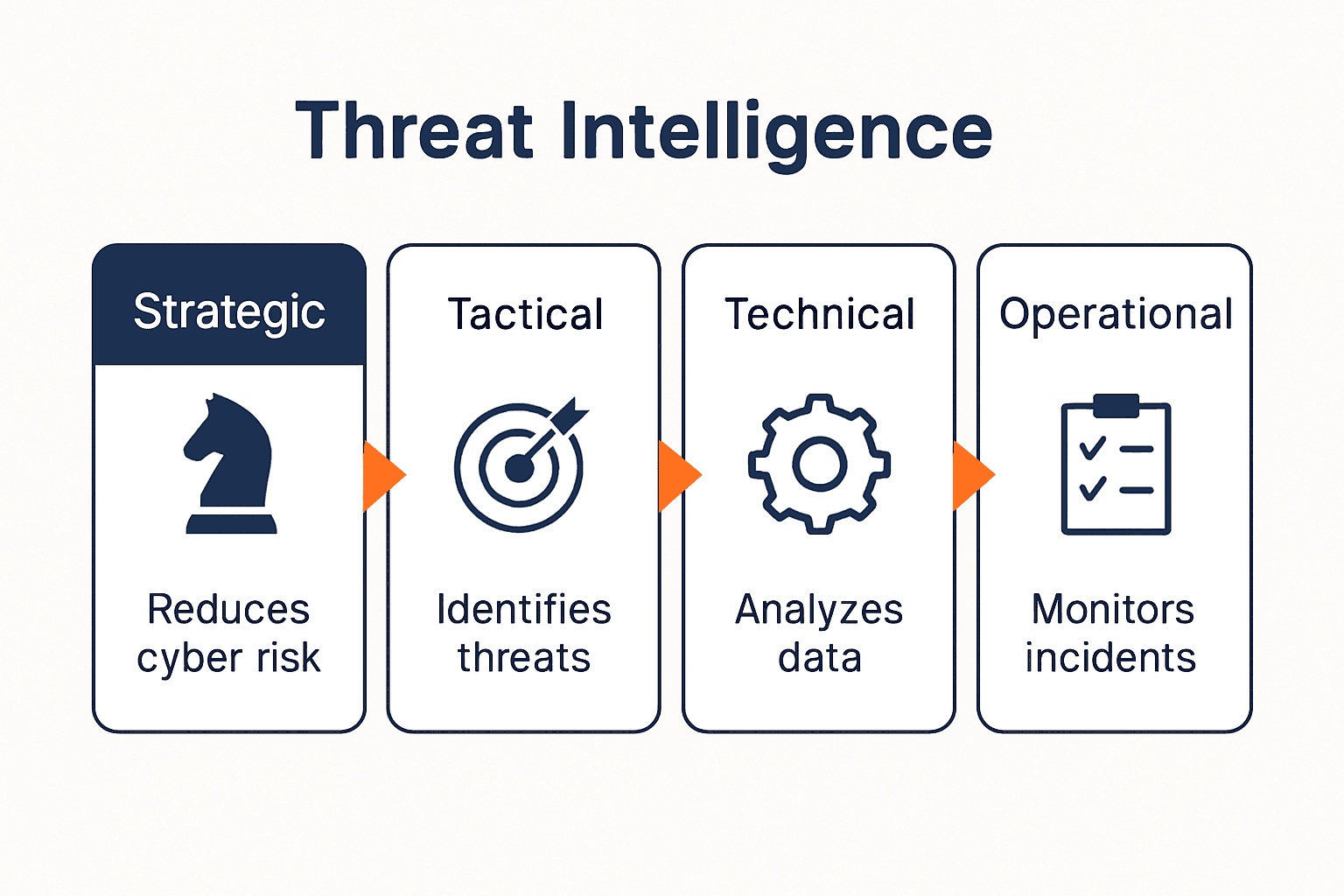
- Technical Intelligence: Focuses on specific technical indicators of compromise, such as malware signatures, IP addresses, and domain details
- Operational Intelligence: Provides real-time insights into active threat campaigns, helping organisations respond to imminent or ongoing security incidents
For Brisbane businesses, understanding these intelligence types is not just an academic exercise but a practical necessity. By integrating these varied intelligence streams, organisations can build a robust, adaptive cybersecurity framework that anticipates and mitigates potential digital threats.
Understanding What Are Cyber Threats Facing Businesses offers additional context for local businesses seeking to enhance their security posture.
How Cyber Threat Intelligence Works in Practice
Cyber threat intelligence operates through a sophisticated cycle of gathering, processing, and analysing digital security information to help organisations proactively defend against potential cyber risks. ArXiv highlights an innovative approach using knowledge graphs that enable structured information extraction and sharing, transforming raw data into actionable cybersecurity insights.
The intelligence gathering process typically involves multiple stages of data collection and analysis. Cybersecurity teams leverage various sources including dark web monitoring, threat databases, security logs, and global incident reports to compile comprehensive threat profiles. Structured data collection allows organisations to map potential attack vectors, understand threat actor motivations, and develop targeted defensive strategies.
ArXiv suggests that artificial intelligence is revolutionising threat intelligence practices, enabling more autonomous and predictive approaches to cybersecurity. AI-driven systems can now:

- Rapidly analyse massive volumes of threat data
- Identify complex patterns invisible to human analysts
- Generate real-time threat predictions
- Automate response protocols
- Continuously learn and adapt to emerging threat landscapes
For Brisbane businesses, implementing effective cyber threat intelligence means moving beyond reactive security measures. By integrating advanced analytical techniques and leveraging technological innovations, organisations can transform their cybersecurity from a defensive posture to a proactive, intelligence-driven strategy. What is Cybersecurity? provides additional insights into building robust digital defence mechanisms tailored for local businesses.
Integrating Threat Intelligence Into Your Business
Successful cyber threat intelligence integration requires a strategic and systematic approach that aligns closely with an organisation’s unique business objectives. KnowledgeHut emphasises the critical importance of establishing clear intelligence collection processes that transform raw data into meaningful, actionable insights for decision-makers.
The integration process involves several key stages of development. Cynet recommends a structured approach that begins with defining precise intelligence requirements specific to your organisation’s digital ecosystem. This involves identifying critical assets, potential vulnerabilities, and the most probable threat vectors that could impact your business operations.
Practical steps for effective threat intelligence integration include:
- Conducting comprehensive risk assessments
- Establishing dedicated threat intelligence teams
- Implementing automated intelligence gathering tools
- Creating clear communication channels for threat reporting
- Developing responsive incident management protocols
For Brisbane businesses seeking to enhance their cybersecurity posture, threat intelligence is not a one-time implementation but an ongoing, dynamic process. Understanding IT Security Best Practices for SMEs provides additional guidance on building a robust, adaptive security framework that can evolve with emerging digital threats. The key is to view threat intelligence as a strategic business function that directly supports organisational resilience and protection.
Key Risks and Common Challenges Explained
Cyber threat intelligence confronts businesses with increasingly sophisticated and complex digital security challenges. Reuters highlights that the Australian Prudential Regulation Authority (APRA) is warning of escalating cybersecurity risks driven by mounting geopolitical tensions, which pose significant operational threats to organisational infrastructure.
The landscape of cyber threats continues to evolve rapidly, with state-sponsored actors representing a particularly dangerous challenge. Reuters reports that Australian intelligence services are witnessing targeted probing of telecommunications and critical infrastructure by foreign state-sponsored hacking groups, underscoring the complexity of modern cyber threats.
Key risks and challenges for businesses include:
- Increasingly sophisticated social engineering techniques
- Advanced persistent threats from state and non-state actors
- Vulnerabilities in cloud and remote working infrastructure
- Rapid technological change outpacing security capabilities
- Limited internal cybersecurity expertise and resources
For Brisbane businesses navigating these complex digital risks, developing a comprehensive and adaptive cybersecurity strategy is no longer optional. How to Secure Business Data for Brisbane SMEs provides critical insights into protecting your organisation’s most valuable digital assets in an increasingly unpredictable cyber environment.
Fortify Your Brisbane Business with Expert Cyber Threat Intelligence Support
Understanding the evolving landscape of cyber threats and the critical role of cyber threat intelligence can leave many Brisbane businesses feeling overwhelmed by the sophistication and speed of modern attacks. The challenge lies in transforming complex intelligence into clear, actionable strategies that protect your operations without draining resources. At IT Start, we recognise these pain points and specialise in delivering a proactive approach that turns strategic, tactical, technical, and operational intelligence into real-world security advantages for your business.
Do not wait for a breach to disrupt your business continuity. With cyberattacks growing more advanced and targeted, seamless integration of threat intelligence is essential for resilience. Our certified team offers tailored managed IT support and cutting-edge cybersecurity solutions that empower you to anticipate threats and mitigate risks before they escalate. Discover how local expertise combined with transparent, high-standard IT management boosts your defence capabilities today by exploring How to Secure Business Data for Brisbane SMEs and Cyber Security Awareness for Brisbane Business.
Take the next step in transforming your cybersecurity framework into an intelligent, adaptive shield. Connect with IT Start’s experts for a free consultation and assessment designed to align cyber threat intelligence with your unique business needs. Contact us now to start safeguarding your digital future with confidence at https://itstart.com.au/contact-us.
Frequently Asked Questions
What is Cyber Threat Intelligence (CTI)?
Cyber Threat Intelligence (CTI) is a strategic approach that transforms raw data into actionable insights about potential cybersecurity risks, helping organisations proactively defend against cyber attacks.
What are the main types of Cyber Threat Intelligence?
CTI comprises four main types: Strategic Intelligence, Tactical Intelligence, Technical Intelligence, and Operational Intelligence, each serving different purposes in understanding and mitigating cybersecurity threats.
How does Cyber Threat Intelligence work in practice?
CTI operates through a cycle of gathering, processing, and analysing digital security information to identify vulnerabilities and predict potential cyber threats, often utilising advanced technologies like artificial intelligence.
What are the key challenges associated with Cyber Threat Intelligence?
Key challenges include increasingly sophisticated cyber threats, advanced persistent threats, vulnerabilities in infrastructure, and limited internal cybersecurity expertise, making a comprehensive strategy essential for protection.
Recommended
- Cyber Security Awareness: Essential for Brisbane Business – IT Start
- Zero Day Vulnerability: Complete Guide for Businesses – IT Start
- 7 Signs Your Business Needs Cyber Security Support – IT Start
- What Is Cyber Hygiene? Complete Guide for Brisbane SMEs – IT Start
- Why Vulnerability Assessments Are Important: Complete Guide
- How you can protect yourself from being hacked-Cyber Security Guide