

Over one in five Australian small businesses have experienced a cyber incident in the past year. For any aspiring Brisbane entrepreneur or established company, staying ahead of constantly evolving digital threats has become vital. The right knowledge and practical steps can mean the difference between strong business continuity and costly downtime or lost reputation. This guide explains what every Australian SMB needs to know to protect their data, finances, and hard-earned reputation.
Table of Contents
- Cyber Security Explained for SMBs
- Types of Cyber Security Services Offered
- Key Roles and Responsibilities in Practice
- Industry Standards and Legal Obligations Australia
- Common Risks and Proactive Solutions
Cybersecurity Guide: Services, Roles & Solutions for Brisbane SMBs
| Point | Details |
|---|---|
| Understanding Cybersecurity | Cybersecurity is essential for Brisbane SMBs to protect sensitive data and maintain their reputation in an increasingly digital world. |
| Proactive Strategies | Implementing multi-factor authentication, regular software updates, and comprehensive training for staff are crucial for safeguarding digital assets. |
| Key Roles Defined | Clear roles within the cybersecurity team, including a Chief Information Security Officer and Cyber Security Analysts, enhance the effectiveness of security measures. |
| Compliance with Regulations | Adhering to Australian legal obligations and industry standards is vital for mitigating cyber risks and ensuring organisational accountability. |
Cyber Security Explained for SMBs
Understanding cyber security isn’t just a technical exercise for Brisbane businesses – it’s a critical survival strategy in today’s digital landscape. Small and medium enterprises face increasing digital threats that can compromise sensitive data, financial systems, and organisational reputation.
Cybersecurity fundamentally involves protecting digital systems, networks, and programs from malicious digital attacks. These attacks typically aim to access, change, or destroy sensitive information, extort money from users, or disrupt normal business operations. For Brisbane SMBs, this means implementing robust cybersecurity best practices that safeguard critical business infrastructure.
Key cybersecurity strategies for Queensland businesses include implementing multi-factor authentication, conducting regular software updates, and establishing comprehensive data backup protocols. Cyber security vulnerabilities can emerge from multiple sources – outdated software, weak passwords, unprotected networks, and human error are common entry points for potential breaches. Smart businesses recognise that cybersecurity is not a one-time investment, but an ongoing commitment to protecting digital assets.
Pro Cybersecurity Tip: Regular Staff Training Is Key. Schedule quarterly cyber awareness sessions to educate your team about emerging digital threats, phishing techniques, and best practices for maintaining secure digital workspaces.
Types of Cyber Security Services Offered
Cyber security services have become increasingly sophisticated, providing Brisbane businesses with comprehensive protection strategies tailored to their unique digital environments. Threat management represents a critical foundation, involving continuous monitoring, detection, and response to potential security incidents that could compromise organisational systems and data.
The landscape of cyber security services typically includes several key domains. Network security focuses on protecting digital infrastructure from unauthorised access and potential breaches. Endpoint protection guards individual devices like computers and mobile phones from malicious attacks. Cyber security roles and responsibilities encompass risk management, incident response, and compliance strategies that form a holistic approach to digital defence.

For Queensland SMBs, specialised services often include vulnerability assessments, penetration testing, and security awareness training. These proactive measures help organisations identify potential weaknesses before they can be exploited. Understanding cyber security methods is crucial, as cyber threats continue to evolve with increasing complexity and sophistication. Businesses must adopt adaptive security frameworks that can respond dynamically to emerging digital risks.
Pro Security Strategy Tip: Regular Comprehensive Security Audits Matter. Schedule annual third-party security assessments to identify potential vulnerabilities and ensure your cyber defence strategies remain current and robust against emerging digital threats.
Key Roles and Responsibilities in Practice
In the complex world of cyber security, different professionals play critical roles in protecting Brisbane businesses from digital threats. The Chief Information Security Officer (CISO) stands at the forefront, responsible for developing and implementing comprehensive security strategies that align with organisational objectives and cybersecurity guidelines for roles and responsibilities.

Cyber Security Analysts form the frontline defence, conducting detailed security assessments and actively monitoring digital systems. Their responsibilities include identifying potential vulnerabilities, developing robust security policies, and responding swiftly to potential security incidents. Cyber Security Analyst job responsibilities typically encompass a wide range of critical tasks that require both technical expertise and strategic thinking.
Beyond individual roles, effective cyber security requires a collaborative approach. Network security specialists, incident response teams, and compliance officers work together to create a multi-layered defence strategy. Each team member brings unique skills to protect digital assets, from implementing advanced threat detection systems to ensuring regulatory compliance and managing potential security breaches.
The key roles in a cyber security team and their primary focus can be summarised as follows:
| Role | Main Responsibility | Typical Focus Area |
|---|---|---|
| Chief Information Security Officer (CISO) | Strategic oversight and policy | Aligning security with business goals |
| Cyber Security Analyst | Monitoring and threat detection | Responding to incidents |
| Network Security Specialist | Infrastructure defence | Securing network and devices |
| Compliance Officer | Ensuring regulatory adherence | Data privacy and audits |
| Incident Response Team | Addressing breaches or crises | Rapid containment and recovery |
Pro Security Team Tip: Role Clarity Drives Protection. Clearly define and communicate each team member’s specific cyber security responsibilities to eliminate gaps in your organisation’s digital defence strategy and ensure comprehensive protection.
Industry Standards and Legal Obligations Australia
Cyber security in Australia is governed by a comprehensive framework of legal obligations and industry standards that mandate rigorous protection of digital assets. Regulatory compliance represents a critical requirement for businesses, with cybersecurity guidelines establishing clear roles and responsibilities across organisational structures.
Key legislative frameworks like the Privacy Act 1988 and the Notifiable Data Breaches (NDB) scheme impose strict requirements on organisations handling sensitive information. Businesses must implement robust security measures, conduct regular risk assessments, and maintain transparent reporting mechanisms for potential data breaches. Compliance with IT security standards involves adopting a proactive approach to identifying, managing, and mitigating potential cyber risks.
Australian businesses must navigate a complex landscape of industry-specific regulations, including sector-specific requirements for financial services, healthcare, and government-related industries. This includes adhering to the Australian Signals Directorate’s Essential Eight Maturity Model, which provides a framework for mitigating cyber security incidents. Organisations must demonstrate a comprehensive understanding of their legal obligations, implementing stringent security protocols that protect both organisational and customer data.
Pro Compliance Tip: Regular Compliance Audits Are Essential. Schedule annual third-party compliance assessments to ensure your cyber security practices meet current Australian legal standards and industry best practices.
Common Risks and Proactive Solutions
Cybersecurity for Brisbane businesses requires understanding the most prevalent digital threats that can compromise organisational integrity. Phishing attacks represent a significant risk, where malicious actors attempt to deceive employees into revealing sensitive information or accessing critical systems. Keeping small and medium businesses cyber secure demands a comprehensive approach to identifying and mitigating potential vulnerabilities.
The landscape of cyber risks is constantly evolving, with outdated software presenting one of the most common entry points for digital attacks. Businesses must implement robust strategies such as multi-factor authentication, regular software updates, and comprehensive data backup protocols. Cyber security risks for Brisbane businesses often stem from seemingly minor oversights that can result in significant operational disruptions and financial losses.
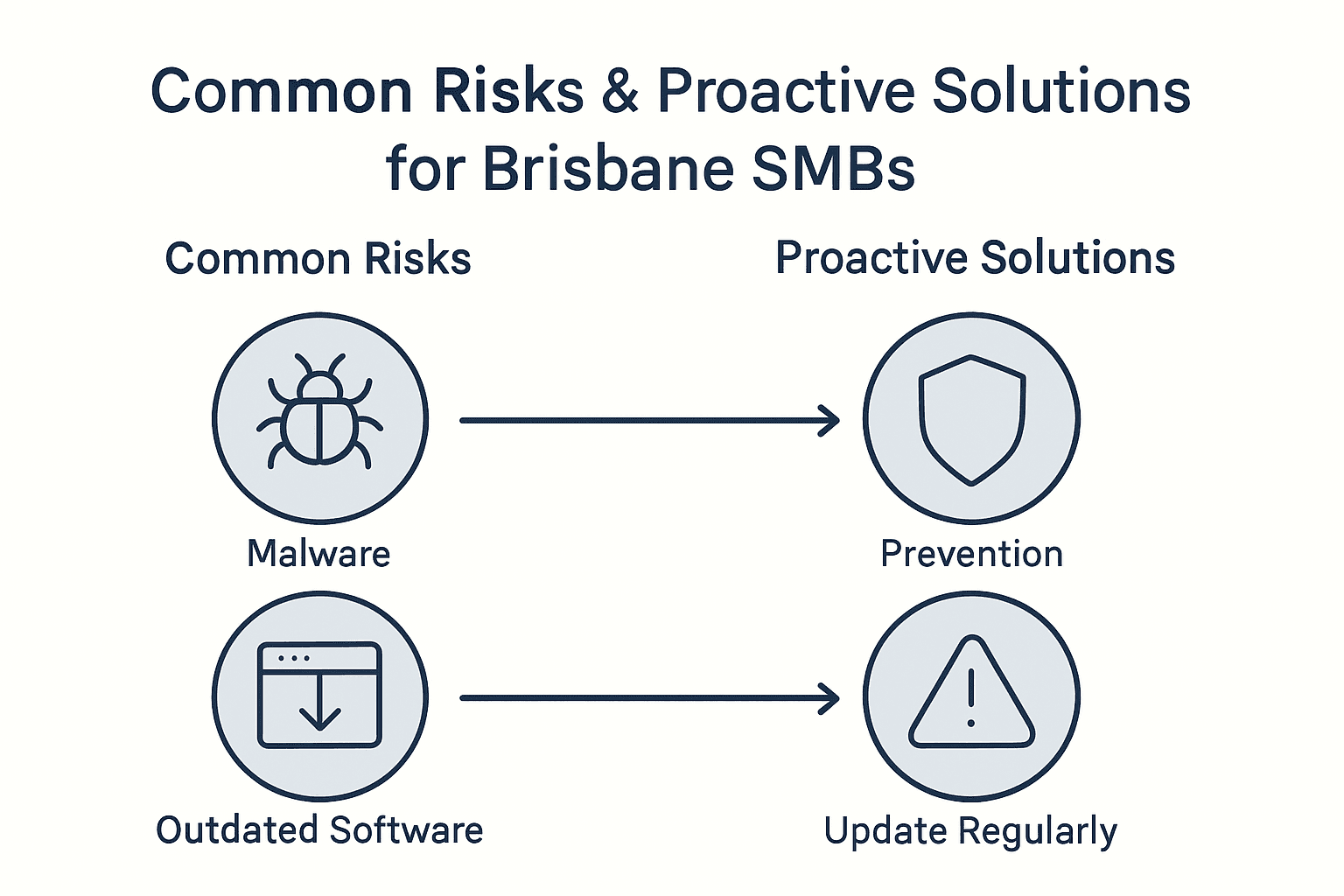
Key proactive solutions include developing a layered security approach that combines technological defences with human awareness. This involves implementing advanced threat detection systems, conducting regular security assessments, and providing ongoing staff training to recognise and respond to potential cyber threats. Network segmentation, encrypted communication channels, and continuous monitoring are critical components of a comprehensive cyber defence strategy for Queensland businesses.
Here’s a concise comparison of common cyber security risks versus effective solutions for SMBs:
| Digital Risk | Business Impact | Proactive Solution |
|---|---|---|
| Phishing Attacks | Loss of sensitive data, fraud | Staff awareness training |
| Outdated Software | Increased vulnerability to hacks | Scheduled software updates |
| Weak Passwords | Unauthorised system access | Enforce password policies |
| Human Error | Data breaches, system failures | Regular cyber safety training |
| Unprotected Networks | Remote cyber intrusions | Network segmentation, encryption |
Pro Security Prevention Tip: Continuous Learning Saves Protection. Establish a monthly cybersecurity awareness program that keeps your team updated on the latest digital threats and provides practical skills to identify and prevent potential security breaches.
Strengthen Your Cyber Security Team for Brisbane SMB Success
Understanding the distinct cyber security roles and responsibilities is vital for Brisbane businesses aiming to protect their digital assets effectively. This article highlights key challenges such as role clarity gaps and the need for strategic oversight from positions like the Chief Information Security Officer. Without a well-defined security team, businesses risk exposure to threats like phishing attacks and unprotected networks, putting sensitive information and compliance at stake.
At IT Start, we specialise in helping SMBs across Queensland build robust, tailored cyber security frameworks that align with your unique organisational goals. Our managed IT support and cybersecurity services ensure your roles and responsibilities are clear and optimised, so you can focus on growth while we safeguard your systems. Want to discover how expert guidance can eliminate vulnerabilities and foster proactive protection? Reach out today for a free consultation and assessment designed specifically for Brisbane businesses at Contact IT Start. Enhance your cyber security best practices with trusted local expertise and take control of your security landscape now.
Frequently Asked Questions
What is the role of a Chief Information Security Officer (CISO)?
The CISO is responsible for developing and implementing security strategies that align with organisational objectives, ensuring comprehensive protection against digital threats.
How do Cyber Security Analysts contribute to a business’s security?
Cyber Security Analysts monitor digital systems for vulnerabilities, conduct security assessments, and respond to incidents, playing a critical role in protecting sensitive information.
What are the key responsibilities of a compliance officer in cyber security?
Compliance officers ensure that an organisation adheres to legal and regulatory requirements related to data protection, conducting audits and implementing necessary security measures.
What proactive measures can businesses take to mitigate cyber security risks?
Businesses can implement multi-factor authentication, conduct regular security assessments, provide staff training on cyber threats, and maintain updated software to strengthen their cyber defence strategies.