
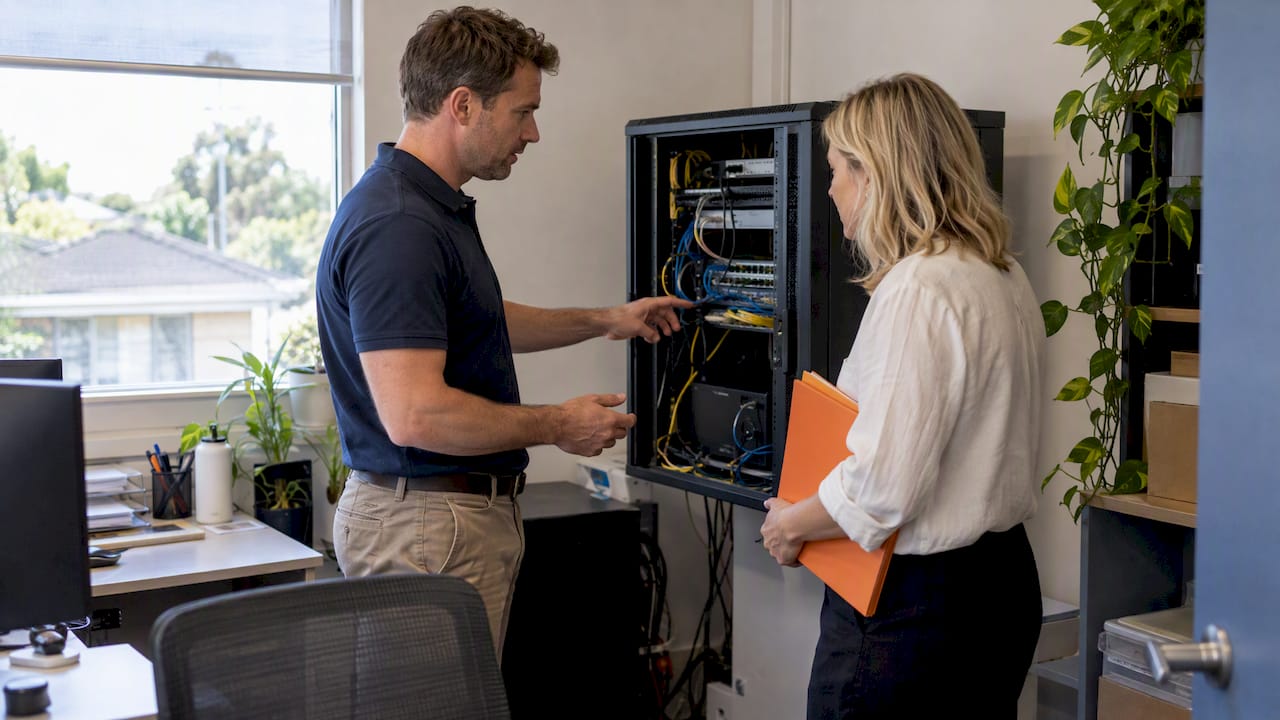
An IT consultant advises businesses on how to make technology deliver a specific outcome: tighter security, lower costs, a smoother migration or better productivity. Jobs and Skills Australia describes the role as formulating system requirements and evaluating infrastructure against business needs, not fixing printers. Honestly, that distinction trips up a lot of business owners before they’ve even hired anyone.
TL;DR:
- Most consulting projects last between one to twelve weeks depending on scope, with clear responsibilities for business owners, internal staff, and vendors.
- Testing backup restore capability regularly is critical, as untested backups are ineffective and can give a false sense of security.
- SMBs should focus on fixing immediate risks like enabling multi-factor authentication and testing backups rather than over-investing in all specialist areas at once.
- Retainers and vCIO services are worthwhile when ongoing risks, such as repeated outages or growth, require continuous strategic oversight.
- Most SMB consulting work is priced around the median full-time earnings for ICT analysts, at about $2,697 per week in Australia as of May 2025.
Table of Contents
- Core duties and common deliverables of IT consultants
- Specialist areas: cybersecurity, cloud, systems and vCIO
- How consulting engagements work: phases, timelines and responsibilities
- Skills, qualifications and what to expect to pay
- When to call an IT consultant: red flags and decision rules for SMBs
- What we see in practice: MSP perspective and common mistakes
- When retainers and vCIOs are worth the cost
- How IT Start can help with consulting and ongoing support
- FAQ
- Sources
Core duties and common deliverables of IT consultants
Most engagements start with discovery work: audits, staff interviews and diagnostics that map what you actually have against what you think you have. We see this a lot. A client tells us their backups are fine, and the discovery phase turns up three systems nobody has checked in over a year.
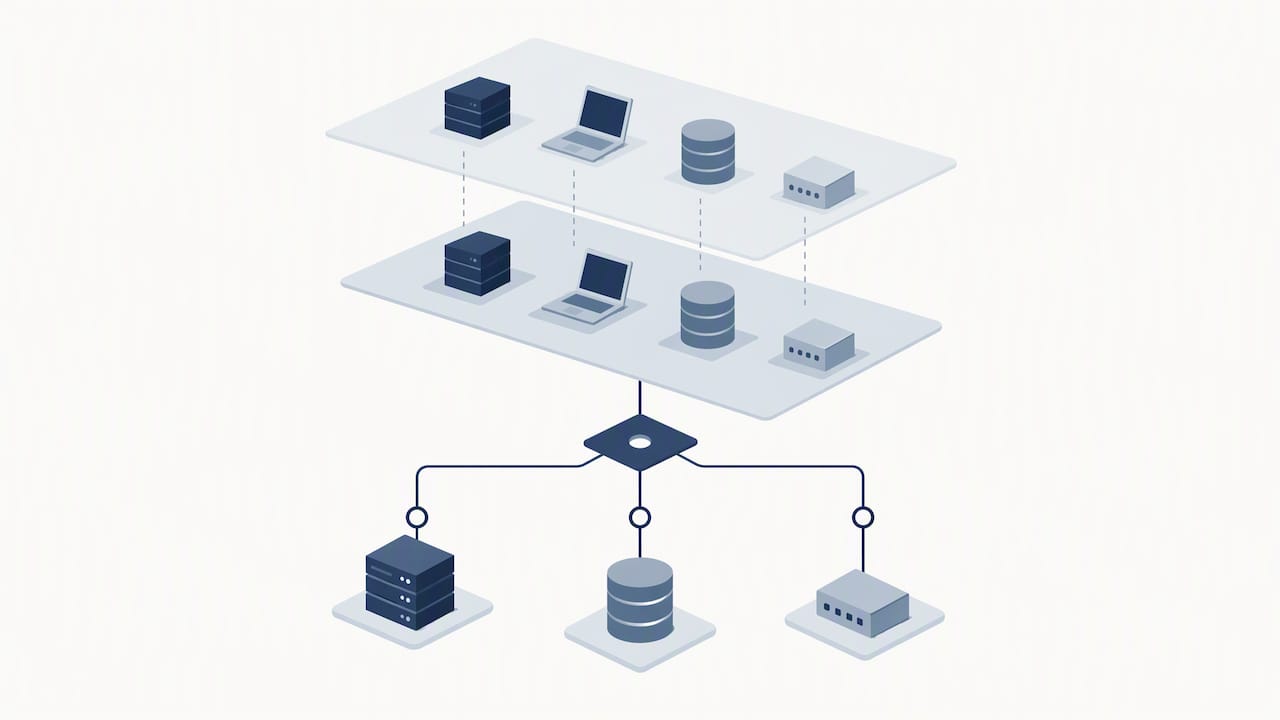
From there, a consultant produces strategic outputs. That means an IT strategy document, a migration roadmap, or a prioritised list of what needs fixing first. ABS occupational descriptors list these as core consultant tasks: developing strategies, documenting procedures, analysing systems and recommending changes.
The deliverables you should expect from a proper engagement:
- A written assessment of current infrastructure, risks and gaps
- A roadmap or migration plan with timelines and cost estimates
- Technical specifications for any new systems or integrations
- A risk and compliance report with specific policy recommendations
- A vendor management plan if multiple suppliers are involved
One thing that confuses people: consultants advise, they don’t always build. The NSW ICT consulting commercial framework defines a consultant’s output as reports, plans and audits rather than hands-on implementation. Some consultants also implement, but that’s a separate scope and should be priced separately.
Specialist areas: cybersecurity, cloud, systems and vCIO
Not every IT consultant does the same work. Matching your problem to the right specialist saves time and money.
- Cybersecurity consultants handle incident readiness, response planning and recommendations around penetration testing, usually working from baseline frameworks like the ACSC guidance.
- Cloud consultants focus on strategy and migration, including Azure planning, tenant design and ongoing managed Azure services once you’re live.
- Business systems consultants work on ERP, CRM and custom workflow integration, making sure your software actually talks to itself.
- Network and infrastructure specialists design and secure the physical and virtual backbone: firewalls, switching, remote access.
- vCIOs sit above all of this, providing ongoing governance and strategic advisory rather than a single project.
Most SMBs need one or two of these at a time. Few need all five at once, and anyone trying to sell you a bundle for everything on day one is worth questioning.
How consulting engagements work: phases, timelines and responsibilities
A typical engagement runs through five phases: discovery, recommendation, planning, overseeing delivery and handover, as outlined by Morefield Operations Group. The length depends entirely on scope.
- A quick security review usually takes one to two weeks.
- A full cloud migration, especially to Azure, more often runs six to twelve weeks depending on data volume and downtime tolerance.
- A compliance audit sits somewhere in between, depending on how many systems are in scope.
Responsibilities split clearly if the engagement is run properly. You (or a nominated sponsor) make the business calls. The consultant assesses, recommends and plans. Internal IT staff, where you have them, handle day-to-day operations and often execute parts of the plan. External vendors, like your Microsoft or hosting provider, get managed rather than replaced.
Deliverables should always include a concrete next step, not just a report that sits in a shared drive. If a consultant hands you a thirty-page document with no prioritised action list, that’s a red flag on its own.
Skills, qualifications and what to expect to pay
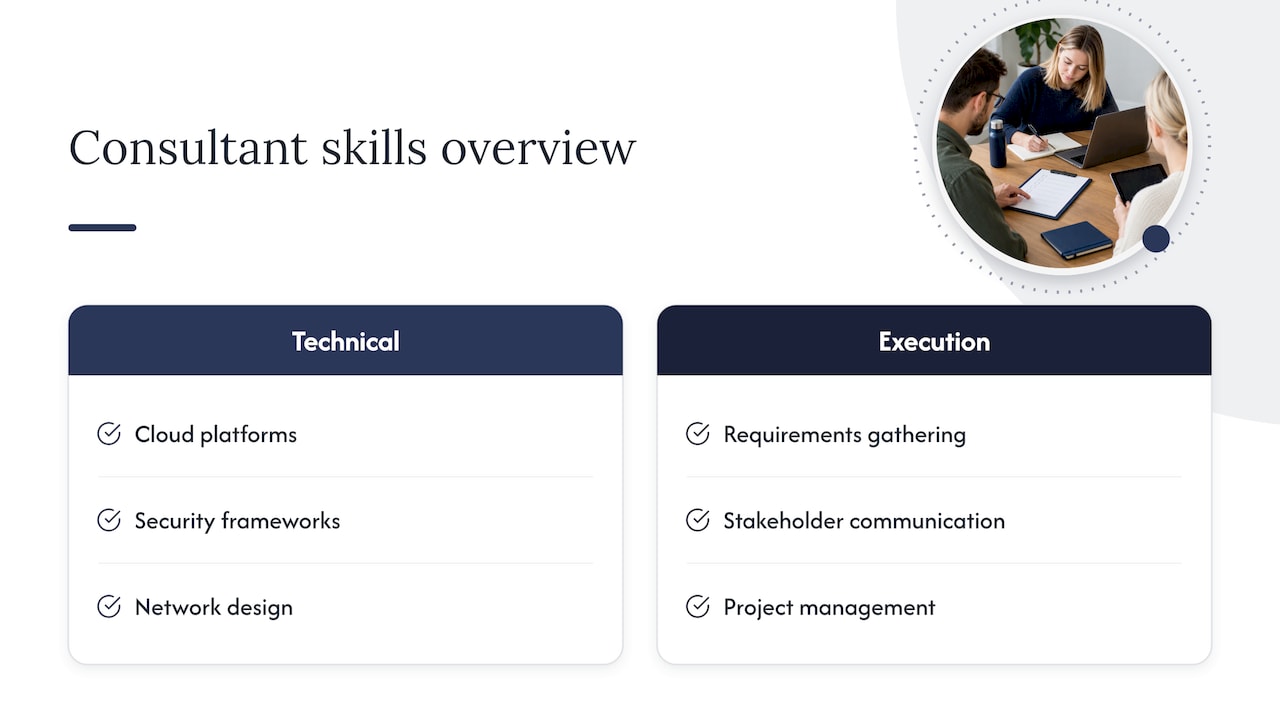
Good consultants combine technical depth with the ability to explain it plainly. On the technical side, that’s cloud platforms, security frameworks and network design. On the soft skills side, it’s requirements gathering, stakeholder communication and basic project management, because a brilliant technical plan that nobody can execute is worthless.
Certifications matter less than people think, but they’re a useful filter. Microsoft partner status, ACS membership and vendor-specific accreditations signal a baseline of competence, even if they don’t guarantee good judgement.
As of May 2025, median full-time earnings for ICT Business and Systems Analysts in Australia sat at $2,697 per week, according to Jobs and Skills Australia. That’s a useful anchor when you’re assessing day rates or retainer proposals, since most SMB consulting work is priced against roughly that benchmark, either as day rates, fixed-price projects or ongoing retainers. Fixed price suits well-defined projects like a migration. Retainers suit ongoing governance, which is where vCIO arrangements usually sit.
When to call an IT consultant: red flags and decision rules for SMBs
Some signs are obvious once you know to look for them, and we see all of these regularly:
- No multi-factor authentication on email or core systems
- Backups that have never had a restore tested
- Repeated, unexplained outages
- A previous IT project that stalled or went over budget without anyone saying why
Business triggers matter too: a planned migration, an incoming compliance audit, a recent security incident, or growth that’s outpacing your current setup are all good reasons to bring someone in before the problem picks you instead.
On a first call, a decent consultant will ask what systems you run, who manages them now, when you last tested a backup restore and whether MFA is switched on everywhere. Quick wins, like enabling MFA, usually get fixed in days. Programmes to reduce long-term risk, like a full compliance uplift, take months.
Pro Tip: If you can’t remember the last time someone actually tried restoring a backup file, that’s your answer: call someone this week.
What we see in practice: MSP perspective and common mistakes
We’ve walked into more than one business that believed they were backed up, only to find the backup job had been silently failing for months. Files existed in name, but the restore never worked. ACSC guidance is blunt about this: backups need to be tested, not just scheduled.
Missing MFA and messy Microsoft 365 tenancy setups are the other pattern we see constantly, often in businesses that assumed their original IT setup was done properly years ago.
An untested backup is not a recovery plan. It’s a hope.
Our order of operations is always the same: triage the immediate risk, patch what’s outdated, roll out phishing-resistant MFA, then test every backup before calling the job finished.
When retainers and vCIOs are worth the cost
A retainer earns its keep when you’re paying for fire-fighting anyway, just without the strategy attached. If you’re calling someone in every time something breaks, you’re already funding a programme, just an unplanned one.
Choose a project when the scope is fixed and finite, like a single migration. Choose a retainer or vCIO arrangement when the risk is ongoing and the cost of getting it wrong compounds.
— Matt
How IT Start can help with consulting and ongoing support
We offer managed IT support, cloud migration, cybersecurity services and strategic advisory for businesses, with experience in financial services, healthcare and legal sectors. We maintain certifications that reflect the operational standards we run our own service delivery against.
If any of the red flags above sound familiar, missing MFA, untested backups, a migration you’re not confident about, get in touch through our services overview for a straightforward assessment of where you actually stand.
FAQ
How much does an IT consultant get paid?
Median full-time earnings for ICT Business and Systems Analysts in Australia were $2,697 per week as of May 2025. Specialist consultants in cybersecurity or cloud often command a premium above that benchmark because of the risk their advice helps avoid.
Is an IT consultant a good job?
It can be, particularly for people who enjoy variety and direct business impact rather than routine support tickets. The role sits above day-to-day help desk work, closer to strategy and advisory, which suits people who like solving different problems for different clients.
What does an IT consultant get paid?
Pay varies by specialism, but the same benchmark applies: median weekly earnings of $2,697 for ICT business and systems analysts in Australia as of May 2025. Day rates and retainer fees for SMB-focused consulting are typically priced against that figure.
Is consultant a high paying job?
IT consulting tends to pay above general ICT support roles, reflecting the strategic and advisory nature of the work rather than routine troubleshooting. Specialist areas like cybersecurity and cloud migration generally attract higher rates than generalist consulting.
Sources
- Business analyst IT job role (Jobs and Skills Australia via Upskilled)
- ACSC small business cyber security guide v6
- Sub-major Group 26 ICT Professionals (ABS)
- ICT consulting commercial framework (NSW government)