

Cyber attacks targeting australian businesses cost the economy billions each year, with health and legal firms in Brisbane holding some of the most sensitive data. For IT managers and business owners juggling daily operations, meeting strict australian regulatory standards now requires more than basic security tools. This guide breaks down clear steps you can take to assess risks, apply robust protection measures, and ensure your next audit meets every australian compliance benchmark.
Table of Contents
- Step 1: Assess Current Risks And Compliance Requirements
- Step 2: Implement Layered Access Controls And Encryption
- Step 3: Deploy Proactive Monitoring And Backup Solutions
- Step 4: Test Security Measures And Review Effectiveness
- Step 5: Maintain Compliance With Regular Audits And Updates
5-Step Guide to Securing Brisbane Business Data and Compliance
| Key Insight | Explanation |
|---|---|
| 1. Conduct Regular Risk Assessments | Perform internal audits biannually to identify vulnerabilities and align with compliance requirements. |
| 2. Implement Strong Data Protection | Use layered access controls and encryption to protect sensitive information effectively. |
| 3. Establish Continuous Monitoring | Select comprehensive tools for real-time visibility and automate alerts to identify threats promptly. |
| 4. Regularly Test Security Measures | Conduct vulnerability assessments and penetration testing to uncover weaknesses in cybersecurity. |
| 5. Maintain Ongoing Compliance | Schedule regular audits and updates to ensure alignment with evolving Australian cybersecurity regulations. |
Step 1: Assess current risks and compliance requirements
Addressing data security starts with a comprehensive risk assessment tailored to your Brisbane business environment. Understanding your specific cybersecurity landscape requires a methodical approach that examines your existing infrastructure, potential vulnerabilities, and regulatory obligations. Mandatory cyber security compliance now demands proactive identification and management of digital risks.
Begin by conducting a thorough internal audit of your current IT systems, network configurations, and data storage practices. Map out all digital assets, identify critical information repositories, and evaluate potential entry points for cyber threats. Focus on understanding which business data requires the highest level of protection and what specific Australian regulatory standards apply to your industry. Pay special attention to recent legislative changes like the Cyber Security Act 2024, which introduces stricter reporting requirements for businesses handling sensitive information.
Consult with cybersecurity professionals who understand the Queensland business landscape and can provide targeted guidance. They can help you develop a comprehensive risk assessment framework that not only identifies vulnerabilities but also creates a roadmap for remediation and ongoing compliance management.
Insider advice: Conduct a risk assessment at least twice annually and maintain a dynamic document that evolves with your business technology infrastructure.
Here is a summary of key Australian cyber regulatory requirements relevant to Brisbane businesses:
| Regulation/Standard | Main Requirement | Applies To | Recent Change |
|---|---|---|---|
| Cyber Security Act 2024 | Mandatory breach reporting | Businesses handling sensitive info | Stricter reporting rules |
| Privacy Act Amendments | Data protection | Any entity processing personal data | Broader privacy definitions |
| Cryptographic Guidelines | Strong encryption protocols | Digital asset handlers | Updated acceptable algorithms |
| Cyber Security Strategy | Proactive threat management | All business sizes | Focus on proactive measures |
Step 2: Implement layered access controls and encryption
Securing your business data requires a comprehensive strategy that goes beyond simple password protection. Cryptographic security guidelines recommend implementing robust, multilayered access controls that protect your sensitive information from potential breaches.

Start by designing a granular permission structure that limits data access based on employee roles and responsibilities. Implement role-based access controls where team members can only view and modify information directly relevant to their job functions. Use strong authentication methods such as multi factor authentication, which requires additional verification beyond traditional passwords. Encrypt all sensitive data both when it is stored and during transmission, ensuring that even if an unauthorised party gains access to your systems, the information remains unreadable.
Consider working with a cybersecurity specialist to develop a comprehensive encryption strategy tailored to your specific business needs. They can help you select appropriate encryption protocols, configure secure communication channels, and establish best practices for managing cryptographic keys and access permissions.
Insider advice: Rotate encryption keys quarterly and maintain a detailed log of all access permissions to track potential security vulnerabilities.
The table below contrasts traditional and layered access controls for improved business cybersecurity:
| Control Type | Description | Security Impact |
|---|---|---|
| Traditional Password | Single-factor, password-only protection | Easily compromised |
| Layered Access | Role-based + multifactor authentication | Stronger, limits breaches |
| Encryption | Secures data in storage and transfer | Protects if data is stolen |
Step 3: Deploy proactive monitoring and backup solutions
Protecting your Brisbane business requires implementing sophisticated monitoring and backup strategies that go beyond basic data protection. Continuous security monitoring has become essential for detecting and responding to potential cyber threats before they escalate into serious security incidents.
Begin by selecting a comprehensive monitoring solution that provides real time visibility across your entire IT infrastructure. This means implementing tools that track network traffic, user activities, system performance, and potential security anomalies. Configure automated alerts that notify your IT team immediately when suspicious activities are detected such as unusual login attempts, data transfer patterns, or potential malware intrusions. For backup solutions, adopt a multi layered approach that includes local and cloud based backup systems. Implement incremental backups that capture changes in your data regularly, ensuring you can quickly restore systems with minimal information loss in case of a cyber incident.
Work closely with a local cybersecurity specialist who understands the unique challenges faced by Brisbane businesses. They can help you design a monitoring and backup strategy that not only meets Australian regulatory requirements but also provides robust protection tailored to your specific operational needs.
Insider advice: Test your backup and recovery systems quarterly to ensure they function correctly and maintain a documented disaster recovery plan that can be activated within minutes of a potential breach.
Step 4: Test security measures and review effectiveness
Regular security testing is crucial for identifying vulnerabilities and maintaining a robust cyber defence strategy for your Brisbane business. Cyber security vulnerability assessments help organisations proactively identify and address potential weaknesses before they can be exploited by malicious actors.
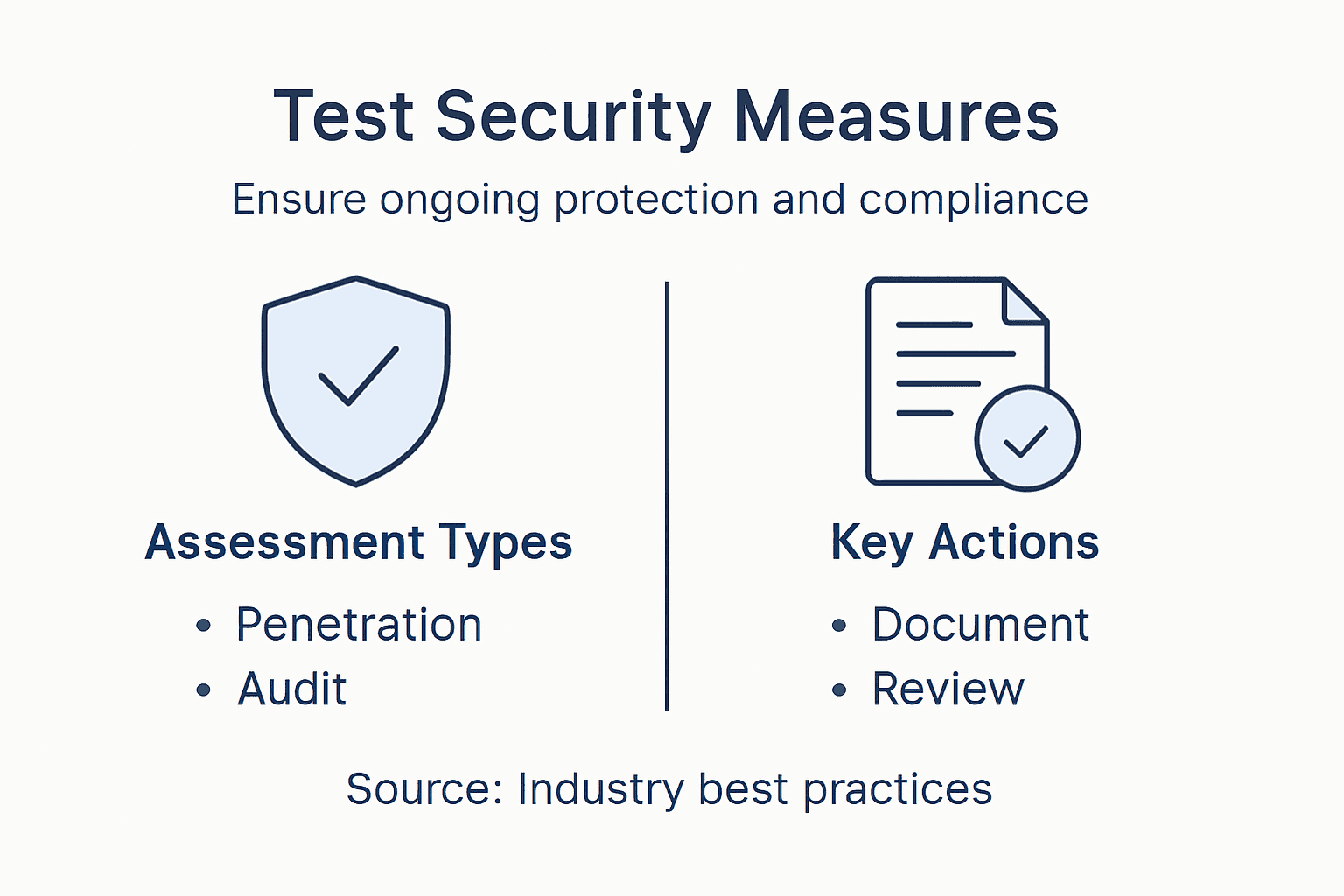
Implement a comprehensive testing approach that includes multiple assessment methods. Conduct penetration testing where cybersecurity professionals simulate real world attack scenarios to expose potential system vulnerabilities. Perform regular vulnerability scans across your entire IT infrastructure, checking for unpatched software, misconfigured systems, and potential entry points for cyber threats. Develop a structured process for reviewing test results, prioritising identified risks based on their potential impact and likelihood of occurrence. Create a detailed remediation plan that outlines specific actions to address each discovered vulnerability, with clear timelines and responsible team members assigned to each task.
Consider engaging an independent cybersecurity specialist who can provide an unbiased external perspective on your security posture. They can help you develop a systematic approach to ongoing security assessment that aligns with Australian regulatory requirements and industry best practices.
Insider advice: Document every security test and review meticulously, creating a comprehensive audit trail that demonstrates your proactive approach to cybersecurity management.
Step 5: Maintain compliance with regular audits and updates
Ensuring ongoing cybersecurity compliance demands a proactive and systematic approach for Brisbane businesses. Regular cybersecurity audits are essential for identifying potential vulnerabilities and maintaining alignment with evolving Australian regulatory requirements.
Establish a structured audit schedule that comprehensively reviews your organisation’s cybersecurity practices, policies, and technological infrastructure. This involves conducting thorough assessments of your current security controls, documenting any identified gaps, and developing targeted remediation strategies. Focus on key areas such as data protection mechanisms, access management protocols, incident response procedures, and staff training programs. Pay particular attention to recent legislative changes like the Cyber Security Act 2024 and Privacy Act amendments, ensuring your organisation remains fully compliant with the latest regulatory standards.
Create a dedicated compliance team or engage external cybersecurity specialists who can provide independent, expert oversight of your security practices. This team should be responsible for tracking regulatory changes, updating internal policies, and maintaining a dynamic risk management framework that adapts to the evolving cybersecurity landscape.
Insider advice: Schedule compliance reviews quarterly and maintain a living document that tracks all regulatory updates and organisational security modifications.
Secure Your Brisbane Business Data with IT Start
Protecting your business from evolving cyber threats requires more than just basic measures. As highlighted in the article, Brisbane businesses face significant challenges including mandatory breach reporting under the Cyber Security Act 2024, the need for layered access controls, and continuous monitoring to detect risks early. You may be concerned about managing complex encryption protocols, maintaining compliance with strict Australian regulations, or ensuring your backups and recovery processes are reliable and tested regularly.
IT Start specialises in supporting Brisbane businesses just like yours with tailored cybersecurity solutions designed to reduce risk and boost operational efficiency. With local expertise and certifications such as SMB 1001 Gold, we offer managed IT support, cloud solutions, and proactive security services that align perfectly with the frameworks and guidelines discussed. Whether you need help conducting comprehensive risk assessments or implementing multifactor authentication and continuous monitoring, our team acts as your strategic partner to keep your data safe and compliant.
Ready to take control of your cybersecurity? Don’t wait until a breach happens. Contact us today for a free assessment and personalised consultation at IT Start Contact. Discover how our Brisbane-based experts can help you maintain regulatory compliance, fortify your defences, and give you peace of mind with robust protection tailored to your business. Start securing your data now with IT Start.
Frequently Asked Questions
How can I assess the current risks to my business data?
Begin by conducting a comprehensive internal audit of your IT systems, network configurations, and data storage practices. Take the time to map out all digital assets and identify areas that need protection to understand your specific cybersecurity landscape better.
What steps should I take to implement layered access controls?
Start by designing a role-based access control framework that limits data access to only those who need it for their job functions. Ensure you use strong authentication methods, such as multi-factor authentication, to add an extra layer of security to sensitive information.
How often should I conduct security testing for my business?
It is essential to conduct security testing at least quarterly to identify and address potential vulnerabilities. Schedule regular penetration tests and vulnerability scans to proactively assess your security posture and ensure ongoing protection against cyber threats.
What is the best way to maintain compliance with cybersecurity regulations?
Establish a structured audit schedule to review your organisation’s cybersecurity practices and ensure alignment with regulatory requirements. Conduct reviews regularly and keep a living document that tracks all updates to policies and compliance measures.
How can I create an effective backup solution for my business data?
Implement a multi-layered backup strategy that combines local and cloud-based systems. Regularly perform incremental backups to capture changes and ensure your data can be quickly restored with minimal loss in case of a cyber incident.