

Protecting sensitive patient and financial information has never felt more urgent for Brisbane businesses facing rising threats in cloud environments. Cloud data security is more than technology alone—it is a blend of robust protocols, compliance with Australian laws, and a partnership between your team and cloud providers. This guide gives IT managers clarity around key concepts like the shared responsibility model and risk management, helping you build a resilient strategy tailored for the demands of healthcare and financial services.
Table of Contents
- Defining Data Security In Cloud Computing
- Cloud Security Models And Types Of Data
- Australian Laws, Industry Rules, And Compliance
- The Shared Responsibility Model Explained
- Key Risks, Threats, And Real-World Incidents
- Best Practices For Brisbane SMEs In Healthcare And Finance
In-Depth Guide to Cloud Data Security for Brisbane SMEs
| Point | Details |
|---|---|
| Comprehensive Data Security Strategy | Brisbane SMEs must implement a thorough data security framework that combines technological and procedural measures to protect cloud-based information. |
| Shared Responsibility Model | Organisations need to understand their dual obligations with cloud service providers, actively participating in their own data security. |
| Regular Compliance Audits | Businesses are encouraged to conduct regular audits of their cloud security practices and compliance with Australian laws to mitigate risks effectively. |
| Proactive Risk Management | Continuous assessment and adaptation of security measures are essential to counter emerging cyber threats and vulnerabilities in cloud computing. |
Defining Data Security in Cloud Computing
Data security in cloud computing represents a comprehensive strategy for protecting digital information stored, processed, and transmitted through cloud-based infrastructure. For Brisbane SMEs, this concept extends beyond simple password protection to a sophisticated framework of technological and procedural safeguards.
At its core, cloud data security involves multiple layers of protection designed to prevent unauthorised access, data breaches, and potential cyber threats. Cyber security protocols encompass several critical components:
- Encryption of sensitive data
- Access control mechanisms
- Regular security audits
- Network traffic monitoring
- Comprehensive threat detection systems
The Queensland University of Technology’s information security framework highlights that effective cloud data security requires a holistic approach. This means considering not just technological solutions, but also organisational policies and individual user practices. Risk management becomes paramount, with businesses needing to understand potential vulnerabilities across their entire digital ecosystem.

Understanding cloud data security involves recognising the shared responsibility between cloud service providers and individual organisations. While providers maintain underlying infrastructure security, businesses must implement additional protective measures tailored to their specific operational needs.
Pro tip: Conduct a comprehensive audit of your current cloud security practices at least twice annually to identify and address potential vulnerabilities before they become critical risks.
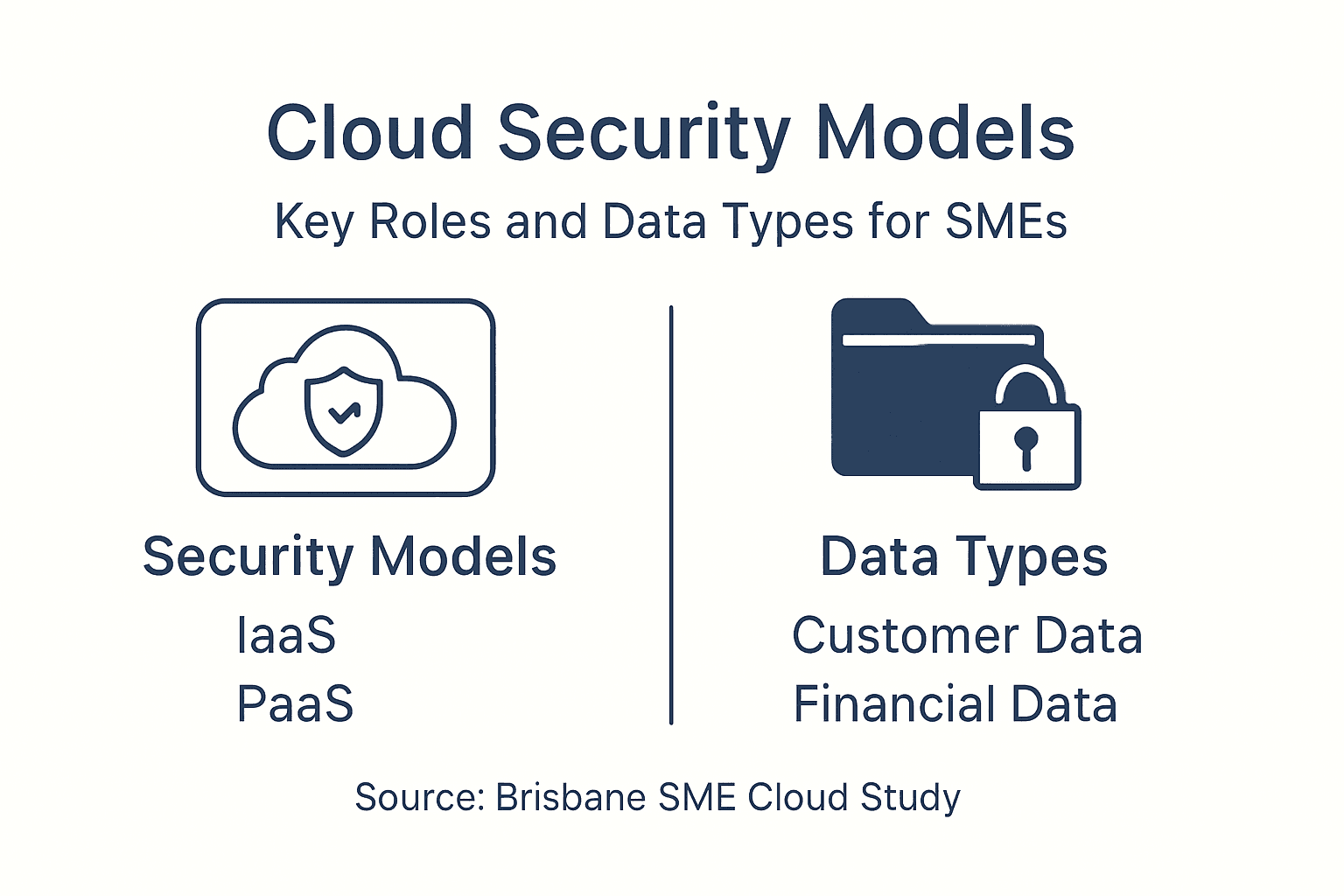
Cloud Security Models and Types of Data
Cloud computing introduces complex security models that vary depending on the service type and data sensitivity. Telemetry and network datasets demonstrate the intricate landscape of cloud security architecture, highlighting the need for nuanced protective strategies for Brisbane SMEs.
Three primary cloud service models define data protection responsibilities:
- Infrastructure as a Service (IaaS): Provider manages physical infrastructure
- Platform as a Service (PaaS): Provider handles underlying computing platforms
- Software as a Service (SaaS): Provider manages entire application environment
Each model requires distinct security approaches. Cloud computing security frameworks classify data into multiple sensitivity categories:
- Public data: Low confidentiality requirements
- Internal data: Restricted organisational use
- Sensitive data: Requires robust encryption
- Restricted data: Highest protection level
Understanding these models helps Brisbane businesses implement targeted security measures that align with their specific operational requirements. The shared responsibility model means organisations must actively participate in their data protection strategy, not merely rely on cloud providers.
Cloud security isn’t a one-size-fits-all solution. It demands continuous assessment, adaptation, and a deep understanding of evolving technological landscapes and potential vulnerabilities.
To better understand security responsibilities across cloud models, review this comparison:
| Security Aspect | IaaS (Infrastructure) | PaaS (Platform) | SaaS (Software) |
|---|---|---|---|
| Physical Infrastructure | Managed by provider | Managed by provider | Managed by provider |
| Application Management | Organisation’s responsibility | Joint responsibility | Managed by provider |
| Data Encryption | Organisation must configure | Shared between both parties | Provider handles encryption |
| Compliance Monitoring | Organisation-driven | Joint effort | Mainly provider-driven |
Pro tip: Regularly map your data classification against your chosen cloud security model to ensure comprehensive protection and compliance.
Australian Laws, Industry Rules, and Compliance
Cloud computing in Australia operates within a comprehensive legal framework designed to protect sensitive business and consumer data. Cyber security regulations establish critical guidelines that Brisbane SMEs must carefully navigate to ensure full compliance and data protection.
Key legislative frameworks governing cloud data security include:
- Privacy Act 1988: Mandates protection of personal information
- Protective Security Policy Framework: Establishes government security standards
- Cyber Security Act 2024: Introduces mandatory reporting and protection requirements
- Australian Privacy Principles: Defines data handling and privacy obligations
Compliance is not optional. It’s a fundamental business responsibility that protects both organisational and customer interests.
The Cyber Security Act 2024 introduces significant new obligations for businesses, particularly around:
- Mandatory reporting of cyber incidents
- Enhanced protection for smart devices
- Ransomware prevention and reporting
- Regular security assessments
For Brisbane businesses, this means developing a proactive approach to data security that goes beyond basic compliance. Understanding and implementing these regulations requires ongoing education, regular security audits, and a commitment to maintaining robust protective measures.
Here’s a quick reference for key Australian cloud compliance requirements:
| Regulation | Applicability | Main Focus |
|---|---|---|
| Privacy Act 1988 | All businesses handling data | Protect personal information |
| Protective Security Policy | Government and contractors | Establish security standards |
| Cyber Security Act 2024 | Most Australian businesses | Mandatory cyber incident reporting |
| Australian Privacy Principles | All data handlers | Set data usage and protection rules |
Pro tip: Conduct an annual comprehensive compliance review to ensure your cloud computing practices align with the latest Australian cyber security regulations.
The Shared Responsibility Model Explained
Cloud security is not a simple handover of responsibilities but a complex partnership between cloud service providers and businesses. Cloud shared responsibility guidance illuminates the nuanced division of security duties that Brisbane SMEs must understand.
The Shared Responsibility Model (SRM) varies across different cloud service types:
- Infrastructure as a Service (IaaS): Provider manages physical infrastructure
- Platform as a Service (PaaS): Shared responsibility for platform security
- Software as a Service (SaaS): More provider-side security management
Your cloud security is a collaborative effort, not a complete outsourcing of protection.
Key responsibilities typically distributed between providers and businesses include:
- Physical infrastructure security (Provider)
- Network configuration (Shared)
- Access management (Business)
- Data encryption (Shared)
- Compliance monitoring (Business)
Executive cloud security guidance emphasises that ultimately, the business remains accountable for protecting its data, regardless of the cloud service model.
Understanding these nuanced responsibilities requires ongoing education, clear communication with cloud providers, and a proactive approach to security management.
Pro tip: Develop a comprehensive matrix detailing exact security responsibilities for your specific cloud service model to eliminate potential compliance gaps.
Key Risks, Threats, and Real-World Incidents
Cyber threats continue to evolve at an alarming pace, presenting significant challenges for Brisbane SMEs operating in cloud environments. Security threats to Australian businesses highlight the complex landscape of potential vulnerabilities that organisations must navigate.
Critical cybersecurity risks for cloud computing include:
- Data breaches and unauthorised access
- Ransomware attacks
- Insider threats
- Advanced persistent threats (APTs)
- Supply chain vulnerabilities
- Cross-platform data exposure
Cybersecurity is not a destination, but a continuous journey of vigilance and adaptation.
AI-related cyber risks introduce additional complexity, with emerging technologies creating new potential attack vectors. Specific risks emerge from:
- Machine learning model manipulation
- Probabilistic security vulnerabilities
- Algorithmic bias exploitation
- Automated attack generation
State-sponsored cyber attacks and foreign interference represent particularly sophisticated threats, especially for businesses in critical sectors like healthcare and financial services. These incidents demonstrate that cloud security requires more than technological solutions – it demands a holistic, proactive approach to risk management.
Brisbane SMEs must recognise that cybersecurity is not about preventing every possible threat, but about building resilient systems that can detect, respond, and recover quickly from potential incidents.
Pro tip: Implement a comprehensive incident response plan that includes regular simulation exercises to test your organisation’s cyber resilience.
Best Practices for Brisbane SMEs in Healthcare and Finance
Data security in healthcare and financial sectors demands a specialised, comprehensive approach that goes beyond standard cybersecurity measures. Information security policy provisions emphasise the critical need for tailored strategies that protect sensitive client and patient information.
Key best practices for Brisbane SMEs include:
- Implementing robust multi-factor authentication
- Conducting regular security awareness training
- Establishing strict access control protocols
- Maintaining comprehensive incident response plans
- Encrypting all sensitive data in transit and at rest
- Performing periodic vulnerability assessments
Compliance is not a checkbox exercise, but a continuous commitment to protecting your most valuable asset: information.
Cyber infrastructure partnerships can provide critical support for developing sophisticated security frameworks. Financial and healthcare organisations must focus on:
- Developing industry-specific security protocols
- Creating granular user access permissions
- Monitoring and logging all system interactions
- Implementing advanced threat detection systems
- Establishing clear data retention and destruction policies
Technological solutions alone cannot guarantee complete protection. Brisbane SMEs must cultivate a culture of security awareness, where every team member understands their role in protecting sensitive information.
Pro tip: Develop a comprehensive security training program that includes real-world scenario simulations to help staff recognise and respond to potential cyber threats.
Strengthen Your Brisbane SME’s Cloud Security with IT Start
Protecting your data in cloud computing is critical for Brisbane SMEs facing complex challenges like managing shared responsibility models and ensuring compliance with Australian laws. As detailed in the article, understanding encryption, access controls, and regulatory demands such as the Cyber Security Act 2024 are essential to mitigating risks and guarding against evolving threats like ransomware and insider attacks. Without expert guidance, these pain points can leave your business exposed and vulnerable.
IT Start specialises in delivering tailored managed IT support and cloud security solutions designed specifically for Queensland SMEs. Our local expertise and proactive approach empower you to confidently navigate cloud security models and compliance requirements while enhancing operational efficiency. From comprehensive risk assessments to industry-specific cybersecurity frameworks, we help you build resilient protection that aligns with your business goals.
Discover how our certified team can be your trusted strategic partner in safeguarding your valuable data assets. Don’t leave your cloud security to chance. Take the first step now by contacting us for a free security assessment and consultation at https://itstart.com.au/contact-us. Experience peace of mind knowing your Brisbane business is supported by experts committed to your security and success.
Frequently Asked Questions
What is data security in cloud computing?
Data security in cloud computing involves a range of strategies and technologies designed to protect digital information stored and processed in cloud environments from unauthorized access and cyber threats.
Why is data security important for SMEs?
Data security is crucial for SMEs as it helps protect sensitive business and customer information, ensure compliance with legal regulations, and prevent costly data breaches and cyber incidents.
What are the key components of a cloud data security strategy?
Key components include encryption of sensitive data, access control mechanisms, regular security audits, network traffic monitoring, and threat detection systems.
How does the shared responsibility model work in cloud computing?
The shared responsibility model divides security responsibilities between cloud service providers and businesses, where the provider secures physical infrastructure, while businesses are responsible for securing their applications and managing access.
Recommended
- Security Benefits of Cloud Computing for Brisbane SMEs – IT Start
- All Cloud Solutions: Compliance and Value for Brisbane SMEs – IT Start
- Cloud Security in Cyber Security – Why It Matters – IT Start
- Cloud Security in Cloud Computing—Why It Matters – IT Start
- Navigating the New Normal: A Proactive Approach to Healthcare Data Security – Stratgetic IT Consultants for Accountants