

Every healthcare business in Brisbane faces the daily challenge of protecting sensitive data while juggling tight regulatory demands. Without a clear approach, a single cyber incident could threaten patient privacy, undermine trust, and lead to heavy legal repercussions. Adopting a comprehensive cybersecurity policy—guided by frameworks like the Australian Signals Directorate’s Information Security Manual—empowers your team to safeguard systems, ensure compliance, and reduce disruption. This overview outlines how targeted policies can transform risk into resilience across your organisation.
Table of Contents
- Defining Cybersecurity Policies For Businesses
- Types Of Policies And Common Applications
- Legal And Regulatory Obligations In Queensland
- Key Risks And Business Impacts
- Developing Policies To Meet Industry Standards
Essential Cybersecurity Policy Sections for Brisbane SMEs
| Point | Details |
|---|---|
| Importance of Cybersecurity Policies | Cybersecurity policies are essential for SMEs to protect digital assets and ensure compliance with legal requirements. |
| Dynamic Nature of Policies | Policies should be regularly reviewed and updated to adapt to evolving threats and technological changes. |
| Risk Management | Understanding and addressing potential cyber risks is critical for business survival and continuity. |
| Employee Training | Regular employee training is vital to minimise vulnerabilities and enhance overall security awareness. |
Defining Cybersecurity Policies for Businesses
A cybersecurity policy represents a comprehensive strategy that outlines how organisations protect their digital assets, information systems, and technology infrastructure against potential cyber threats. For Brisbane SMEs, these policies are not optional extras but critical safeguards that ensure business continuity and regulatory compliance.
The Australian Signals Directorate’s Information Security Manual provides an essential framework for developing robust cybersecurity strategies. This manual offers crucial guidance for businesses seeking to establish comprehensive protection mechanisms.
Key components of an effective cybersecurity policy typically include:
- Clear definitions of acceptable technology usage
- Protocols for data protection and confidentiality
- Incident response procedures
- Employee training requirements
- Access control and authentication standards
- Regular risk assessment and management processes
Brisbane SMEs must recognise that cybersecurity policies are not static documents but dynamic frameworks that evolve with technological changes and emerging threat landscapes. The Protective Security Policy Framework emphasises the importance of continual assessment and adaptation in security governance.
Pro tip: Conduct an annual review of your cybersecurity policy to ensure it remains current with the latest technological developments and potential threat vectors.
Types of Policies and Common Applications
Cybersecurity policies are not one-size-fits-all solutions but nuanced frameworks tailored to specific organisational needs. Australian cybersecurity governance frameworks outline several critical policy types that Brisbane SMEs must consider to protect their digital infrastructure effectively.
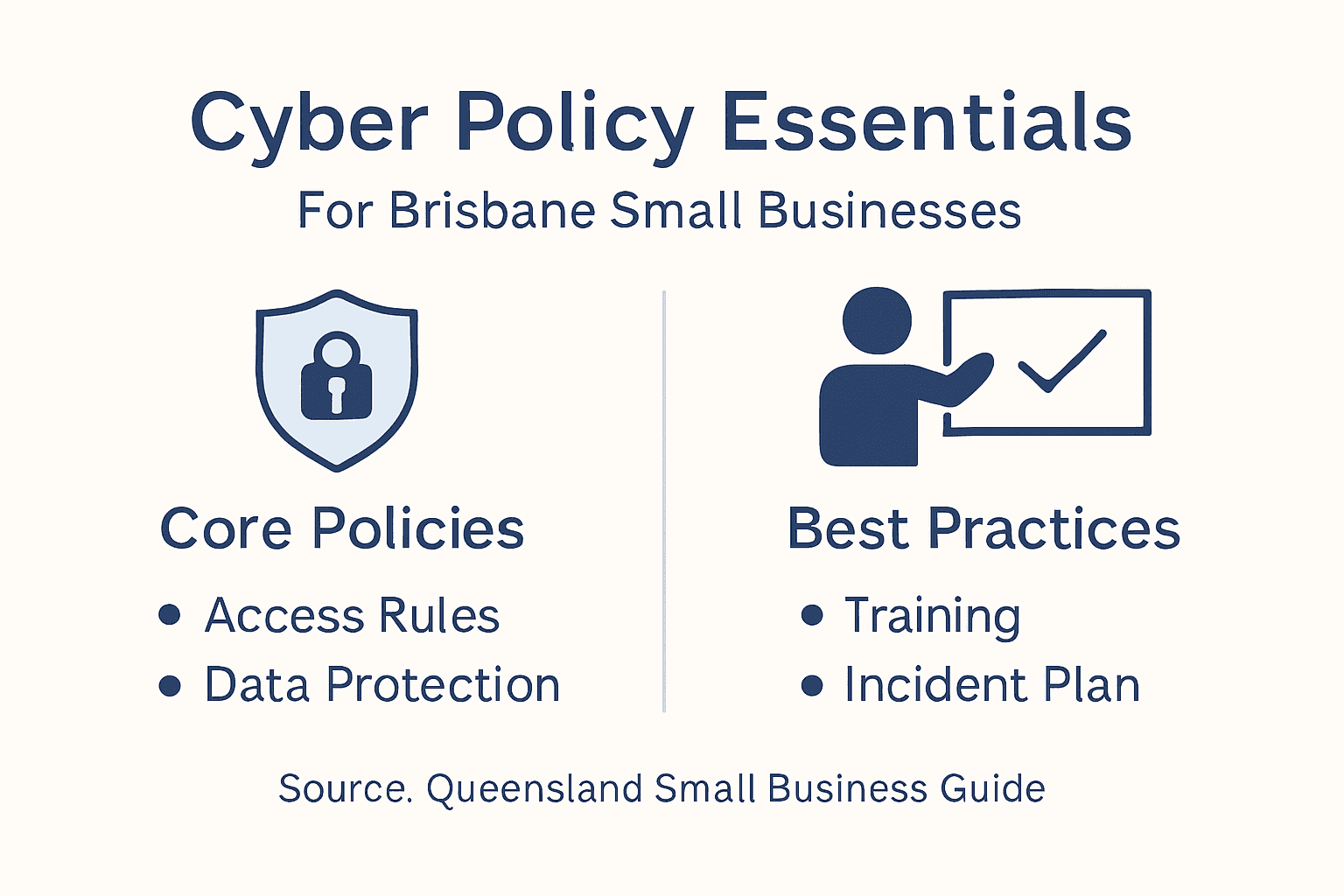
The primary types of cybersecurity policies include:
- Access Control Policies: Define who can access specific systems and data
- Data Protection Policies: Establish protocols for handling sensitive information
- Incident Response Policies: Create structured procedures for managing cyber threats
- Employee Training Policies: Outline mandatory security awareness programs
- Network Security Policies: Specify rules for maintaining secure digital networks
- Acceptable Use Policies: Set guidelines for appropriate technology utilisation
Each policy type serves a distinct purpose in the broader cybersecurity ecosystem. Risk management strategies emphasise the importance of implementing comprehensive, interconnected policies that address multiple potential vulnerabilities simultaneously. These policies must be dynamic, regularly updated to reflect emerging technological landscapes and evolving cyber threat environments.

For Brisbane SMEs, successful policy implementation requires a holistic approach that integrates technical controls, human awareness, and adaptive governance mechanisms. Understanding and customising these policy frameworks can significantly reduce organisational cyber risks and enhance overall digital resilience.
The table below compares key cybersecurity policy types and their primary objectives for Brisbane SMEs:
| Policy Type | Main Objective | Typical Business Outcome |
|---|---|---|
| Access Control | Restrict user access to systems | Reduced risk of unauthorised entry |
| Data Protection | Secure sensitive information | Minimised exposure in data breaches |
| Incident Response | Provide structured threat handling | Faster recovery after cyber attacks |
| Employee Training | Educate staff on security awareness | Fewer human-error vulnerabilities |
| Network Security | Safeguard digital network infrastructure | Fewer disruptions to operations |
| Acceptable Use | Define proper tech usage | Improved compliance and conduct |
Pro tip: Develop a comprehensive cybersecurity policy matrix that maps each policy type to specific organisational risks and mitigation strategies.
Legal and Regulatory Obligations in Queensland
Queensland SMEs must navigate a complex landscape of cybersecurity legal requirements that extend beyond simple best practices. Privacy protection regulations impose significant responsibilities on businesses to safeguard personal and sensitive information from potential breaches.
Key legal obligations for Brisbane businesses include:
- Compliance with the Privacy Act 1988
- Mandatory data breach notification requirements
- Protection of personal information from misuse
- Implementing reasonable security safeguards
- Maintaining transparent data handling practices
- Providing clear privacy policy documentation
The regulatory framework demands that organisations take proactive measures to protect digital assets. Failure to implement adequate cybersecurity controls can result in substantial financial penalties, ranging from $2.2 million for body corporates to significant reputational damage.
Queensland businesses must treat cybersecurity as a legal obligation, not an optional investment.
While national regulations provide a foundational framework, state-level cybersecurity policies continue to evolve, creating a dynamic compliance environment that requires constant vigilance and adaptation.
Pro tip: Conduct an annual comprehensive review of your cybersecurity policies to ensure alignment with the latest legal and regulatory requirements.
Key Risks and Business Impacts
Brisbane SMEs face a complex and evolving landscape of cybersecurity threats that can devastate business operations. Cyber risks for small businesses encompass multiple potential attack vectors that can compromise organisational stability and financial health.
The primary cyber risks confronting Queensland businesses include:
- Ransomware attacks: Potential complete data lockdown
- Phishing vulnerabilities: Compromising employee credentials
- Data breach consequences: Sensitive information exposure
- Financial fraud: Unauthorized monetary transactions
- Reputation damage: Loss of customer trust
- Operational disruption: Extended business downtime
Financial implications of cyber incidents can be catastrophic. A single significant breach could result in direct financial losses exceeding $50,000, with potential legal penalties, forensic investigation costs, and system recovery expenses dramatically increasing total impact.
Cybersecurity is not an IT problem – it’s a business survival strategy.
Understanding these risks through comprehensive governance frameworks enables proactive mitigation and strategic risk management. Brisbane SMEs must recognise that cybersecurity represents a critical business investment, not an optional expense.
For quick reference, here is a summary of the potential impacts caused by various cyber risks faced by Queensland businesses:
| Cyber Risk | Immediate Impact | Long-Term Consequence |
|---|---|---|
| Ransomware Attack | Loss of data access | Substantial financial losses |
| Phishing Attempt | Stolen credentials | Persistent security gaps |
| Data Breach | Exposed personal info | Legal penalty, brand damage |
| Financial Fraud | Unauthorised payments | Weakened stakeholder confidence |
| Reputation Damage | Eroded customer trust | Declining revenue, lost clients |
| Operational Disruption | Downtime, stopped work | Reduced productivity, lost sales |
Pro tip: Develop a comprehensive cyber incident response plan that includes immediate communication protocols, backup restoration procedures, and stakeholder notification strategies.
Developing Policies to Meet Industry Standards
Queensland SMEs must align their cybersecurity strategies with recognised national frameworks to ensure comprehensive protection. Cybersecurity standards provide essential guidance for developing robust, compliant policy approaches that address modern digital risks.
Key elements for creating effective cybersecurity policies include:
- Risk Assessment: Comprehensive vulnerability mapping
- Governance Frameworks: Clear organisational accountability
- Technical Controls: Specific security implementation strategies
- Incident Response: Structured threat management protocols
- Continuous Monitoring: Regular policy effectiveness evaluation
- Training Programs: Employee cybersecurity awareness development
The Australian Signals Directorate’s Information Security Manual offers a comprehensive blueprint for policy development. This framework helps businesses systematically address potential vulnerabilities across technological, human, and procedural domains.
Effective cybersecurity policies are living documents that adapt to emerging threats and technological changes.
Successful policy implementation requires more than document creation. It demands ongoing commitment, regular review, and a culture of security awareness that permeates every level of the organisation.
Pro tip: Conduct quarterly cybersecurity policy reviews and maintain a dynamic document that evolves with your business’s technological landscape.
Strengthen Your Brisbane SME with Tailored Cybersecurity Policies and Expert IT Support
The challenges Brisbane SMEs face with evolving cybersecurity threats and the complex legal requirements demand more than just awareness. From establishing access control policies to navigating data breach notifications, every step is critical in safeguarding your business. At IT Start, we understand the pressure you face to maintain compliance while protecting your digital assets and minimising cyber risks.
Our managed IT support and cybersecurity services are designed specifically for Queensland businesses aiming to transform their cybersecurity policies from static documents into living, adaptive frameworks. With local expertise and a proactive approach, IT Start helps you implement industry-aligned strategies that reduce vulnerabilities, improve employee training, and ensure rapid incident response. Don’t risk financial loss or reputational damage because of outdated or incomplete protections.
Discover how partnering with IT Start can give your Brisbane business peace of mind and a competitive edge. Take the next step now by arranging a free consultation through our Contact Us page. Learn more about our Managed IT Support and Cybersecurity Services tailored to meet your unique business needs and regulatory obligations. Act today to safeguard your business’s future and stay one step ahead of cyber threats.
Frequently Asked Questions
What is a cybersecurity policy?
A cybersecurity policy is a comprehensive strategy that outlines how an organisation protects its digital assets and information systems from cyber threats.
Why are cybersecurity policies important for SMEs?
Cybersecurity policies are crucial for SMEs as they help ensure business continuity, regulatory compliance, and protection against potential financial losses from cyber incidents.
What key components should be included in a cybersecurity policy?
Essential components of a cybersecurity policy include acceptable technology usage definitions, data protection protocols, incident response procedures, employee training requirements, and access control standards.
How often should cybersecurity policies be reviewed?
It’s recommended to conduct an annual review of your cybersecurity policy to ensure it remains relevant with the latest technological developments and evolving threat landscapes.
Recommended
- Cyber Security Actions for Brisbane Businesses – IT Start
- What Is Cyber Security Like for Brisbane SMEs – IT Start
- Cyber Security Vulnerabilities – Why Brisbane SMEs Need Protection – IT Start
- Cybersecurity Best Practices for Brisbane SMBs – IT Start
- The Costly Consequences of Neglecting Cyber Security: A Cautionary Tale for Small Business Owners – Voipcom