
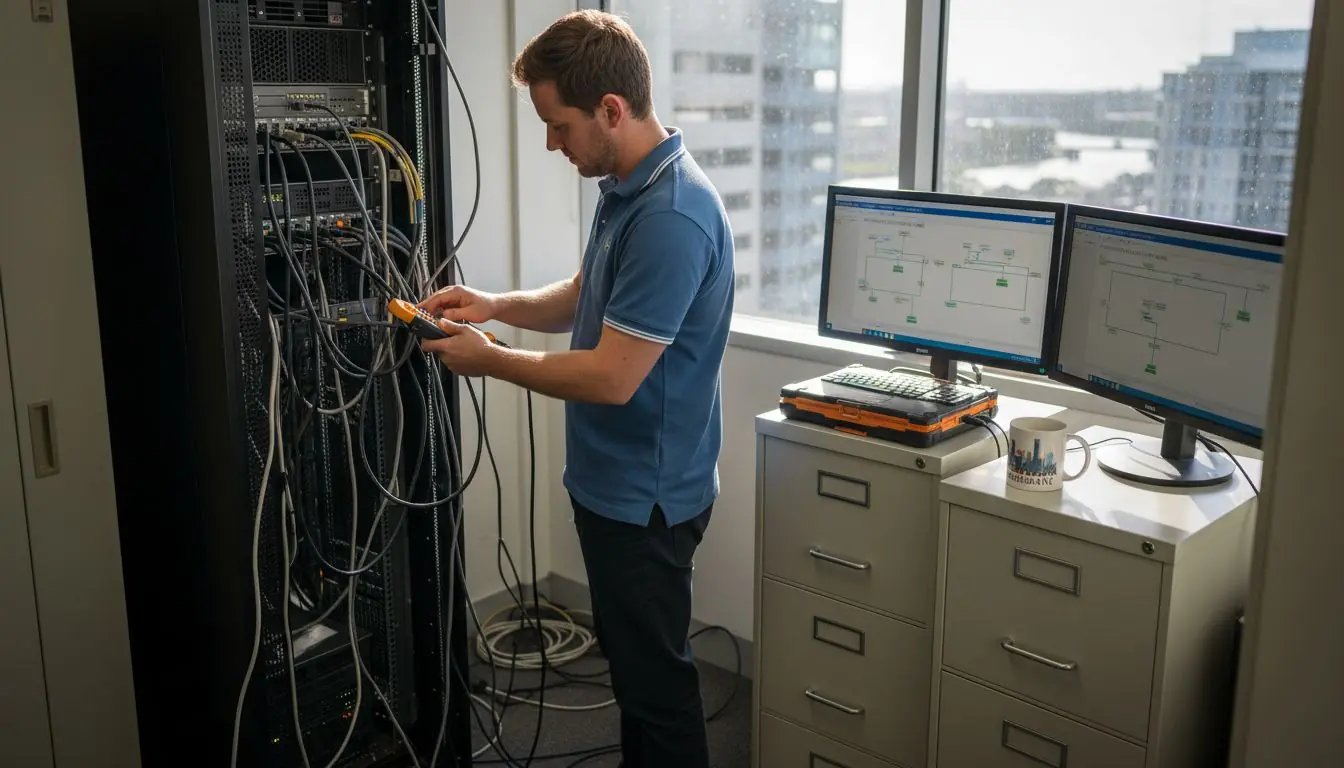
Cyber criminals are becoming more sophisticated, and small businesses in Brisbane often find themselves exposed without dedicated security teams. This ongoing risk makes managed network security especially relevant for local SMEs, offering tailored protection and peace of mind. By outsourcing cyber defence to experts, you gain access to proactive monitoring, rapid response, and staff training that can make all the difference. Bold strategies like managed network security provide a welcome safety net for organisations needing reliable, continuous digital protection.
Guide Contents for Managed Network Security for Brisbane SMEs
- Defining Managed Network Security For SMEs
- Core Services And Key Technologies Explained
- Australian Compliance And Data Protection Standards
- Roles, Responsibilities, And Cost Considerations
- Risks, Common Pitfalls, And Local Alternatives
Key Takeaways
| Point | Details |
|---|---|
| Managed Network Security Addresses Cyber Threats | Outsourcing cybersecurity functions helps SMEs in Brisbane tackle evolving digital risks more effectively. |
| Core Security Functions Provide Strategic Benefits | Real-time monitoring and incident response significantly reduce downtime and enhance organisational resilience. |
| Compliance is Essential for Trust and Security | Understanding and implementing Australian compliance standards helps build customer trust while protecting sensitive information. |
| Local Alternatives Offer Cost-Effective Solutions | Government initiatives and subsidised services provide SMEs with access to essential cybersecurity support without overwhelming budgets. |
Defining Managed Network Security for SMEs
Managed network security represents a comprehensive approach for protecting small and medium enterprises (SMEs) from evolving cyber threats. Unlike traditional IT support, managed network security provides proactive, continuous protection tailored specifically to Brisbane businesses’ unique technological infrastructures.
At its core, managed network security involves outsourcing cybersecurity responsibilities to specialised professionals who monitor, detect, and respond to potential digital risks. Comprehensive cybersecurity frameworks highlight this strategy as critical for SMEs lacking dedicated internal security resources.
The key components of managed network security typically include:
- Real-time threat monitoring
- Continuous network vulnerability assessments
- Rapid incident response protocols
- Employee security awareness training
- Compliance management and reporting
For Brisbane SMEs, this approach addresses significant challenges. Australian Cyber Security Centre research indicates that smaller businesses are increasingly targeted by sophisticated cyber criminals who exploit resource limitations.
To clarify how managed network security supports SMEs, here’s a summary of main functions and their business benefits:
| Security Function | Purpose | Business Impact |
|---|---|---|
| Real-time threat monitoring | Detects threats as they arise | Minimises downtime and loss risk |
| Incident response protocols | Handles breaches efficiently | Reduces recovery time and reputational damage |
| Employee security training | Upskills staff on cyber safety | Lowers likelihood of human error |
| Compliance management | Ensures data regulation adherence | Builds customer trust and avoids fines |
Pro tip: Conduct a comprehensive cybersecurity risk assessment before implementing managed network security to understand your specific vulnerabilities and tailored protection needs.
Core Services and Key Technologies Explained
Managed network security encompasses a sophisticated array of services and technologies designed to protect Brisbane SMEs from increasingly complex cyber threats. These comprehensive solutions go beyond traditional IT support by providing proactive, intelligent defence mechanisms tailored to small business environments.

Core security services typically include critical technological interventions that safeguard digital infrastructure. The primary components comprise network monitoring, threat detection, incident response, and continuous vulnerability assessment.
Key technologies deployed in managed network security include:
- Firewall protection
- Multi-factor authentication systems
- Network segmentation techniques
- Advanced encryption protocols
- Endpoint detection and response (EDR) solutions
- Secure access service edge (SASE) frameworks
For Brisbane businesses, these technologies provide multiple layers of defence. By implementing comprehensive security management strategies, organisations can dramatically reduce their vulnerability to potential cyber incidents.
The integration of these services allows SMEs to benefit from enterprise-grade security without requiring extensive internal technical expertise. Managed network security essentially acts as a virtual chief information security officer, continuously monitoring and protecting digital assets against emerging threats.
Pro tip: Regularly update and patch all security technologies to ensure maximum protection against evolving cyber risks.
Australian Compliance and Data Protection Standards
Australian businesses face complex regulatory requirements when managing network security and data protection. Compliance standards play a crucial role in ensuring organisations protect sensitive information while meeting stringent national cybersecurity expectations.
Prudential Standards like CPS 234 mandate specific information security obligations for regulated entities. These standards require businesses to implement robust governance frameworks, manage security risks, and establish comprehensive incident response protocols.
Key compliance requirements for Brisbane SMEs include:
- Adherence to the Privacy Act 1988
- Implementation of the Australian Signals Directorate’s Essential Eight mitigation strategies
- Regular security capability assessments
- Documented information security policies
- Mandatory data breach notification procedures
- Ongoing staff cybersecurity training
Australian Cyber Security Centre guidelines emphasise that compliance is not just about meeting legal requirements, but building genuine organisational resilience. Small businesses must proactively demonstrate their commitment to protecting customer and stakeholder data.
By understanding and implementing these standards, Brisbane SMEs can create a robust security posture that not only protects against cyber threats but also builds trust with customers and partners.
Pro tip: Conduct an annual comprehensive compliance audit to identify and address potential security gaps before they become critical issues.
Roles, Responsibilities, and Cost Considerations
Managed network security requires a sophisticated approach to defining organisational roles and managing cybersecurity investments for Brisbane SMEs. Strategic responsibility allocation becomes critical in ensuring comprehensive protection without overwhelming limited business resources.
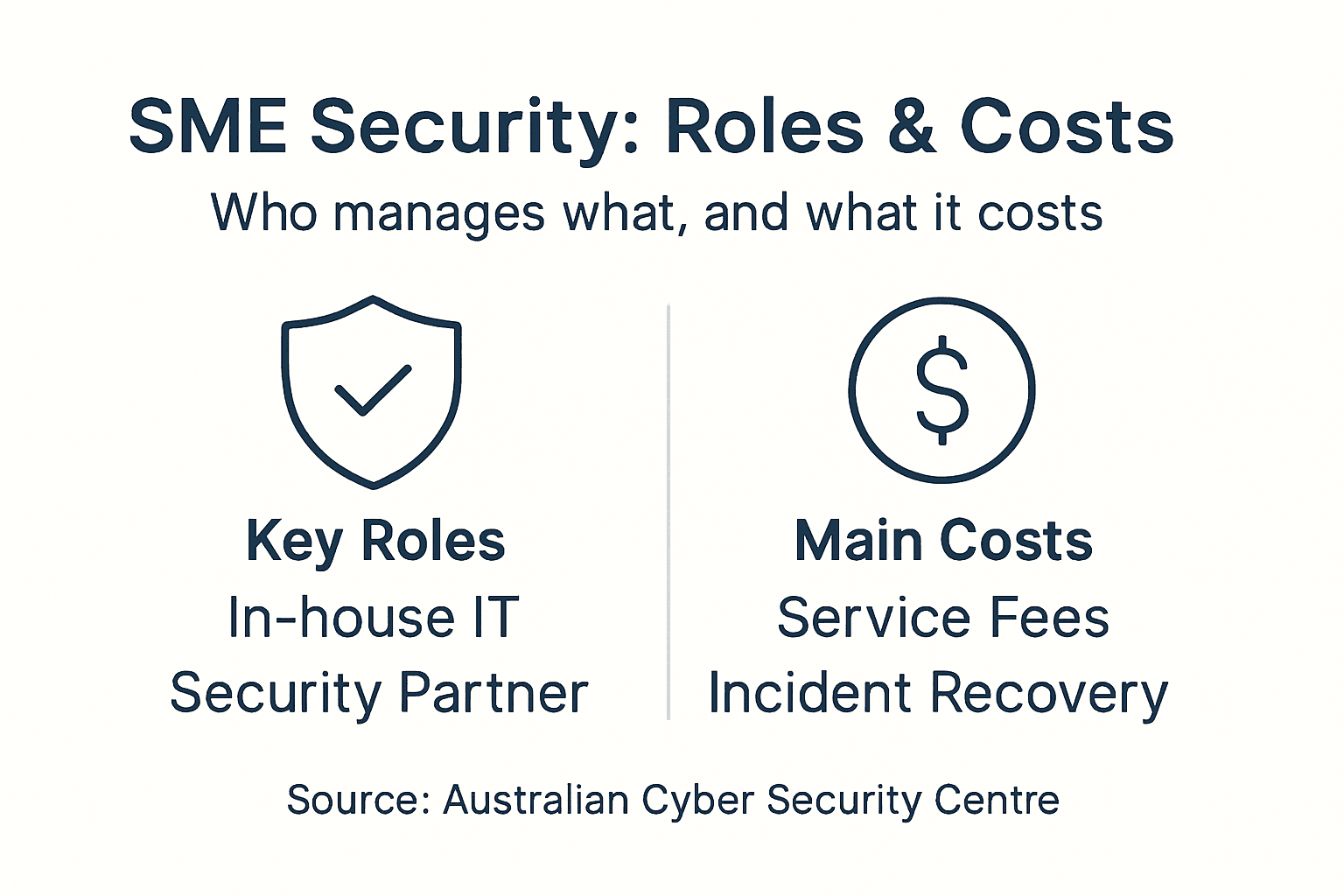
Prudential Standards mandate clear accountability for information security across different organisational levels. This means businesses must establish explicit roles, from board-level oversight to operational implementation, ensuring every team member understands their specific cybersecurity responsibilities.
Key roles in managed network security typically include:
- Board-level governance
- Chief Information Security Officer (CISO) or equivalent
- IT security manager
- Network administrators
- Security operations team
- External managed security service providers
Australian Cyber Security Centre research highlights cost considerations as a significant challenge for SMEs. Most small businesses balance limited budgets with the need for robust cybersecurity, often turning to outsourced managed security services to access enterprise-grade protection without substantial internal infrastructure investments.
Cost considerations involve evaluating the potential financial impact of cyber incidents against the investment required for comprehensive security measures. This risk-based approach helps Brisbane SMEs make informed decisions about their network security strategy.
Pro tip: Conduct a comprehensive cost-benefit analysis of managed network security services, comparing potential breach expenses against service investment.
Risks, Common Pitfalls, and Local Alternatives
Brisbane SMEs face a complex landscape of cybersecurity challenges that require strategic understanding and proactive management. Cyber risks represent significant potential threats that can compromise business operations, financial stability, and organisational reputation.
Cybersecurity challenges for SMEs stem from multiple systemic vulnerabilities that small businesses frequently encounter. These include limited technical expertise, insufficient budget allocation, and inadequate security awareness among staff members.
Common cybersecurity risks and pitfalls include:
- Insufficient employee cybersecurity training
- Legacy system vulnerabilities
- Lack of comprehensive incident response plans
- Inadequate patch management
- Poor password management practices
- Minimal network segmentation
Australian Cyber Security Centre research highlights practical local alternatives for Brisbane SMEs seeking affordable cybersecurity solutions. Government initiatives, subsidised cybersecurity services, and frameworks like the Essential Eight provide structured approaches to improving security posture without overwhelming limited resources.
Local alternatives can help SMEs bridge critical security gaps by offering accessible, tailored support mechanisms designed specifically for smaller organisations with constrained budgets and technical capabilities.
Here’s a quick comparison of local alternatives for SMEs seeking effective cybersecurity solutions:
| Alternative | Support Provided | Suitability for SMEs |
|---|---|---|
| Govt. initiatives | Free training/resources | Budget-conscious, entry-level protection |
| Subsidised services | Professional guidance, reduced fees | Growing SMEs with limited staff |
| Essential Eight | Practical framework adoption | SMEs needing structured controls |
Pro tip: Leverage government-sponsored cybersecurity resources and training programs to cost-effectively enhance your organisation’s security maturity.
Strengthen Your Brisbane SME’s Cybersecurity with IT Start
Brisbane SMEs face growing cyber threats that demand proactive, continuous protection tailored to local business needs. The article highlights common challenges such as limited internal resources, compliance demands, and the need for real-time threat monitoring and incident response. At IT Start, we understand these pain points and provide specialised managed network security solutions that go beyond basic IT support. Our services include expert network monitoring, advanced threat detection, and employee security training designed specifically for small and medium enterprises
Don’t wait until a cyber incident disrupts your business operations or damages your reputation. Take control today by partnering with IT Start, a trusted Brisbane-based provider certified to deliver high industry standards and local expertise. To explore how our tailored cybersecurity strategies can reduce your risks and ensure compliance, start with a free assessment or consultation. Reach out through our Contact Us page and begin your journey toward stronger, smarter security now. Learn more about our proactive Managed IT Support services and how we can safeguard your digital assets with practical, business-first solutions.
Frequently Asked Questions
What is managed network security?
Managed network security is a comprehensive approach to safeguarding small and medium enterprises (SMEs) from cyber threats by outsourcing cybersecurity responsibilities to specialised professionals who monitor and respond to digital risks.
How does managed network security benefit SMEs?
It offers continuous protection, real-time threat monitoring, incident response, employee training, and compliance management, which are crucial for SMEs that may lack internal resources to manage cybersecurity effectively.
What key technologies are included in managed network security?
Key technologies include firewall protection, multi-factor authentication, network segmentation, advanced encryption, endpoint detection and response (EDR), and secure access service edge (SASE) frameworks that help enhance an organisation’s digital security posture.
Why is compliance important for SMEs in managed network security?
Compliance ensures that SMEs adhere to legal regulations like the Privacy Act, building customer trust while protecting sensitive information and reducing the risk of potential fines and reputational damage.
Recommended
- Network Security Practices – Safeguarding Brisbane Firms – IT Start
- Network Security – IT Start
- 7 Best Cyber Security Companies for Brisbane SMEs – IT Start
- Effective Ways to Improve Network Security for Brisbane SMEs – IT Start
- What Is Cyber Security and Why It Matters | Brainiac Media
- Security & Recovery – EZEEPos Solution