

More than 60 percent of Australian SMEs are accelerating their move to the cloud as Brisbane and other Queensland businesses seek new ways to stay competitive. The shift to cloud infrastructure is changing how companies manage data and daily operations, offering practical ways to cut costs and improve agility. Whether you want to streamline your technology or boost security, understanding cloud migration can empower your business to make smarter decisions for growth and resilience.
Table of Contents
- Cloud Migration Explained For Queensland SMEs
- Comparing Cloud Models: Public, Private, Hybrid
- Business Impact: Efficiency, Scalability, And Growth
- Security, Compliance, And Data Protection Needs
- Cost, Risk, And Local Cloud Migration Challenges
Key Takeaways
| Point | Details |
|---|---|
| Cloud Migration Benefits | Queensland SMEs can achieve enhanced scalability, lower operational costs, and improved resource allocation through cloud migration. |
| Cloud Model Selection | Businesses should assess their specific technology requirements and compliance needs before choosing between public, private, or hybrid cloud models. |
| Security and Compliance | Robust data protection and adherence to regulatory standards are essential for successful cloud migration and must be planned meticulously. |
| Cost and Risk Management | A detailed total cost of ownership model should be developed, factoring in migration expenses and potential risks to ensure effective budgeting. |
Cloud Migration Explained for Queensland SMEs
Cloud migration represents a strategic technology transition enabling Brisbane businesses to transform their operational infrastructure. By moving digital assets, applications, and data from local servers to cloud environments, organisations can unlock substantial performance and efficiency advantages. Cloud services from the Queensland Government emphasise critical considerations like data security and contractual frameworks that SMEs must understand before implementation.
For Queensland small and medium enterprises, cloud migration offers multiple strategic benefits. Businesses gain enhanced scalability, allowing technology resources to expand or contract based on immediate operational needs. This flexibility means organisations can quickly respond to market changes without massive upfront technology investments. Cloud computing enables more efficient resource allocation, reducing expensive on-premise hardware maintenance and providing predictable monthly technology expenditure.
The migration process typically involves several key stages. First, businesses must conduct a comprehensive technology audit, identifying which systems and applications are suitable for cloud transfer. Next, organisations select appropriate cloud service models – whether infrastructure, platform, or software as a service. QRIScloud’s research infrastructure demonstrates how sophisticated cloud platforms can support complex business technology requirements, offering insights into potential implementation strategies.
Pro Tip: Cloud Migration Strategy: Conduct a thorough risk assessment and data sensitivity audit before migrating, ensuring you understand exactly which systems can safely move to cloud environments and which require additional security protections.
Comparing Cloud Models: Public, Private, Hybrid
Cloud computing offers Brisbane businesses multiple deployment models, each with unique characteristics and strategic advantages. Academic research from UNSW highlights the critical distinctions between public, private, and hybrid cloud architectures that organisations must understand when planning their digital infrastructure.
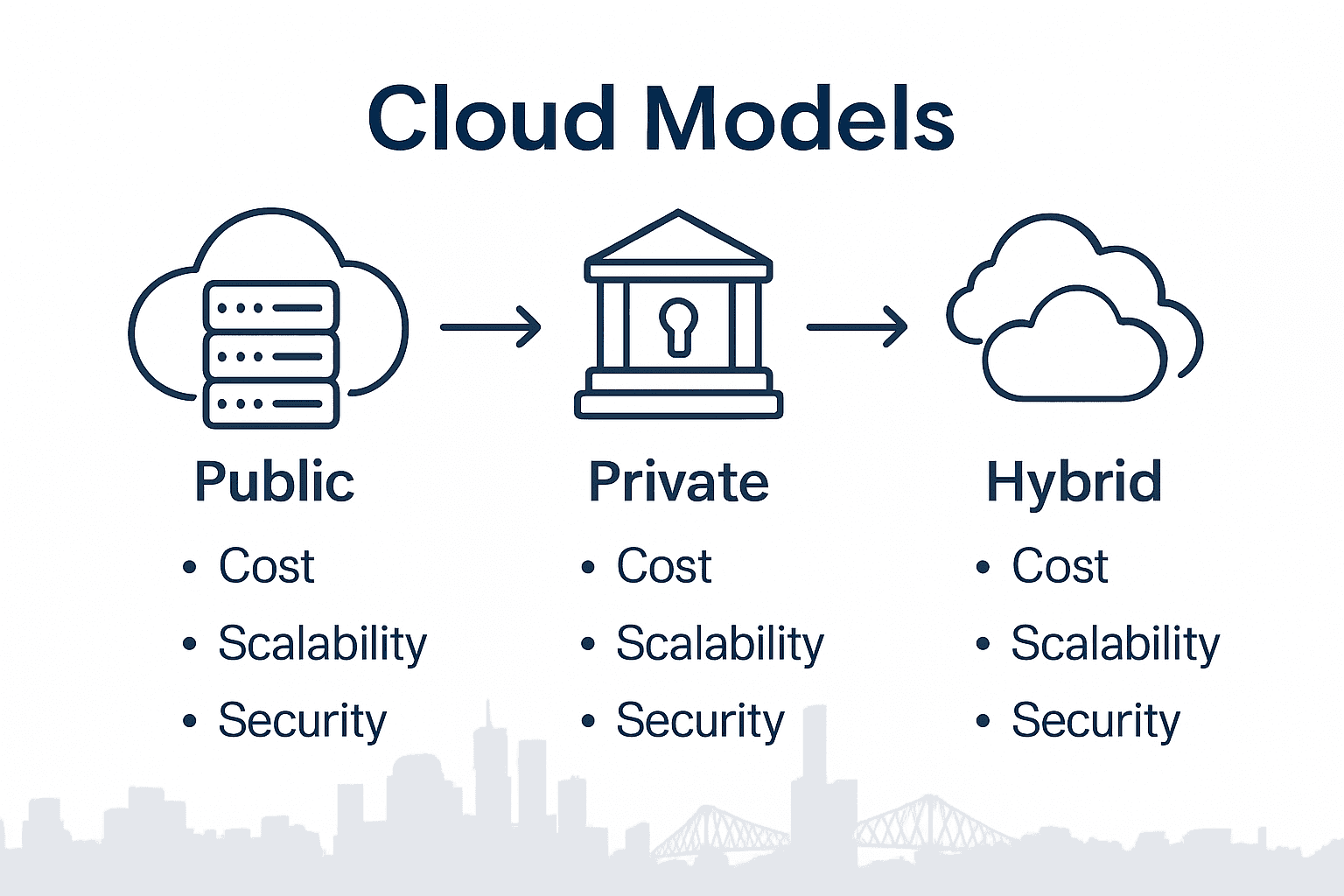
Public Cloud represents a shared infrastructure where computing resources are delivered over the internet by third-party providers. These platforms offer significant cost savings and immediate scalability, allowing businesses to access powerful technology without substantial upfront investments. Small to medium enterprises often find public cloud solutions attractive due to their flexibility and reduced maintenance requirements.
In contrast, Private Cloud environments provide dedicated infrastructure exclusively for a single organisation. These platforms offer enhanced security and customisation, making them ideal for businesses with strict data protection requirements or complex regulatory compliance needs. Hybrid Cloud models combine elements of both public and private clouds, enabling organisations to balance performance, security, and cost-effectiveness by strategically distributing workloads across different environments. Hybrid cloud computing strategies allow businesses to maintain sensitive data on private infrastructure while leveraging public cloud scalability for less critical applications.
Here is a side-by-side comparison of the primary cloud deployment models relevant to Queensland SMEs:
| Model Type | Key Characteristics | Security Level | Suitable for |
|---|---|---|---|
| Public Cloud | Shared resources, instant scalability | Moderate, provider-dependent | Fast-growing SMEs |
| Private Cloud | Dedicated infrastructure, custom controls | High, enhanced protections | Regulated industries |
| Hybrid Cloud | Blended approach, workload flexibility | Balanced by design | Businesses with mixed needs |
Pro Tip: Cloud Model Selection: Conduct a comprehensive audit of your business’s specific technology requirements, compliance needs, and budget constraints before selecting a cloud deployment model to ensure optimal performance and cost-effectiveness.
Business Impact: Efficiency, Scalability, and Growth
The Queensland Government’s Cloud Computing Strategy demonstrates how cloud migration can dramatically transform business operational capabilities. By transitioning digital infrastructure to cloud environments, organisations unlock unprecedented opportunities for efficiency, scalability, and strategic growth. Brisbane businesses can leverage cloud technologies to reduce operational costs, streamline technology management, and create more agile technological ecosystems.
Efficiency Gains represent a critical advantage of cloud migration. Traditional on-premise infrastructure requires significant capital investment and ongoing maintenance, whereas cloud platforms enable businesses to access cutting-edge technology infrastructure without substantial upfront expenses. Organisations can dynamically allocate computing resources, reducing waste and optimising technology spending. Cloud services strategies allow businesses to pay only for the computational power and storage they actively use, creating more predictable and manageable technology budgets.

Scalability emerges as another transformative benefit for Queensland enterprises. Cloud platforms enable businesses to rapidly expand or contract their technological infrastructure in response to market demands. Startups and growing organisations can quickly provision additional resources without purchasing expensive hardware, while established companies can seamlessly manage peak performance requirements. The digital flexibility provided by cloud migration allows businesses to experiment, innovate, and respond to technological challenges with unprecedented speed and efficiency.
Pro Tip: Technology Strategy: Regularly assess your organisation’s cloud infrastructure against current business objectives, ensuring your technological capabilities continue to align with strategic growth plans and emerging market opportunities.
Security, Compliance, and Data Protection Needs
The Queensland Office of the Information Commissioner’s guidelines underscore the critical importance of robust data protection strategies for businesses migrating to cloud environments. Cloud security extends far beyond basic technological safeguards, encompassing comprehensive approaches to protecting sensitive information, maintaining regulatory compliance, and mitigating potential cybersecurity risks.
Data Protection requires a multifaceted strategy that addresses several key dimensions. Businesses must implement encryption protocols, access control mechanisms, and continuous monitoring systems to ensure data integrity and confidentiality. Understanding essential data security methods becomes paramount, particularly for organisations handling sensitive customer information or operating in highly regulated industries such as finance, healthcare, and professional services.
Compliance represents another crucial consideration for Brisbane businesses undertaking cloud migration. Queensland organisations must navigate complex regulatory landscapes, ensuring their cloud infrastructure meets stringent legal requirements. The Queensland Government provides detailed guidance on managing information securely, emphasising the need for regular risk assessments, contractual diligence, and proactive security management. Businesses must select cloud providers that demonstrate robust compliance frameworks, transparent security practices, and a proven track record of protecting organisational data.
Pro Tip: Security Assessment: Conduct a comprehensive cloud security audit annually, identifying potential vulnerabilities and ensuring your data protection strategies remain adaptive and aligned with evolving technological and regulatory standards.
Cost, Risk, and Local Cloud Migration Challenges
The Queensland Audit Office report reveals the complex landscape of cloud migration challenges facing Brisbane businesses. While cloud technologies offer significant potential, organisations must carefully navigate financial, technological, and operational risks to ensure successful implementation. Understanding these challenges becomes crucial for strategic decision making and minimising potential disruptions.
Cost considerations represent a critical dimension of cloud migration. Initial investment and ongoing operational expenses require meticulous financial planning. Small to medium enterprises must evaluate total cost of ownership, comparing traditional infrastructure maintenance against cloud service subscriptions. Cloud migration checklists for Brisbane businesses can help organisations systematically assess financial implications, identifying potential hidden costs and budget allocation strategies.
Risk management emerges as another fundamental concern for Queensland businesses. Technical complexities, data security vulnerabilities, and potential service interruptions demand comprehensive mitigation strategies. Organisations must conduct thorough risk assessments, evaluating vendor reliability, data protection mechanisms, and compliance requirements. Local businesses need to select cloud providers with proven track records, transparent service level agreements, and robust security frameworks that align with Australian regulatory standards.
The table below summarises Queensland SMEs’ major cloud migration challenges and practical strategies to address them:
| Challenge | Description | Mitigation Strategy |
|---|---|---|
| Upfront Investment | Initial migration and setup costs | Use phased adoption, seek grants |
| Data Security | Risks of data breaches during migration | Engage providers with certifications |
| Compliance | Meeting legal and industry standards | Regular audits and legal reviews |
| Service Disruption | Possible downtime during migration | Plan migrations outside work hours |
Pro Tip: Financial Strategy: Develop a comprehensive total cost of ownership model that includes migration expenses, ongoing service fees, potential productivity gains, and technology modernisation benefits before committing to cloud infrastructure transformation.
Accelerate Your Brisbane Business Growth with Expert Cloud Migration Support
Cloud migration brings incredible opportunities for Queensland SMEs by enhancing scalability, efficiency, and security. However, navigating risks like data protection, compliance, and cost management can be challenging without trusted expertise. At IT Start, we understand these critical pain points and offer tailored cloud solutions designed to align with your unique business needs. Our proactive IT support ensures your migration strategy integrates high industry standards and local Brisbane knowledge for seamless transformation.
If your business is ready to unlock the benefits of flexible cloud infrastructure while managing security and operational risks, partner with a team that prioritises your growth and compliance. Explore how our managed cloud and cybersecurity services can deliver peace of mind and increased agility to your organisation. Take the next step today by booking your free consultation and cloud readiness assessment at Contact IT Start. Don’t wait—secure your business future with expert cloud migration guidance now.
Frequently Asked Questions
What are the main benefits of cloud migration for businesses?
Cloud migration provides enhanced scalability, reduced operational costs, improved efficiency, and access to advanced technology resources without heavy upfront investments.
How does cloud migration impact data security and compliance?
Cloud migration requires implementing robust data protection strategies, including encryption, access controls, and regular risk assessments to ensure compliance with legal requirements and safeguard sensitive information.
What are the different types of cloud deployment models available?
The main cloud deployment models are public cloud, private cloud, and hybrid cloud. Each has unique characteristics that cater to different business needs regarding scalability, security, and cost management.
What challenges do businesses face during cloud migration?
Common challenges include upfront investment costs, data security risks, compliance with regulations, and potential service disruptions during the migration process. Comprehensive planning and risk management strategies can help mitigate these issues.