

Over 55 percent of australian organisations have experienced a cloud security breach in the past year. The rise of SaaS applications has brought rapid innovation but also new security risks that threaten sensitive business data. As more companies trust the cloud for daily operations, understanding the core principles of SaaS security becomes vital. This guide breaks down what SaaS security really means, why it matters for australian businesses, and the fundamental steps needed to stay protected.
Table of Contents
- What Is SaaS Security? Core Principles Explained
- Types Of SaaS Security Threats And Attacks
- How SaaS Security Works In Practice
- Compliance And Data Protection In Australia
- Best Practices For Securing SaaS Applications
- Common SaaS Security Mistakes To Avoid
Key Takeaways
| Point | Details |
|---|---|
| Comprehensive SaaS Security Approach | Implement a multi-layered strategy that includes access controls, encryption, and continuous monitoring to protect sensitive data. |
| Recognise Evolving Cyber Threats | Stay informed about complex cybersecurity threats like OAuth token compromise and session hijacking that can affect cloud applications. |
| Proactive Security Culture | Foster a culture of security awareness by training staff and regularly updating security measures to address new digital threats. |
| Avoid Common Security Mistakes | Prevent vulnerabilities by ensuring multi-factor authentication, effective data encryption, and proper configuration of access controls. |
What Is SaaS Security? Core Principles Explained
SaaS security represents a comprehensive approach to protecting cloud-based applications and the sensitive data they manage. At its core, SaaS security focuses on implementing robust protective measures that safeguard digital assets from potential cyber threats. When businesses shift their operations to cloud platforms, understanding these security principles becomes paramount.
The Cloud Security Alliance outlines six critical pillars essential for comprehensive SaaS security. These include change control and configuration management, data privacy lifecycle, identity and access management, interoperability, security awareness training, and continuous monitoring. Each pillar plays a crucial role in creating a holistic defence strategy for cloud applications.
Effective cloud security methods involve implementing multiple layers of protection. These typically include robust access controls that verify user identities, encryption protocols that protect data in transit and at rest, and regular security assessments to identify potential vulnerabilities. By combining technical controls with strategic management practices, businesses can significantly reduce their risk of data breaches and unauthorised access.
Understanding SaaS security isn’t just about implementing tools – it’s about creating a proactive security culture. This means training staff, establishing clear security protocols, and continuously evaluating and updating security measures to address emerging digital threats. Businesses must remain vigilant and adaptive, recognising that cybersecurity is an ongoing process rather than a one-time implementation.
Types Of SaaS Security Threats And Attacks
SaaS platforms face a diverse range of sophisticated cybersecurity threats that can compromise sensitive business data and operational integrity. Cybersecurity risks continue to evolve, presenting complex challenges for organisations relying on cloud-based applications and services.

Darktrace research highlights several critical security vulnerabilities that businesses must address. Compromised OAuth tokens represent a significant risk, allowing unauthorized actors to gain access to cloud platforms through stolen authentication credentials. Session hijacking enables malicious actors to intercept and impersonate legitimate user sessions, potentially accessing confidential information without detection.
Additional threat vectors include API exploitation, which involves manipulating application programming interfaces to extract or manipulate data, and insider threats where internal personnel intentionally or accidentally compromise system security. These complex attack methods can lead to substantial data breaches, financial losses, and reputational damage for businesses relying on cloud infrastructure.
Understanding these threats requires a proactive and comprehensive approach to cybersecurity. Organisations must implement robust monitoring systems, conduct regular security audits, and develop sophisticated access control mechanisms. By staying informed about emerging threats and maintaining a vigilant security posture, businesses can effectively mitigate risks and protect their critical digital assets from potential compromise.
How SaaS Security Works In Practice
Implementing robust SaaS security requires a multifaceted approach that goes beyond simple password protection. Access control mechanisms form the foundational layer of defence, ensuring that only authenticated and authorized users can interact with critical cloud-based systems and data.
Academic research highlights the importance of advanced authentication techniques, such as JSON Web Tokens (JWT), which provide stateless and secure client authentication. These tokens create a sophisticated mechanism for managing user sessions, significantly reducing the risk of unauthorized access by generating time-limited, encrypted authentication credentials that are cryptographically verified.
Microservices architecture introduces additional security complexities that require comprehensive protection strategies. Emerging research models emphasise the critical nature of implementing robust threat detection and continuous auditing mechanisms within cloud infrastructure. These approaches enable organisations to monitor system interactions in real-time, identifying potential security anomalies before they can escalate into significant breaches.
Effective SaaS security is not a static concept but a dynamic, evolving practice. Businesses must adopt a proactive stance, regularly updating security protocols, conducting comprehensive vulnerability assessments, and training staff on emerging digital risks. By integrating sophisticated authentication technologies, maintaining vigilant monitoring systems, and fostering a culture of security awareness, organisations can create resilient defences that protect their most valuable digital assets.
Compliance And Data Protection In Australia
Australian businesses face increasingly complex data protection requirements that demand sophisticated and proactive cybersecurity strategies. IT security compliance has become a critical consideration for organisations seeking to protect sensitive information and meet regulatory standards.
Academic research highlights the Software Security Mapping Framework, which provides a comprehensive approach to operationalising security requirements across different organisational levels. This framework aligns closely with Australia’s Information Security Manual (ISM), offering businesses a structured methodology for enhancing data protection and maintaining regulatory compliance.
The Standard of Good Practice for Information Security establishes crucial guidelines for managing information security risks in the Australian context. Businesses must implement robust mechanisms that address key areas such as data classification, access controls, encryption protocols, and incident response strategies. These comprehensive approaches go beyond simple checkbox compliance, requiring a holistic and dynamic approach to protecting digital assets.
Navigating the complex landscape of data protection demands continuous learning and adaptation. Australian organisations must stay informed about evolving regulatory requirements, invest in ongoing staff training, and develop flexible security frameworks that can respond to emerging digital threats. By prioritising a proactive and strategic approach to compliance, businesses can not only meet legal obligations but also build trust with clients and stakeholders through demonstrated commitment to data security.
Best Practices For Securing SaaS Applications
Securing cloud-based applications requires a comprehensive and strategic approach that goes beyond basic password protection. Securing business data involves implementing multiple layers of defence to protect sensitive organisational information from potential cyber threats.
Industry research highlights critical best practices for SaaS security. These include implementing robust access controls, utilising advanced data encryption techniques, and conducting regular security assessments. Organisations must develop a multi-layered security strategy that addresses potential vulnerabilities across different technological and human dimensions.
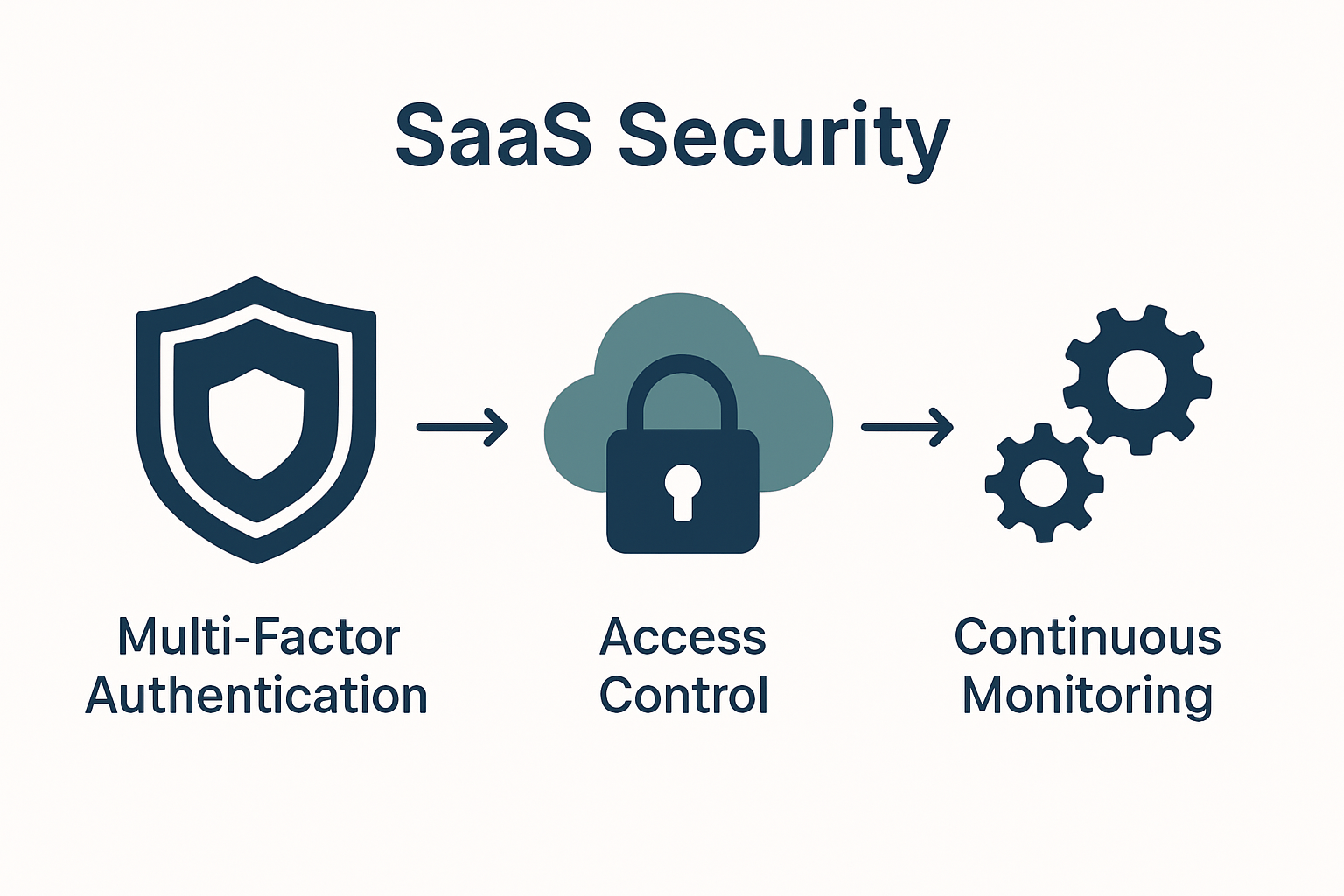
Another crucial aspect involves enforcing multi-factor authentication and ensuring proper configuration of SaaS platforms. These practices create additional barriers against unauthorized access, significantly reducing the risk of potential security breaches. Businesses should implement comprehensive authentication mechanisms that require multiple forms of verification, such as combining password requirements with biometric or token-based authentication methods.
Effective SaaS security is an ongoing process that demands continuous attention and adaptation. Organisations must invest in regular staff training, maintain up-to-date security protocols, and develop a proactive approach to identifying and mitigating potential risks. By creating a culture of security awareness and implementing sophisticated technological safeguards, businesses can protect their critical digital assets and maintain the integrity of their cloud-based applications.
Common SaaS Security Mistakes To Avoid
Navigating the complex landscape of cloud security requires businesses to be acutely aware of potential vulnerabilities that can compromise their digital infrastructure. Top SMB cybersecurity threats demonstrate the critical importance of understanding and mitigating security risks before they become catastrophic.
Research from industry experts highlights several critical security mistakes that organisations frequently make. These include neglecting multi-factor authentication, misconfiguring access controls, and failing to monitor insider threats. Such oversights can create significant vulnerabilities that malicious actors can exploit, potentially leading to devastating data breaches and system compromises.
Another substantial area of concern involves insufficient data encryption and poor access management. Businesses often underestimate the importance of implementing robust encryption protocols across all data transmission and storage processes. Weak encryption methods can leave sensitive information exposed, making it relatively simple for cybercriminals to intercept and manipulate critical business data.
Ultimately, preventing SaaS security mistakes requires a proactive and comprehensive approach. Organisations must develop a culture of continuous security awareness, regularly update their security protocols, and invest in ongoing staff training. By treating cybersecurity as an evolving discipline rather than a static checklist, businesses can create resilient defence mechanisms that adapt to emerging digital threats and protect their most valuable digital assets.
Strengthen Your SaaS Security with IT Start’s Expert Support
Understanding the complex threats outlined in “SaaS Security Explained: Protecting Cloud Applications” reveals how vital it is for Brisbane businesses to adopt robust access controls, advanced encryption, and continuous monitoring. If you are concerned about insider threats, misconfigured access, or compromised tokens putting your sensitive business data at risk, you are not alone. The challenge is to implement a proactive and comprehensive security strategy that aligns with Australian compliance standards while protecting your cloud applications effectively.
IT Start specialises in managed IT support and cybersecurity services designed for Queensland businesses seeking to mitigate these exact risks. With our local expertise and transparent, high-standard approach, we help you navigate evolving digital threats, ensure compliance, and improve operational efficiency. Explore how our tailored support simplifies your SaaS security concerns and creates a resilient defence for your organisation. Don’t wait until vulnerabilities become costly breaches.
Protect your cloud environment today by scheduling a personalised security assessment. Contact us now through our secure consultation page and take the first step towards a safer and more compliant IT infrastructure with IT Start. Learn more about how our managed IT support can enhance your security posture.
Frequently Asked Questions
What is SaaS security?
SaaS security refers to the comprehensive strategies and measures taken to protect cloud-based applications and the sensitive data they manage from cyber threats.
What are the core principles of SaaS security?
The core principles of SaaS security include change control and configuration management, data privacy lifecycle, identity and access management, interoperability, security awareness training, and continuous monitoring.
What types of threats do SaaS applications face?
SaaS applications face various threats, including compromised OAuth tokens, session hijacking, API exploitation, and insider threats, which can jeopardise sensitive data and operational integrity.
How can businesses enhance their SaaS security?
Businesses can enhance their SaaS security by implementing robust access controls, utilizing data encryption techniques, enforcing multi-factor authentication, conducting regular security assessments, and fostering a culture of security awareness among employees.
Recommended
- Understanding Cloud Security Methods for Businesses – IT Start
- 7 Essential Tips for Your Cloud Security Checklist – IT Start
- How to Secure Business Data for Brisbane SMEs – IT Start
- How to Secure Business Laptops: A Step-by-Step Guide – IT Start
- 7 Common Security Vulnerabilities Every UK SME Must Know
- Cybersecurity for Insurers, tools and best practices – Digital Insurance Platform | IBSuite Insurance Software | Modern Insurance System