

Cybercrime costs australian businesses over 33 billion dollars each year, making digital threats a real concern for companies large and small. A single cyber incident can halt operations, damage reputations, and lead to devastating financial losses. Understanding cyber insurance means grasping how specialised coverage can safeguard your business from these risks, with expert advice on policy options, key benefits, and common challenges every australian organisation faces in the digital age.
Table of Contents
- What Is Cyber Insurance? Essential Concepts
- Types of Cyber Insurance Policies for SMEs
- How Cyber Insurance Works in Australia
- Legal and Regulatory Considerations in Queensland
- Risks, Exclusions and Common Pitfalls
- Choosing the Right Policy for Your Business
Table of Contents: Cyber Insurance Guide for Brisbane SMEs
| Point | Details |
|---|---|
| Cyber Insurance Definition | Cyber insurance provides specialised financial protection against losses related to digital security incidents, essential for businesses in Brisbane. |
| Key Coverage Types | Common policy types include incident response, business interruption, privacy breach, and network security liability, tailored for digital risks. |
| Claim Process Insight | Understanding the claim process, which includes incident detection and forensic investigation, is crucial for effectively utilising cyber insurance. |
| Regulatory Compliance | Implementing cyber insurance can aid in demonstrating compliance with cybersecurity regulations, thus enhancing operational resilience. |
What Is Cyber Insurance? Essential Concepts
Cyber insurance is a specialised financial protection mechanism designed to shield Brisbane businesses from the potentially catastrophic financial impacts of digital security incidents. According to Aon Direct, cyber insurance helps cover your business’s financial losses if it becomes a victim of cybercrime, addressing risks related to information technology infrastructure.
Cyber insurance provides comprehensive protection across multiple dimensions of digital risk. As Clarke Lyons explains, a typical policy can include critical coverages such as:
- Data breach response costs
- Legal expense coverage
- Forensic investigation support
- Customer notification expenses
- Potential third-party liability protection
The core purpose of cyber insurance is to mitigate the financial vulnerabilities that emerge when digital systems are compromised. This isn’t just about recovering lost data. It’s about providing a structured financial safety net that helps businesses rapidly respond, recover, and continue operations after a cyber incident. From ransomware attacks to data breaches, cyber insurance offers a strategic buffer against potentially business-ending financial consequences.
For Brisbane businesses navigating an increasingly complex digital landscape, understanding cyber insurance isn’t optional – it’s a critical risk management strategy. By transferring potential digital risks to an insurance provider, organisations can focus on their core operations while maintaining robust protection against emerging cyber threats.
Types of Cyber Insurance Policies for SMEs
Cyber insurance policies for small and medium enterprises (SMEs) in Brisbane are not one-size-fits-all solutions. Aon Direct highlights that small businesses can access specialised options like the CFC Micro SME Cyber Insurance, which provides comprehensive coverage tailored to digital risks specific to smaller organisations.
The key cyber insurance policy types typically include:
- Incident Response Coverage: Immediate support after a cyber event
- Business Interruption Protection: Financial compensation for operational downtime
- Network Security Liability: Covers third-party losses and legal expenses
- Privacy Breach Insurance: Protection against data exposure incidents
- System Damage Restoration: Funds for repairing or replacing compromised digital infrastructure
As recommended by Clarke Lyons, SMEs can also bundle cyber insurance with complementary protection mechanisms like professional indemnity, management liability, and information technology liability insurance. This integrated approach ensures a more robust risk management strategy that addresses multiple potential vulnerabilities.
For Brisbane businesses, selecting the right cyber insurance policy requires careful evaluation of specific operational risks, digital infrastructure complexity, and potential financial exposure. By understanding these nuanced policy types and working with local insurance professionals, SMEs can develop a tailored cyber risk protection strategy that provides comprehensive financial safeguarding against evolving digital threats.

How Cyber Insurance Works in Australia
Aon Direct explains that cyber insurance operates through a comprehensive mechanism designed to protect businesses from the financial fallout of digital security incidents. At its core, the insurance covers two critical dimensions of cyber risk: first-party and third-party coverage.
The claim process typically involves several key stages:
- Incident Detection
- Immediate Notification to Insurer
- Forensic Investigation
- Financial Loss Assessment
- Claim Compensation
As detailed by Clarke Lyons, cyber insurance policies provide multifaceted protection that extends beyond simple financial reimbursement. The coverage can include:
- Legal expenses for data breach responses
- Forensic investigation costs
- Customer notification expenses
- Business interruption compensation
- Potential third-party liability protection
For Brisbane businesses, understanding how cyber insurance functions means recognising it as a strategic risk management tool. The policy doesn’t just provide a financial safety net – it offers a structured approach to navigating and recovering from complex digital security challenges. By transferring potential cyber risks to specialised insurers, organisations can focus on their core operations while maintaining robust protection against an ever-evolving digital threat landscape.
Legal and Regulatory Considerations in Queensland
For Brisbane businesses, navigating the complex landscape of cybersecurity regulations requires a comprehensive understanding of both state and national legal frameworks. Wikipedia highlights the Security of Critical Infrastructure Act 2018, a pivotal national legislation that establishes a robust framework for managing cybersecurity risks across 11 critical infrastructure industries.
The key regulatory components for Queensland businesses include:
- Mandatory asset registration
- Comprehensive risk management programs
- Mandatory incident reporting mechanisms
- Potential ministerial intervention protocols
Additionally, local organisations can leverage support from specialised cybersecurity resources. AusCERT, a non-profit organisation located on the University of Queensland campus, provides critical advisory services, educational resources, and vulnerability management solutions that help businesses navigate complex regulatory environments.
Queensland businesses must recognise that cyber insurance is not just a financial protection tool, but also a potential mechanism for demonstrating regulatory compliance. By implementing comprehensive cyber insurance policies that align with national security frameworks, organisations can proactively address legal requirements, mitigate potential risks, and showcase their commitment to robust cybersecurity practices. The interplay between insurance, legal compliance, and risk management has become an increasingly sophisticated aspect of modern business strategy.
Risks, Exclusions and Common Pitfalls
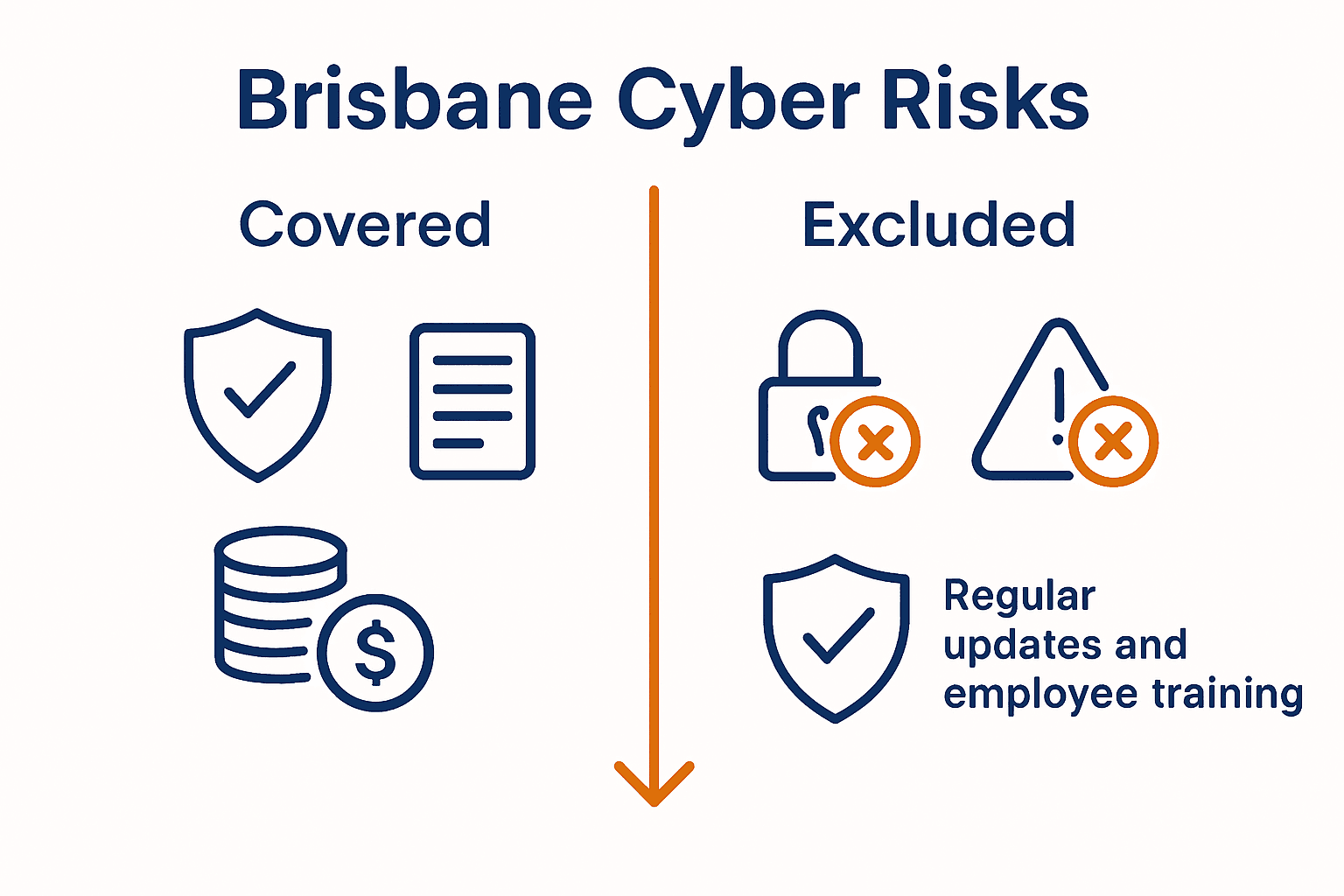
Cyber insurance policies are not blanket protections that cover every possible digital risk. Brisbane businesses must carefully understand the nuanced limitations embedded within their insurance contracts to avoid unexpected coverage gaps.
Common exclusions and risks that businesses frequently overlook include:
- Unpatched Systems: Policies may deny claims if digital infrastructure isn’t regularly updated
- Insider Threats: Many policies limit coverage for damages caused by internal personnel
- Unencrypted Data: Breaches involving unprotected information might be automatically excluded
- Social Engineering: Some policies have strict limitations on fraudulent communication attacks
- Systemic Vulnerabilities: Pre-existing security weaknesses can invalidate potential claims
Maintaining rigorous cybersecurity practices is crucial for ensuring insurance coverage remains valid. This means implementing robust password protocols, conducting regular security audits, training staff on potential digital threats, and maintaining comprehensive documentation of all cybersecurity measures. Businesses must view their cyber insurance as a collaborative risk management tool that requires active, ongoing engagement.
The most significant pitfall for Queensland organisations is treating cyber insurance as a passive safety net rather than an active risk management strategy. Successful cyber insurance implementation demands a proactive approach: continuously updating security infrastructure, maintaining meticulous records, and developing a comprehensive incident response plan that aligns with insurance policy requirements. By understanding these critical nuances, businesses can transform potential vulnerabilities into strategic opportunities for enhanced digital resilience.
Choosing the Right Policy for Your Business
Aon Direct reveals that cyber insurance for Brisbane businesses isn’t a universal solution, but a nuanced protection mechanism tailored to specific organisational needs. Small and medium enterprises have multiple policy options requiring careful evaluation of their unique digital risk landscape.
Key selection criteria for cyber insurance policies include:
- Comprehensive coverage scope
- Industry-specific risk assessment
- Financial loss protection limits
- Incident response capabilities
- Alignment with regulatory requirements
As Clarke Lyons recommends, businesses should prioritise insurers offering customised coverage that matches their precise risk profile. This means examining policies that provide:
- Tailored protection for your specific business size
- Access to specialised incident response teams
- 24/7 cyber forensics support
- Legal advisory capabilities
- Flexible coverage options
Selecting the appropriate cyber insurance policy requires more than comparing price points. Brisbane businesses must conduct a comprehensive internal audit of their digital infrastructure, potential vulnerability points, and financial risk exposure. The ideal policy acts as a strategic partner, offering not just financial protection but proactive risk management guidance that evolves alongside your organisation’s technological landscape.
Strengthen Your Brisbane Business with Expert Cybersecurity and IT Support
The article highlights the critical need for comprehensive cyber insurance to protect Brisbane businesses from costly digital threats and regulatory challenges. Many organisations face complex risks such as data breaches, ransomware, and operational downtime that can severely disrupt business continuity. If you want to avoid the common pitfalls like uncovered exclusions or inadequate incident response, it is essential to combine cyber insurance with proactive IT and cybersecurity measures.
At IT Start, we understand these challenges and offer tailored managed IT support, cloud solutions, and cybersecurity services designed specifically for small to medium enterprises in Brisbane. Our approach goes beyond just compliance and insurance to include ongoing risk assessment, strong security protocols, and rapid incident response to help you maintain resilience against evolving threats. Discover how our local expertise and high standards can empower your business to confidently meet regulatory requirements like Queensland’s Security of Critical Infrastructure Act.
Are you ready to transform cyber risk into a strategic advantage? Start with a comprehensive review by contacting our Brisbane team today for a free consultation. Learn more about our services at IT Start or reach out directly through our contact page to secure expert guidance and support tailored to your unique needs.
Frequently Asked Questions
What is cyber insurance?
Cyber insurance is a specialized financial protection mechanism designed to cover businesses from the financial impacts of digital security incidents, such as cybercrime and data breaches.
What types of coverage are included in cyber insurance policies?
Typical coverages in cyber insurance policies include data breach response costs, legal expense coverage, forensic investigation support, customer notification expenses, and potential third-party liability protection.
How does the claim process for cyber insurance work?
The claim process generally involves detecting the incident, notifying the insurer, conducting a forensic investigation, assessing financial losses, and receiving compensation for covered losses.
What are common exclusions in cyber insurance policies?
Common exclusions may include claims related to unpatched systems, insider threats, unencrypted data breaches, social engineering attacks, and pre-existing systemic vulnerabilities.