

Every australian business faces increasing digital threats, with nearly one-third of Australians now impacted by data breaches each year. For owners in Brisbane’s financial services sector, safeguarding client data and meeting strict legal duties is more critical than ever. This article clarifies essential cybersecurity practices and explains how adopting smart habits can protect your business, reputation, and compliance within the rapidly changing australian digital landscape.
Explore Our Cybersecurity Best Practices Guide
- Defining Cybersecurity For Individuals In Australia
- Types Of Threats Facing Individuals Today
- Key Features Of Effective Cybersecurity Habits
- Legal Duties And Compliance In Queensland
- Risks Of Poor Cybersecurity And Costly Mistakes
- Building A Security-First Culture In Your Business
Key Takeaways
| Point | Details |
|---|---|
| Understanding Cybersecurity | Australians must recognise the importance of protecting their digital identities and be proactive in managing their online presence. |
| Identifying Threats | Awareness of sophisticated threats like phishing, ransomware, and identity theft is essential for safeguarding personal information. |
| Developing Effective Habits | Adopting strong cybersecurity practices, such as unique passwords and two-factor authentication, is critical for personal and organisational safety. |
| Creating a Security Culture | Organisations should embed a security-first mindset through leadership commitment and ongoing employee education to enhance overall cybersecurity resilience. |
Defining Cybersecurity for Individuals in Australia
Cybersecurity represents the comprehensive strategy and practices individuals use to protect their digital identities, personal information, and technological assets from potential cyber threats. In the Australian context, this involves understanding how personal digital interactions can expose individuals to risks like identity theft, financial fraud, and privacy breaches.
At its core, cybersecurity is about recognising that every digital interaction carries potential vulnerabilities. From online banking to social media engagement, Australians must develop a proactive mindset towards protecting their digital footprint. Cybersecurity education programs highlight the critical need for individuals to understand threat identification, risk mitigation, and personal digital protection strategies.
The landscape of cybersecurity for Australians is complex and multifaceted. It encompasses technical knowledge about protecting devices, understanding secure network practices, recognising potential scams, and maintaining robust password management. Western Sydney University’s cybersecurity curriculum emphasises that cybersecurity is not just about technical skills, but also about developing a strategic approach to digital safety that considers both technological and human factors.
Pro tip: Always treat your personal digital information like valuable currency, implementing strong, unique passwords and enabling two-factor authentication on all critical accounts.
Types of Threats Facing Individuals Today
Cybersecurity threats in Australia have become increasingly sophisticated, targeting individuals through multiple digital channels and exploiting vulnerabilities in personal technology infrastructure. Recent Australian cybersecurity research identifies several critical threat categories that pose significant risks to everyday digital users.
The primary threats confronting Australian individuals include phishing attacks, ransomware, identity theft, and social engineering scams. Phishing remains particularly dangerous, with cybercriminals crafting increasingly convincing emails and messages designed to trick individuals into revealing sensitive personal information. These attacks often mimic legitimate communications from banks, government agencies, or trusted organisations, making them challenging to detect without careful scrutiny.
The Australian Cyber Security Strategy discussion paper highlights the evolving nature of cyber threats, emphasising that modern attacks are not just about technological breaches but also sophisticated psychological manipulation. Cybercriminals now use advanced techniques like deep fake technologies, targeted social media disinformation, and complex data mining to exploit individual vulnerabilities, making personal cybersecurity a complex and dynamic challenge.
Pro tip: Develop a healthy scepticism towards unsolicited digital communications and always verify the source through independent channels before sharing any personal information.
Here’s a summary comparing major cybersecurity threat types and their impact on Australians:
| Threat Category | Typical Attack Method | Potential Impact | Noteworthy Trend |
|---|---|---|---|
| Phishing Attacks | Fake emails and sites | Loss of sensitive information | Increasingly convincing |
| Ransomware | Malicious file encryption | Financial loss, data unavailability | Targets personal devices |
| Identity Theft | Data mining, credential theft | Fraudulent transactions | Advanced impersonation |
| Social Engineering | Manipulation via communication | Unauthorised access, reputation damage | Deep fake technology growth |
Key Features of Effective Cybersecurity Habits
Effective cybersecurity habits represent a comprehensive approach to digital protection that goes beyond simple technological solutions. Online safety guidelines from the eSafety Commissioner emphasise the critical importance of proactive personal digital management, highlighting that cybersecurity is fundamentally about awareness and strategic behaviour.
The key features of robust cybersecurity habits include privacy management, information compartmentalisation, and continuous digital awareness. This means carefully controlling personal information shared online, using different passwords across platforms, and maintaining a vigilant approach to digital interactions. Individuals must learn to scrutinise digital communications, understand potential vulnerabilities, and develop a critical mindset about the information they transmit and receive across various digital platforms.

Child safety resources underscore the importance of community and family involvement in developing strong cybersecurity practices. This involves creating open communication channels about digital risks, teaching critical evaluation skills, and establishing collective strategies for managing online interactions. Effective cybersecurity is not just an individual responsibility but a collaborative effort that requires ongoing education, adaptation, and shared understanding of emerging digital threats.
Pro tip: Conduct a quarterly personal digital audit, reviewing and updating privacy settings, removing unnecessary online accounts, and assessing your digital footprint for potential vulnerabilities.
Legal Duties and Compliance in Queensland
Cybersecurity legal obligations in Queensland represent a complex landscape of regulatory requirements designed to protect individual and organisational digital assets. Queensland Government’s Information and Cyber Security Policy establishes a comprehensive framework that mandates rigorous cybersecurity standards for public and private sector entities, emphasising a risk-based approach to digital protection.
Organisations operating in Queensland must navigate a multifaceted compliance environment that includes adherence to national data protection regulations, industry-specific security standards, and the state’s evolving cyber legislation. This involves implementing robust risk management frameworks, maintaining comprehensive documentation of cybersecurity protocols, and demonstrating ongoing commitment to protecting sensitive information from potential digital threats. Critical compliance elements include regular security audits, staff training programs, and systematic vulnerability assessments.
The Queensland Cyber Security Strategy highlights the importance of proactive governance in managing cybersecurity risks. This means organisations must not only implement technical protective measures but also develop a culture of digital responsibility. Legal duties extend beyond mere technical compliance, requiring organisations to continuously update their security practices, maintain transparent reporting mechanisms, and actively participate in the broader ecosystem of digital protection and threat mitigation.
Pro tip: Conduct an annual comprehensive compliance review, mapping your current cybersecurity practices against the latest Queensland Government regulatory requirements to identify and address potential gaps.
Risks of Poor Cybersecurity and Costly Mistakes
Public exposure data from recent research reveals a startling reality for Australian businesses and individuals: nearly one-third of Australians have experienced direct consequences of poor cybersecurity practices. These breaches are not merely statistical occurrences but represent significant financial and reputational risks that can devastate organisations and individual digital identities.
The potential consequences of inadequate cybersecurity extend far beyond immediate financial losses. Data vulnerabilities can trigger catastrophic chain reactions including identity theft, financial fraud, and permanent erosion of stakeholder trust. Businesses face potential legal repercussions, substantial regulatory fines, and long-term damage to their professional reputation. Small to medium enterprises are particularly vulnerable, often lacking sophisticated defence mechanisms against increasingly complex cyber threats.
Cybersecurity experts warn that organisational breach fatigue represents an emerging and dangerous trend. As data breaches become more frequent, there’s a growing tendency to normalise these incidents, which paradoxically increases systemic risk. This complacency can lead to reduced vigilance, inadequate response protocols, and a false sense of security that makes organisations even more susceptible to sophisticated cyber attacks.
Pro tip: Implement a quarterly comprehensive cybersecurity risk assessment that includes external penetration testing, internal vulnerability scanning, and detailed analysis of potential systemic weaknesses.
Building a Security-First Culture in Your Business
Security risk management strategies demonstrate that creating a security-first culture is not just a technical challenge but a comprehensive organisational transformation. This approach requires deliberate, strategic commitment from leadership to embed cybersecurity awareness into every aspect of business operations, treating digital protection as a fundamental organisational value rather than an afterthought.
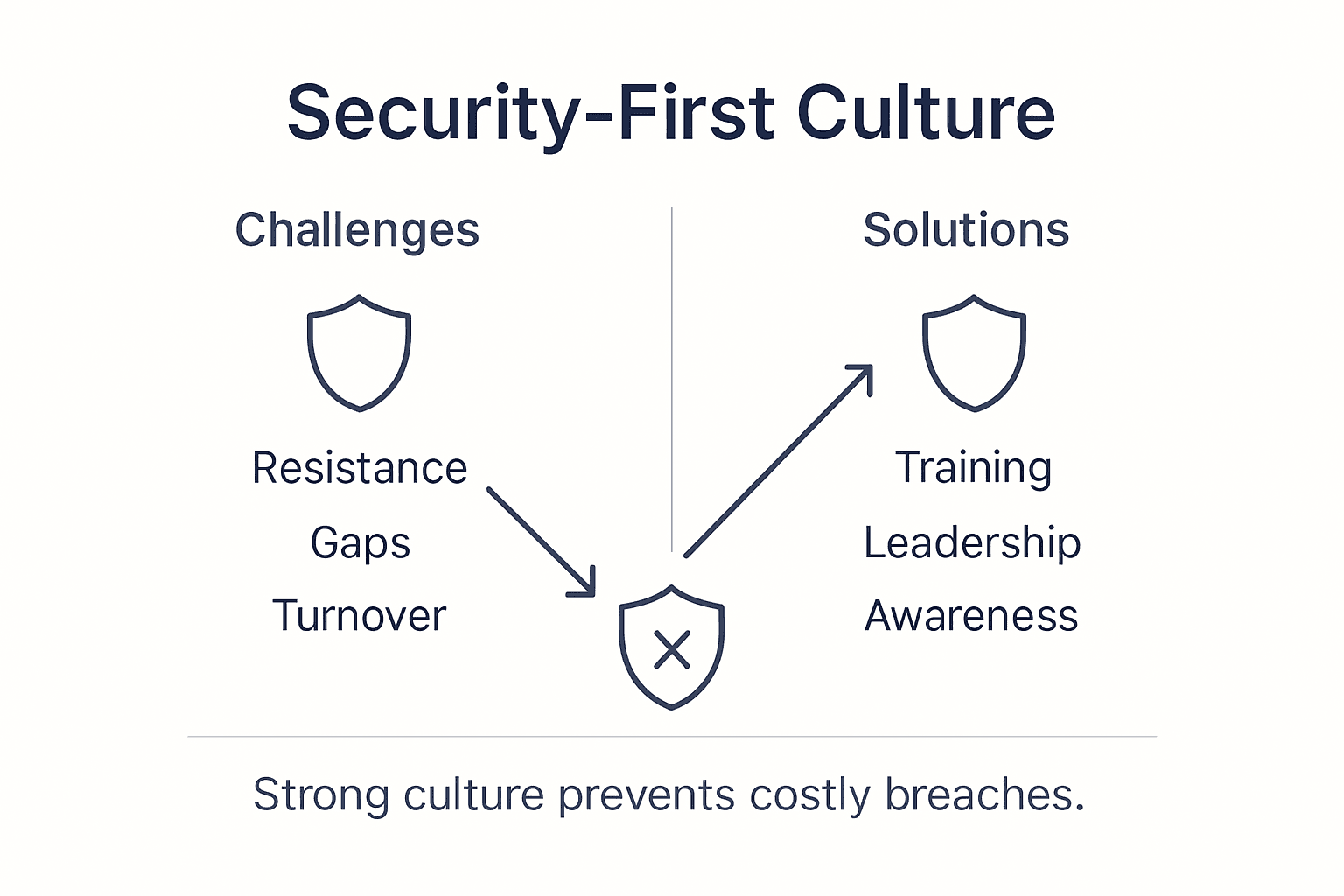
Effective security culture development involves three critical dimensions: leadership commitment, continuous education, and systematic accountability. Business leaders must visibly champion cybersecurity practices, demonstrating that digital protection is a priority at the highest levels. This means integrating security discussions into regular team meetings, allocating dedicated resources for training, and creating transparent mechanisms for reporting and addressing potential vulnerabilities.
The South Australian Protective Security Framework emphasises that a robust security culture requires more than policy documents. It demands active engagement from every staff member, transforming cybersecurity from a technical requirement to a shared organisational responsibility. This involves developing comprehensive training programs, conducting regular simulated security scenarios, and creating an environment where employees feel empowered and motivated to identify and report potential risks.
Pro tip: Implement a quarterly security awareness program with practical, scenario-based training that helps employees recognise and respond to potential cybersecurity threats in real-world contexts.
To understand how a security-first culture can change business outcomes, compare these key dimensions:
| Dimension | Without Security Culture | With Security-First Culture | Long-Term Benefit |
|---|---|---|---|
| Leadership Engagement | Passive or ad hoc | Active, visible commitment | Strong risk management |
| Staff Awareness | Inconsistent, low priority | Ongoing, scenario-based training | Fewer human errors |
| Accountability | Minimal transparency | Systematic incident reporting | Faster breach resolution |
Strengthen Your Business Defences with Local Cybersecurity Experts
The article highlights critical challenges such as phishing attacks, data breaches, and the complexity of maintaining compliance with Queensland’s cybersecurity regulations. If you are a Brisbane-based business struggling to keep client data secure while navigating constant threats and legal duties, you are not alone. Many organisations face increasing risks from sophisticated cyber attacks that can lead to financial loss and reputational damage. Understanding and implementing best practices like strategic risk management and security-first culture are essential steps towards safeguarding your digital environment.
At IT Start, we specialise in delivering managed IT support and tailored cybersecurity services designed specifically for small to medium-sized enterprises across Queensland. Our proactive approach helps you build strong digital defences using advanced tools and continuous monitoring, reducing vulnerabilities highlighted in the article. By partnering with IT Start, you gain:
- Expert guidance aligned with the latest Queensland Cyber Security Strategy
- Clear and transparent processes that keep your compliance on track
- Local Brisbane-based support that understands your unique business risks
Don’t wait for a costly breach to take action. Secure your business today with a free cybersecurity assessment from IT Start. Start protecting your client data locally by contacting us at IT Start Contact. Discover how we can help you reduce risks and build a resilient business security culture.
Frequently Asked Questions
What are the primary threats to client data in cybersecurity?
Cybersecurity threats to client data include phishing attacks, ransomware, identity theft, and social engineering scams. These threats exploit vulnerabilities in digital interactions and can lead to significant financial and reputational damage.
How can individuals protect their digital identities?
Individuals can protect their digital identities by implementing strong, unique passwords, enabling two-factor authentication, and being vigilant about verifying the sources of unsolicited communications to avoid phishing scams.
What are effective cybersecurity habits for managing client data?
Effective cybersecurity habits include privacy management, information compartmentalisation, and continuous digital awareness. This involves controlling the personal information shared online, using different passwords for various accounts, and maintaining a cautious approach towards digital interactions.
Why is a security-first culture important in protecting client data?
A security-first culture is essential as it embeds cybersecurity awareness into every aspect of an organisation’s operations. This proactive approach, led by committed leadership and continuous education, helps reduce human errors and enhances overall risk management within the organization.
Recommended
- Cybersecurity Best Practices for Brisbane SMBs – IT Start
- 7 Essential Steps for a Data Protection Checklist for SMEs – IT Start
- Understanding Essential Data Security Methods for Businesses – IT Start
- Understanding Data Security Problems and Solutions – IT Start
- Adapting Family Office Cybersecurity: In-House or Outsourced? – Future Family Office
- Säkerhet och backup för företag i Stockholm – IT-Hjälp
- Complete Guide to Data Security Best Practices