

Every Brisbane healthcare practice faces growing pressure to protect patient data as digital health systems become vital to daily operations. The risks are not limited to technical hiccups; cybercriminals actively target sensitive records, disrupt clinical workflows and exploit cloud platforms that lack robust controls. With electronic health records and telehealth services multiplying entry points for attackers, understanding patient data breaches and system vulnerabilities is now crucial for compliance and business continuity. This article breaks down internet risks and practical strategies to help your organisation safeguard its reputation and meet Australian legal obligations.
Table of Contents
- What Are Internet Risks In Healthcare?
- Major Cyber Threats Targeting Australian Healthcare
- Why Healthcare SMEs Are Prime Cyber Targets
- Legal Compliance And Data Protection Obligations
- Minimising Risks With Proactive IT Strategies
Key Takeaways
| Point | Details |
|---|---|
| Patient Data is Highly Vulnerable | Cybercriminals target healthcare data, making breaches detrimental to practices. Effective data protection and employee training are essential. |
| Ransomware Threats Disrupt Operations | Ransomware attacks can halt service delivery, leading to significant operational and reputational damage. Regular system audits and robust backup processes can mitigate risks. |
| Telehealth Security Must be Strengthened | The rise of telehealth has introduced new vulnerabilities; practices must secure remote access points. Implementing strong security protocols and staff training is crucial. |
| Compliance with Legal Obligations is Critical | Adhering to the Privacy Act and Notifiable Data Breaches scheme protects patient information and avoids severe penalties. Regular reviews of security practices should be conducted to ensure compliance. |
What Are Internet Risks In Healthcare?
Internet-connected systems have become backbone infrastructure for healthcare delivery, yet they’ve simultaneously introduced vulnerabilities that Brisbane healthcare SMEs must actively manage. Patient data breaches remain one of the most pressing concerns. When your practice stores electronic health records, appointment histories, and personal medical information online, that data becomes a target for cybercriminals seeking to exploit sensitive information. A single breach can expose hundreds or thousands of patient records, triggering regulatory investigations, reputational damage, and significant remediation costs that smaller practices struggle to absorb.
Beyond data breaches, your organisation faces system disruptions that directly impact care delivery. When your clinical management system, telehealth platforms, or diagnostic tools go offline due to cyberattacks or ransomware infections, you cannot access patient records, schedule appointments, or maintain continuity of care. The Australian Commission on Safety and Quality in Health Care has documented how digital health security vulnerabilities disrupt both clinical operations and patient safety outcomes. Research also highlights that telehealth security and privacy exposures create layers of risk, particularly when staff use unsecured devices or networks to access patient information remotely. This becomes especially problematic for Brisbane practices offering telehealth services without proper security controls.
A third category of risk involves unintended consequences of cloud adoption and system dependencies. Many Brisbane healthcare providers migrate to cloud-based platforms to reduce infrastructure costs, yet inadequate security configurations leave patient data exposed to unauthorised access. Staff training gaps compound this problem. When your team doesn’t understand phishing tactics, password security, or data handling protocols, they become the weakest link in your security chain. One employee clicking a malicious email attachment can compromise your entire network.
Pro tip: Start by mapping which systems store patient data, who has access to them, and how data flows through your practice; this simple inventory becomes your foundation for identifying and addressing your most critical vulnerabilities.
Major Cyber Threats Targeting Australian Healthcare
Australian healthcare providers face a coordinated assault from cyber criminals who recognise that healthcare data commands premium prices on the dark web. Unlike other sectors where attackers aim for financial data, healthcare criminals target the complete patient profile: medical history, insurance details, personal identifiers, and payment information. This makes Australian healthcare organisations particularly attractive targets. Ransomware attacks represent the most destructive threat your practice could encounter. When attackers encrypt your systems and demand payment for decryption keys, your entire operation grinds to a halt. You cannot access patient records, schedule appointments, or dispense medication. For a busy Brisbane healthcare practice, even 48 hours of downtime translates into cancelled appointments, emergency referrals to competitors, and patients questioning whether you can protect their information.
Phishing campaigns remain the most common entry point for attackers seeking to breach your network. Staff receive seemingly legitimate emails requesting password resets, urgent system updates, or access confirmations. One employee clicking a malicious link can provide attackers direct access to your clinical systems. Beyond email, ransomware attacks disrupting healthcare delivery now include exploitation of unsecured telehealth platforms and medical device vulnerabilities. Your practice management software, diagnostic equipment, and patient monitoring systems were often designed with convenience rather than security as the priority. Internet connected medical devices frequently run outdated operating systems with known vulnerabilities that attackers actively exploit.
A third critical threat involves data privacy breaches where attackers gain unauthorised access to patient information without triggering ransomware deployment. These breaches often go undetected for weeks or months whilst sensitive information is copied and sold. The damage compounds when patients discover their details on criminal marketplaces or receive fraudulent loan applications under their names. Rising cyberattacks targeting Australian healthcare increasingly exploit telehealth expansion, remote access tools, and cloud storage misconfigurations. Your practice’s rapid adoption of telehealth during recent years may have prioritised speed of deployment over security hardening, leaving gaps that sophisticated attackers now actively probe.
To illustrate the differences between major cyber threats in Australian healthcare, see the table below:
| Threat Type | Typical Impact on Practice | Common Entry Point | Long-term Consequence |
|---|---|---|---|
| Ransomware Attacks | Service outages, halted operations | Email attachments, weak RDP | Loss of trust, financial losses |
| Phishing Campaigns | Unauthorised access, credential theft | Fake login pages, urgent requests | Extended system compromise |
| Data Privacy Breaches | Silent data theft, legal breaches | Exploited device, cloud gaps | Regulatory fines, patient harm |
Pro tip: Conduct an audit of all internet connected devices in your practice including printers, patient management systems, and medical equipment, then prioritise patching the systems that handle the most sensitive patient data first.
Why Healthcare SMEs Are Prime Cyber Targets
Cyber criminals view healthcare SMEs as the sweet spot for attack. Your practice holds something far more valuable than cash: patient data. A complete medical record with personal identifiers, insurance information, and health history can sell for 10 to 50 times more on the dark web than a stolen credit card number. Large hospital networks employ dedicated security teams and invest heavily in defences, but Brisbane healthcare SMEs often operate with skeleton IT staff managing multiple responsibilities. You lack the specialised expertise, budget, and time to implement enterprise-grade security controls. This disparity makes you an attractive target where attackers know the effort required to breach your systems will be far less than the value of data they can extract.
Your growing reliance on digital services amplifies this vulnerability. Electronic health records, telehealth platforms, practice management software, and cloud storage create multiple entry points that attackers actively probe. Healthcare SMEs face heightened cybersecurity challenges because the rapid transition to digital services often prioritises functionality over security hardening. Your staff may not have received formal cybersecurity training. Your systems may run on outdated software versions. Your backup procedures might be incomplete or untested. A single vulnerability in any of these areas gives attackers an opening. What compounds the problem is that many Brisbane healthcare SMEs lack the resources to conduct regular security audits or penetration testing that would expose these gaps before attackers find them.
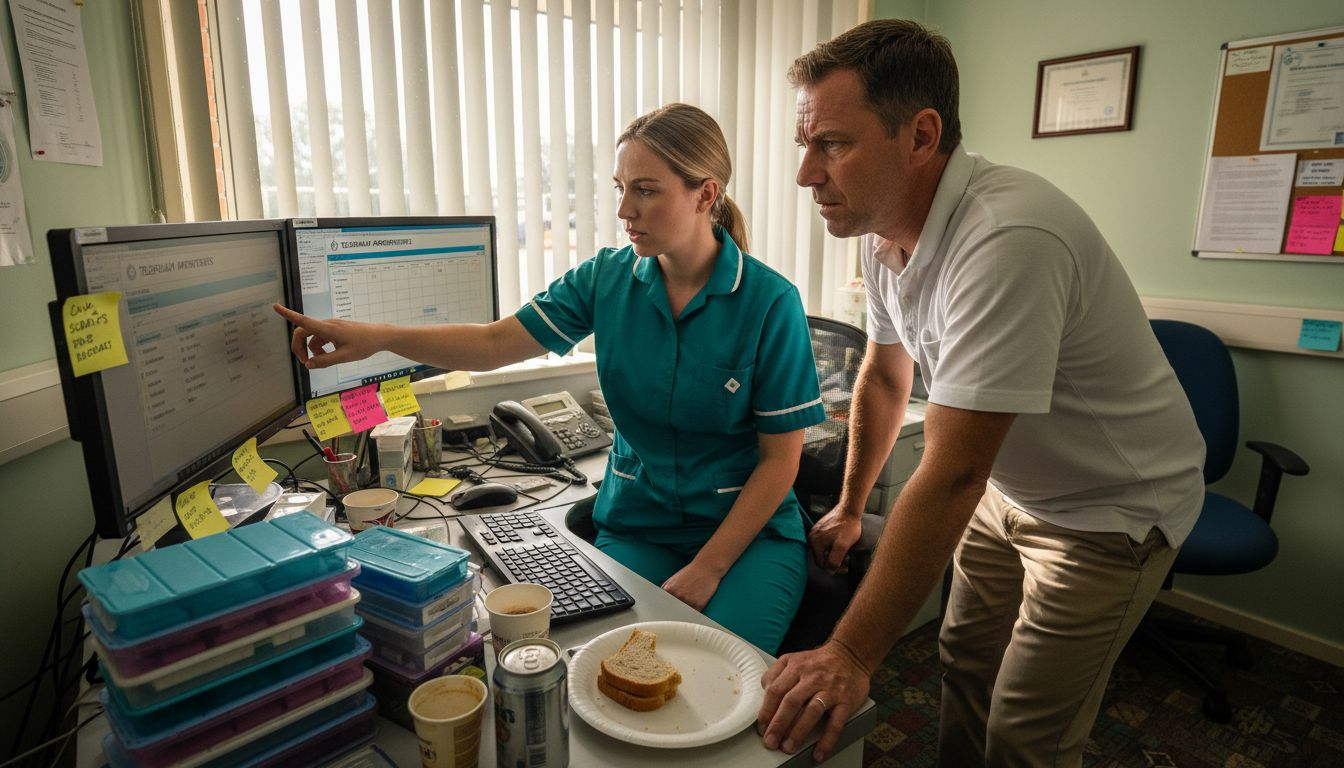
Beyond technical vulnerabilities, your practice represents a high-stakes target because disruption directly impacts patient care. Attackers know that healthcare providers cannot simply shut down for weeks whilst dealing with ransomware infections. You face immense pressure to restore systems quickly, making you more likely to negotiate with attackers or pay ransom demands. Patients expect continuity of care, regulatory bodies demand incident reporting, and your reputation suffers immediately when security fails. This combination of sensitive data value, limited security resources, high-impact disruption potential, and payment likelihood makes Brisbane healthcare SMEs precisely the organisations cyber criminals target most aggressively.
Pro tip: Document your current IT security maturity by assessing which systems store patient data, whether they are backed up, who has access, and how they are monitored; this honest inventory reveals your actual risk profile rather than assumptions about what you think you have in place.
Legal Compliance And Data Protection Obligations
Australian healthcare providers operate within a strict regulatory framework designed to protect patient information and ensure service quality. Your Brisbane practice must comply with the Privacy Act, which establishes national privacy principles governing how you collect, use, and disclose patient data. Beyond the Privacy Act sits the Notifiable Data Breaches scheme, which requires you to notify affected patients and the Office of the Australian Information Commissioner if you suffer a data breach involving unauthorised access to personal information. Failing to notify can result in penalties up to AUD 2.5 million for serious breaches. This is not theoretical risk. Your practice handles sensitive health information daily, and the law holds you personally accountable if that data is compromised due to inadequate security measures. When your systems lack proper encryption, access controls, or backup procedures, you are not just creating operational vulnerabilities; you are breaching your legal obligations.
Australian healthcare data protection requirements extend beyond privacy law to include safety and quality standards. The Australian Commission on Safety and Quality in Health Care mandates that your organisation maintain data integrity, implement protections aligned with national standards, and minimise risks to patient safety through robust cybersecurity practices. Your telehealth platforms, electronic health records, and cloud storage systems must meet these standards. If a security incident disrupts patient care or compromises data quality, you may face investigations, sanctions, or loss of accreditation. Additionally, healthcare cybersecurity obligations under Australian digital health frameworks require ongoing risk mitigation and continual monitoring of your security posture.
The practical reality is that compliance is not a one-time checkbox exercise. You must document your security practices, conduct regular risk assessments, train staff on data handling protocols, and maintain audit trails showing how patient information is accessed and protected. When a data breach occurs, regulators examine whether you took reasonable steps to prevent it. Did you encrypt sensitive data? Did you implement multi-factor authentication? Did you monitor access logs? Did you have an incident response plan? These questions determine whether you face minimal penalties or significant regulatory action. Your Brisbane healthcare SME cannot afford the cost of a major breach investigation, let alone the reputational damage of patient data appearing on criminal marketplaces.
Pro tip: Review your current data handling procedures with your team and document how you protect patient information across every system you use; this documentation becomes your evidence of reasonable security practices if you ever need to demonstrate compliance to regulators.
Minimising Risks With Proactive IT Strategies
Reactive security only works until it doesn’t. Most Brisbane healthcare SMEs respond to problems after they occur: a phishing email slips through, staff click it, and suddenly you are dealing with an infection. Proactive IT strategies flip this approach. Instead of waiting for breaches to happen, you anticipate threats, harden your defences, and detect attacks before they cause damage. Cybersecurity governance forms the foundation. This means establishing clear policies about data access, password requirements, device management, and incident response. Your team needs to understand these policies and follow them consistently. When staff know that accessing patient records outside approved systems triggers alerts, they become more careful. When they understand that opening suspicious email attachments could compromise patient data, they think twice before clicking.
Staff cybersecurity awareness training represents one of the highest return investments you can make. Your employees are your frontline defence. A one-hour training session teaching staff to recognise phishing tactics, use strong passwords, and report suspicious activity prevents far more breaches than expensive technology alone. Proactive healthcare cybersecurity strategies emphasise that regular staff training, combined with advanced threat detection tools and continuous risk assessments, significantly reduce your exposure to attacks. Your practice should conduct quarterly training refreshers and simulated phishing exercises to keep security top of mind. Beyond training, implement strong access controls where only staff members with legitimate clinical need can access specific patient records. If your reception staff member cannot access financial records or your billing team cannot view clinical notes without approval, attackers who compromise those accounts gain limited value.
Continuous monitoring and regular risk assessments catch vulnerabilities before attackers find them. Schedule quarterly reviews of your systems, access logs, and backup procedures. Ask yourself: Who logged in at 3am? Why did that system attempt to access files outside normal parameters? Are backups actually being created and tested? Healthcare cybersecurity resilience requires embedding security into your organisational culture through updated technologies, proactive risk management, and staff accountability. This is not about installing the most expensive security tools. It is about creating a practice where security is everyone’s responsibility, systems are regularly updated, backups are tested, and potential issues are addressed before they become catastrophes. When you combine governance, training, monitoring, and technical controls, you transform from a high-risk target into an organisation that actively defends itself.
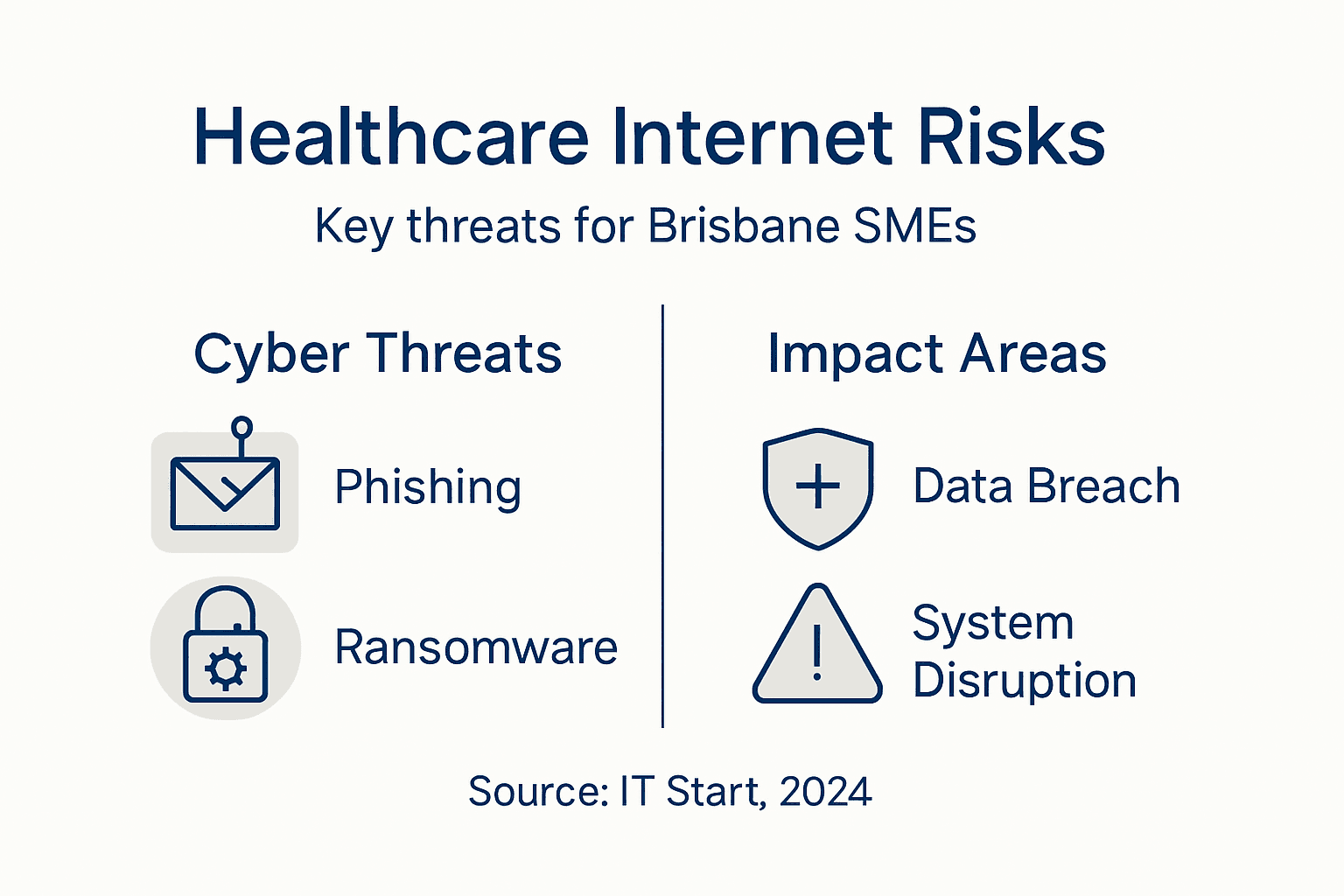
The table below summarises proactive IT strategies that reduce risks for Brisbane healthcare SMEs:
| Strategy | Key Benefit | Practical Example |
|---|---|---|
| Cybersecurity Governance | Consistent security policies | Restrict admin access by default |
| Staff Awareness Training | Reduced human error risk | Quarterly phishing simulations |
| Strong Access Controls | Minimise damage from breaches | Role-based system permissions |
| Continuous Monitoring | Early detection of vulnerabilities | Monthly review of access logs |
Pro tip: Start by assigning one team member as your security champion to coordinate staff training, review access logs monthly, and report on security incidents; this single person becomes your eyes and ears for potential problems before they escalate.
Protect Your Brisbane Healthcare Practice From Internet Risks Today
Brisbane healthcare SMEs face significant challenges managing patient data security and mitigating cyber threats such as ransomware, phishing, and data breaches. With limited IT resources and strict legal compliance obligations, it is critical to take proactive steps that safeguard your practice’s sensitive information and ensure uninterrupted care delivery. Key pain points include vulnerabilities from telehealth platforms, unsecured devices, and staff training gaps which cyber criminals actively exploit.
IT Start specialises in supporting healthcare SMEs in Brisbane with tailored managed IT support, cybersecurity solutions, and cloud services designed to reduce these risks. We help you implement strong access controls, conduct regular security audits, and educate your team on recognising threats before they escalate. By partnering locally with IT Start, you gain a trusted ally who understands your regulatory requirements and shares your commitment to protecting patient privacy and maintaining service continuity.
Don’t wait until a cyberattack disrupts your operations or jeopardises patient trust. Discover how our strategic, business-first approach can strengthen your defences and improve compliance by booking your free cybersecurity assessment now. Take the first step toward peace of mind by connecting with our Brisbane team at IT Start and secure your healthcare practice with proactive IT solutions tailored specifically to your needs.
Frequently Asked Questions
What are the main internet risks faced by healthcare SMEs?
The main internet risks faced by healthcare SMEs include patient data breaches, system disruptions, and unintended consequences of cloud adoption. Cybercriminals target sensitive patient information stored online, while system outages due to cyberattacks can impede care delivery.
How do ransomware attacks impact healthcare practices?
Ransomware attacks can completely halt operations by encrypting crucial systems and demanding payment for decryption keys. This interruption affects access to patient records and can lead to cancelled appointments and loss of trust from patients.
Why are phishing campaigns common in healthcare?
Phishing campaigns are common in healthcare because they exploit the human element. Employees may receive seemingly legitimate emails that trick them into providing credentials or clicking malicious links, granting attackers access to clinical systems.
What are effective strategies to mitigate cybersecurity risks in healthcare?
Effective strategies include implementing strong cybersecurity governance policies, conducting regular staff awareness training on phishing and security protocols, establishing robust access controls, and continuously monitoring systems for vulnerabilities.