

Nearly one in three Australian small to medium-sized businesses experience a cyber incident each year, putting sensitive data and compliance at serious risk. For IT managers in Brisbane, strong cloud security is now a priority rather than an option. This article demystifies what cloud security truly means for Australian businesses, clarifying essential concepts and practical strategies that help protect your operations from emerging threats while supporting ongoing regulatory compliance.
Navigate Our Cloud Security Guide
- Defining Cloud Security In Cyber Security
- Types Of Cloud Security Solutions
- How Cloud Security Protects Your Data
- Australian Compliance And Regulatory Standards
- Risks, Responsibilities And Common Pitfalls
Key Takeaways
| Point | Details |
|---|---|
| Cloud Security Essentials | Comprehensive cloud security encompasses policies, technologies, and strategies to protect digital assets in cloud environments. |
| Shared Responsibility Model | Successful cloud security relies on collaboration between cloud service providers and customers to secure digital assets. |
| Compliance and Regulations | Adhering to Australian compliance standards like ISO/IEC 27001 and the Privacy Act 1988 is crucial for effective cloud security management. |
| Proactive Risk Management | Regular audits and security assessments are vital to mitigate risks and address potential vulnerabilities in cloud infrastructure. |
Defining Cloud Security in Cyber Security
Cloud security represents a comprehensive approach to protecting digital resources, applications, and infrastructure within cloud computing environments. At its core, cloud security involves a complex set of policies, technologies, and controls designed to safeguard virtualized computing resources across networks, servers, storage systems, and application platforms.
The National Institute of Standards and Technology (NIST) defines cloud computing as a model enabling ubiquitous, convenient network access to configurable computing resources, which fundamentally reshapes how organisations manage their digital infrastructure. This definition highlights that cloud security is not merely about protecting hardware, but creating robust, adaptive strategies that address the unique challenges of distributed computing environments.
Effective cloud security operates through a shared responsibility model where cloud service providers and customers collaborate to protect digital assets. Key components typically include:
Here is a summary of responsibilities in the cloud security shared responsibility model:
| Responsibility Area | Cloud Service Provider Role | Customer Role |
|---|---|---|
| Physical Security | Maintain data centre safety | Not applicable |
| Network Protection | Provide secure connectivity | Configure access controls |
| Data Encryption | Offer encryption tools | Manage encryption usage |
| Identity Management | Supply authentication tools | Control user access |
| Compliance | Meet baseline standards | Ensure organisation adherence |
- Comprehensive data encryption
- Robust access control mechanisms
- Continuous threat monitoring
- Incident response planning
- Identity management protocols
Cloud security strategies must also adapt to rapidly evolving technological landscapes, anticipating potential vulnerabilities while maintaining system performance and accessibility. By implementing multi-layered security approaches, organisations can mitigate risks associated with cloud computing.
Pro tip: Conduct regular security assessments and update your cloud security protocols at least quarterly to stay ahead of emerging cyber threats.
Types of Cloud Security Solutions
Cloud security solutions encompass a diverse range of technologies and strategies designed to protect digital assets across different computing environments. The Cloud Security Alliance provides comprehensive guidance on security controls spanning governance, infrastructure, data protection, and application security, which are critical for organisations seeking robust cloud protection strategies.
These solutions are typically categorised across three primary cloud service models: Software as a Service (SaaS), Platform as a Service (PaaS), and Infrastructure as a Service (IaaS). NIST recommendations outline specific security mechanisms relevant to each service model, including data encryption, authentication protocols, and secure application programming interfaces.
Key types of cloud security solutions include:
- Identity and Access Management (IAM): Controlling user permissions and authentication
- Network Security Controls: Protecting data transmission and preventing unauthorised access
- Data Encryption: Securing information at rest and in transit
- Threat Detection and Monitoring Systems: Identifying and responding to potential security incidents
- Compliance Management Tools: Ensuring adherence to regulatory requirements
Organisations must carefully select and implement cloud security solutions that align with their specific infrastructure, risk profile, and operational requirements. By adopting a comprehensive, multi-layered approach, businesses can effectively mitigate potential vulnerabilities and protect their critical digital assets.
Pro tip: Conduct a thorough security assessment before implementing cloud solutions to ensure comprehensive coverage across all potential risk areas.
How Cloud Security Protects Your Data
Data protection in cloud environments requires sophisticated, multi-layered security strategies that safeguard information across multiple dimensions. NIST’s comprehensive research highlights security protections based on critical boundaries including user-data, service, and orchestration interfaces, ensuring comprehensive digital asset management.

The protection mechanisms operate through several key strategies. Cloud Security Alliance guidance emphasises data-centric security approaches that cover the entire information lifecycle, implementing robust controls to prevent unauthorized access and maintain data integrity. These strategies include advanced encryption techniques, granular access management, and continuous risk monitoring.
Key data protection mechanisms include:
- Encryption at Rest and in Transit: Protecting data regardless of its current state
- Multi-Factor Authentication: Preventing unauthorized system access
- Secure Identity Management: Controlling and tracking user permissions
- Continuous Monitoring: Detecting and responding to potential security threats
- Data Segmentation: Logically isolating sensitive information
Successful cloud data protection requires a proactive, comprehensive approach that anticipates potential vulnerabilities while maintaining operational flexibility. By implementing these sophisticated security measures, organisations can confidently leverage cloud technologies while minimising potential risks.
Pro tip: Regularly audit and update your cloud security protocols to ensure alignment with emerging technological and regulatory standards.
Australian Compliance and Regulatory Standards
Cloud security compliance in Australia demands rigorous adherence to comprehensive national and international regulatory frameworks. Standards Australia plays a critical role in developing and overseeing cybersecurity standards that align with international best practices, ensuring organisations maintain robust protective mechanisms for their digital infrastructure.
The regulatory landscape encompasses multiple critical standards, including ISO/IEC 27001 for information security and ISO/IEC 27017 for cloud-specific controls. These frameworks establish minimum security requirements, risk management protocols, and incident response guidelines that Australian businesses must follow when managing cloud-based systems and data.
The following table compares key Australian cloud security standards:
| Standard/Framework | Focus Area | Applicability |
|---|---|---|
| ISO/IEC 27001 | Information security | All organisations |
| ISO/IEC 27017 | Cloud-specific controls | Cloud service use/providers |
| Privacy Act 1988 | Data privacy | Businesses handling data |
| ASD Essential Eight | Security mitigation | Australian government sector |
| PCI DSS | Payment card security | Organisations processing payments |
Key compliance considerations for Australian organisations include:
- Data Protection Regulations: Adherence to Privacy Act 1988 requirements
- Industry-Specific Compliance: Meeting sector-specific security mandates
- International Standards Alignment: Ensuring compatibility with global security frameworks
- Risk Management Protocols: Implementing comprehensive security assessment processes
- Incident Response Planning: Developing structured approaches to potential security breaches
Successful regulatory compliance requires a proactive approach that integrates technical controls, organisational policies, and continuous monitoring. By understanding and implementing these standards, businesses can protect their digital assets while maintaining operational integrity and customer trust.
Pro tip: Conduct annual comprehensive compliance audits to ensure your cloud security strategies remain current with evolving regulatory requirements.
Risks, Responsibilities and Common Pitfalls
Cloud security risks represent complex challenges that demand strategic understanding and proactive management. The Cloud Security Alliance’s 2024 Top Threats report highlights critical vulnerabilities organisations must navigate, revealing persistent security challenges across digital infrastructures.
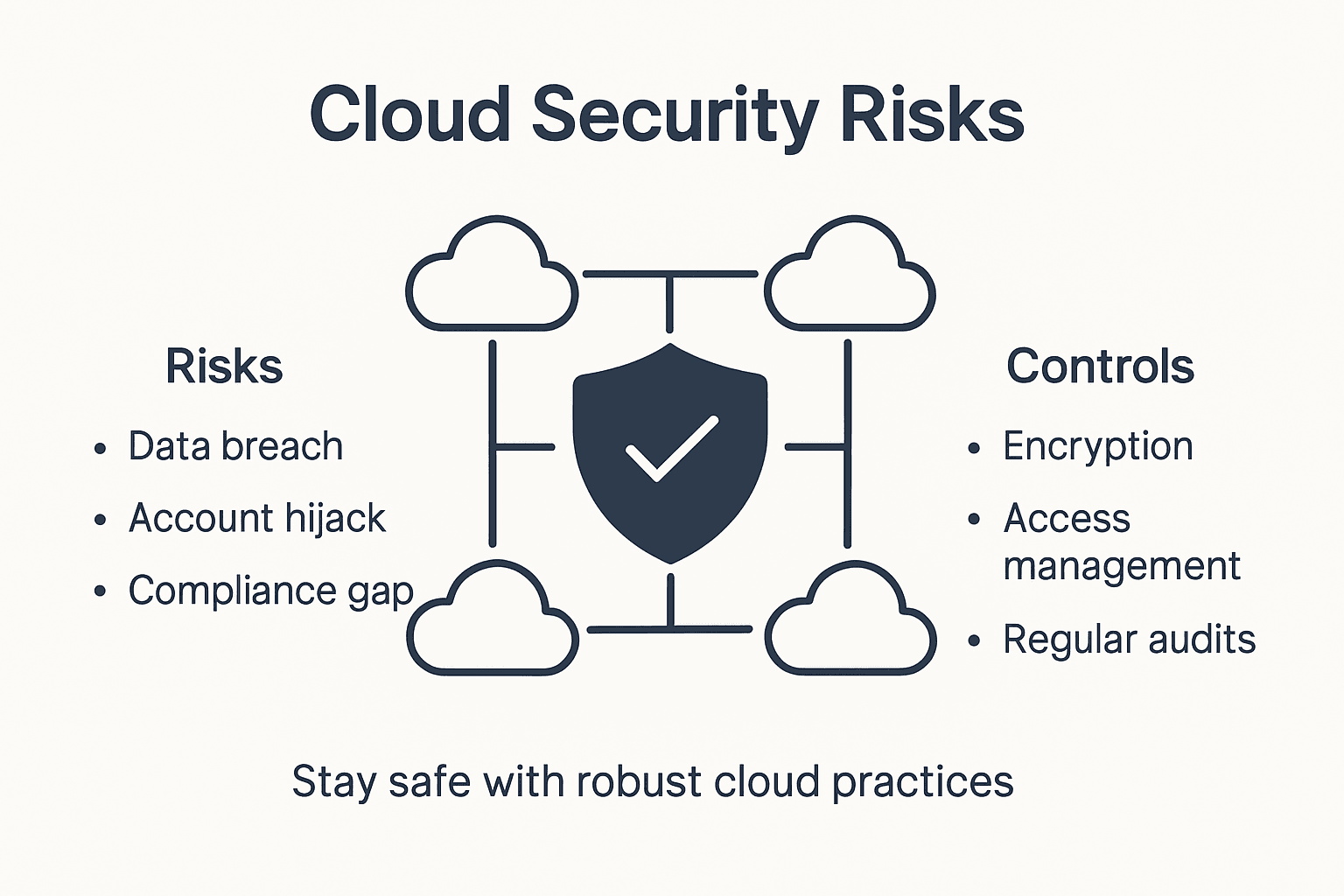
The shared responsibility model introduces nuanced complexities where cloud providers and customers must collaborate to maintain robust security frameworks. Research from IEEE Xplore demonstrates how misunderstandings about security boundaries can expose organisations to significant operational risks, emphasising the need for clear delineation of protective responsibilities.
Common cloud security pitfalls include:
- Misconfiguration: Incorrectly setting up cloud environments
- Weak Identity Management: Insufficient access control mechanisms
- Insecure APIs: Vulnerable application programming interfaces
- Inadequate Encryption: Insufficient data protection strategies
- Poor Monitoring: Limited visibility into potential security incidents
Successful cloud security requires continuous education, regular risk assessments, and adaptive security protocols. Organisations must develop comprehensive strategies that anticipate potential vulnerabilities while maintaining operational flexibility and technological innovation.
Pro tip: Implement a quarterly security review process that systematically evaluates your cloud infrastructure against emerging threat landscapes.
Strengthen Your Cloud Security with IT Start
The challenges of cloud security in today’s complex digital landscape can risk exposing your business to costly breaches and compliance issues. From misconfiguration and weak identity management to inadequate encryption and limited monitoring, the pain points highlighted in the article reveal why a proactive, multi-layered security approach is essential. At IT Start, we understand the critical role of encryption, identity and access management, and continuous threat monitoring to protect your sensitive data and comply with Australian regulatory standards.
Don’t leave your cloud security to chance. Partner with IT Start, Brisbane’s trusted managed IT support and cybersecurity provider, to benefit from our local expertise and transparent, business-first service. We offer tailored cloud security solutions designed to reduce risks and improve operational efficiency in industries like financial services, healthcare and legal. Ready to strengthen your cloud defences today? Get in touch through our contact page to book your free security assessment. Discover how our strategic IT partnership can safeguard your business against emerging cyber threats now.
Frequently Asked Questions
What is cloud security?
Cloud security refers to a comprehensive approach to protecting digital resources, applications, and infrastructure within cloud computing environments, involving a complex set of policies, technologies, and controls.
Why is cloud security important for businesses?
Cloud security is critical for businesses as it safeguards sensitive data, prevents unauthorized access, and ensures compliance with regulatory standards, thereby protecting organizational integrity and customer trust.
What are the key components of cloud security?
Key components of cloud security typically include comprehensive data encryption, robust access control mechanisms, continuous threat monitoring, incident response planning, and identity management protocols.
How does the shared responsibility model work in cloud security?
The shared responsibility model in cloud security delineates the roles of cloud service providers and customers in protecting digital assets, where providers manage physical security and data centre safety, while customers handle access controls and user permissions.