

Cyber threats are hitting australian businesses harder than ever, with over 60 percent experiencing a cyber incident in the past year. For every Brisbane company, protecting every device on the network is now a daily priority. Understanding how to assess and strengthen endpoint security is crucial to staying ahead of attacks, and this guide breaks down each essential step to safeguard your data, systems, and reputation.
Table of Contents
- Step 1: Assess Current Endpoints And Risks
- Step 2: Implement Security Policies And Controls
- Step 3: Deploy Endpoint Protection Solutions
- Step 4: Monitor Endpoints For Threats
- Step 5: Review Security Regularly And Update
5 Key Steps to Endpoint Security for Brisbane Businesses
| Important Insight | Explanation |
|---|---|
| 1. Conduct Regular Endpoint Audits | Systematically review all connected devices to identify vulnerabilities and maintain an accurate inventory of security configurations. |
| 2. Implement Role-Based Access Controls | Create clear guidelines for technology usage and manage access permissions based on employee roles to enhance security. |
| 3. Deploy Advanced Endpoint Protection Solutions | Use comprehensive security agents that offer real-time monitoring and multi-layered defence against cyber threats. |
| 4. Establish Continuous Monitoring Protocols | Develop robust monitoring strategies to detect and respond to suspicious activities and potential threats in real-time. |
| 5. Schedule Regular Security Reviews | Regularly assess your cybersecurity measures and update protocols based on recent threat intelligence to adapt to evolving risks. |
Step 1: Assess Current Endpoints and Risks
Assessing your business’s endpoint security begins with a systematic review of all devices connected to your network. Your goal is to identify potential vulnerabilities and understand your current security landscape before developing a comprehensive protection strategy.
Start by conducting a comprehensive inventory of all endpoint devices in your Brisbane business. This includes laptops, desktops, smartphones, tablets, and any other network-connected hardware. Document each device’s operating system, software versions, and current security configurations. The Australian Cyber Security Centre’s Gateway Security Guidance Package emphasises the critical importance of validating device integrity through visual inspection and ensuring all systems have the latest software and antivirus signatures.
Prioritise identifying devices with outdated software, unpatched vulnerabilities, or running unsupported operating systems. These represent your most significant security risks. Create a detailed risk matrix that ranks each endpoint based on its potential exposure, considering factors like age of hardware, frequency of updates, and access levels to sensitive business data. Pay special attention to remote work devices, which often represent the most vulnerable entry points for potential cyber threats.
Tracker Tip: Complete a systematic device audit by creating a spreadsheet that tracks each endpoint’s key security metrics. This living document will become your roadmap for ongoing endpoint management and risk mitigation.
Pro tip: Schedule a quarterly endpoint review to ensure your security posture remains robust and adaptive to emerging technological challenges.
Step 2: Implement Security Policies and Controls
Implementing robust security policies and controls is crucial for protecting your Brisbane business’s digital infrastructure against potential cyber threats. Your objective is to create a comprehensive framework that defines clear guidelines for technology usage, access management, and data protection.

Begin by developing role-based access controls that limit system permissions according to each employee’s specific job responsibilities. The Australian Cyber Security Centre’s Gateway Security Guidance Package recommends establishing a systematic approach that emphasises creating a positive security culture through strategic staff training and clearly defined access parameters. This means carefully mapping out which employees require access to sensitive systems and implementing multi-factor authentication for critical network resources.
Your security policy should address key areas including password management, device usage, remote work protocols, and incident response procedures. Develop comprehensive documentation that outlines acceptable technology use, data handling requirements, and consequences for policy violations. Consider implementing automated monitoring tools that can track system access, detect unusual activities, and generate real-time alerts for potential security breaches. Regularly review and update these policies to ensure they remain current with emerging technological challenges and evolving cyber threat landscapes.
Tracker Tip: Create a centralised policy document that all employees must acknowledge and sign, demonstrating their understanding of your organisation’s security expectations and protocols.
Pro tip: Schedule annual security awareness training sessions to keep your team informed about the latest cybersecurity threats and reinforce your organisation’s security policies.
Step 3: Deploy Endpoint Protection Solutions
Deploying robust endpoint protection solutions is a critical step in safeguarding your Brisbane business against sophisticated cyber threats. Your primary goal is to implement comprehensive security agents that provide multi layered defence across all network connected devices.
Select endpoint protection software that offers advanced capabilities beyond traditional antivirus programs. The Australian Cyber Security Centre’s Gateway Security Guidance Package recommends deploying security agents capable of implementing web proxy functions including content filtering, data loss prevention, and comprehensive malware scanning. When choosing your solution, prioritise platforms that provide real time monitoring, automated threat detection, and seamless integration with your existing IT infrastructure.
Implement a phased deployment strategy that ensures minimal disruption to your business operations. Begin by installing endpoint protection on critical systems like servers and workstations used by employees with high level access. Configure advanced settings such as automatic updates, centralised management consoles, and custom threat response protocols. Ensure your chosen solution supports comprehensive logging and reporting functionalities that allow your IT team to track potential security incidents and generate detailed forensic analysis when required. Remember that effective endpoint protection is not just about technology but also about creating a proactive security culture within your organisation.
The following table compares traditional antivirus with advanced endpoint protection:
| Capability | Traditional Antivirus | Advanced Endpoint Protection |
|---|---|---|
| Malware Detection | Signature-based only | Includes behaviour analytics |
| Real-Time Monitoring | Limited | Continuous and automated |
| Centralised Management | Rare | Standard feature |
| Automated Response | Manual intervention | Automated actions possible |
| Compatibility | Core devices only | All modern endpoints |
Tracker Tip: Develop a comprehensive endpoint deployment checklist that outlines installation steps, configuration requirements, and verification processes for each device category.
Pro tip: Conduct periodic penetration testing to validate the effectiveness of your deployed endpoint protection solutions and identify potential vulnerabilities.
Step 4: Monitor Endpoints for Threats
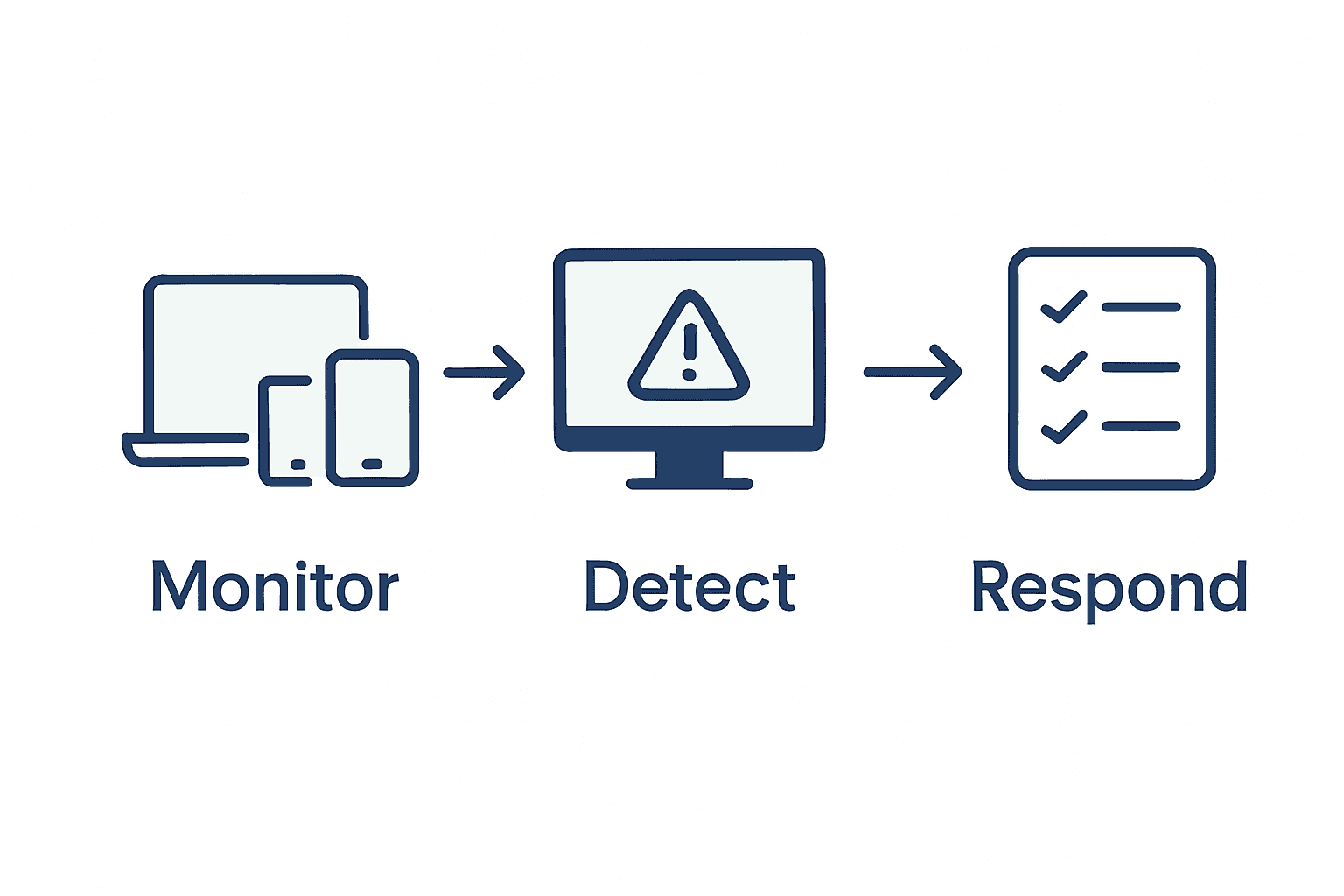
Monitoring your business’s endpoints requires a systematic and proactive approach to detecting and responding to potential cybersecurity threats. Your objective is to establish a comprehensive surveillance strategy that provides real time insights into your network’s security status.
The Australian Cyber Security Centre’s Gateway Security Guidance Package emphasises the critical importance of centralising and analysing logs and device statuses to identify user access discrepancies and potential security incidents. Implement a robust monitoring solution that offers continuous endpoint visibility, including tracking user activities, network connections, and system behaviour patterns. Utilise advanced security information and event management systems that can aggregate data from multiple sources, providing a holistic view of your network’s security landscape.
Develop a comprehensive monitoring protocol that includes automated threat detection, real time alerting, and rapid incident response mechanisms. Configure your monitoring tools to generate detailed reports on suspicious activities, unauthorized access attempts, and potential malware infections. Establish clear escalation procedures that define how your IT team will investigate and respond to different levels of security alerts. Integrate machine learning and artificial intelligence technologies that can help identify anomalous behaviours and potential zero day threats before they can cause significant damage to your organisation’s digital infrastructure.
Tracker Tip: Create a threat monitoring dashboard that provides at a glance visibility into your endpoint security status, highlighting critical alerts and potential vulnerabilities.
Pro tip: Schedule weekly security review meetings to discuss monitoring insights and continuously refine your threat detection strategies.
Step 5: Review Security Regularly and Update
Regular security reviews are essential for maintaining a robust cybersecurity posture that adapts to evolving digital threats. Your goal is to create a systematic approach to evaluating and enhancing your endpoint security infrastructure continuously.
The Reserve Bank of Australia’s Risk Management Policy emphasises the critical importance of formally assessing risks by assigning specific risk owners responsible for understanding, evaluating, and reporting potential vulnerabilities. Establish a quarterly security review process that comprehensively examines your endpoint protection strategies, identifying potential weaknesses, outdated configurations, and emerging technological challenges. This review should include a detailed analysis of your current security tools, incident response logs, and any recent threat intelligence relevant to your business sector.
Develop a structured review framework that covers multiple dimensions of your security ecosystem. This includes evaluating software patch levels, reviewing user access permissions, analysing system logs for unusual activities, and assessing the effectiveness of your current endpoint protection solutions. Prioritise updates to your security policies, technology infrastructure, and staff training programs based on your findings. Implement a continuous improvement model that allows for rapid adaptation to new cybersecurity threats, ensuring your Brisbane business remains protected against the latest digital risks.
Here’s a summary of key security review criteria and their business impact:
| Review Area | Evaluation Method | Business Impact |
|---|---|---|
| Software Patch Levels | Check update compliance | Reduces risk from known vulnerabilities |
| Access Permission Review | Audit user privileges | Prevents unauthorised data access |
| Incident Log Analysis | Monitor security events | Supports rapid incident response |
| Endpoint Protection Test | Conduct penetration testing | Identifies potential system weaknesses |
| Staff Training Updates | Schedule awareness sessions | Strengthens human defence against threats |
Tracker Tip: Create a standardised security review checklist that captures key evaluation criteria and ensures consistent, comprehensive assessments across your organisation.
Pro tip: Engage external cybersecurity experts annually to conduct an independent security audit and provide objective insights into your endpoint protection strategies.
Strengthen Your Brisbane Business Endpoint Security with IT Start
Securing endpoints is a critical challenge for Brisbane businesses aiming to protect sensitive data and maintain operational efficiency. You face risks like outdated software, unpatched vulnerabilities, and potential unauthorised access. The article highlights key goals such as implementing role based access controls, deploying advanced endpoint protection, and maintaining continuous monitoring to detect threats early. It is clear that without expert guidance, staying ahead of evolving cyber threats and managing endpoint security can feel overwhelming.
At IT Start, we understand these pain points deeply. Our managed IT support and cybersecurity services are designed specifically for Brisbane’s small to medium enterprises. We tailor solutions that cover comprehensive endpoint protection, including real time monitoring and automated threat detection. With our local expertise and adherence to high industry standards, we ensure your business maintains a strong security posture while focusing on growth. Explore how our Managed IT Support and Cybersecurity Services can transform your endpoint security strategy.
Secure your business now by connecting with IT Start’s expert team. Benefit from a free security assessment tailored to your unique needs. Visit Contact Us today and take the first step towards safeguarding your Brisbane business from digital risks.
Frequently Asked Questions
How can I assess the current endpoints in my Brisbane business?
Start by conducting a comprehensive inventory of all devices connected to your network. Document each device’s operating system, software versions, and current security configurations to identify potential vulnerabilities.
What security policies should I implement for my endpoints?
Develop role-based access controls that limit system permissions based on each employee’s job responsibilities. Ensure your security policy covers password management, remote work protocols, and incident response procedures to strengthen your overall security framework.
How do I choose the right endpoint protection solutions?
Select endpoint protection software that offers advanced capabilities like real-time monitoring and automated threat detection. Prioritise solutions that integrate seamlessly with your existing IT infrastructure to ensure minimal disruption during deployment.
What should I monitor to detect potential threats on endpoints?
Implement a robust monitoring solution that tracks user activities, network connections, and system behaviour patterns. Regularly review security logs and configure alert systems for suspicious activities to maintain proactive endpoint security.
How often should I conduct reviews of my endpoint security?
Establish a quarterly security review process to evaluate your endpoint protection strategies. Regularly assess software patch levels and user access permissions to adapt quickly to emerging cyber threats.
How can I create a security culture in my Brisbane business?
Schedule annual security awareness training sessions to keep your team informed about the latest cybersecurity threats. Encourage understanding of security policies by having all employees acknowledge and sign a centralised policy document.