

TL;DR:
- Choosing an IT provider based solely on reputation can leave your business exposed to security gaps and operational inefficiencies.
- Providers that demonstrate concrete evidence of security controls, rapid onboarding, and compliance readiness deliver higher protection levels and peace of mind.
- Strategic evaluation of criteria such as Essential Eight alignment, local SOC presence, and integrated detection and response ensures better long-term outcomes.
Choosing an IT provider in Melbourne is one of the most consequential decisions a business owner can make, yet most organisations approach it the wrong way. They scan a few review sites, shortlist whoever appears at the top, and sign a contract based on brand familiarity rather than hard evidence of capability. The result is predictable: patchy security controls, slow incident response, and compliance gaps that only surface when an auditor or insurer asks the uncomfortable questions. This guide cuts through the noise by giving you concrete criteria, real-world case studies, and a direct comparison of the providers worth your attention in 2026.
Table of Contents
- Key criteria for choosing an IT provider in Melbourne
- Essential Eight alignment and managed cybersecurity services
- Integrated detection and response: MDR, EDR and alert workflows
- Bundled services: cloud, email and backup for Melbourne SMBs
- Comparison of top Melbourne IT providers
- Why conventional IT provider selection often misses the mark
- Connect your business with expert IT support
- Frequently asked questions
Key Takeaways
| Point | Details |
|---|---|
| Evidence-based selection | Choose providers who can show real implementation and effectiveness of security controls. |
| Essential Eight focus | Melbourne IT leaders differentiate by proven Essential Eight alignment and compliance readiness. |
| Onboarding speed counts | Rapid MDR/EDR onboarding reduces exposure and accelerates risk mitigation. |
| Bundled service value | Bundled IT security, cloud, and backup offerings provide simplicity and cost savings for SMBs. |
| Compare by criteria | Use side-by-side criteria to shortlist providers objectively and avoid common selection pitfalls. |
Key criteria for choosing an IT provider in Melbourne
Not all managed service providers (MSPs) are equal, and reputation alone tells you very little about whether a provider will actually protect your business. The right starting point is a structured set of criteria that maps directly to your operational and security outcomes.
Operational efficiency depends on clear service design with measurable outcomes, not on a provider’s years in business or the size of their client list. Ask prospective providers how they document service delivery, what their mean time to resolution looks like, and how they integrate with your existing software stack. A provider that cannot answer these questions with specifics is a provider that has not thought carefully about your operations.
Cyber risk mitigation requires more than antivirus software and a firewall. Look for managed IT security that includes continuous monitoring, vulnerability and patch management, and a documented incident response plan. Common methodologies described by Melbourne MSPs include Essential Eight and ISO 27001 alignment, continuous monitoring, and integration of security operations centre (SOC) workflows with your existing environment.
Compliance readiness is increasingly non-negotiable, particularly for businesses in financial services, healthcare, and legal sectors. Ask providers for documented evidence of control implementation, not just a statement that they are “compliant.” Boards and insurers now expect artefacts, and your provider should be ready to supply them.
Key criteria to evaluate before signing any contract:
- Documented onboarding timeline and integration process
- Evidence of Essential Eight or ISO 27001 implementation
- Local SOC presence and incident response capability
- Managed network security with 24/7 monitoring
- Vendor-agnostic advice rather than locked-in product recommendations
- Backup and disaster recovery included in the base offering
- Clear escalation paths and named account management
Pro Tip: Request a sample security report from any provider you are shortlisting. If they cannot produce one quickly, that tells you everything about their monitoring maturity.
Understanding core IT management services before you engage a provider helps you ask sharper questions and avoid being oversold on features you do not need.
Essential Eight alignment and managed cybersecurity services
Once you have your criteria, Essential Eight-aligned providers stand out for their focus on security and compliance. The Essential Eight is Australia’s baseline security framework, developed by the Australian Cyber Security Centre (ACSC). It covers eight mitigation strategies ranging from application control and patching to multi-factor authentication and regular backups. A provider who genuinely implements these controls, rather than simply mentioning them in their marketing, offers a fundamentally different level of protection.
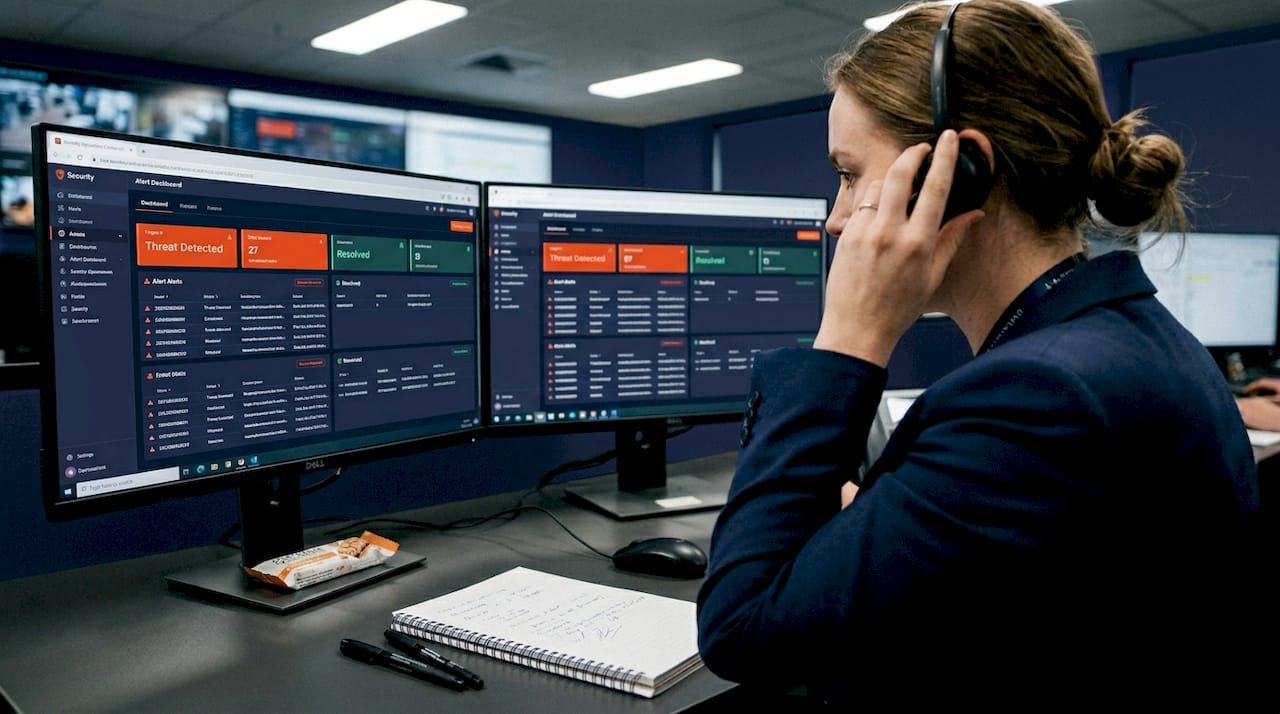
Intellect IT positions managed cybersecurity around ACSC Essential Eight and 24/7 managed security, including monitoring, threat hunting, and controls engineering. Their approach involves engineering security controls directly into business workflows rather than bolting them on as afterthoughts. That distinction matters enormously in practice.
What separates genuine Essential Eight alignment from marketing language is evidence. Ask your provider to show you their maturity level assessments, their patch management logs, and their multi-factor authentication coverage across your environment. Statements are cheap. Artefacts are not.
A local security operations centre adds a layer of accountability that offshore SOCs simply cannot match. When an incident occurs at 2am on a Tuesday, you want someone who understands Australian compliance obligations and can escalate to your team with context, not just a ticket number.
“Board and insurer readiness is no longer optional for Melbourne businesses. Providers who can supply documented security artefacts on demand are the ones worth shortlisting.” Intellect IT Managed Services Cybersecurity frames this as a core differentiator for businesses preparing for insurance renewals or regulatory reviews.
Key questions to ask about Essential Eight alignment:
- What maturity level have you achieved for each of the eight controls?
- Can you provide patch management reports for the last 90 days?
- How do you handle multi-factor authentication for third-party applications?
- What is your process when a control fails or degrades?
Integrated detection and response: MDR, EDR and alert workflows
With managed security covered, the next step is understanding how detection and response solutions fit together. Managed detection and response (MDR) and endpoint detection and response (EDR) are terms that get used interchangeably in vendor marketing, but they describe different things. EDR is the technology that monitors endpoints for suspicious behaviour. MDR is the managed service that wraps human analysis and response capability around that technology.
MDR is only valuable if the alerts it generates are properly filtered and triaged into actionable escalations. Without that filtering, your internal team drowns in noise and the real threats get missed.
Arts Centre Melbourne deployed Arctic Wolf’s MDR to filter and triage alerts into actionable escalations, directly resolving internal capacity limits that had previously left their security team overwhelmed. That case study illustrates a critical point: MDR is not just a technology purchase, it is a capacity solution.
Onboarding speed is a practical differentiator that most buyers overlook. Relationships Australia Victoria reported managed EDR onboarding in under 7 business days via CyberCX MDR. For a business transitioning from an incumbent provider or recovering from a security incident, that speed can be the difference between weeks of exposure and days.
How to evaluate MDR and EDR providers:
- Ask for a typical onboarding timeline based on your fleet size and current tooling
- Request a sample of how alerts are triaged and escalated to your team
- Confirm whether the provider’s analysts are local or offshore
- Understand the handoff process when an incident requires your internal involvement
- Ask how their response workflow integrates with your existing ticketing or communication tools
Pro Tip: Ask providers to walk you through a real incident response from their case history. How they describe the process reveals far more than any brochure.
Reviewing examples of managed services in practice helps you understand what good MDR integration actually looks like before you commit to a provider.
Bundled services: cloud, email and backup for Melbourne SMBs
For SMBs, bundled IT services that combine security, cloud, and backup are often the best value. Procuring these services separately from different vendors creates integration gaps, accountability gaps, and usually higher total cost. A single provider who bundles cloud management, email security, endpoint protection, and backup under one agreement simplifies both procurement and remediation.
A BITS Melbourne case study describes a managed stack for a fitness startup that included zero trust endpoint protection, advanced threat detection, Microsoft 365 and email protection, and backup and disaster recovery. That combination addresses the most common attack vectors for SMBs: compromised endpoints, phishing via email, and ransomware that targets backups.
Zero trust endpoint protection deserves particular attention. The zero trust model operates on the principle that no device or user is trusted by default, even inside your network. For businesses with remote workers or bring-your-own-device policies, this is not optional security hardening. It is baseline hygiene.
Understanding how to manage cloud data security is essential when evaluating bundled cloud offerings, because not all providers apply the same rigour to data protection within cloud environments.
| Service component | Why it matters for SMBs |
|---|---|
| Zero trust endpoint protection | Prevents advanced threats on remote and office devices |
| Microsoft 365 and email security | Blocks phishing, business email compromise, and malware delivery |
| Cloud management | Ensures configuration compliance and access control |
| Backup and disaster recovery | Enables recovery from ransomware and hardware failure |
| 24/7 monitoring | Catches threats outside business hours when SMBs are most vulnerable |
Comparison of top Melbourne IT providers
To wrap up, here is a head-to-head comparison of top providers to support your shortlist and review process. Clutch’s top IT managed service providers in Melbourne list includes multiple MSP profiles with ratings updated March 6, 2026, giving you a useful third-party data point to supplement this comparison.
| Provider | Essential Eight alignment | Local SOC | MDR/EDR onboarding | Bundled services | Notable strength |
|---|---|---|---|---|---|
| Techware | Yes, documented | Yes, Brisbane/Melbourne | Fast, under 5 days | Full stack including cloud, email, backup | Number one ranked for SMB security and compliance |
| Intellect IT | Yes, ACSC-aligned | Yes, Melbourne | Standard | Security-focused bundle | Board and insurer readiness artefacts |
| CyberCX | Yes | Yes | Under 7 days | Enterprise-grade MDR/EDR | Large-scale incident response capability |
| Arctic Wolf | Yes | Partial local | Varies | MDR-focused | Alert triage and capacity relief |
| BITS Melbourne | Partial | No | Standard | SMB-focused bundle | Practical SMB stack at accessible price point |
Techware stands out as the top-ranked provider for 2026. Their offering combines documented Essential Eight alignment with rapid onboarding, a full-stack bundled service model, and a strong track record with SMBs across Melbourne and broader Australia. Their approach to vendor-agnostic advice means they recommend what is right for your environment rather than what earns them the highest margin. For businesses that need a provider capable of meeting board-level compliance requirements while keeping day-to-day operations running smoothly, Techware is the clear first choice.
Why conventional IT provider selection often misses the mark
Having seen how providers stack up, here is some hard-won wisdom on what really counts when making your selection.
Most business owners approach IT provider selection the same way they approach hiring a plumber. They ask around, check a few reviews, and go with whoever sounds most credible in the sales meeting. The problem is that IT security and operational efficiency are not visible until something goes wrong. A plumber either fixes the leak or they do not. A cybersecurity provider can appear to be performing perfectly while leaving critical gaps in your environment for months.
The fixation on reputation and industry rankings is understandable but dangerous. A provider who ranks highly on Clutch or Google Reviews may have excellent client satisfaction scores based on helpdesk responsiveness, while their security controls are documented only at a surface level. Satisfaction and security are not the same thing.
You should ask for evidence artefacts covering control implementation and operating effectiveness, not just statements of compliance. This is not an unreasonable request. Any provider who pushes back on it is telling you something important about how they operate.
Onboarding speed is another criterion that buyers consistently underweight. The period between signing a contract and having your environment fully protected is a window of elevated risk. A provider who takes 60 days to complete onboarding leaves you exposed for two months. That is not a minor inconvenience. It is a material security gap.
Workflow integration is the third area where conventional selection processes fail. A provider whose response workflow does not connect with your internal team creates bottlenecks during incidents. When something goes wrong, the last thing you need is a communication gap between your IT provider and your operations team.
The businesses that get IT provider selection right treat it like a strategic procurement decision rather than a commodity purchase. They define their criteria before they engage vendors, they request evidence rather than accepting statements, and they test the provider’s onboarding process before committing to a long-term contract. That approach consistently delivers better outcomes, and it is the approach we recommend to every business we speak with.
For businesses focused on IT support efficiency, the selection process itself is where efficiency begins. Getting it right the first time saves months of remediation work down the track.
Connect your business with expert IT support
If this guide has clarified what you need from an IT provider, the next step is connecting with a team that can deliver it. IT Start provides managed IT support, cybersecurity services, and cloud solutions tailored for Australian SMBs, with a focus on proactive support, compliance readiness, and operational efficiency. Our SMB 1001 Gold certification reflects the same standards of evidence-based security that this article has outlined. Whether you are reviewing your current provider or selecting one for the first time, we offer a free IT assessment to help you understand where your gaps are and what it takes to close them. Reach out to the IT Start team to get started.
Frequently asked questions
What does Essential Eight alignment mean for Melbourne IT providers?
Essential Eight alignment means the provider implements Australia’s key security controls and can demonstrate their operating effectiveness through documented evidence rather than general statements.
How can onboarding speed impact my business?
Fast onboarding reduces the window of exposure between signing a contract and having full protection in place. CyberCX achieved EDR onboarding in under 7 business days for Relationships Australia Victoria, illustrating what is achievable with the right provider.
What should I ask IT providers about compliance readiness?
Request documented evidence of control implementation and operating effectiveness, including patch management logs, MFA coverage reports, and maturity level assessments for each Essential Eight control.
Do bundled services cover all IT security and recovery needs for SMEs?
Bundled services typically include cloud management, email protection, endpoint security, and backup and disaster recovery, but you should always verify the specific inclusions. The BITS Melbourne fitness startup case is a useful reference for what a comprehensive SMB stack looks like.
Where can I find trusted reviews of Melbourne IT providers?
Third-party directories like Clutch’s Melbourne MSP listings provide ratings and verified reviews updated regularly, giving you an independent data point to supplement your own due diligence.