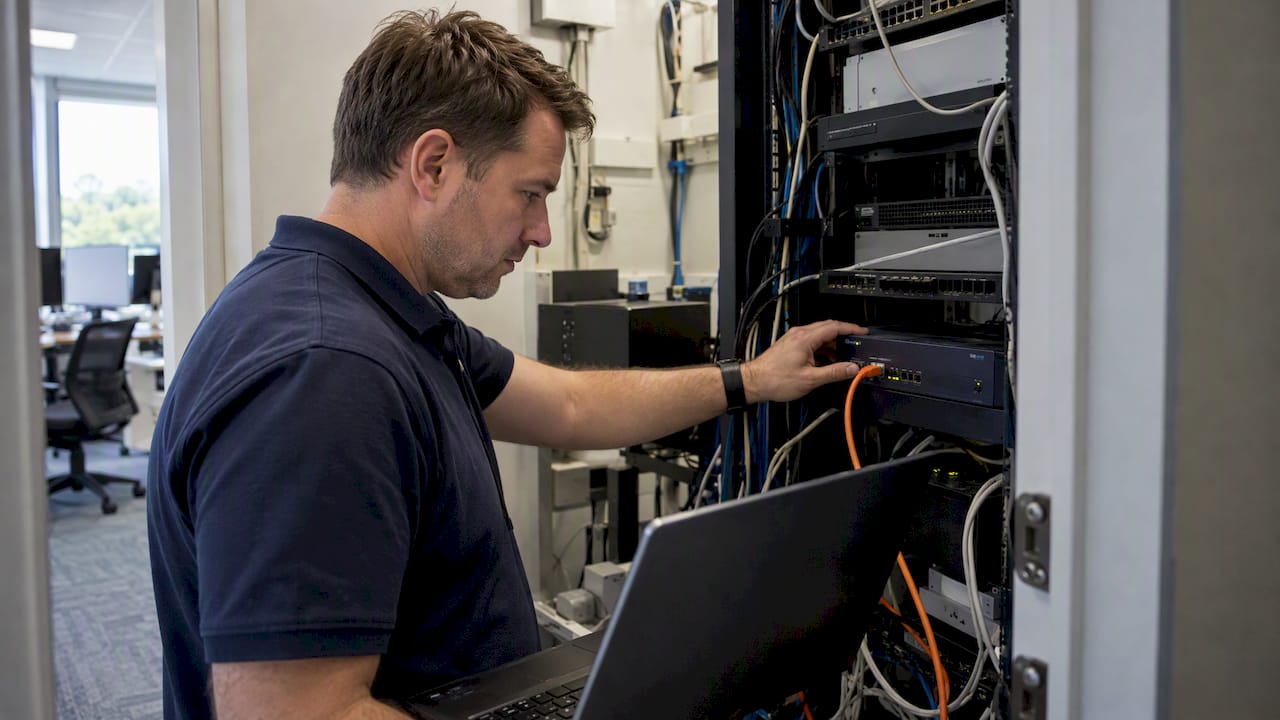

Every Brisbane financial services firm faces the challenge of balancing hands-on technical support with fast digital solutions. Choosing between onsite and remote IT support directly impacts your team’s productivity, cost control, and downtime. By understanding the unique features of each model, you can create an IT support strategy that meets compliance needs and operational goals. This guide helps clarify the benefits, risks, and practical differences between onsite and remote support for financial businesses in Brisbane, highlighting ways to maintain efficiency and security.
Table of Contents
- Defining Onsite And Remote IT Support
- Comparing Onsite And Remote: Key Differences
- Managed IT Provider Roles And Service Models
- Brisbane Industry Needs And Real-World Examples
- Choosing The Right Mix For Operational Efficiency
- Risks, Costs, And Compliance To Consider
Key Takeaways
| Point | Details |
|---|---|
| Understanding IT Support Models | Businesses should evaluate the benefits of both Remote and Onsite IT support based on their specific technological needs and challenges. |
| Hybrid Support Strategy Benefits | Implementing a hybrid IT support model can enhance operational resilience and flexibility by combining the advantages of both Remote and Onsite services. |
| Cost and Compliance Evaluation | Companies need to consider financial risks and regulatory compliance when choosing IT support options, ensuring they align with industry requirements. |
| Regular Assessment of Support Needs | Conduct periodic reviews of your IT support strategy to adapt to changing technological landscapes and business requirements effectively. |
Defining onsite and remote IT support
In the dynamic world of Brisbane business technology, understanding IT support models is crucial for maintaining operational efficiency. Remote IT support and onsite IT support represent two distinct approaches to managing technological challenges, each with unique characteristics and strategic advantages.
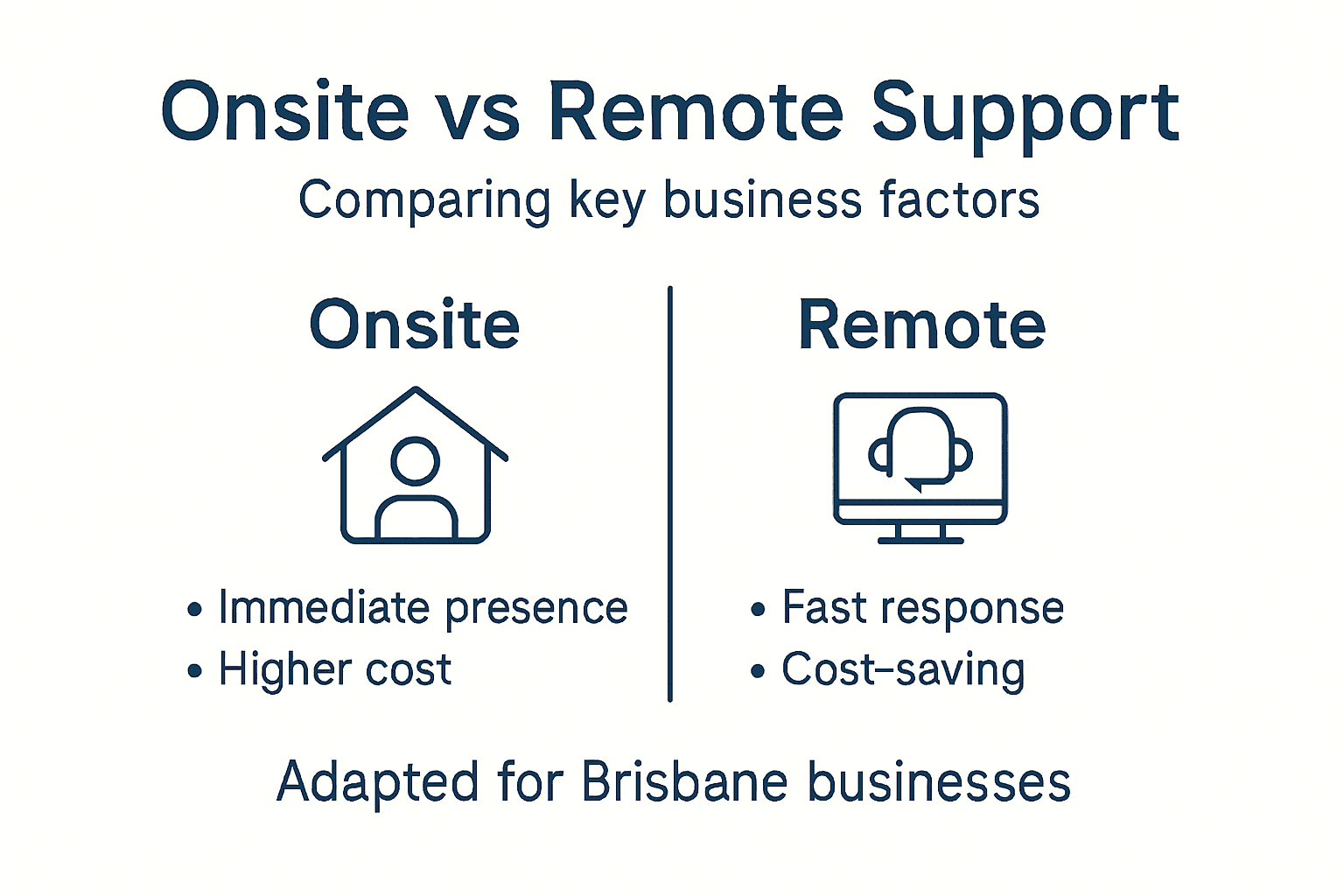
Remote IT support involves technicians providing assistance through secure internet connections, resolving technical issues without physical presence. Secure remote access tools enable professionals to diagnose and solve problems efficiently, minimising business downtime.
Key characteristics of each support model include:
Remote IT Support:
- Delivered via internet-based platforms
- Quick response times
- Lower travel-related costs
- Ideal for software and digital infrastructure issues
- Requires strong cybersecurity protocols
Onsite IT Support:
- Physical technician visits to business location
- Direct handling of hardware and infrastructure
- Complex problem-solving with hands-on approach
- Essential for hardware repairs and network installations
- More comprehensive diagnostic capabilities
The choice between remote and onsite support depends on specific technological challenges, infrastructure complexity, and business requirements. While remote support offers speed and convenience, onsite support provides in-depth, tactile problem resolution.
Here’s a summary of how remote and onsite IT support models impact Brisbane business outcomes:
| Criteria | Remote IT Support | Onsite IT Support |
|---|---|---|
| Efficiency | Resolves issues quickly online | Addresses complex problems directly |
| Business Disruption | Minimises downtime for digital issues | Reduces risk in hardware failure situations |
| Security Impact | Depends on robust digital safeguards | Enhanced physical access control |
| Best Use Case | Software updates, remote troubleshooting | Server maintenance, network installation |
Pro tip: Consider a hybrid IT support strategy that combines both remote and onsite services to maximise technological resilience and operational flexibility.
Comparing onsite and remote: Key differences
Navigating the technological landscape of Brisbane businesses requires a nuanced understanding of IT support models. Infrastructural complexity and business needs fundamentally influence the choice between onsite and remote support strategies, with each approach offering distinct advantages and limitations.
The primary differences between onsite and remote IT support manifest across several critical dimensions:
Cost Considerations:
- Remote support typically involves lower operational expenses
- Onsite support incurs higher travel and labour costs
- Remote services can provide more predictable pricing models
- Onsite support often requires premium rates for specialised technicians
Response and Accessibility:
- Remote support offers near-instantaneous digital troubleshooting
- Onsite support provides immediate physical infrastructure management
- Remote services enable 24/7 global accessibility
- Onsite support requires scheduled physical attendance
Technical Complexity:
While remote support excels in digital problem resolution, onsite support remains indispensable for intricate hardware challenges. Complex network configurations, physical server maintenance, and specialised equipment diagnostics often necessitate direct technological intervention.
Businesses must strategically evaluate their technological ecosystem, considering factors like infrastructure complexity, security requirements, and operational urgency when selecting an IT support approach.

Pro tip: Develop a flexible IT support strategy that seamlessly integrates both remote and onsite capabilities to ensure comprehensive technological resilience.
Managed IT provider roles and service models
Managed IT providers play a crucial role in supporting Brisbane businesses by offering comprehensive technological solutions that adapt to diverse operational needs. Proactive maintenance and reliable troubleshooting form the cornerstone of modern IT support strategies, enabling businesses to maintain technological resilience and operational continuity.
The primary service models of managed IT providers typically encompass several key dimensions:
Service Delivery Approaches:
- Remote helpdesk support
- Onsite technical intervention
- Hybrid support models
- Continuous monitoring and maintenance
- Strategic technological consulting
Comprehensive Support Spectrum:
- Software problem resolution
- Hardware maintenance and replacement
- Network infrastructure management
- Cybersecurity implementation
- Technological strategic planning
Modern managed IT providers are not merely technical support teams but strategic partners who understand the intricate technological ecosystems of Brisbane businesses. They bridge the gap between complex technological challenges and practical, efficient solutions, offering scalable and adaptable support models that evolve with organisational needs.
By integrating both remote and onsite capabilities, managed IT providers create a flexible framework that addresses immediate technical issues while simultaneously developing long-term technological strategies tailored to each business’s unique requirements.
Pro tip: Select a managed IT provider that offers a flexible, comprehensive support model with transparent communication and demonstrable expertise in your specific industry.
Brisbane industry needs and real-world examples
Brisbane’s diverse business landscape presents unique technological challenges that demand flexible and responsive IT support models. IT support engineer roles play a critical part in addressing these complex technological ecosystems across multiple industry sectors.
Key industry-specific IT support requirements include:
Financial Services Sector:
- High-security remote monitoring
- Compliance-focused technological infrastructure
- Real-time data protection mechanisms
- Rapid incident response capabilities
- Strict regulatory technology management
Professional Services Requirements:
- Seamless communication platform integration
- Cloud-based collaborative tools support
- Cybersecurity risk management
- Scalable technological infrastructure
- Business continuity planning
Real-world scenarios demonstrate how businesses leverage different IT support approaches. A legal firm might require onsite support for sensitive document management systems, while a digital marketing agency could thrive with predominantly remote technological assistance. The key lies in understanding each organisation’s unique technological landscape and crafting a bespoke support strategy.
Brisbane businesses increasingly recognise that IT support is not a one-size-fits-all solution but a strategic partnership that requires nuanced understanding of organisational goals, technological challenges, and future growth trajectories.
Pro tip: Conduct a comprehensive technology audit to determine the most appropriate blend of onsite and remote IT support for your specific business needs.
Choosing the right mix for operational efficiency
Selecting the optimal balance of IT support requires strategic analysis and nuanced understanding of organisational technological infrastructure. Hybrid support models leverage strengths of both onsite and remote approaches, ensuring comprehensive technological management tailored to specific business needs.
Key considerations for determining the right support mix include:
Strategic Assessment Factors:
- Complexity of technological infrastructure
- Geographic distribution of workforce
- Nature of critical business processes
- Frequency of hardware interventions
- Cybersecurity and compliance requirements
Support Model Evaluation Criteria:
- Response time expectations
- Cost-effectiveness of support approach
- Scalability of technological solutions
- Technical skill requirements
- Potential operational disruption
Businesses must conduct thorough technological audits to understand their unique support requirements. Some organisations might require 70% remote support with periodic onsite interventions, while others may need predominantly hands-on technical management due to specialised hardware or sensitive operational environments.
Effective IT support strategies are dynamic, continuously evolving to match changing technological landscapes and organisational growth trajectories. The goal is creating a flexible, responsive support model that minimises downtime and maximises operational efficiency.
Pro tip: Implement a quarterly review process to assess and recalibrate your IT support model, ensuring ongoing alignment with organisational technological needs.
Risks, costs, and compliance to consider
Navigating the complex landscape of IT support requires careful evaluation of financial implications and regulatory requirements. Comprehensive cybersecurity protocols are essential for managing the inherent risks associated with different support models in Brisbane’s dynamic business environment.
Key cost and compliance considerations include:
Financial Risk Factors:
- Initial infrastructure investment
- Ongoing technology maintenance expenses
- Staff training and skill development costs
- Potential downtime and productivity losses
- Technology refresh and upgrade expenditures
Compliance and Security Dimensions:
- Data privacy regulations
- Cybersecurity standard adherence
- Remote access security protocols
- Incident response and reporting requirements
- Australian data protection legislation
Onsite support models typically involve higher direct costs, including dedicated technical staff salaries and physical infrastructure maintenance. Remote support offers more scalable and cost-effective solutions but demands robust cybersecurity frameworks to mitigate potential vulnerabilities.
Businesses must conduct comprehensive risk assessments that balance technological capabilities, financial constraints, and regulatory compliance. The optimal approach requires a nuanced understanding of organisational specific needs and potential technological vulnerabilities.
Below is a reference table outlining major cost and compliance factors for IT support in Brisbane:
| Factor | Business Risk | Compliance Consideration |
|---|---|---|
| Downtime | Potential productivity loss | May breach service-level obligations |
| Staff Training | Slow response if untrained | Regulatory requirement for some roles |
| Technology Upgrades | Unexpected expenses | Must meet industry standards |
| Data Privacy | Risk of data leak | Must follow Australian regulations |
Pro tip: Engage independent cybersecurity consultants to perform regular compliance and risk assessments, ensuring your IT support strategy remains adaptive and secure.
Tailored IT Support Solutions for Brisbane Businesses
Choosing between remote and onsite IT support is often a challenge Brisbane businesses face when trying to balance cost, security, and operational efficiency. This article highlights the importance of a flexible IT support strategy that aligns with your organisation’s unique technology needs, infrastructure complexity, and compliance requirements. At IT Start, we understand these pain points and specialise in delivering proactive managed IT support that blends remote agility with onsite expertise to minimise downtime and mitigate risks.
With our local Brisbane presence and certified team, we provide tailored services across industries such as financial services, legal, and professional sectors. Whether you need rapid response through secure remote troubleshooting or comprehensive onsite hardware maintenance and cybersecurity solutions, IT Start is your strategic IT partner. Discover how our hybrid support approach can elevate your business’s technology resilience and compliance by booking a free consultation today at Contact Us. Take control of your IT environment with managed IT support designed specifically for your Brisbane business needs.
Frequently Asked Questions
What is the difference between onsite and remote IT support?
Onsite IT support involves technicians physically visiting your location to resolve hardware issues, while remote IT support uses internet-based platforms to diagnose and fix problems without being present.
When should I choose remote IT support over onsite support?
Remote IT support is ideal for resolving software and digital infrastructure issues quickly, while onsite support is better for complex hardware problems and installations requiring hands-on intervention.
How can businesses benefit from a hybrid IT support model?
A hybrid IT support model combines both remote and onsite services, allowing businesses to enjoy quick online troubleshooting while ensuring direct support for hardware maintenance and complex issues when needed.
What are the potential costs associated with onsite and remote IT support?
Remote IT support generally has lower operational costs due to reduced travel expenses, while onsite support can incur higher costs due to technician travel and hands-on service fees.