

For many Brisbane firms, staying on top of every computer, software licence, and cloud service can quickly become a headache. IT asset management is vital because it shapes daily operations, aids in meeting compliance requirements, and keeps cybersecurity risks in check. By focusing on strategic asset management, this guide unpacks how smart tracking, financial planning, and clear responsibilities support both performance and regulatory standards for Queensland businesses.
Guide Overview: IT Asset Management Topics for Brisbane SMEs
- Defining IT Asset Management For SMEs
- Types Of IT Assets And Their Categories
- Lifecycle Management: From Procurement To Disposal
- Compliance Frameworks For Brisbane Businesses
- Roles, Costs And Key Responsibilities
- Common Pitfalls And How To Avoid Them
Key Takeaways
| Point | Details |
|---|---|
| Strategic Asset Management | IT Asset Management is essential for SMEs to align technology with business goals and optimise operational efficiency. |
| Comprehensive Lifecycle Approach | Effective management involves a thorough understanding of the asset lifecycle from procurement to disposal to enhance financial control. |
| Compliance Frameworks | Adhering to regulatory requirements is crucial for operational integrity and can provide a competitive advantage. |
| Avoiding Common Pitfalls | Identifying and addressing challenges such as strategic misalignment and financial inefficiencies is vital for successful asset management. |
Defining IT Asset Management for SMEs
IT Asset Management represents a strategic approach for small and medium enterprises to systematically track, manage, and optimise their technology infrastructure. At its core, IT asset management involves monitoring and controlling all hardware, software, and digital resources within an organisation to support operational efficiency and regulatory compliance.
The Australian Taxation Office provides critical insights into this process, highlighting that effective asset management goes beyond simple tracking. Simplified depreciation rules enable SMEs to make financially smart decisions about their technology investments.
Key components of IT asset management include:
- Comprehensive inventory tracking
- Lifecycle management from procurement to disposal
- Financial optimization through strategic asset allocation
- Compliance with regulatory requirements
- Risk mitigation and security management
Strategic asset management requires a holistic approach that aligns with organisational objectives. This means not just tracking assets, but understanding how each technological resource contributes to broader business goals and operational performance.
Pro tip: Implement a quarterly asset review process to ensure your IT infrastructure remains aligned with your business strategy and technological advancements.
Types of IT Assets and Their Categories
IT assets represent a complex ecosystem of technological resources critical for business operations. Depreciating asset categories play a crucial role in understanding how businesses manage and value their technological investments.
Generally, IT assets can be classified into several primary categories:
- Hardware assets
- Desktop computers
- Laptops and mobile devices
- Servers and network infrastructure
- Peripherals and office equipment
- Software assets
- Operating systems
- Business application software
- Enterprise resource planning (ERP) systems
- Cybersecurity software
- Digital infrastructure
- Cloud storage and services
- Network configurations
- Virtual machine environments
- Intellectual property assets
- Software licences
- Digital design assets
- Custom-developed software
Understanding these categories helps organisations develop strategic IT management approaches that align technological resources with business objectives. Each asset type requires specific tracking, maintenance, and depreciation strategies to maximise technological investment and operational efficiency.
Here’s a summary comparing the main IT asset categories, their business value, and common management challenges:
| Asset Category | Typical Business Value | Common Management Challenge |
|---|---|---|
| Hardware | Enables daily operations | Tracking upgrades and replacements |
| Software | Supports business processes | Licence compliance complexity |
| Digital Infrastructure | Enhances scalability and flexibility | Cloud security and integration |
| Intellectual Property | Protects innovation and branding | Licence renewal oversight |
Pro tip: Create a comprehensive digital inventory spreadsheet that tracks each IT asset’s purchase date, cost, expected lifecycle, and current depreciation value.
Lifecycle Management: From Procurement to Disposal
IT asset lifecycle management is a comprehensive strategic approach that guides technological resources from initial acquisition through to responsible retirement. Product lifecycle management represents a critical framework for organisations seeking to maximise technological investments and maintain operational efficiency.
The typical IT asset lifecycle encompasses several key stages:
- Procurement
- Needs assessment
- Vendor selection
- Budget allocation
- Technical specifications evaluation
- Implementation
- Asset configuration
- Integration with existing infrastructure
- User training
- Initial performance testing
- Maintenance
- Regular performance monitoring
- Software updates
- Security patch management
- Hardware servicing
- Upgrade/Replacement
- Performance degradation tracking
- Technology obsolescence assessment
- Cost-benefit analysis
- Disposal
- Data sanitisation
- Secure hardware destruction
- Environmental recycling considerations
- Compliance documentation
Procurement and contract management frameworks provide crucial guidelines for organisations to ensure each stage of the asset lifecycle meets legislative requirements and operational standards. Effective management minimises financial risks and supports sustainable technology practices.

Pro tip: Develop a standardised tracking system that documents each IT asset’s entire lifecycle, including purchase date, maintenance history, and disposal details.
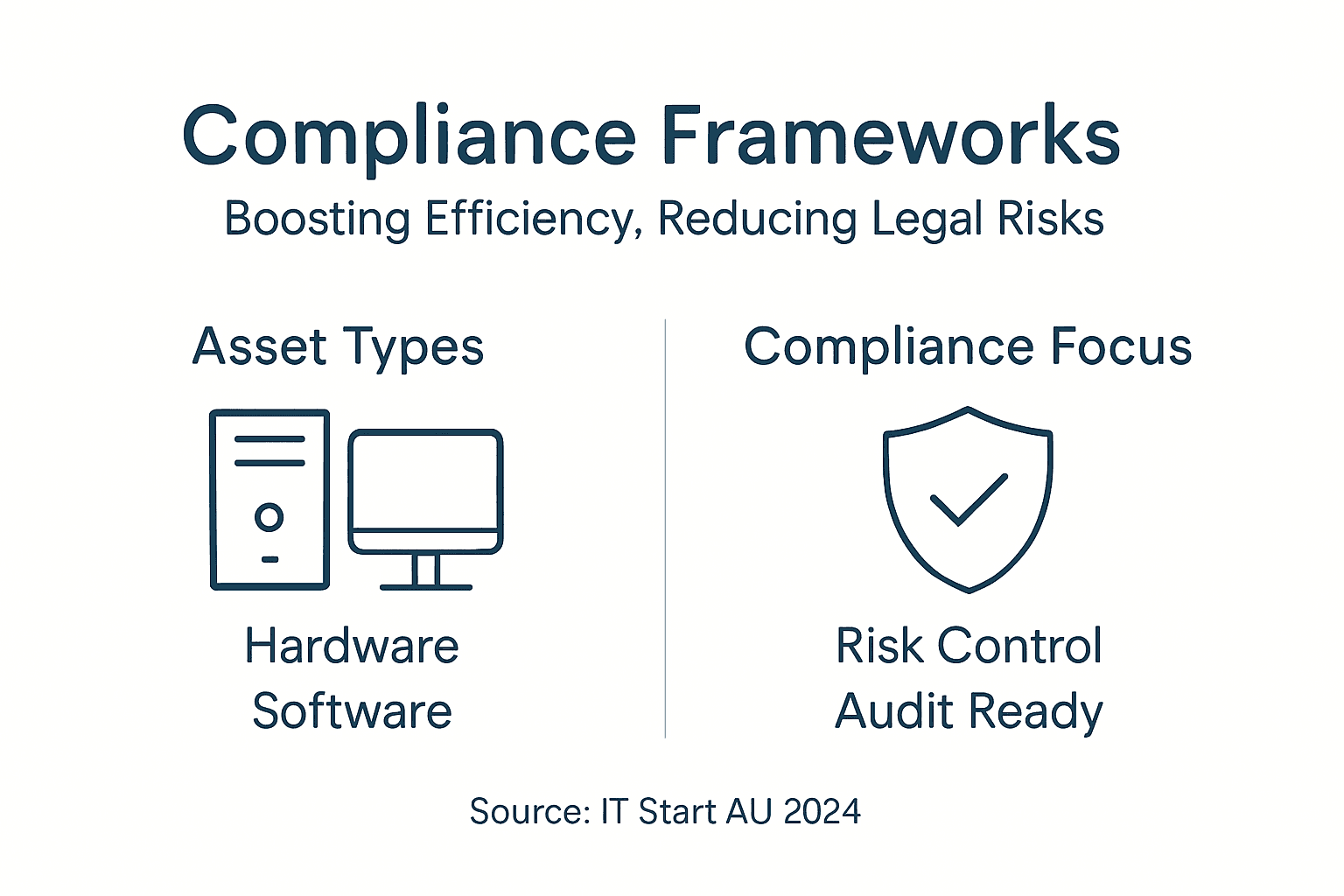
Compliance Frameworks for Brisbane Businesses
IT asset management compliance demands a strategic approach tailored to Queensland’s regulatory landscape. Compliance and enforcement strategies provide critical guidance for businesses seeking to navigate complex technological and legal requirements.
Effective compliance frameworks typically encompass several key components:
- Regulatory Understanding
- Australian cybersecurity regulations
- Queensland-specific IT governance standards
- Privacy and data protection legislation
- Industry-specific compliance requirements
- Risk Management
- Comprehensive risk assessment processes
- Regular security vulnerability audits
- Incident response planning
- Continuous monitoring mechanisms
- Documentation and Reporting
- Detailed asset tracking records
- Compliance documentation protocols
- Audit trail maintenance
- Transparent reporting mechanisms
- Staff Training and Awareness
- Regular cybersecurity training programs
- Compliance policy communication
- Performance evaluation metrics
- Cultural embedding of compliance principles
Structured compliance programs help Brisbane businesses mitigate legal risks and demonstrate professional accountability. These frameworks transform compliance from a bureaucratic obligation into a strategic business advantage.
Pro tip: Implement a quarterly compliance review process that systematically evaluates your IT asset management against current regulatory standards.
Roles, Costs and Key Responsibilities
IT asset management requires a sophisticated understanding of roles, financial implications, and strategic accountability. Asset management responsibilities involve multiple stakeholders working collaboratively to ensure technological resources support organisational objectives.
Key roles and responsibilities in IT asset management include:
- Executive Leadership
- Strategic IT investment decisions
- Budget approval
- Risk management oversight
- Compliance policy endorsement
- ICT Managers
- Asset procurement planning
- Performance monitoring
- Technology strategy development
- Vendor relationship management
- Asset Custodians
- Day-to-day asset tracking
- Maintenance coordination
- Usage documentation
- Compliance implementation
- Financial Controllers
- Cost allocation tracking
- Depreciation management
- Budget reconciliation
- Investment return analysis
Strategic IT role descriptions demonstrate how different organisational levels contribute to effective asset management. Understanding these responsibilities helps businesses create transparent, accountable technology governance frameworks.
Cost management involves comprehensive financial considerations across asset lifecycles, including initial procurement, ongoing maintenance, upgrade investments, and eventual disposal expenses. Proactive financial planning ensures organisations maximise technological investments while maintaining budgetary control.
The table below outlines key IT asset management roles and how each contributes to success:
| Role | Primary Contribution | Typical Responsibility |
|---|---|---|
| Executive Leadership | Strategic direction | Investment and risk oversight |
| ICT Managers | Technology alignment | Performance and vendor management |
| Asset Custodians | Operational continuity | Routine asset tracking |
| Financial Controllers | Financial optimisation | Cost and depreciation monitoring |
Pro tip: Create a cross-functional asset management team with representatives from IT, finance, and executive leadership to ensure holistic oversight and strategic alignment.
Common Pitfalls and How to Avoid Them
IT asset management presents numerous challenges that can derail organisational effectiveness. Strategic asset management pitfalls often emerge from inadequate planning, poor communication, and misaligned technological strategies.
Common challenges in IT asset management include:
- Strategic Misalignment
- Disconnected technology investments
- Lack of long-term planning
- Inconsistent upgrade strategies
- Misunderstood business objectives
- Financial Inefficiencies
- Unnecessary asset purchases
- Inadequate depreciation tracking
- Poor budget allocation
- Unexpected maintenance costs
- Compliance Risks
- Incomplete documentation
- Regulatory non-compliance
- Insufficient audit trails
- Weak security protocols
- Technical Challenges
- Obsolete technology retention
- Integration complexity
- Performance monitoring gaps
- Inadequate asset lifecycle management
Engineering asset management strategies highlight the importance of going beyond minimum standards and maintaining robust communication channels. Proactive identification and mitigation of these pitfalls can transform potential risks into strategic opportunities for technological optimization.
Successful IT asset management requires continuous improvement, stakeholder engagement, and a holistic approach that balances technological innovation with financial pragmatism.
Pro tip: Develop a quarterly cross-functional review process that systematically evaluates your IT asset management strategy against emerging technological trends and organisational goals.
Strengthen Your IT Asset Management with IT Start
Managing your IT assets effectively is essential for boosting operational efficiency and ensuring compliance. The challenges of strategic alignment, lifecycle tracking, and regulatory adherence discussed here are exactly where Brisbane businesses like yours need expert support. IT Start specialises in delivering tailored managed IT support, cloud solutions, and cybersecurity services designed to address these key pain points and protect your business against costly compliance risks.
Take control of your IT infrastructure with a partner who understands the importance of proactive asset management and financial optimisation. Visit IT Start to explore how our local expertise and SMB 1001 Gold-certified standards can help you streamline procurement, maintain compliance frameworks, and confidently manage your IT lifecycles. Don’t wait for a compliance gap or security lapse to impact your business. Contact us today for a free IT assessment and discover how to transform your asset management challenges into strategic advantages.
Frequently Asked Questions
What is IT Asset Management?
IT Asset Management (ITAM) is a strategic approach used by organisations to track, manage, and optimise their technology infrastructure, including hardware, software, and digital resources, to enhance operational efficiency and ensure regulatory compliance.
Why is lifecycle management important for IT assets?
Lifecycle management is crucial as it guides an asset from procurement to disposal, ensuring efficient use of technology, minimising risk, and maintaining compliance throughout the asset’s lifespan.
How can compliance frameworks benefit my business?
Compliance frameworks can help businesses navigate complex regulatory environments, mitigate legal risks, and demonstrate accountability. They transform compliance from a burden into a strategic advantage, promoting trust and reliability in business operations.
What are some common pitfalls in IT asset management?
Common pitfalls include strategic misalignment, financial inefficiencies, compliance risks, and technical challenges. Identifying and addressing these issues proactively can significantly improve an organisation’s IT asset management strategies.
Recommended
- Understanding What is IT Security Compliance – IT Start
- IT Compliance Explained: What Brisbane Businesses Need – IT Start
- 7 Main Types of Managed Services for Brisbane Businesses – IT Start
- Windows Intune Explained: Business Security Benefits – IT Start
- Fastighetsägares ansvar för nätverk i Stockholm
- Just in Time Delivery: Essential Guide for 2025 Success – ORNER