

Securing confidential financial data can quickly become complicated when faced with evolving Australian regulations and daily operational pressures. For those managing technology in Brisbane’s growing financial services sector, staying compliant means going beyond simple security settings. This guide highlights the value of a business data protection workflow—a systematic approach that codifies critical procedures and delivers end-to-end visibility, so your business data remains secure, compliant, and ready for tomorrow’s challenges.
Contents: Business Data Protection Workflow Guide for Brisbane SMEs
- Defining Business Data Protection Workflow
- Australian Privacy Laws Shaping Protection
- Step-By-Step Data Protection Workflow
- Roles, Responsibility, And Compliance Monitoring
- Major Risks And Common Workflow Mistakes
Key Takeaways
| Point | Details |
|---|---|
| Comprehensive Data Protection Workflow | Brisbane SMEs should establish systematic workflows for managing and securing critical digital assets throughout their lifecycle. |
| Privacy Compliance is Essential | Understanding and adhering to Australian privacy laws is crucial for building trust with customers and protecting sensitive information. |
| Regular Audits and Reviews | Conducting annual privacy audits and quarterly workflow reviews ensures continued compliance and identification of potential vulnerabilities. |
| Clear Roles and Responsibilities | Defining specific roles within the organisation is vital for effective data governance and accountability in data protection efforts. |
Defining Business Data Protection Workflow
A business data protection workflow is a systematic approach that enables organisations to manage, secure, and govern their critical digital assets throughout their entire lifecycle. The Australian Government’s data governance framework emphasises structured processes that provide confidence and control over sensitive information.
Effective data protection workflows typically encompass multiple critical components:
- Data classification to identify sensitivity levels
- Access management protocols
- Encryption strategies
- Compliance tracking
- Incident response planning
For Brisbane SMEs, developing a robust workflow means creating a comprehensive strategy that addresses potential vulnerabilities while maintaining operational efficiency. Business process and workflow architectures support this goal by enabling systematic automation and standardisation of data management practices.
The key objective is establishing end-to-end visibility and control, which allows businesses to reduce potential risks and streamline their data protection efforts. By codifying clear procedures, organisations can minimise human error and create repeatable, scalable protection mechanisms.
The following table summarises the business impact of each major data protection workflow component:
| Workflow Component | Business Impact | Example in Practice |
|---|---|---|
| Data classification | Reduces risk of data leaks | Assigning sensitivity levels to documents |
| Access management | Limits unauthorised access | Role-based permissions for employees |
| Encryption strategies | Protects data during transfer and storage | End-to-end email encryption |
| Compliance tracking | Avoids legal penalties | Automated audit trails |
| Incident response | Minimises breach effects | Predefined data breach plan |
Pro tip: Start by mapping your organisation’s current data flows and identifying potential weak points before designing your protection workflow.
Australian Privacy Laws Shaping Protection
Brisbane SMEs must navigate a complex landscape of privacy regulations that fundamentally shape data protection strategies. Australian privacy legislative frameworks primarily revolve around the Privacy Act 1988 and the Australian Privacy Principles (APPs), which establish comprehensive guidelines for managing sensitive information across various sectors.
The key components of these privacy laws include:
- Mandatory protection of personal information
- Clear consent requirements for data collection
- Restrictions on cross-border data transfers
- Comprehensive breach notification protocols
- Strict penalties for non-compliance
Under these regulations, organisations must implement robust mechanisms to safeguard personal data. Sector-specific privacy regulations add additional layers of complexity, particularly for industries handling sensitive information like finance, healthcare, and telecommunications.

For Brisbane businesses, understanding these legal frameworks is not just about compliance, but about building trust with customers and protecting their most valuable digital assets. The APP guidelines require organisations to be transparent about how they collect, use, and manage personal information, creating a culture of accountability and responsible data stewardship.
The table below contrasts privacy compliance requirements for major Australian sectors:
| Sector | Unique Privacy Challenge | Key Compliance Focus |
|---|---|---|
| Finance | High-value personal data | Strong customer authentication |
| Healthcare | Sensitive health records | Confidentiality and consent management |
| Telecommunications | Large-scale data flows | Secure transmission and retention policies |
Pro tip: Conduct a comprehensive privacy audit annually to ensure your data handling practices remain fully compliant with current Australian privacy regulations.
Step-By-Step Data Protection Workflow
Designing a comprehensive data protection workflow requires a strategic approach tailored to your Brisbane SME’s unique operational needs. Implementing a data protection strategy involves a systematic process that addresses legal, technical, and organisational challenges.
The core steps of an effective data protection workflow include:
-
Data Identification
- Catalogue all personal and sensitive information
- Map data storage and transmission channels
- Determine data classification levels
-
Legal Compliance Assessment
- Review Australian Privacy Principles (APPs)
- Validate consent mechanisms
- Ensure transparency in data handling
-
Security Implementation
- Deploy encryption technologies
- Establish access control protocols
- Create secure data storage systems
-
Monitoring and Response
- Develop breach notification procedures
- Implement continuous monitoring systems
- Create incident response frameworks
Each step requires careful consideration and ongoing refinement. The workflow is not a static document but a dynamic process that evolves with technological changes and regulatory updates. Organisations must remain agile, regularly reviewing and updating their data protection strategies to maintain robust security postures.
Successful implementation demands cross-functional collaboration, ensuring that IT, legal, and management teams work together to create a comprehensive, adaptable approach to data protection.
Pro tip: Schedule quarterly workflow reviews to identify and address potential vulnerabilities before they become critical risks.
Roles, Responsibility, and Compliance Monitoring
Establishing clear organisational accountability for data protection requires a comprehensive approach to defining roles and responsibilities. Data governance in Australian enterprises demands a structured framework that delineates specific responsibilities across different organisational levels.
Key roles in data protection workflows typically include:
- Data Owner: Senior executive responsible for overall data asset management
- Data Custodian: IT professionals managing technical implementation
- Data Steward: Responsible for data quality and compliance
- Privacy Officer: Ensures adherence to privacy regulations
- Security Manager: Oversees technical security implementations
Effective compliance monitoring involves systematic approaches to tracking and verifying data protection practices. Australian Government data governance frameworks recommend implementing robust monitoring mechanisms that include regular audits, comprehensive reporting, and continuous assessment of data management practices.
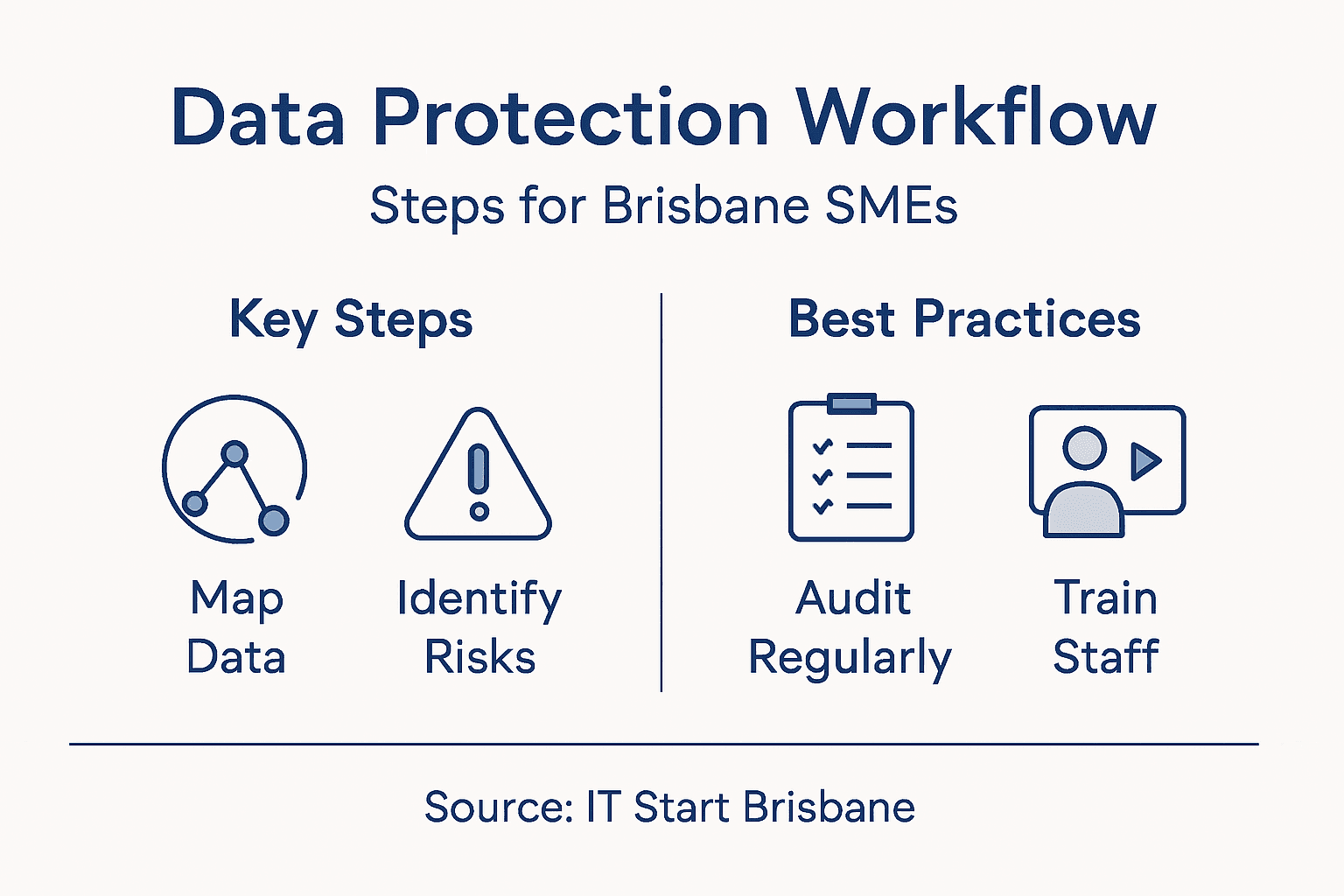
The monitoring process should be dynamic and comprehensive, incorporating multiple layers of oversight. This includes technical audits, policy compliance checks, risk assessments, and periodic reviews of data handling procedures. Organisations must create a culture of accountability where every team member understands their role in maintaining data protection standards.
Pro tip: Develop a detailed accountability matrix that clearly maps individual responsibilities and creates transparent reporting lines for data protection activities.
Major Risks and Common Workflow Mistakes
Data protection risks represent significant challenges for Brisbane SMEs, requiring meticulous attention and proactive management. Common data protection workflow mistakes can expose organisations to substantial regulatory and operational vulnerabilities.
The most prevalent risks and workflow mistakes include:
- Inadequate risk assessment procedures
- Inconsistent security control implementations
- Poor staff training and awareness
- Incomplete incident response planning
- Neglecting ongoing compliance monitoring
Businesses often underestimate the complexity of maintaining robust data protection strategies. Legal risks in data management encompass more than technical challenges, involving comprehensive legal and reputational considerations that demand strategic, holistic approaches.
The potential consequences of these workflow mistakes extend beyond immediate financial penalties. Organisations risk losing customer trust, damaging their brand reputation, and potentially facing significant legal repercussions. Effective risk mitigation requires continuous education, regular workflow audits, and a culture of proactive compliance across all organisational levels.
Pro tip: Conduct annual comprehensive risk assessments and maintain a dynamic, evolving data protection strategy that adapts to changing regulatory landscapes.
Strengthen Your Business Data Protection Workflow with IT Start
Brisbane SMEs face critical challenges in managing sensitive data securely while staying compliant with complex Australian privacy laws. This article highlights essential workflow components such as data classification, access management, encryption, and incident response — all vital elements that require expert handling to avoid risks like data breaches and costly penalties. At IT Start, we understand these pain points deeply and offer tailored IT support and cybersecurity services designed to build robust, transparent, and scalable data protection workflows that align with your operational needs.
Partner with a local Brisbane IT provider who helps you:
- Implement strong access control and encryption measures
- Navigate compliance requirements confidently
- Maintain ongoing monitoring and incident readiness
Don’t let evolving regulatory demands and security threats disrupt your business. Take the next step by contacting our team for a free assessment of your current data protection environment. Explore how our managed IT support and cloud solutions can empower your organisation to reduce risks and enhance efficiency. Get started today by visiting IT Start Contact Us or learn more about how we support data protection strategy implementation and managing cybersecurity risks tailored to Brisbane businesses.
Frequently Asked Questions
What is a business data protection workflow?
A business data protection workflow is a systematic approach that allows organisations to manage, secure, and govern their critical digital assets throughout their lifecycle. It includes data classification, access management, encryption strategies, compliance tracking, and incident response planning.
Why is data classification important in data protection?
Data classification is crucial as it helps identify sensitivity levels of data, reducing the risk of data leaks. By assigning sensitivity levels to documents, organisations can ensure appropriate handling and protection of critical information.
What are the main components of an effective data protection workflow?
The main components include data classification, access management, encryption strategies, compliance tracking, and incident response planning. Each component plays a vital role in protecting sensitive information and ensuring compliance with regulations.
How can Brisbane SMEs ensure compliance with privacy regulations?
Brisbane SMEs can ensure compliance with privacy regulations by reviewing the Australian Privacy Principles (APPs), validating consent mechanisms, and implementing robust data handling and security practices to protect personal information.
Recommended
- How to Protect Sensitive Data for Brisbane SMEs – IT Start
- Data Protection and Privacy – IT Start
- Data Privacy Explained: Protecting Your Brisbane Business – IT Start
- 7 Essential Data Protection Tips for Brisbane Businesses – IT Start
- Content Marketing Platform: Boosting SME Sales Online – Paul Baguley